
Last updated 5 September 2026. Package prices below are read from our booking system on that date and hold for 2026 and 2027 departures; the park fee is from the Nepal Tourism Board table.
The arithmetic of Langtang is almost suspiciously good. Eight days of guided trekking through one of the most beautiful glacial valleys in the Himalayas. A licensed guide who knows every stone on the trail. A porter who carries your bag while you carry nothing heavier than a water bottle and a camera. Three meals a day. Teahouse accommodation every night. All permits. All ground transport. Three hundred and sixty-five dollars.
That is forty-five dollars per day. For everything. In a landscape where the mountains reach seven thousand metres and the silence between them has the quality of something sacred.
Langtang is not cheap because it is lesser. It is cheap because it is close. No internal flights, you drive from Kathmandu, seven hours on a road that climbs through river valleys and terraced hillsides. No restricted area permits, the Langtang National Park entry fee is 3,000 rupees, about 22 dollars. No Lukla lottery, the trailhead is accessible by road regardless of weather. The economics of proximity translate directly into savings that other treks, Everest with its flights, Manaslu with its restricted area fees, Upper Mustang with its 50-dollar-a-day permit, cannot offer.
How much does a guided Langtang Valley Trek package cost?
A fully guided eight-day Langtang Valley trek through a registered Nepali company costs between 365 and 1,000 US dollars per person depending on the service tier.
Budget provides the essentials. A licensed, English-speaking guide. The Langtang National Park entry permit and TIMS card. Ground transport from Kathmandu to Syabrubesi and back, and airport transfers in Kathmandu. A shared teahouse room. What Budget does not include is a porter or meals: you carry your own bag and order and pay for your own food at the teahouses, which is why the price is 365 dollars.
Standard adds all meals on the trek, a private twin room where the lodge has one, one porter between two trekkers carrying ten kilograms each, and a duffel bag of your own. The sleeping bag and down jacket are provided free on every tier including Budget, so that is not what the difference buys you.
Luxury adds a dedicated porter so you carry nothing, a guide for every two trekkers, the best available room at each teahouse, and all drinks except alcohol.
Prices drop with group size on every tier, and the price is the same whether you book privately or as a group; we never add strangers to your trek. Per person, from our booking system:
| Group size | Budget | Standard | Luxury |
|---|---|---|---|
| 1 person | 365 dollars | 650 dollars | 1,000 dollars |
| 2 to 4 people | 320 dollars | 570 dollars | 800 dollars |
| 5 to 8 people | 280 dollars | 540 dollars | 750 dollars |
| 9 to 12 people | 260 dollars | 510 dollars | 700 dollars |
| 13 to 20 people | 250 dollars | 480 dollars | 680 dollars |
Langtang is the one trek where bringing a friend changes the price a lot: a single trekker pays 365 dollars on Budget, two people pay 320 each. Kathmandu hotels are not included on any tier.
The difference between tiers is meals, porters and room comfort. The guide quality and safety protocols are identical across all three. The trail does not change. The mountains do not change. The dal bhat does not change. Related: How to Hire a Trekking Guide in Nepal: 2026/2027 Rules, Costs and What to Look For.
What is the total cost of the Langtang Valley Trek?
The trek package is not the total cost. International flights, visa, insurance, tips, and personal spending add to the short answer. Here is the complete picture.
From the United Kingdom: return flights to Kathmandu cost six hundred to nine hundred dollars depending on airline and advance booking. The thirty-day Nepal visa costs fifty dollars. Travel insurance with altitude coverage costs fifty to one hundred and fifty dollars. Tips for guide and porter over eight days total two hundred to three hundred dollars. Personal spending on the trail, hot showers, WiFi, charging, snacks, beer, runs ten to fifteen dollars per day, or eighty to one hundred and twenty over eight days. A few meals in Kathmandu before and after the trek add thirty to sixty dollars.
Total from the UK, Budget tier, where you pay for your own meals on the trail: roughly 1,700 to 1,900 dollars. Standard: 2,000 to 2,200. Luxury: 2,600 to 2,900. Those figures use the package prices above, a 650 to 800 dollar return flight, visa, insurance, three nights in Kathmandu, tips and trail extras.
From the United States, add two to four hundred for higher airfares. From Australia, add one to three hundred. Related: How Much Does the Kanchenjunga Base Camp Trek Cost in 2026/2027?
Is Langtang the cheapest and best value trek in Nepal?
The comparison is instructive. Everest Base Camp costs roughly 3,600 to 4,300 dollars in total from the UK, Lukla flights included. The Annapurna Circuit costs 2,300 to 2,500. The Manaslu Circuit costs 2,400 to 2,600. Upper Mustang, with its 50-dollar-a-day permit, costs more again.
Langtang undercuts them all. At 1,700 to 1,900 in total for Budget, it is roughly half the cost of Everest Base Camp and three-quarters the cost of the Annapurna Circuit. The savings come from three sources: no internal flights, no restricted area permits, and a shorter duration that reduces daily costs.
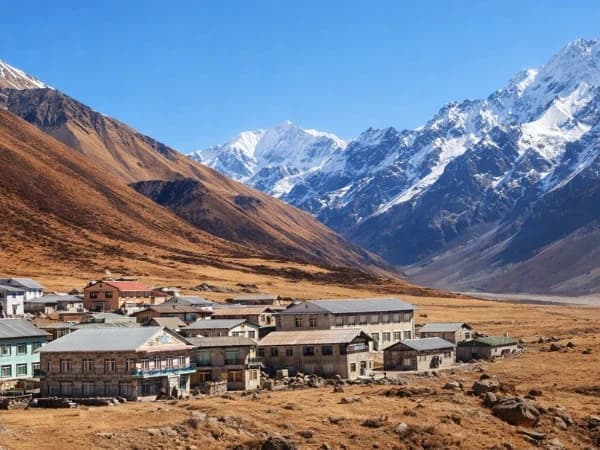
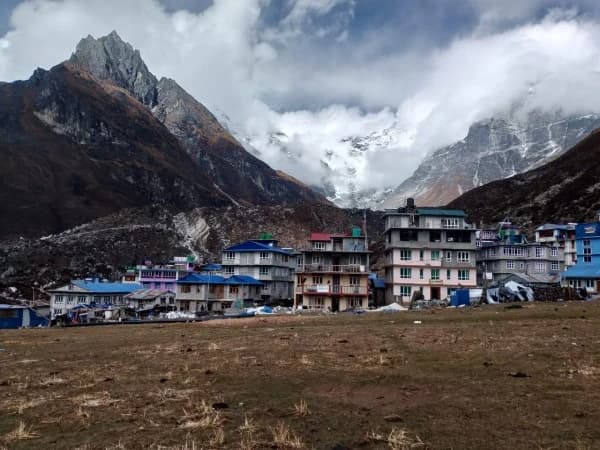
What you get for the lower price is not a lesser experience. Langtang Valley, the bamboo forests, the Tamang villages, the glacier at the head of the valley, the rebuilt communities after the 2015 earthquake, the quiet that comes from being on a trail that only a fraction of the Everest crowd ever walks, is a genuine Himalayan trek with cultural depth, mountain beauty, and emotional resonance that rival anything the more expensive routes offer.
How much spending money do you need daily on the Langtang trek?
Hot showers at teahouses below three thousand metres are often free or one hundred to two hundred rupees. Above, they cost two hundred to four hundred rupees where available. WiFi costs one hundred to three hundred rupees per day. Phone charging is free to two hundred rupees. A beer at the end of a long day costs four hundred to seven hundred rupees. Snacks, chocolate bars, biscuits, chips, cost one hundred to three hundred rupees each.
Over eight days, a moderate spender drops eight hundred to twelve hundred rupees per day on extras, roughly six to ten dollars. A frugal trekker who skips beer and showers spends half that. A generous one spends double.
How much should you tip guides and porters on the Langtang trek?
Guide: fifteen to twenty dollars per day. Over eight days: one hundred and twenty to one hundred and sixty dollars. Porter: ten to fifteen dollars per day. Over eight days: eighty to one hundred and twenty. Total tips: two hundred to two hundred and eighty dollars. On Budget there is no porter, so the guide is the only tip.
Tips are given at the end of the trek in Kathmandu. In a sealed envelope. In cash, Nepali rupees or US dollars. Tipping is customary, deeply appreciated, and a significant portion of your guide's and porter's annual income. The guide who walked with you for eight days, monitored your health, booked your rooms, carried your safety net, and made the difference between a good trek and a great one, the tip is how you say thank you in a way that words alone cannot.
How can you do the Langtang Valley Trek more cheaply?
Trek in shoulder season, late February, early March, or late November. Some companies offer discounted rates outside peak season, and the trails are quieter.
Do not spend money on a sleeping bag or a down jacket. Both are provided free on every tier of this trek, Budget included, so renting one in Kathmandu at a dollar or two a day would be paying for something you already have. Tell us at the briefing if you need them.
Book directly with a Nepal-based company. The international operator adds its margin on top of ours for the identical trek. The trail is the same. The teahouses are the same. The mountains are the same. The difference is the London office rent that your booking fee subsidises when you book through a middleman.
And eat dal bhat. Not because it is cheap, though it is, with unlimited refills, but because it is the best trekking fuel in the Himalayas. The pizza and pasta on teahouse menus cost more and fuel you less. Dal bhat is the local wisdom distilled into a meal. Trust it.
Which Langtang trek should you book?
The 8-day valley trek on this page is the right first choice for most people. Four neighbours use the same guides, the same road from Kathmandu and the same three tiers:
- Langtang Valley, 8 days, from 365 US dollars. Syabrubesi to Kyanjin Gompa and back, with a day for Kyanjin Ri.
- Gosaikunda, 5 days, from 370 US dollars. The sacred lakes at 4,380 metres in under a week, the shortest high-altitude trek we run from Kathmandu.
- Langtang and Gosainkunda, 13 days, from 750 US dollars. The valley, then over the Laurebina pass to the lakes and down through Helambu.
- Langtang Ganja La Pass, 12 days, from 725 US dollars. The valley plus a 5,100-metre pass crossing. Not for beginners.
- Tamang Heritage Trail, 12 days, from 725 US dollars. Villages, hot springs and homestays on the Tibetan border before the valley itself.
Before you decide, read how difficult the Langtang trek really is and the day-by-day distances. We have compared Langtang with Poon Hill, Annapurna and Everest Base Camp, written it up in autumn, October and spring, and listed where we stay each night. The Langtang region guide covers every route in one place.
Is the Langtang Valley Trek worth the cost?
Three hundred and sixty-five dollars does not convey what it purchases. The first morning above the tree line when the glacier catches light. The prayer wheels spinning in a village that was buried by an earthquake and rebuilt by the hands of the people who survived it. The cheese factory at Kyanjin Gompa where yak milk becomes something unexpectedly delicious. The sound of meltwater at four thousand metres, a sound that has no equivalent in the world below.
Langtang is the most affordable major trek in Nepal. It is also, for many trekkers, including those who have done EBC and the Annapurna Circuit, the most personally meaningful. The cost is low. The value is immeasurable. The two are not related.
See the full cost breakdown on our Langtang Trek (8 days) page.
Langtang is the most affordable major trek in Nepal. No domestic flight needed (you drive from Kathmandu), lower permit fees than Everest or Manaslu, and cheaper teahouses because the altitude is lower. The views are just as good. The cultural immersion is arguably richer. And you save $1,000+ compared to an EBC trek of similar length.
See our Langtang Trek (8 days) for pricing and what is included.
What trekkers say about our Langtang treks
Two recent reviews, quoted as written (the second is shortened where marked):
“We had a fabulous time trekking thanks to Shreejan and his family. The 8-day Langtang trek was quite accessible for novice trekkers and absolutely stunning. Great variety of landscapes and breathtaking views of Langtang peak. The inns and tea houses were always selected with care and very cosy. Our guide, Janak, was very trusting and helpful, and always available for any queries, always doing his very best to make use comfortable and find solutions. He spoke perfect English and was happy to share insights on Himalayan and Nepalese culture. Highly recommend!”
Laura P, TripAdvisor, May 2025
“I had an incredible Langtang trek and can highly recommend this company! From the very beginning, everything was perfectly organized and tailored to my individual needs and wishes. […] A special thank you to my guide and porter, who were exceptionally kind, professional, and supportive at all times. […] The team handled everything very professionally and supported me in making this decision.”
Chiara, Trustpilot, March 2026
Check us before you pay
Trekking scams in Nepal are real and in the news, so do not take my word for any of this. The Everest Holiday Pvt. Ltd. was registered in Kathmandu on 8 April 2016, company registration 147653/072/073, trekking licence 2090/072, Trekking Agencies’ Association of Nepal member 1586. Every legitimate operator holds the same paperwork and will send it without being offended that you asked. Ask me for a call before you send a deposit; I am on WhatsApp around the clock. Our reviews are on TripAdvisor and Google under our own name; read the critical ones as well as the kind ones.
The questions I get asked most about the Langtang cost
Is Langtang open after the August 2026 flood? Rasuwa was hit hard. Before we confirm any Langtang date we check the road from Kathmandu and the trail on the ground, and we tell you plainly what is open; this is what happened. If your dates turn out not to be safe, we move you to another valley or another date at no charge.
Can I do this trek alone? Yes, as a solo traveller, with a licensed guide included. Langtang is not a restricted area, so a solo trekker needs only the park permit and TIMS card, which we arrange. A single trekker pays the one-person price; two people already drop to 320 dollars each on Budget.
Is the price the same for a private trek and a group? Yes. Every trek we run is private, your group only, and the discount comes from group size, not from sharing with strangers.
Are Kathmandu hotels included? No, on any tier. Tell us your budget and we will recommend and book one for you, or choose your own.
What gear is free? A down jacket and a sleeping bag rated to minus fifteen Celsius, on every tier, at no charge. A duffel bag is provided on Standard and Luxury. Bring your own broken-in boots and layers.
How much is the deposit and how do I pay? Ten per cent by card through Himalayan Bank’s secure gateway to confirm your dates; the balance is paid in Kathmandu before the trek. The deposit is non-refundable, but you can move your dates to any date within a year at no charge with 72 hours’ notice.
Will the price change for 2027? No. The prices on this page hold for 2027 departures.
If you want a quote for your own dates and group size rather than an article’s averages, write to me on WhatsApp and I will send the real numbers, including the unwelcome ones.
WhatsApp:+977 9810351300
Email:[email protected]
Written by Shreejan Simkhada, CEO of The Everest Holiday and third-generation Himalayan guide. TAAN Member #1586.
Langtang Valley in 2027
Prices hold for 2027 departures. Langtang is also the region hit hardest by the August 2026 Rasuwa flood, so for spring 2027 the honest advice is to check the road and trail status with me a few weeks before you fly rather than trusting an old post. We check it on the ground before every season and say plainly what is open.
Langtang Valley is the most affordable multi-day in Nepal. Our Langtang Trek (8 Days) is private (your group only, no strangers), 2026 and 2027 dates open, From USD $365. WhatsApp us for tailored 2026 and 2027 dates and current departures.
 Chat with Shreejan