

The Langtang Valley trek is the Goldilocks option: not as long as EBC, not as high as the Annapurna Circuit's pass, not as remote as Manaslu, but offering genuine Himalayan scenery, cultural richness, and altitude experience in seven to eleven days at a maximum altitude of 4,984 metres (if you climb Tserko Ri) or 3,870 metres (if you stop at Kyanjin Gompa). The approach from Kathmandu is the shortest of any major trek (seven to eight hours by road to Syabrubesi), and the teahouse infrastructure is well-developed throughout.
This accessibility makes the Langtang Valley an excellent first trek, and its packing list reflects that: less extreme than what EBC or Manaslu demand, but still requiring proper mountain equipment for a trail that reaches altitudes where the temperature drops below minus ten at night and the weather can change from sunshine to snowstorm within hours.
What clothes should I pack for the Langtang Valley trek?
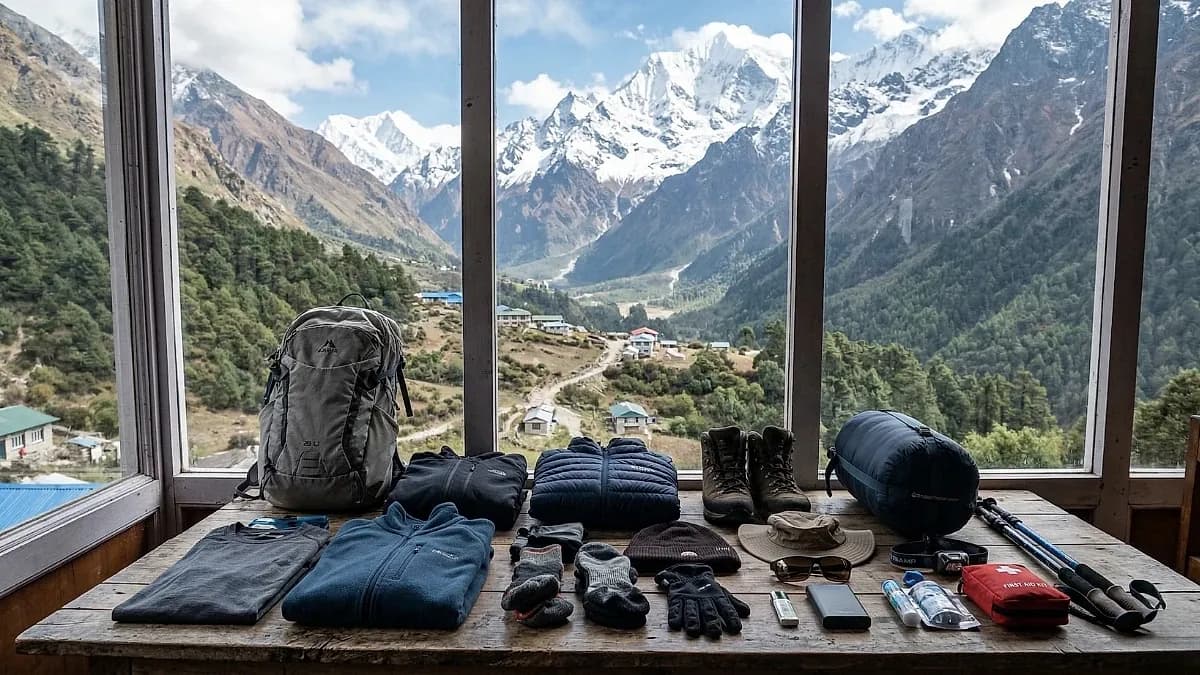
Base layers: Two long-sleeve merino or synthetic tops. One or two T-shirts for the warmer lower sections (Syabrubesi to Lama Hotel is subtropical). One pair of thermal leggings for sleeping and high-altitude layering.
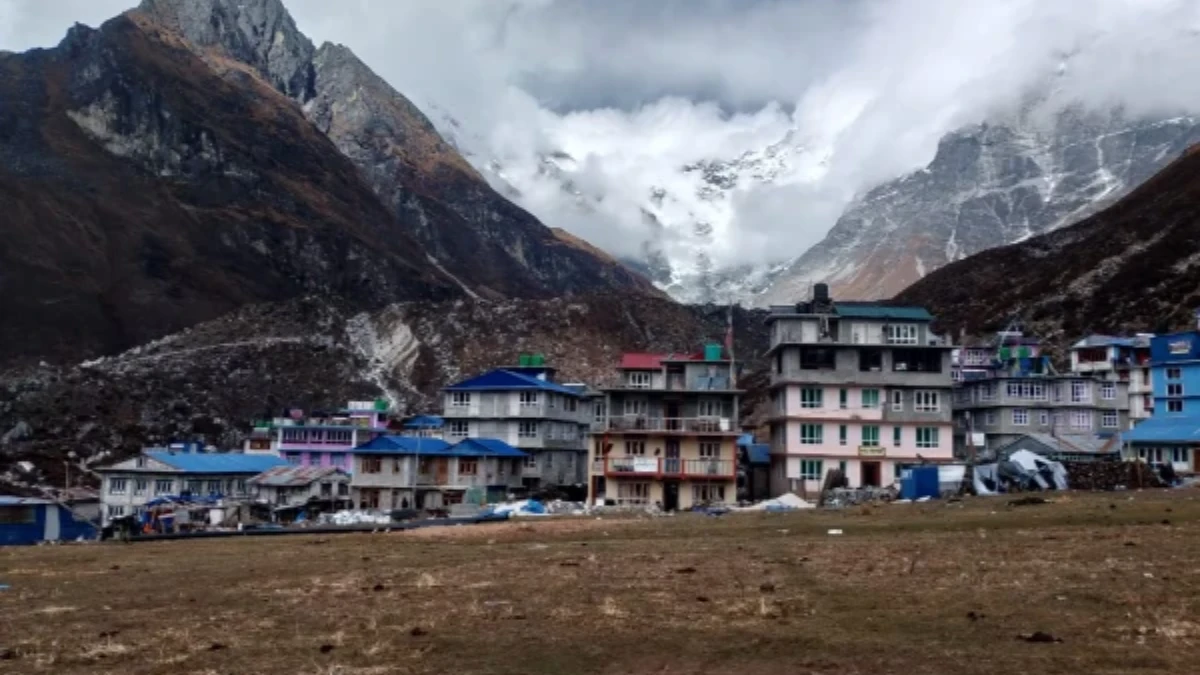
Mid layers: One fleece jacket. One down jacket (lighter weight than EBC; a jacket rated to minus five is sufficient for the Langtang Valley's maximum altitude). The down jacket is for evenings at Kyanjin Gompa and for the Tserko Ri summit attempt if you do it.
Outer layer: Waterproof shell jacket with hood. The Langtang Valley receives more precipitation than the Khumbu: the forest sections are lush because they are wet, and rain gear is essential rather than precautionary.
Trousers: Two pairs of quick-dry trekking trousers. Zip-off legs are useful for the warm lower sections. Waterproof overtrousers for rain, more likely to be needed here than on the EBC trail.
Socks: Three to four pairs of merino trekking socks. The shorter duration means fewer socks than EBC or Manaslu.
Underwear: Three pairs of quick-dry. Sports bra for women.
Gloves: Thin liner gloves and one pair of insulated gloves. The Langtang Valley's lower maximum altitude means less extreme cold than EBC, but mornings at Kyanjin Gompa (3,870 metres) are cold enough to need proper hand protection.
Headwear: Warm beanie. Sun hat. Buff. Sunglasses with UV protection.
Footwear: Waterproof trekking boots (broken in). Camp shoes for teahouse evenings. Related: Nepal Trek Packing Checklist: The Only List You Need (Printable 2026/2027).
What gear do I need for the Langtang Valley trek?
Daypack: Twenty to thirty litres. Smaller than EBC or Manaslu because the daily walking distances are shorter and the altitude range is less extreme.
Duffel bag: Forty to sixty litres for the porter. The shorter duration means less clothing and fewer supplies than longer treks.
Sleeping bag: Rated to minus ten Celsius. The Langtang Valley's teahouses provide blankets, and the maximum sleeping altitude (Kyanjin Gompa, 3,870 metres) is lower than EBC or Manaslu. A minus-ten bag with teahouse blankets is comfortable. If you plan to climb Tserko Ri and sleep at a higher camp, upgrade to minus fifteen.
Trekking poles: Recommended. The trail has significant elevation changes, the descent from Langtang village to Syabrubesi involves steep stone steps that punish knees without pole support.
Headlamp: Essential. With spare batteries.
Power bank: 10,000-20,000mAh. The shorter duration means less charging need than longer treks, and the Langtang Valley's teahouses have better charging infrastructure than more remote routes.
Water purification: Tablets or SteriPEN. The Langtang Valley has some Safe Drinking Water stations, but your own purification ensures you are never dependent on them.
What medical supplies should I bring on the Langtang Valley trek?
First aid kit: Standard trekking kit, paracetamol, ibuprofen, loperamide, oral rehydration salts, blister treatment, antiseptic wipes. Diamox if your doctor recommends it (less critical for the Langtang Valley's moderate altitude than for EBC, but useful if you plan to climb Tserko Ri at 4,984 metres).
Sunscreen: SPF 50+. The UV above the tree line is intense even at the Langtang Valley's moderate altitude.
Lip balm with SPF. Hand sanitiser. Toilet paper. Wet wipes.
Insect repellent: DEET-based. More important on the Langtang trek than on higher-altitude treks because the lower forest sections (below 2,500 metres) are subtropical and harbour biting insects. In late spring and monsoon season, leeches are present below 2,500 metres.
What permits and cash do I need for the Langtang Valley trek?
Passport, permits, insurance documentation, same as any Nepal trek. Your company handles permits.
Cash: Nepali rupees. Less needed than on longer treks, budget three thousand to six thousand rupees per day for personal expenses. No ATMs on the trail, but the shorter duration means less total cash needed.
The Langtang Difference
The Langtang Valley packing list is lighter and simpler than EBC or Manaslu because the trek is shorter, lower, and better-serviced. The maximum altitude is lower by over a thousand metres than EBC's Kala Patthar, which means less extreme cold, less altitude sickness risk, and less need for heavy insulation.
The trade-off: the Langtang Valley's lower altitude does not mean it is easy. The trail includes significant elevation changes, steep climbs and descents that test legs and knees, and the weather can turn quickly at any altitude above 3,000 metres. Pack for the conditions you might face, not the conditions you hope for.
The Langtang Valley is close enough to Kathmandu that a forgotten item can theoretically be retrieved, but practically, once you are on the trail, you are on the trail. Pack what you need. Leave the luxury behind. And walk into a valley that delivers Himalayan beauty at a distance, a duration, and an altitude that makes the mountains accessible without making them easy.
For the full Langtang packing list, see our Langtang Trek (8 days) page. We provide a sleeping bag rated to minus fifteen and a down jacket free on every tier, Budget included, and a duffel bag as well on the Standard and Luxury packages.
The Langtang packing list is the lightest of any major Nepal trek. No extreme cold-weather gear needed (the maximum altitude is 4,984m if you do Tserko Ri), no crampons, no technical equipment. Good boots, warm layers, rain gear, and a sense of adventure. We provide a sleeping bag and down jacket free on every tier, and a duffel bag on the Standard and Luxury packages.
See our Langtang Valley Trek for the full itinerary.
WhatsApp:+977 9810351300
Email:[email protected]
Written by Shreejan Simkhada, CEO of The Everest Holiday and third-generation Himalayan guide. TAAN Member #1586.
Langtang packing list: pair with our 8-day. Our Langtang Trek (8 Days) is private (your group only, no strangers), 2026 dates open, From USD $365. WhatsApp us for tailored 2026 dates and current departures.
 Chat with Shreejan