

Written by Shreejan Simkhada, CEO of The Everest Holiday and third-generation Himalayan guide. TAAN Member #1586.
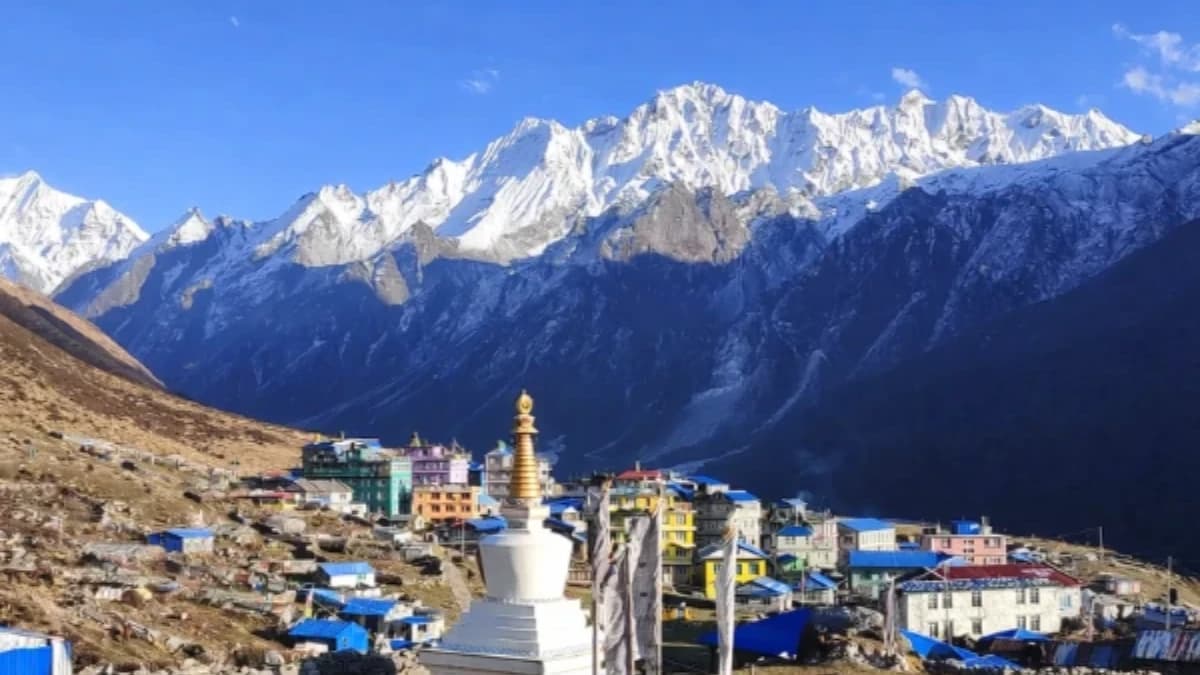
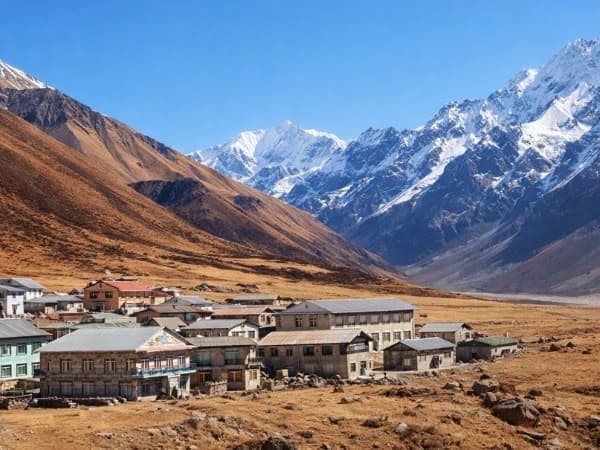
The Langtang Valley widens. The trail, which has been climbing through forest and along the river for three days, crosses a final stretch of boulder-strewn moraine and enters a broad, flat meadow surrounded by mountains on three sides. Prayer flags stretch between rocks. A small monastery sits on a rise, its whitewashed walls bright against the brown hillside. And behind the monastery, Langtang Lirung, 7,227 metres of ice and rock, fills the northern sky with a wall so steep and so close that you can hear the occasional crack of ice calving from its face.
Kyanjin Gompa at a glance
| Altitude | About 3,870 m, at the head of the Langtang Valley |
| Region | Langtang National Park |
| What it is | A Buddhist monastery and the last settlement on the Langtang Valley trek, with a village cheese factory |
| Day hikes | Kyanjin Ri (about 4,770 m) and Tserko Ri (about 4,984 m), for close views of Langtang Lirung |
| Trek it on | Langtang Valley Trek, Langtang Gosainkunda Trek |
Kyanjin Gompa lies within Langtang National Park, managed by Nepal’s Department of National Parks and Wildlife Conservation.
Kyanjin Gompa is the end of the road. The last settlement in the Langtang Valley, at 3,870 metres, beyond which there are no teahouses, no trails, and no people, only glaciers, moraines, and peaks that rise above seven thousand metres into air too thin for permanent habitation. It is where the Langtang trek reaches its destination, where trekkers spend one or two nights before turning back, and where the specific character of the Langtang Valley, more intimate than the Khumbu, quieter than the Annapurna, closer to Kathmandu than either, reveals itself most completely. Related: Langtang vs Annapurna: Which Trek Has Fewer Crowds in 2027?
How do you get to Langtang Valley from Kathmandu?
The Langtang Valley is Nepal's most accessible major Himalayan valley, seven to eight hours by road from Kathmandu to the trailhead at Syabrubesi, then three to four days of walking to Kyanjin Gompa. The total duration, seven to eleven days for a return trek, makes it the shortest of Nepal's "big three" trekking valleys (the others being the Khumbu and the Annapurna basin). And the proximity to Kathmandu, no flights required, no permit costs beyond the national park entry, makes it the most affordable.
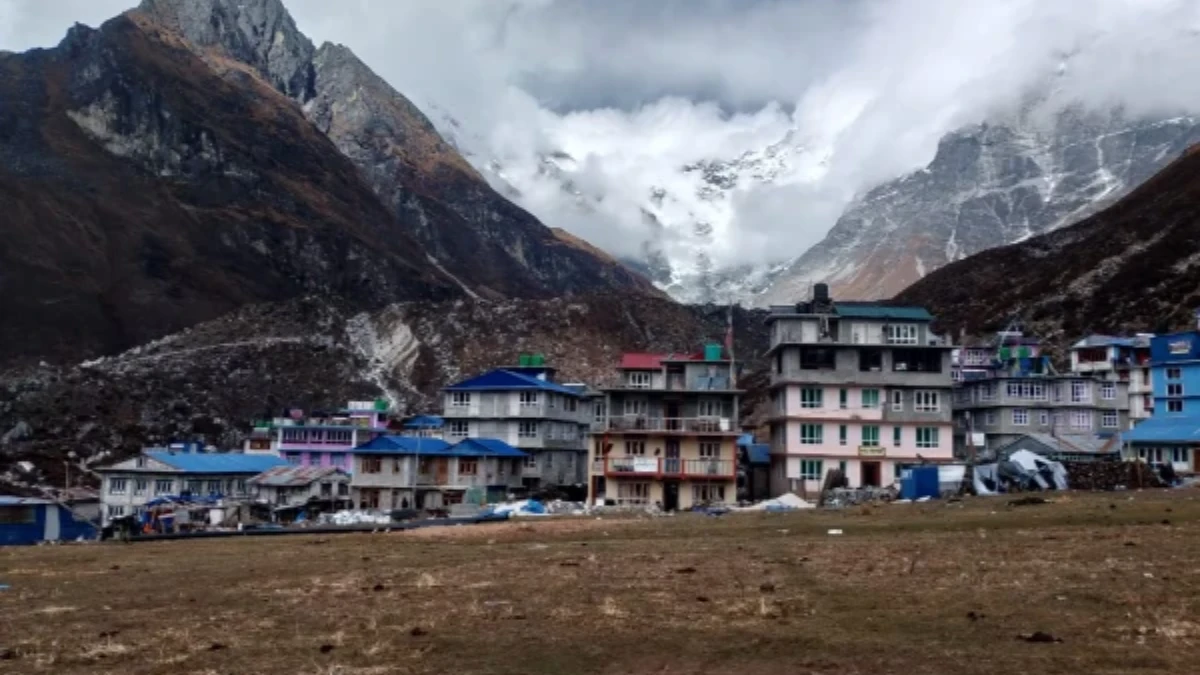
But accessibility does not mean easy. The Langtang Valley climb from Syabrubesi (1,460 metres) to Kyanjin Gompa (3,870 metres) gains 2,410 metres over three days, a rate of ascent that demands proper acclimatisation. The trail passes through one of Nepal's finest forest transitions: subtropical sal and bamboo at the bottom, temperate oak and rhododendron in the middle, and subalpine birch and juniper at the top. The forest is old growth, some trees are hundreds of years old, and the wildlife includes red pandas, Himalayan tahr, langur monkeys, and the danphe pheasant.
The 2015 earthquake devastated the Langtang Valley. An avalanche triggered by the earthquake buried the village of Langtang, killing over 300 people, trekkers, lodge owners, and residents. The village has been rebuilt nearby, and a memorial marks the avalanche site. Walking past the memorial on the way to Kyanjin Gompa is a sobering experience, the scale of the debris field, the photographs of the victims, and the knowledge that the same mountains that create the valley's beauty also created its worst tragedy.
What Is Kyanjin Gompa Like as a Settlement?
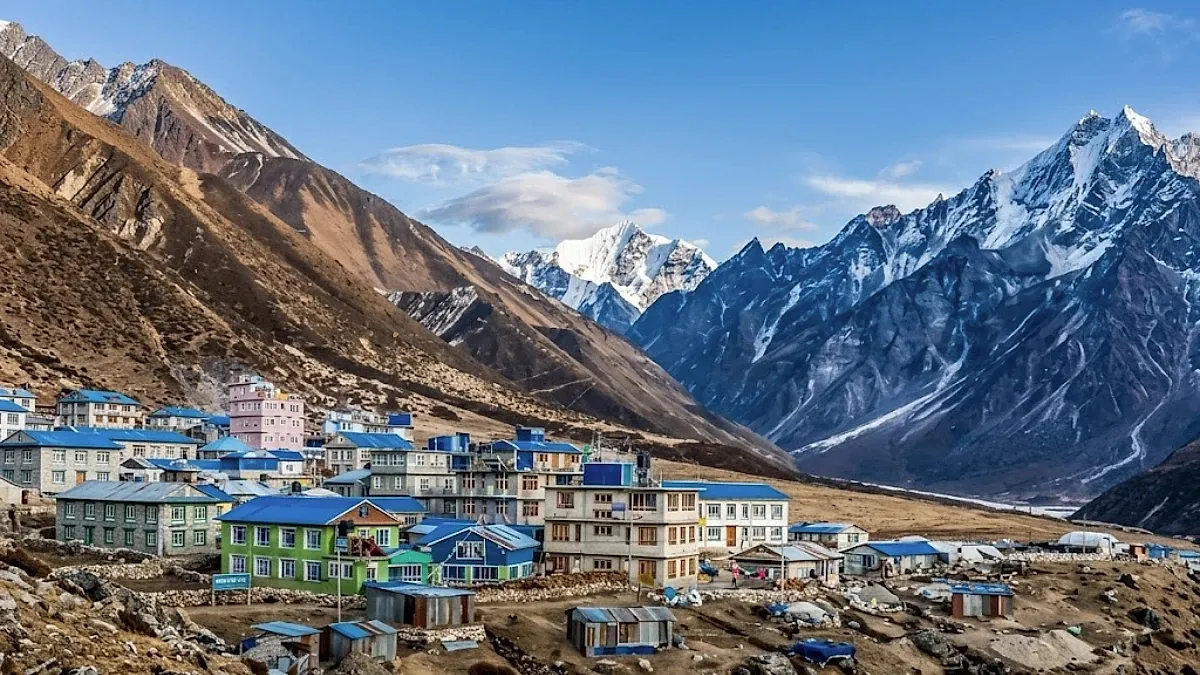
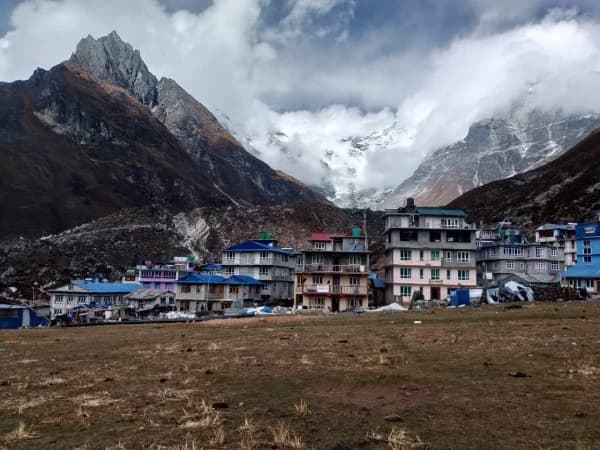
Kyanjin Gompa is a small settlement, perhaps a dozen teahouses and lodges, a monastery, and the famous cheese factory that has been producing yak cheese since it was established as a Swiss development project in the 1950s. The settlement sits on a flat moraine terrace above the Langtang Khola river, with Langtang Lirung to the north, Gangchempo (6,387 metres) to the northeast, and the Langtang Glacier stretching east toward the Tibetan border.
The monastery, the "gompa" that gives the settlement its name, is small but active. A few monks maintain the temple, which contains wall paintings, statues, and butter lamps. The monastery belongs to the Nyingma tradition and serves the Tamang Buddhist community that inhabits the upper Langtang Valley. Visitors are welcome, remove shoes, walk clockwise, make a small donation. The morning prayers, if you wake early enough to hear them, are accompanied by the sound of a conch shell whose note carries across the valley in the still dawn air.
The cheese factory is Kyanjin Gompa's most unexpected attraction. Established by a Swiss aid programme to provide economic alternatives to subsistence farming, the factory produces hard cheese from yak and chauri (yak-cow hybrid) milk. The cheese is aged, firm, sharp, and, at this altitude, after three days of dal bhat, astonishingly good. You can buy cheese at the factory or at the teahouses. A block of Kyanjin cheese, eaten with crackers and tea on the terrace of a teahouse with Langtang Lirung visible above, is one of the great small pleasures of Nepal trekking.
What day hikes can you do from Kyanjin Gompa?
Kyanjin Gompa is the base for two acclimatisation hikes that are the highlights of the Langtang trek.
Kyanjin Ri (4,773 metres): A steep climb directly above the settlement that gains 900 metres in approximately three hours. The trail is clear but steep, rocky terrain with no technical difficulty but significant altitude challenge. The summit provides 360-degree views: Langtang Lirung to the north (so close its ice seracs are individually visible), the Langtang Glacier stretching east, Gangchempo to the northeast, and the Langtang Valley dropping away to the south toward the forests you walked through yesterday. On clear days, the distant peaks of the Annapurna and Manaslu ranges are visible to the west.
The climb to Kyanjin Ri is the single best viewpoint on the Langtang trek and one of the finest viewpoints in Nepal. The panorama is not as wide as Kala Patthar's and does not include Everest, but the proximity of Langtang Lirung, less than five kilometres away, its seven-thousand-metre summit directly above, creates a sense of mountain intimacy that the more distant views of the Khumbu cannot match.
Tserko Ri (4,984 metres): A longer, more demanding climb that takes five to six hours from Kyanjin Gompa and reaches nearly 5,000 metres. The trail follows a ridge east of the settlement, climbing through alpine scrub and rock to a summit that provides even wider views than Kyanjin Ri, including, on clear days, the summit of Shishapangma (8,027 metres) across the border in Tibet. Tserko Ri is for fit, well-acclimatised trekkers who want to push above 4,900 metres without the commitment of a trekking peak.
Both hikes follow the "climb high, sleep low" principle, you ascend during the day and return to 3,870 metres to sleep. If you have two nights at Kyanjin Gompa (which the standard itinerary provides), do Kyanjin Ri on the first day and Tserko Ri on the second. If you have one night, Kyanjin Ri is the priority, it is shorter, more accessible, and provides ninety percent of the view. Related: Kyanjin Ri: The Viewpoint That Langtang Trekkers Call the Best-Kept Secret in Nepal.
Can you hike to Langtang Glacier from Kyanjin Gompa?
The Langtang Glacier, one of the largest in the region, begins above Kyanjin Gompa and flows east toward the Tibetan border. A day walk onto the glacier surface is possible from Kyanjin Gompa, two to three hours across moraine to the glacier edge, then onto the ice itself. The glacier is debris-covered, its surface is rock rubble rather than clean ice, but the ice is visible in crevasses and at the glacier's edges, blue and dense and ancient.
The glacier walk is not part of the standard itinerary but is available for trekkers with an extra day. Your guide can arrange it, the route is not marked, and navigation across the moraine requires local knowledge. The trip is raw, no trail, no teahouses, no other trekkers. Just you, your guide, and a river of ice that has been flowing from the mountains for millennia.
Where do you stay and eat at Kyanjin Gompa?
Kyanjin Gompa has approximately a dozen teahouses, rebuilt or renovated after the 2015 earthquake. The teahouses are standard Langtang quality, clean rooms, shared bathrooms, common rooms with stoves, and menus that include dal bhat, noodle soup, fried rice, pancakes, and, uniquely, yak cheese products from the local factory.
The must-try items: yak cheese omelette, yak cheese with crackers, and yak butter tea (po cha). The cheese omelette is the signature dish of Kyanjin Gompa, every teahouse makes it, every trekker orders it, and the combination of sharp yak cheese and eggs cooked on a gas stove at 3,870 metres is one of those improbable culinary moments that trekking produces.
Prices at Kyanjin Gompa are moderate, higher than Syabrubesi but lower than equivalent stops on the EBC trail. The Langtang Valley's road access (supplies come by road to Syabrubesi, then by porter for three days) keeps costs lower than the Khumbu, where everything arrives by air to Lukla.
How do you get back from Kyanjin Gompa to Syabrubesi?
The return from Kyanjin Gompa to Syabrubesi takes two to three days, retracing the trail through the valley, past the Langtang memorial, through the forests, and down to the roadhead. The descent is faster than the ascent, gravity and increasing oxygen do their work, and the forest sections, which you climbed through with effort, unroll downhill with an ease that makes the body feel light and the lungs feel grateful.
An alternative return is the route via Gosaikunda, climbing from the Langtang Valley over the Laurebina La pass (4,610 metres) to the sacred lakes, and descending to Dhunche. This extension adds three to four days and raises the maximum altitude significantly, but it combines the Langtang Valley experience with the Gosaikunda sacred lake experience in a single trek. Discuss this option with your guide, it requires good acclimatisation and weather conditions for the pass crossing.
Is the Langtang Valley trek worth doing?
The Langtang Valley trek does not have the name recognition of Everest Base Camp or the cultural variety of the Annapurna Circuit. It does not reach the extreme altitudes of the Khumbu or cross a high pass like Thorong La. It is shorter, lower, cheaper, and less famous than either of Nepal's marquee treks.
And yet. Trekkers who have done all three, EBC, Annapurna, and Langtang, frequently name Langtang as their favourite. Not because the mountains are higher (they are not). Not because the views are wider (they are not). But because the trip is more intimate. The valley is narrower. The mountains are closer. The forests are older. The communities are smaller. And the feeling, of walking into a valley that ends at a glacier, surrounded by peaks that rise directly from the valley floor, is a feeling of immersion that the wider, more panoramic Khumbu and Annapurna landscapes do not produce.
Kyanjin Gompa is where that immersion reaches its peak. The end of the trail. The last settlement. The cheese factory and the monastery and the mountain that fills the sky. And the knowledge, quiet, personal, carried home like the taste of yak cheese, that the best trekking in Nepal is not always the most famous trekking, and that the valley closest to Kathmandu sometimes delivers the experience farthest from ordinary life.
Kyanjin Gompa is the turnaround point on the Langtang Trek (8 days). From here you can day-hike to Kyanjin Ri or Tserko Ri for panoramic views before heading back to Syabrubesi.
Kyanjin Gompa is where the Langtang Valley stops climbing and starts opening up. The cheese factory, the ancient monastery, the yak herders who come down for supplies: this is the destination, not a stop along the way. I have sat on the monastery steps here with a cup of tea and watched Langtang Lirung turn gold at sunset more times than I can count. It never gets old.
Kyanjin Gompa is the turnaround point on our Langtang Valley Trek. We build in a rest day here so you can climb Kyanjin Ri or Tserko Ri.
WhatsApp:+977 9810351300
Email:[email protected]
Kyanjin Gompa is the end of Langtang Valley trek. Our Langtang Trek (8 Days) is private (your group only, no strangers), 2027 dates open, From USD $490. WhatsApp us for tailored 2027 dates and current departures.
 Chat with Shreejan