
Short answer: The Kanchenjunga Conservation Area covers 2,035 square kilometres of north-eastern Nepal, from subtropical forest at about 1,200 m to the summit of Kanchenjunga at 8,586 m, and it is home to over five thousand people, snow leopards, red pandas and more than three hundred bird species. Trekking there needs a restricted-area permit and a licensed guide. Walk through it on our 19-day Kanchenjunga Base Camp trek.
In the far northeast corner of Nepal, pressed against the borders of India's Sikkim state and Tibet's Qomolangma region, there is a protected area that receives fewer visitors per year than Namche Bazaar receives per week. The Kanchenjunga Conservation Area covers 2,035 square kilometres of eastern Nepal (from the subtropical forests of the Tamor valley at 1,200 metres to the permanent ice of Kanchenjunga's summit at 8,586 metres), and it is, by every measure that matters, the wildest major trekking destination in the country.
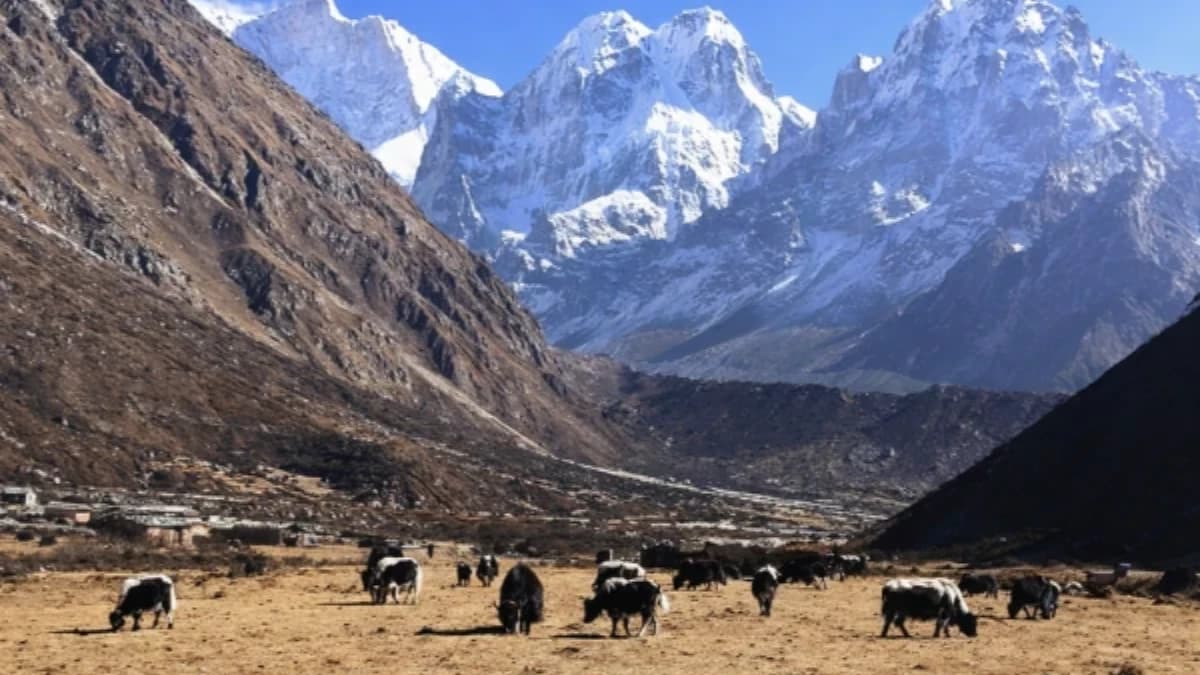
Wild does not mean empty. The conservation area is home to over five thousand people: Limbu, Rai, Sherpa, and Tibetan communities who have lived in these valleys for centuries. It is home to snow leopards, red pandas, Himalayan black bears, musk deer, and over three hundred bird species. And it is home to the third highest mountain on earth, a mountain so massive that it creates its own weather, its own ecosystem, and its own gravity on the imagination of anyone who sees it from the valleys below.
What wild means is this: fewer than two thousand foreign trekkers per year. Trails that are marked by cairns rather than signposts. Teahouses that are sometimes open and sometimes not, depending on the season and the owner's other commitments. And a landscape that is not managed for tourism but exists in its natural state: the forests unlogged, the rivers undammed, the wildlife undisturbed by the daily passage of hundreds of trekkers that the popular routes endure.
What is Kanchenjunga and how high does it reach?
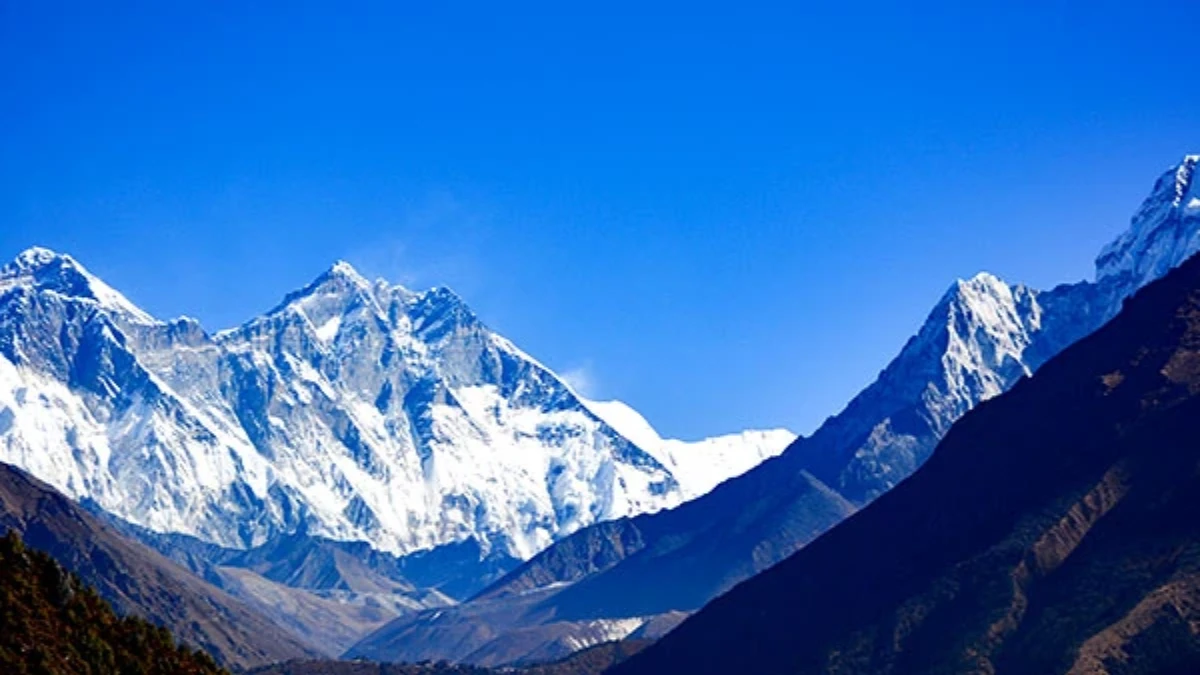
Kanchenjunga, the name is Tibetan, meaning "The Five Treasures of the Great Snow", is the third highest mountain in the world at 8,586 metres. It sits on the border between Nepal and India, with its summit technically in India's Sikkim state but its trekking approaches entirely in Nepal. The mountain has five summits, each said to contain one of five treasures: gold, silver, gems, grain, and holy scriptures.
The mountain was first climbed in 1955 by a British expedition led by Charles Evans (who had been deputy leader of the 1953 Everest expedition). In a gesture of respect for local religious beliefs, the climbers stopped just below the true summit, a tradition honoured by most subsequent expeditions. The Sikkimese and the Limbu people of eastern Nepal consider Kanchenjunga sacred, and the agreement not to stand on the highest point is a recognition of that sanctity that mountaineering culture has, unusually, maintained.
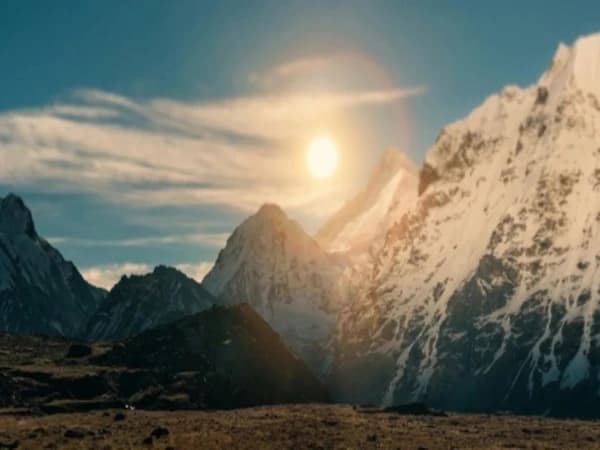
From the trekking trails of the conservation area, Kanchenjunga is not seen as a single peak but as a wall. The mountain's massive bulk, the north face, the south face, the interconnecting ridges, fills the northern horizon from multiple viewpoints, and the scale is difficult to process. From Pangpema (north base camp, 5,143 metres), the north face rises over three thousand metres directly above you, a vertical mile of ice and rock that makes the mountain feel not just high but impossibly, unreasonably, geologically extravagant in its dimensions.
What Does the Kanchenjunga Conservation Area Protect?
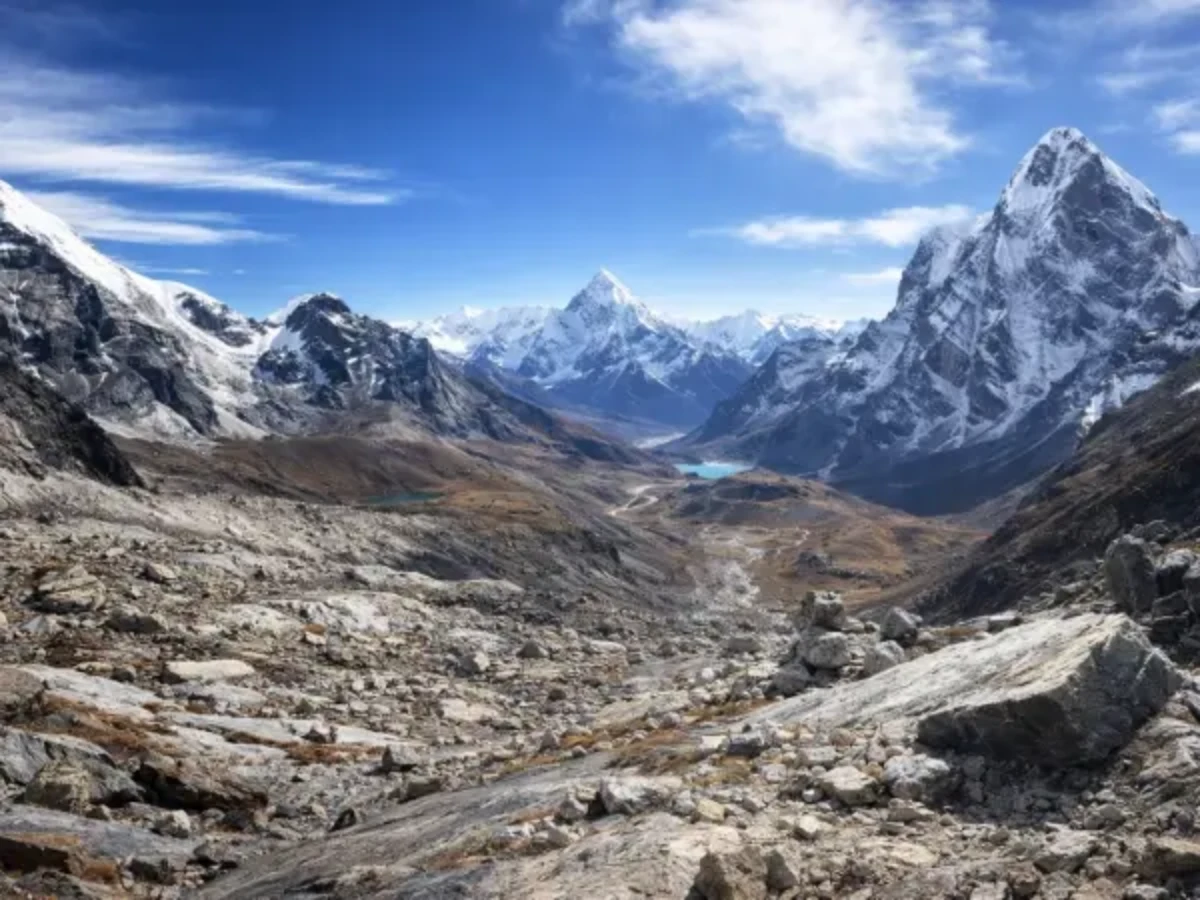
Biodiversity. The altitude range of the conservation area, from 1,200 to 8,586 metres, creates an ecological gradient that supports an extraordinary diversity of life. The lower forests (below 3,000 metres) are subtropical and temperate, sal, rhododendron, magnolia, bamboo, and host langur monkeys, wild boar, and over two hundred bird species. The middle zone (3,000-4,500 metres) is alpine, juniper, dwarf rhododendron, alpine meadow, and hosts Himalayan tahr, musk deer, and the elusive snow leopard. The upper zone (above 4,500 metres) is glacial, rock, ice, and the specific organisms that survive at extreme altitude.
The snow leopard population in the Kanchenjunga Conservation Area is one of the healthiest in Nepal. Camera trap surveys have documented individuals at altitudes between 3,500 and 5,500 metres, and the conservation area's low human traffic provides the undisturbed habitat that the species requires. Seeing a snow leopard on the Kanchenjunga trek is extraordinarily unlikely, the cats are masters of camouflage, but the blue sheep (bharal) that are their primary prey are commonly seen on rocky slopes above the trail, and where there are blue sheep, there are snow leopards.
The red panda, Nepal's most celebrated rare species, inhabits the bamboo forests of the conservation area between 2,200 and 4,800 metres. The Kanchenjunga region, along with the Langtang and Manaslu regions, is one of the species' strongholds in Nepal.
Communities. The conservation area is managed under a community-based model, similar to the Annapurna Conservation Area Project (ACAP), in which local communities participate in management decisions and receive a share of permit revenue. This model means that the conservation benefits reach the people who live within the boundary and who bear the costs of living alongside wildlife (crop raiding by bears, livestock predation by snow leopards) that conservation imposes.
The communities within the conservation area are ethnically diverse. The lower valleys are Limbu homeland, the Limbu people are the predominant indigenous group of eastern Nepal, with their own language, religion (Kirat), and cultural traditions. The upper valleys, particularly around Ghunsa, are Sherpa, culturally and linguistically Tibetan, practising Buddhism, and maintaining the pastoral and trading traditions that Sherpa communities throughout the Himalaya share.
What are the main trekking routes in Kanchenjunga Conservation Area?
North Base Camp (Pangpema, 5,143m): The most popular route. From Taplejung, the trail follows the Tamor and Ghunsa valleys north to Pangpema at the foot of Kanchenjunga's north face. Duration: ten to twelve days one way. The route passes through the full ecological gradient, subtropical forest, temperate forest, alpine meadow, glacial moraine, and the cultural transition from Limbu to Sherpa. The north face view from Pangpema is the trek's visual climax.
South Base Camp (Oktang, 4,730m): Less visited than the north, the south route diverges from the main trail at Ghunsa and follows the Simbua Khola valley west to the south face of Kanchenjunga. The south face is less vertical than the north but equally massive, and the solitude on this route is near-total.
Full Circuit: The ultimate Kanchenjunga experience, visiting both north and south base camps in a single trek. Duration: eighteen to twenty-one days. This is one of the longest standard treks in Nepal and one of the most demanding, not because of technical difficulty but because of the sustained remoteness, the limited infrastructure, and the altitude exposure at two base camps above 4,700 metres.
What permits do you need to trek Kanchenjunga Conservation Area?
The Kanchenjunga Conservation Area is a restricted zone. A restricted area permit is required, currently approximately ten US dollars per week (significantly cheaper than Mustang or Manaslu). A licensed guide is mandatory. The two-trekker minimum was scrapped on 22 March 2026, so a solo trekker can now hold the permit. The permit is obtained through a registered trekking company as part of the booking process.
The low permit cost is a deliberate policy choice, the Nepal government wants to encourage trekking in the Kanchenjunga region to distribute tourism revenue beyond the Everest and Annapurna corridors. The result is an unusual combination: a restricted area (with guide and group requirements) at an unrestricted price. The permit is not the barrier to Kanchenjunga trekking. The barrier is the remoteness, the long approach, the basic infrastructure, and the commitment of three weeks that the popular routes' shorter, more convenient options make unnecessary for most visitors.
What is the best time to trek Kanchenjunga Conservation Area?
October-November: The best months. Clear skies, stable weather, the trail at its driest. The cold at high altitude (north base camp can reach minus twenty at night) is manageable with proper gear. The rhododendron and magnolia forests at lower altitudes are post-monsoon green.
March-May: Spring brings warmer temperatures, rhododendron blooms at lower altitudes (March-April), and longer days. The visibility is slightly hazier than autumn but still good. Wildflowers on the alpine meadows above Ghunsa are at their best in May.
June-September: Monsoon. Not recommended. Heavy rain at lower altitudes, leeches in the forest, landslides on the trail, and poor visibility at altitude. The trails may be impassable in sections.
December-February: Winter. Possible for experienced trekkers with winter-grade gear, but the cold at altitude is extreme and some sections of the trail above 4,000 metres may be snow-covered. The lower sections (below 3,000 metres) are comfortable and the views are exceptionally clear.
Why Kanchenjunga
The question is not whether Kanchenjunga is worth the three weeks. The question is if you are the trekker for whom three weeks in Nepal's wildest protected area, walking to the base of the third highest mountain on earth through forests that hold snow leopards and villages that hold centuries of uninterrupted culture, is the trip you are looking for.
If you want convenience, go to Everest. If you want variety, go to Annapurna. If you want a circuit, go to Manaslu. These are magnificent treks. They deliver extraordinary journeys with well-developed infrastructure that makes them accessible to many different trekkers.
If you want wild, go to Kanchenjunga. If you want to walk for five days before seeing another foreigner. If you want to sleep in a teahouse where the owner's other job is farming and the menu is whatever she cooked for her family. If you want to stand at the base of a mountain that almost nobody stands at, looking at a face that almost nobody sees, in a silence that almost nobody hears. If you want that, and if you have three weeks, a good guide, and the fitness to handle sustained walking at extreme altitude in remote terrain, then the Kanchenjunga Conservation Area is the place where Nepal keeps its wildest mountains, its rarest animals, and its most authentic trekking experience.
The trail is long. The teahouses are basic. The mountain is enormous. And the experience, walking through the wildest major protected area in Nepal, to the foot of the third highest mountain on earth, with fewer companions than you would find in a Kathmandu restaurant, is the experience that the conservation area was protected to preserve. Not for the two thousand. For each one of the two thousand. Individually. Personally. In the specific, unrepeatable silence of a valley that the rest of the trekking world has not yet found.
The Kanchenjunga Conservation Area is where the Kanchenjunga Base Camp Trek takes place. The conservation permit is included in all our packages.
The Kanchenjunga Conservation Area is Nepal at its wildest. No teahouse menus, no WiFi, no other trekkers most days. Just forest, mountains, and the third-highest peak on earth getting closer every morning. If Everest feels too crowded and Annapurna feels too easy, Kanchenjunga is where you go.
Our Kanchenjunga Base Camp Trek is fully supported: we bring everything because there is nothing to buy on the trail.
WhatsApp:+977 9810351300
Email:[email protected]
Written by Shreejan Simkhada, CEO of The Everest Holiday and third-generation Himalayan guide. TAAN Member #1586.
Kanchenjunga Conservation Area covers our full 19-day trek. Our Kanchenjunga Base Camp Trek (19 Days) is private (your group only, no strangers), 2027 dates open, From USD $1655. WhatsApp us for tailored 2027 dates and current departures.
 Chat with Shreejan