

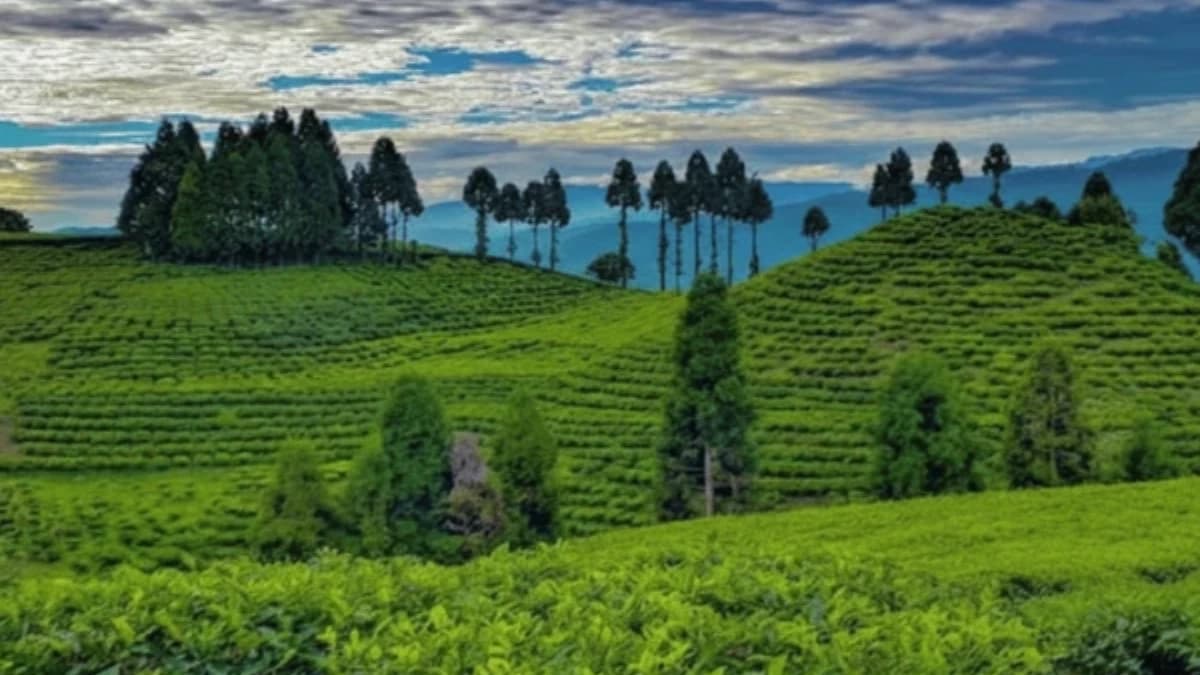
Short answer: Illam is Nepal's tea capital in the far east, a district of green tea gardens near the Indian border that produces over seventy percent of Nepal's tea and has grown it since the 1860s. It is a lowland trip, quite different from the trekking regions. Ask us to add it to a tour, or start with our 19-day Kanchenjunga Base Camp trek in the same corner of Nepal.
Four hours south of Taplejung, in the eastern hills of Nepal where the altitude drops from Himalayan to subtropical and the air thickens with moisture and the scent of oxidising tea leaves, there is a landscape that looks nothing like the Nepal of postcards and trekking brochures. No snow-capped peaks. No prayer flags. No teahouses serving dal bhat to altitude-struck trekkers. Instead: rolling green hills covered in tea bushes. Mist that settles in the valleys at dawn and burns off by mid-morning to reveal views that stretch to the Indian plains. And the specific, civilised, surprisingly European beauty of a cultivated landscape that has been producing some of Asia's finest tea since the 1860s.
Illam is Nepal's tea capital. The district (in Province 1, near the Indian border, in the far east of the country) produces over seventy percent of Nepal's tea, on plantations that climb the hillsides in contoured rows of emerald green. The tea is orthodox: hand-plucked, traditionally processed, comparable in quality to the Darjeeling teas produced on the other side of the border in India's West Bengal. The comparison is not coincidental: Illam and Darjeeling share the same latitude, the same altitude range (1,000-2,000 metres), the same monsoon pattern, and the same soil: the only difference is the international boundary that runs between them.
Travellers who visit Illam discover a Nepal that the trekking industry has made invisible. A Nepal of agriculture rather than adventure. Of misty mornings rather than frozen dawns. Of tea shops rather than teahouses. And of a beauty, green, cultivated, gentle, that requires neither crampons nor altitude acclimatisation to appreciate.
What kind of tea is grown in Illam Nepal?
Illam tea is orthodox tea, processed using traditional methods that preserve the leaf's shape and complexity, as opposed to CTC (crush-tear-curl) processing that produces the uniform granules used in most tea bags. The orthodox process is slower, more labour-intensive, and produces tea with a subtlety and range of flavour that CTC tea cannot match.
The tea is grown at altitudes between 1,000 and 2,000 metres, the sweet spot where cool temperatures, adequate rainfall, and well-drained soil combine to produce leaves with the specific balance of tannins, amino acids, and aromatic compounds that define quality tea. The first flush (spring harvest, March-April) produces delicate, floral tea with light colour and high aroma. The second flush (summer harvest, June-July) produces fuller-bodied, muscatel tea with amber colour and deeper flavour. The autumn flush produces strong tea suitable for blending.
The tea factories in Illam are mostly small operations, family-owned or cooperative, that process the leaves picked from surrounding smallholder farms. Unlike the large plantation model of India and Sri Lanka, Nepal's tea industry is primarily smallholder-based: individual farmers grow tea on their own land and sell the fresh leaves to local factories for processing. This model distributes the economic benefits of tea production more widely than the plantation system and maintains the small-scale, community-based character of Illam's agriculture.
Visiting a tea factory is one of Illam's essential experiences. The process, withering, rolling, oxidation, drying, is visible in a single facility, and the factory manager or owner will typically explain each stage while you watch the leaves transform from fresh green to the curled, dark, aromatic product that arrives in your teacup. Tasting is part of the visit, multiple grades, multiple flushes, brewed in proper teaware, and the difference between a first-flush Illam and a supermarket tea bag is the difference between wine and grape juice.
How Do You Get to Illam?
Illam is accessible by road from multiple directions:
From Kathmandu: Domestic flight to Bhadrapur (Chandragadhi Airport, approximately one hour), then drive north to Illam (three to four hours through the eastern Terai and up into the hills). Alternatively, bus from Kathmandu to Birtamod (twelve to fourteen hours overnight), then local bus or jeep to Illam (three to four hours).
From Darjeeling (India): Cross the border at Kakarbhitta-Panitanki, then drive north to Illam (four to five hours). This makes Illam a natural extension for travellers combining Nepal and India's eastern regions.
From Taplejung (Kanchenjunga trailhead): Drive south from Taplejung to Illam (four to five hours). This combination, Kanchenjunga trek followed by Illam tea country, is one of the most distinctive itineraries in Nepal, combining the most remote major trek with the most civilised agricultural region.
What are the best things to see and do in Illam?
Tea garden walks. The tea gardens cover the hillsides in rows of manicured green, a landscape that invites walking. Several gardens welcome visitors for guided walks among the bushes, explaining the cultivation process and the seasonal rhythms that govern plucking and processing. The visual effect of tea bushes contoured across a hillside, row upon row of identical green, climbing toward the mist, is hypnotic and photogenic in a way that differs completely from the dramatic peaks-and-glaciers photography of the Himalaya.
Kanyam tea garden. The most famous and most visited tea estate in Illam, Kanyam sits at approximately 1,600 metres with views across the tea-covered hills to the Indian plains below. The garden has a small visitor centre and a tea shop where you can sample locally produced tea while looking at the bushes it grew on. Early morning, when the mist sits in the valleys and the tea pluckers move through the rows with their baskets, is the best time for photography.
Antu Danda. A viewpoint at 2,155 metres, above the tea zone, from which the sunrise over the eastern Himalaya, including Kanchenjunga, the world's third highest mountain, is visible on clear mornings. The drive to Antu Danda from Illam takes approximately two hours, and the sunrise view, Kanchenjunga catching the first gold while the tea gardens below are still in shadow, combines the two things that make eastern Nepal unique: mountains and tea.
Mai Pokhari. A sacred lake at 2,090 metres, surrounded by dense forest, designated as a Ramsar Wetland of International Importance. The lake is religiously significant to both Hindus and Buddhists and is the site of a festival during Bala Chaturdashi (November-December). The walk to the lake from the nearest road takes one to two hours through beautiful hill forest.
Sandakpur. A peak at 3,636 metres on the Nepal-India border, offering one of the widest Himalayan panoramas in eastern Nepal, from Everest to Kanchenjunga. The trek to Sandakpur from Illam takes two to three days and provides mountain views combined with tea country scenery, a combination unique to this region.
Where Should You Stay in Illam?
Illam town has basic to mid-range hotels, clean, comfortable, affordable (ten to thirty dollars per night). Some tea estates offer homestay accommodation, sleeping at the factory owner's house, eating home-cooked meals, and waking to the mist-and-tea-bush views that make Illam's mornings distinctive.
The homestay experience is recommended for travellers who want to understand Illam beyond the tourist surface. The families who host are typically involved in tea production, they grow, pluck, process, or trade tea, and their knowledge of the industry, shared over meals and evening conversation, provides context that a hotel stay cannot.
When is the best time to visit Illam tea gardens?
March-May (first flush): The tea is at its finest. The gardens are at their busiest, pluckers in the rows, factories processing at full capacity. The weather is warm and pleasant. The rhododendrons in the surrounding forests bloom in March-April. This is Illam's prime season.
October-November: Post-monsoon clarity. Clear views from Antu Danda. Comfortable temperatures. The autumn flush is being processed. Good season for combining Illam with Kanchenjunga trekking.
June-September: Monsoon. Heavy rain. Lush and dramatic, the greenest the tea gardens will ever be, but wet, muddy, and with limited views. The second flush (the most flavourful tea) is harvested during monsoon, so factory visits are productive even when outdoor activities are limited.
Is Illam good for trekking or just tea gardens?
Illam is not a trekking destination. It is the opposite, a place where the terrain is gentle, the altitude is comfortable, and the experience is agricultural rather than alpine. For trekkers, Illam works as a pre-trek or post-trek complement:
Before a Kanchenjunga trek: Fly to Bhadrapur, spend two days in Illam (tea gardens, Antu Danda sunrise, factory visit), then drive to Taplejung and start the trek. This sequence acclimatises you gently and provides a cultural counterpoint to the mountain wilderness ahead.
After any eastern Nepal trek: Descend from the mountains to the tea hills. The shift is total, altitude cold replaced by subtropical warmth, teahouse dal bhat to home-cooked meals, from granite peaks to green tea rows, is a sensory reset that makes the return to Kathmandu less abrupt.
As a standalone trip: For travellers who do not trek, or who have done their trekking and want a different Nepal, Illam offers three to four days of gentle touring that is accessible, affordable, and unlike anything else in the country. No altitude. No crampons. No dal bhat. Just tea, mist, green hills, and the quiet pleasure of sitting on a hillside in eastern Nepal, holding a cup of first-flush orthodox, watching the pluckers move through the rows below, and understanding that Nepal is not only mountains. It is also this. Green and gentle and steeped in a different kind of beauty.
Ilam is the gateway to eastern Nepal and the starting point for the Kanchenjunga Base Camp Trek. Most trekkers fly to Bhadrapur and drive through Ilam to reach Taplejung.
Illam is where Nepal grows its finest tea, and almost nobody visits. The rolling green hills, the tea pickers in the morning mist, and the taste of freshly processed first-flush tea at the factory door: it is the Darjeeling experience without the crowds and at a fraction of the price. If you are in eastern Nepal for the Kanchenjunga trek, adding two days in Illam is worth the detour.
We can add Illam to any eastern Nepal itinerary. Ask us about combining it with the Kanchenjunga trek.
WhatsApp:+977 9810351300
Email:[email protected]
Written by Shreejan Simkhada, CEO of The Everest Holiday and third-generation Himalayan guide. TAAN Member #1586.
Illam tea gardens: eastern Nepal addition to our Pokhara tour. Our Kathmandu & Pokhara Tour (7 Days) is private (your group only, no strangers), 2027 dates open, From USD $749. WhatsApp us for tailored 2027 dates and current departures.


 Chat with Shreejan