10kg in your duffel, 5-8kg on your back. Here's exactly what to pack, what to leave in Kathmandu, and how to weigh everything before you fly to Lukla.
Govt Regd. No.: 147653/072/073
Travel Agency Licence: 2838/072
How Much Luggage Can I Bring on a Nepal Trek?

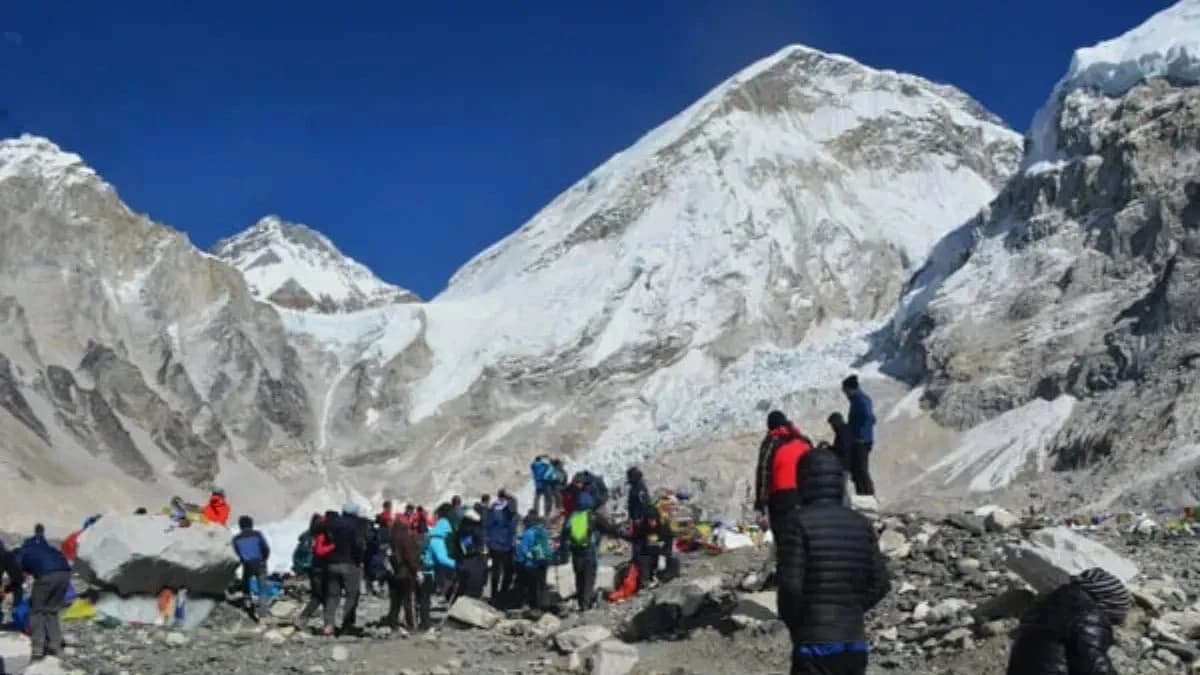
Short answer: On our Standard tier, a porter carries up to 20 kg in total, which is 10 kg for each of two trekkers. That is the government limit for one porter. On Luxury you have your own porter, and your bag can weigh up to 20 kg. On Budget there is no porter. You carry a daypack of about 5 to 8 kg yourself, and Lukla flights check weight at the airport. See the packing advice for our 12-day Everest Base Camp trek.
How Much Luggage Can I Bring on a Nepal Trek?
Here's the scene. You're standing in your living room the night before your flight to Kathmandu, staring at a pile of gear that would make a Sherpa weep. Two jackets, three fleeces, a sleeping bag you've never tested, hiking boots that still have the tags on, and a toiletry bag that weighs more than some people's entire daypack.
You're not alone. Nearly every trekker we've guided over the past decade has had this exact moment of panic. The good news: Nepal trek luggage rules are simple once somebody explains them properly. The bad news: nobody ever does, which is why half the trekkers who arrive in Kathmandu end up stuffing clothes into hotel storage lockers at the last minute.
My name is Shreejan, and I run The Everest Holiday. I've watched hundreds of trekkers pack, repack, and then pack again. Here's the honest, practical guide I wish someone had written years ago.
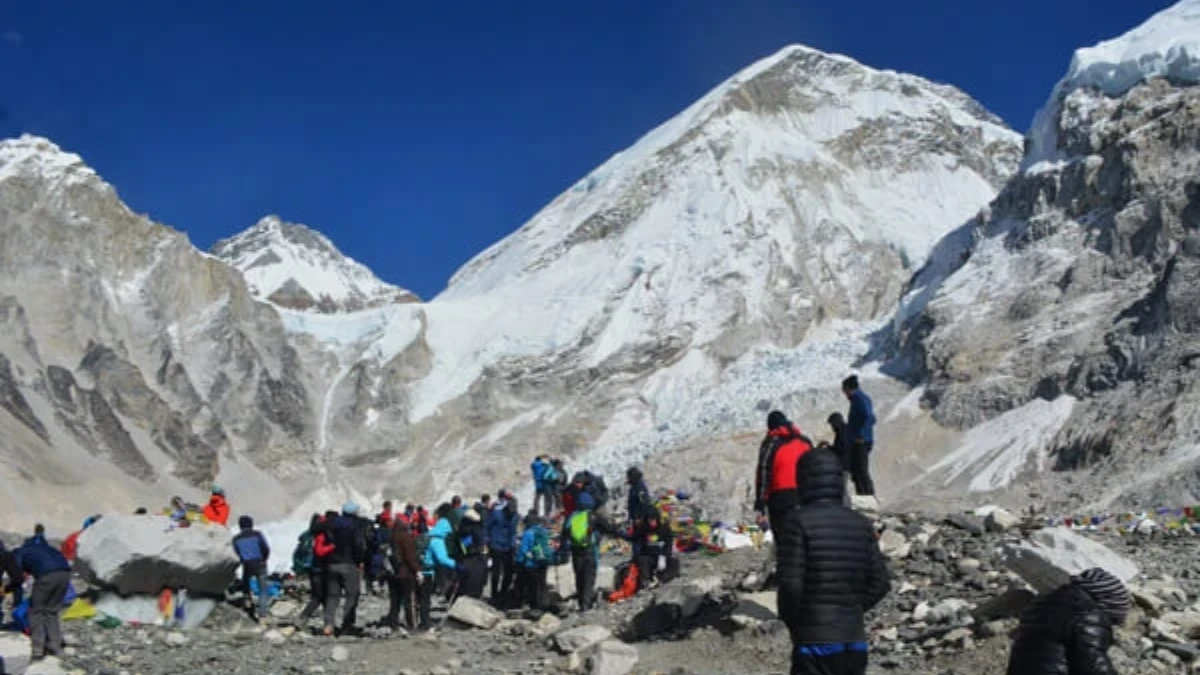
How much weight does a porter carry on a Nepal trek?
10 kilograms in your duffel bag, carried by your porter. 5 to 8 kilograms in your daypack, carried by you. That's the whole system.
Your porter carries a maximum of 20kg total, split between two trekkers. So your share of the porter load is 10kg. This isn't a guideline or a suggestion. It's a hard limit enforced at the trailhead, and on domestic flights to Lukla it's enforced even more strictly at the airport check-in counter.
Porters are the backbone of the Himalayas. We can only do this work because they carry the supplies on their backs. Government rules say a porter should carry no more than 20 kg. With your own porter (Luxury), your bag can weigh up to 20 kg. On Standard treks, two guests share one porter at 10 kg each. We have seen porters on the trail carry far more, which is why we keep to our own lighter standard.
Your daypack sits on your own back all day, every day, for however many days your trek lasts. If you load it with 10kg because you "might need" that extra layer, your knees and shoulders will be screaming by lunchtime on Day 2. Keep it light. Five to eight kilograms covers everything you'll actually need between teahouses.
Our senior guides tell every group the same thing on the morning of Day 1. If you haven't touched it by Day 3, you don't need it. They are right every single time.
What are the luggage weight limits by trek type in Nepal?
Not all treks are equal for luggage. A 5-day walk to Poon Hill has different demands than a 20-day expedition around Manaslu. Here's how it breaks down:
| Trek Type | Duration | Porter Duffel Limit | Daypack (You Carry) | Total Per Person |
|---|---|---|---|---|
| Short teahouse treks (Poon Hill, Mardi Himal) | 4-7 days | 10 kg | 5-6 kg | 15-16 kg |
| Classic teahouse treks (EBC 12-day, ABC, Langtang) | 8-14 days | 10 kg | 5-8 kg | 15-18 kg |
| Long circuit treks (Annapurna Circuit, Manaslu) | 14-21 days | 10 kg | 6-8 kg | 16-18 kg |
| High-altitude expeditions (Three Passes, Island Peak) | 16-22 days | 10 kg | 7-8 kg | 17-18 kg |
| Restricted region treks (Upper Mustang, Kanchenjunga) | 14-25 days | 10 kg | 6-8 kg | 16-18 kg |
Notice something? The porter duffel limit stays at 10kg no matter if you're trekking for 5 days or 25. The difference is what goes inside it. Longer treks don't mean more clothes. They mean smarter choices.
What should I pack in the porter duffel for a Nepal trek?
Your duffel bag is your main luggage. It stays at the teahouse each night while you walk with just your daypack. Your porter picks it up each morning and carries it to the next stop. You won't see it again until late afternoon.
This means everything in the duffel needs to be stuff you can live without during the walking day. Here's what belongs inside:
- Sleeping bag (rated to -15°C for high-altitude treks like Everest Base Camp or Island Peak). Our Standard and Luxury packages include one, so check before buying.
- Spare clothing: 2-3 thermal tops, 2 trekking trousers, underwear for 4-5 days, 4-5 pairs of merino socks
- Down jacket (again, included in our Standard and Luxury packages)
- Fleece or warm mid-layer
- Waterproof overtrousers
- Camp shoes: sandals or lightweight trainers for teahouse evenings
- Toiletries: travel-sized everything, no full bottles
- First aid kit: basics only (plasters, paracetamol, Diamox if prescribed, antiseptic wipes)
- Sleeping bag liner: adds warmth and keeps things hygienic
Pack everything inside dry bags or heavy-duty bin liners within the duffel. Rain happens. River crossings happen. If your sleeping bag gets soaked at 4,800 metres, you're in for a miserable night.
Choosing the Right Duffel
Soft-sided, 65 to 80 litres, with no rigid frame. Porters carry duffels on their backs using a traditional headstrap and tumpline system. Hard-shell suitcases are impossible to balance and will be refused at the trailhead. A good duffel with lockable zips costs $30-50 in Kathmandu's Thamel district if you don't already own one.
What should I carry in my daypack while trekking in Nepal?
Your daypack is everything you need while walking. Think of it as your survival kit for the 5-7 hours between leaving one teahouse and arriving at the next.
- 1 litre of water (minimum, 2 litres above 4,000m)
- Rain jacket: waterproof, windproof, always accessible
- Warm layer: fleece or light down for rest stops
- Snacks: energy bars, nuts, chocolate, dried fruit
- Sun protection: SPF50 sunscreen, lip balm with SPF, sunglasses (UV400 essential)
- Camera or phone
- Power bank (20,000mAh minimum)
- Head torch with spare batteries
- Buff or neck gaiter
- Trekking poles (carried, not packed, these don't count towards your weight)
A 30 to 35 litre daypack with a proper hip belt is ideal. The hip belt transfers weight off your shoulders and onto your hips, which makes an enormous difference by Day 6 or 7 when fatigue starts to build.
How much are excess baggage fees on the Lukla flight?
If your trek starts with a flight to Lukla, which applies to the classic EBC trek, Three Passes, and Island Peak, you need to know about domestic airline weight limits.
Tara Air and Yeti Airlines both publish the same allowance for their mountain flights, which covers Kathmandu (Tribhuvan) or Manthali (Ramechhap) to Lukla Tenzing-Hillary Airport and Pokhara to Jomsom:
- Checked baggage: 10kg per person (your duffel)
- Hand carry: 5kg per person (your daypack)
- Total: 15kg per person, strictly enforced
They weigh your bags at check-in. Every time. The small aircraft that fly to Lukla have strict payload limits because of the short runway and mountain terrain, and if the flight is full, an extra bag may simply not go on. On its other routes, such as Kathmandu to Pokhara, Yeti allows 20kg checked plus 5kg hand carry, and it publishes an excess rate of NPR 150 per kilogram on that sector. We have not found a published excess rate for Lukla or Jomsom, and other airlines set their own limits, so check with us for the current figure before you fly. Your ticket is always the final word. Airline-by-airline detail is in our Nepal domestic flights guide for trekkers.
This is the number one reason trekkers end up leaving luggage at their Kathmandu hotel. If your total is over 15kg, you need to trim it before you reach the airport.
If you'd rather avoid the Lukla flight entirely, our Everest Base Camp by Road trip reaches the same trailhead by jeep. No weight limits, no flight delays, no Lukla stress.
What should I leave behind in Kathmandu before trekking?
Most hotels in Thamel offer free luggage storage for trekkers. We arrange this for every group. Anything you don't need on the trail stays safely locked at your hotel until you return.
Leave behind:
- City clothes and nice shoes
- Laptop (unless you absolutely need it for work)
- Books, download audiobooks or e-books to your phone instead
- Jeans, cotton t-shirts, anything cotton (cotton kills warmth when wet)
- Extra electronics, chargers for devices you're leaving behind
- Anything "just in case", if you can't name exactly when you'll use it, leave it
I've seen trekkers store everything from hair straighteners to camping chairs. There's no judgement. But the trekkers who enjoy themselves most are always the ones who packed least.
How do I weigh my trek luggage before leaving home?
Buy a cheap luggage scale. They cost under $10 and they'll save you a panicked repacking session at Kathmandu airport at five in the morning.
Here's the method our guides recommend:
- Step 1: Lay out everything you plan to bring. All of it. On the floor.
- Step 2: Remove one third. Yes, one third. You'll still have too much, but this gets you close.
- Step 3: Pack your duffel with everything the porter will carry. Weigh it. If it's over 10kg, remove items until it's under.
- Step 4: Pack your daypack with your walking essentials. Weigh it. If it's over 8kg, something needs to move to the duffel or go home.
- Step 5: Walk around your house for 20 minutes wearing the daypack. If your shoulders ache after 20 minutes, imagine 6 hours uphill at altitude. Lighten it.
Trek-Specific Luggage Tips
Everest Region Treks
The Everest Base Camp trek and short trek to Namche Bazaar both involve the Lukla flight, so the 15kg total limit (10kg checked plus 5kg hand carry) applies. Temperatures above 4,000m can drop to -20°C before dawn, so your sleeping bag and down jacket are non-negotiable weight. Budget the rest around those items.
Annapurna Region Treks
The Annapurna Circuit and Annapurna Base Camp trek start from Pokhara or nearby road heads, so there's no flight weight restriction. You still want to keep your duffel at 10kg for porter welfare, but there's more flexibility in getting extra gear to the trailhead. The lower starting altitudes mean you can pack lighter warm layers for the first few days and add rental gear in Pokhara if needed.
Manaslu and Restricted Areas
The Manaslu Circuit, Upper Mustang, Kanchenjunga, and even the Langtang Valley trek in its more remote northern sections are longer, more remote treks. Teahouses are more basic, and resupply points are fewer. Bring a complete set of warm gear from Day 1 because you won't find rental shops along the trail. A good sleeping bag liner is especially important here, as blankets in remote teahouses have seen better days.
Short and Easy Treks
For the Poon Hill trek or Mardi Himal trek, you can often get away with a single 40-50 litre backpack and no porter at all. Maximum altitude is lower, duration is shorter, and teahouses are well-equipped. That said, hiring a porter for $15-20 a day lets you walk with a featherweight daypack, and the difference in enjoyment is massive. Related: Is a Porter Worth It? The Honest Guide.
Is 10kg of luggage enough for a two-week Nepal trek?
"What if I forget something essential?"
Kathmandu's Thamel district has hundreds of trekking shops selling everything from sleeping bags to trekking poles to thermal underwear. Namche Bazaar, three days into the Everest trek, has another dozen shops. You can buy or rent almost anything you've forgotten. The quality of Thamel gear has improved hugely in recent years, and for items you'll only use once, it makes more financial sense than buying premium brands at home.
"What if my luggage gets lost on the Lukla flight?"
It's rare, but it happens. Your duffel goes on the same small aircraft as you, and the flight is only 25 minutes, so the logistics are simple. But as a precaution, always keep your essential medication, passport, phone, power bank, and one warm layer in your daypack (carry-on). If your duffel is delayed by a flight, you'll survive the night with what's on your back.
"What if I overpack and the airline won't take my bag?"
This is why you weigh at home. But if you arrive at Ramechhap or Tribhuvan over the limit, you have two options: pay the excess fee (roughly $1.50-2.25 per kilo) or leave the extra weight with your hotel driver, who will store it until you return. We always have a vehicle at the airport for exactly this reason.
"Is 10kg really enough for two weeks?"
Yes. You're not packing for a holiday where you need different outfits every day. You're trekking. You'll wear the same walking clothes most days, wash them on rest days, and rotate through two or three sets. Every experienced trekker will tell you the same thing: you pack too much on your first trek and half as much on your second.
Frequently Asked Questions
Can I bring a suitcase instead of a duffel bag?
No. Hard-shell suitcases cannot be carried by porters, who balance loads using a headstrap and tumpline system. Soft-sided duffel bags are the only practical option. You can buy one in Kathmandu for $30-50 if you don't own one.
Do trekking poles count towards my weight limit?
On the trek, no. Trekking poles are carried in hand, not packed. On domestic flights, they must go in checked baggage (your duffel) and count towards the 10kg checked limit. Collapsible poles that fit inside a duffel are ideal.
Can I hire extra porters for more luggage?
Yes. An additional porter costs USD 25 per day, plus 13% VAT and a 3.5% bank charge on top. But honestly, if you need an extra porter, you've packed too much. We've guided trekkers on 20-day expeditions with a single 10kg duffel. It's always enough.
What about camera equipment and drones?
Camera gear goes in your daypack where you can access it and protect it. A mirrorless camera with one lens adds about 1-1.5kg. Drones are technically legal in most trekking areas but require a permit from the Civil Aviation Authority of Nepal. The permit process takes time and costs money, so plan ahead. Drone batteries count towards your flight weight limit.
Should I bring my own sleeping bag or rent one?
If you're trekking above 4,000m, a good sleeping bag is essential. Our Standard and Luxury packages include a sleeping bag rated to -15°C. Budget trekkers can rent one in Kathmandu (NPR 100-150 per day, roughly $0.75-1.10 USD). Buying a quality bag at home is the best option if you plan to trek again in future.
The Golden Rule of Nepal Trek Luggage
Pack for the trek, not for the trip. Your Kathmandu days need almost nothing. Your walking days need even less than you think. And every extra kilogram you carry above 4,000 metres feels like three.
If you're still unsure what to bring for your specific trek, send me a message. I've packed for every route in Nepal and I'm happy to look at your gear list and tell you what stays and what goes.
Plan Your Trek With Shreejan
The Everest Holiday has guided trekkers through the Himalayas for over a decade with ratings of 4.9 on TripAdvisor, 4.9 on Google and 4.7 on Trustpilot, from more than 300 reviews.
WhatsApp:+977 9810351300
Email:[email protected]
TAAN Member: #1586 | Tourism Licence: 2838/072
How much luggage for EBC? Our porters carry up to 20kg, which is 10kg each for two trekkers. Our Everest Base Camp Trek (12 Days) is private (your group only, no strangers), 2027 dates open, From USD $1399. WhatsApp us for tailored 2027 dates and current departures.
Planning a trip to Nepal?
Drop us your details and tell us what you have in mind. We will put together a personalised plan and get back to you.
Not sure which Nepal trek is right for you?
Take our free 2-minute quiz and get personalised recommendations based on your fitness, experience, and travel style.
Find Your Perfect Trek →Need Help? Call Us+977 9810351300orChat with us on WhatsApp
Latest Travel Blogs
Christmas and New Year Treks from Pokhara 2026/27: 3 to 5 Days
<p>Short treks from Pokhara for Christmas and New Year 2026/27: Panchase 3 days, Poon Hill 4 days and Mardi Himal 5 days. Weather, snow, what is open, and prices by group size.</p>
Read More
Thamdanda and Surke: The Road Head for Everest Base Camp by Road
Thamdanda is the road head where our Everest Base Camp trek by road starts and ends on foot. How to get there from Phaplu and what the first walk to Paiya is like.
Read MorePoon Hill Trek Permits 2027: ACAP, TIMS, Cost and What You Need
Poon Hill needs two permits: ACAP at NPR 3,000 and a TIMS card at NPR 2,000. Who arranges them, where they are checked, SAARC rates and the 2027 trek prices.
Read More Chat with Shreejan