
The most difficult treks in Nepal ranked by a local guide. Three Passes, Kanchenjunga, GHT, Mera Peak. Altitude, technical difficulty, and honest failure rates.
Govt Regd. No.: 147653/072/073
Travel Agency Licence: 2838/072
The Hardest Treks in Nepal: 7 Routes That Will Push You to Your Limits

Short answer: Among treks of normal length, the hardest in Nepal are the trekking peaks Mera Peak (6,476 m) and Island Peak (6,165 m), because they add glacier travel and fixed ropes, and the hardest non-technical trek is the Everest Three Passes, which crosses Kongma La (5,535 m), Cho La and Renjo La. The Great Himalayan Trail is hardest of all simply because it takes about 150 days. If you already have one high trek behind you, our Everest Three Passes trek is the natural next step.
The Hardest Treks in Nepal, Ranked by Someone Who's Done Them
People ask me which trek is the hardest in Nepal like there's a simple answer. There isn't. "Hard" means different things. The Three Passes trek is physically brutal but technically straightforward. Island Peak requires actual climbing skills but is shorter. The Great Himalayan Trail is neither the highest nor the most technical: it's just relentlessly, absurdly long.
I've walked, climbed, or guided every route on this list. Some of them more than once. Some of them I never want to do again. Here they are, ranked from hard to nearly impossible, with the honest truth about what each one demands.
What is the hardest trek in Nepal?
| Trek | Duration | Max Altitude | Technical Climbing | Daily Hours | Failure Rate | Difficulty |
|---|---|---|---|---|---|---|
| Annapurna Circuit + Tilicho Lake | 16-18 days | 5,416m (Thorong La) | None | 6-8 | ~15% | 7/10 |
| Manaslu Circuit | 12-14 days | 5,160m (Larkya La) | None | 6-8 | ~15% | 7.5/10 |
| Makalu Base Camp | 18-20 days | 5,009m | None | 6-8 | ~20% | 8/10 |
| Everest Three Passes | 17-19 days | 5,535m (Kongma La) | Minimal | 7-9 | ~25% | 8.5/10 |
| Kanchenjunga Base Camp | 19-22 days | 5,143m | None | 6-8 | ~20% | 8.5/10 |
| Mera Peak | 14-16 days | 6,476m | Yes (glacier, fixed rope) | 6-10 | ~30% | 9/10 |
| Island Peak | 14-16 days | 6,165m | Yes (glacier, fixed rope, jumar) | 6-12 | ~25% | 9/10 |
| Great Himalayan Trail | 140-160 days | 6,146m (multiple passes) | Some sections | 7-10 | ~70% | 10/10 |
Those failure rates aren't official statistics. They're my estimates based on years of guiding and talking to other guides. "Failure" means turning back before completing the intended route, usually due to altitude sickness, injury, exhaustion, or weather.
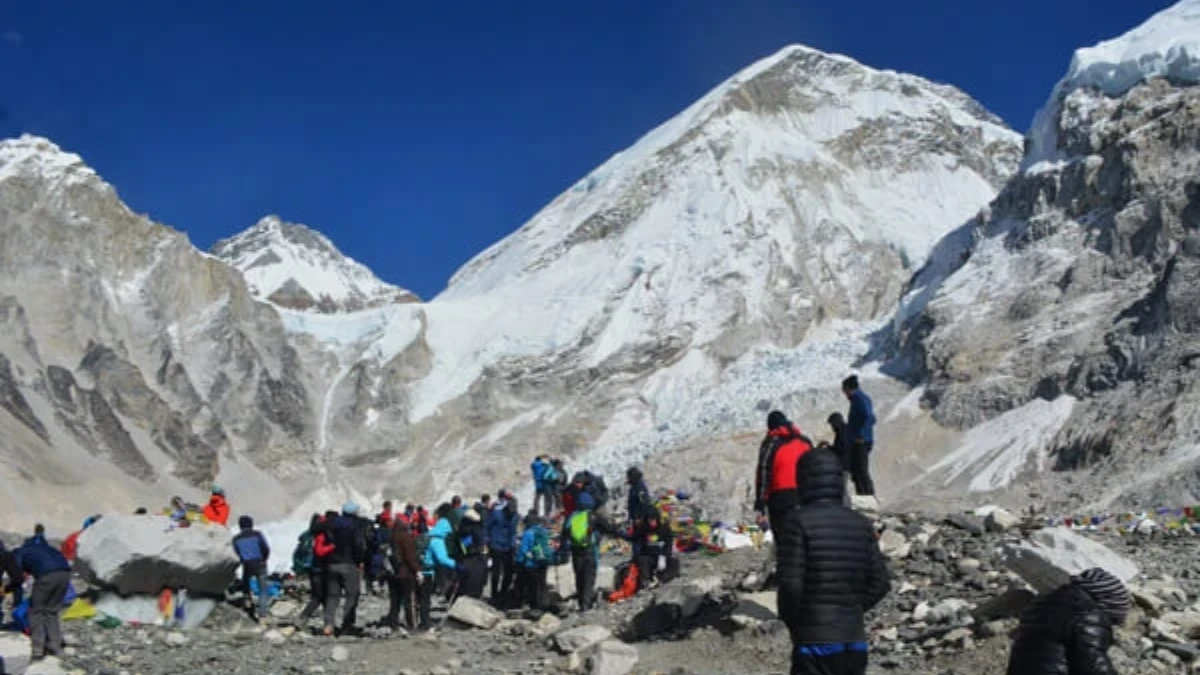
Now let me explain each one.
How hard is the Annapurna Circuit with Tilicho Lake?
The Annapurna Circuit is the entry point to serious Nepal trekking. Adding Tilicho Lake (one of the world's highest lakes at 4,919 metres) pushes it from "challenging" into "hard."
Why it's hard: The Thorong La pass at 5,416 metres is the crux. It's a long day: you start at 4,450 metres in Thorong Phedi, climb 966 vertical metres, then descend 1,600 metres to Muktinath. Most trekkers set off at 4 AM and don't arrive until 2-3 PM. The altitude hits hard. The cold at the top is vicious. And if the weather turns, there's nowhere to shelter on the exposed pass.
The Tilicho Lake detour adds 2-3 days and takes you to nearly 5,000 metres on a trail that's narrow, exposed, and prone to rockfall. The final approach traverses a steep scree slope where one wrong step sends you sliding. I've seen people freeze on that section, unable to move forward or back.
Who should attempt it: Fit trekkers with at least one previous high-altitude experience. If Poon Hill was comfortable, you're probably ready for this. If it was a struggle, you're not.
The honest negative: The eastern half of the circuit has been ruined by road construction. You'll walk on dusty jeep tracks for days with trucks passing. The western side (Manang to Thorong La to Muktinath) is still spectacular, but the full circuit isn't the wilderness see it was 15 years ago.
How hard is the Manaslu Circuit trek?
The Manaslu Circuit is what the Annapurna Circuit used to be. Remote, quiet, and beautiful. It circumnavigates Mount Manaslu (8,163m), the eighth highest mountain on earth, crossing the Larkya La pass at 5,160 metres.
Why it's hard: Remoteness. Once you're past Samagaon, there's very little between you and the pass. If something goes wrong (altitude sickness, injury, bad weather), evacuation is difficult. Helicopter rescue depends on weather, and weather above 4,000 metres is unpredictable.
The Larkya La itself is less dramatic than Thorong La but still demanding. The approach from the south involves glacier moraine and the trail can be hard to follow in poor visibility. Several people have died on this pass, usually from going off-route in whiteout conditions.
The trail also crosses landslide zones. The stretch between Jagat and Philim was rebuilt after massive landslides in 2015 and remains unstable. In monsoon season (don't trek here then), the trail can simply disappear.
Who should attempt it: Experienced trekkers who want something quieter than Everest or Annapurna. You need to be self-sufficient mentally: days pass without seeing other trekkers. If you thrive on solitude, this is heaven. If you need social energy, you'll find it lonely.
The honest negative: The restricted area permit costs $100-150 USD depending on season, and you must trek with a registered agency. This adds cost. Also, the teahouses in the Manaslu region are more basic than Annapurna or Everest. Expect cold rooms, limited menu, and sometimes no menu at all: you eat what they have.
Do you need a guide for the Makalu Base Camp trek?
Makalu is the fifth highest mountain in the world at 8,485 metres. Its base camp trek is one of the most beautiful and most punishing walks in Nepal.
Why it's hard: Length and isolation. The trek takes 18-20 days through terrain that ranges from subtropical jungle to arctic high altitude. There are no teahouses for much of the route: you're camping. The trail crosses the Shipton La and Keke La passes, both above 4,000 metres, before descending into the Barun Valley and climbing to base camp at 5,009 metres.
The Barun Valley approach is extraordinary: untouched, wild, and almost never visited. But it's also relentless. The trail gains and loses thousands of metres across rough, unmarked terrain. Navigation requires an experienced guide. Getting lost here isn't a minor inconvenience: it's a survival situation.
Who should attempt it: Experienced trekkers comfortable with camping, remote environments, and long days. You should have completed at least one high pass trek (Thorong La, Larkya La, or similar) before attempting Makalu. Physical fitness needs to be high: this isn't a trek where you can have a bad day and recover at a comfortable teahouse.
The honest negative: Logistics. Because this is a camping trek, you need a full support team: guide, cook, porters, tents, food supplies. This makes it significantly more expensive than teahouse treks. Budget $2,500-4,000 per person for a properly supported expedition.
How hard is the Everest Three Passes trek?
The Everest Three Passes trek is the hardest mainstream trekking route in Nepal. You cross three passes above 5,300 metres in 17 days: Kongma La (5,535m), Cho La (5,420m), and Renjo La (5,360m), while also visiting Everest Base Camp and Gokyo Lakes.
Why it's hard: Sustained altitude. Unlike the Annapurna Circuit, where you cross one high pass and descend, the Three Passes keeps you above 4,800 metres for days at a time. You sleep at altitude, walk at altitude, eat at altitude. Your body never fully recovers between passes.
Kongma La is the crux. It's the highest of the three passes and the most technical. The approach involves scrambling over large boulders, not climbing, but hands-and-feet scrambling where a fall could mean a broken ankle or worse. In snow, this section becomes genuinely dangerous.
Cho La has a glacier section. It's not steep, but it's icy, and without crampons (which most trekking agencies don't provide), you're relying on kicked steps and balance. Trekkers slip here every season.
Who should attempt it: Very fit trekkers with proven high-altitude experience. If you've done Everest Base Camp comfortably and thought "I want more," the Three Passes is your next step. If EBC nearly broke you, this will break you.
The honest negative: The failure rate is high. I estimate about 1 in 4 trekkers who start the Three Passes route don't complete all three passes. Some skip one due to weather. Some get altitude sickness. Some simply run out of physical reserves. This isn't a failure of character. It's the reality of spending 17 days above 4,000 metres.
How hard is the Kanchenjunga Base Camp trek?
The Kanchenjunga trek takes you to the base of the world's third highest mountain (8,586m) in the far east of Nepal, near the Indian border. It's wild, remote, and utterly magnificent.
Why it's hard: It's not one base camp. It's two. The complete trek visits both the north base camp (Pangpema, 5,143m) and the south base camp (Oktang, 4,850m), connected by a traverse through dense forest and steep valleys. The route is 19 days minimum, and the daily walking is relentless, 6-8 hours through terrain that never lets you settle into a rhythm.
Remoteness is the defining challenge. The Kanchenjunga Conservation Area has very few trekkers. Teahouses exist but are basic and widely spaced. If you're sick or injured, help is far away. Communication is limited, mobile signal disappears after the first few days. You're genuinely on your own out here.
The approach through the eastern hills takes 4-5 days before you even reach the mountains. These are long days on undulating trails through villages that rarely see foreigners. It's culturally fascinating but physically monotonous, endless up and down without the dramatic scenery you're expecting.
Who should attempt it: Experienced trekkers who actively want remoteness. If you've done the popular trails and want to see the Nepal that existed before tourism, Kanchenjunga delivers. You need to be mentally tough, the isolation gets to some people.
The honest negative: Getting there is a pain. You either fly to Bhadrapur and drive for hours, or fly to Suketar (weather-dependent, frequently cancelled). The logistics of reaching the trailhead are sometimes harder than the trek itself. Also, leeches. In the lower sections during any month with moisture, the leeches are extraordinary. Not dangerous, but deeply unpleasant.
Do Mera Peak and Island Peak need technical climbing skills?
These are trekking peaks, Nepal's term for mountains that require climbing skills but not full expedition-style mountaineering. At 6,476m and 6,165m respectively, Mera Peak and Island Peak take you into a different category entirely.
Mera Peak (6,476m)
Mera is technically the easier of the two summits, but it's the higher one. The trek to high camp takes about 10 days through the remote Hinku Valley. Summit day starts around midnight and involves 8-10 hours of climbing on a glacier, roped up, with crampons and an ice axe.
Why it's hard: The altitude. 6,476 metres is where things get serious. Above 6,000 metres, your body deteriorates, you can't digest food properly, you can't sleep properly, and every step takes twice the effort. The summit push involves a 1,000-metre altitude gain from high camp, which at that height feels like climbing a skyscraper with a backpack full of bricks.
The glacier is crevassed. You're roped to your guide and team. If someone falls into a crevasse, the others need to arrest the fall and execute a rescue. This requires training, which we provide, but the theoretical knowledge doesn't fully prepare you for the reality of hearing ice crack beneath your feet.
Failure rate: About 30% don't summit. Weather is the main reason, if the wind is too strong or visibility too poor, turning back is the only safe option. Altitude sickness accounts for most of the rest.
Island Peak (6,165m)
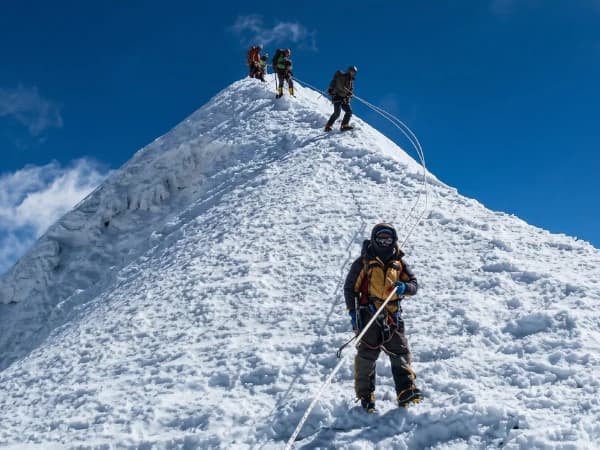
Island Peak (Imja Tse) is usually climbed as an extension of the Everest Base Camp trek. It's lower than Mera but more technical. The summit ridge is narrow and exposed, with fixed ropes that you ascend using a jumar (mechanical ascender). The headwall below the summit is about 45 degrees of ice and snow.
Why it's hard: The technical climbing. Mera is essentially a steep snow walk. Island Peak requires actual climbing technique, front-pointing with crampons, ascending fixed ropes, clipping and unclipping at anchors while standing on a narrow ridge with 500-metre drops on either side. If you're afraid of heights, this is not your mountain.
Summit day is brutal. You leave at 1-2 AM, climb for 8-12 hours, and return exhausted. At 6,000+ metres, exhaustion is dangerous, this is when mistakes happen, when people trip on ropes or forget to clip in.
Who should attempt either peak: You need prior trek itself to at least 5,000 metres, basic mountaineering training (we provide a 1-2 day course before the climb), good cardiovascular fitness, and the mental resilience to push through extreme discomfort. Prior climbing trip is recommended but not strictly required for Mera. For Island Peak, some rock climbing or ice climbing trip is strongly recommended.
The honest negative for both: Summit success is never guaranteed. You might spend two weeks trekking to high camp and then be turned back by weather 200 metres from the top. That's mountaineering. If you can't accept that possibility, these peaks aren't for you. Also, the cost: $2,000-3,500 per person for a properly guided peak climbing expedition. Cheap operators exist, but cheap at 6,000 metres means cutting corners on safety equipment, and that's not a saving worth making.
How long is the Great Himalayan Trail trek?
The Great Himalayan Trail is the longest and most difficult trek on earth. It traverses the entire length of Nepal from Kanchenjunga in the east to Hilsa in the west, approximately 1,700 kilometres through the highest mountains on the planet.
Why it's the hardest: Everything. Duration (140-160 days for the complete high route), altitude (multiple passes above 5,000m, with the highest at 6,146m), remoteness (weeks between resupply points), terrain (glaciers, snow, rock, jungle, desert), logistics (you need food, fuel, and equipment for sections lasting 2-3 weeks without villages), and the sheer mental endurance required to walk for five months straight.
Most people who attempt the GHT do sections, not the complete route. Even sections are serious undertakings. The Kanchenjunga-to-Makalu section alone takes 25-30 days and crosses terrain that would qualify as extreme in any other context.
The complete GHT has been finished by fewer than 50 people. To put that in perspective, more people have summited Everest in a single week than have completed the GHT in its entire history.
What makes it uniquely difficult:
- No infrastructure: For long sections, there are no teahouses, no villages, no trails. You're navigating by GPS through unmarked terrain.
- Weather exposure: 150 days means you'll experience every type of weather Nepal has. Monsoon rain, autumn cold, winter storms, spring heat. You pack for all of it.
- Physical toll: Walking 7-10 hours per day for five months destroys your body. Tendon injuries, foot problems, weight loss, and general breakdown are inevitable. Rest days are essential but add to the already staggering duration.
- Mental endurance: This is arguably the hardest part. After two months, the excitement fades and the monotony sets in. You wake up, you walk, you eat, you sleep. For 150 days. The people who finish the GHT aren't necessarily the fittest. They're the most stubborn.
Who should attempt it: Almost nobody. Seriously. If you're reading this blog and thinking "that sounds amazing," start with a section. Do Kanchenjunga. Do the Three Passes. Do Manaslu. Prove to yourself that you can handle 20 days in the mountains before committing to 150.
If you've done all of that and you still want the GHT, contact us. We'll spend weeks planning your route, arranging permits for every restricted area along the way, coordinating resupply drops, and assembling a support team that can handle the logistics. It's a genuine expedition, and it's priced like one.
The honest negative: The GHT will take over your life. Five months away from work, family, and normal existence. The financial cost is $15,000-25,000 USD minimum for a fully supported attempt. Most people who start don't finish, the 70% failure rate is the highest of any trek on this list. And even those who finish often describe the experience as equal parts wonderful and miserable.
Which Nepal trek should I choose for my ability?
Hard treks aren't better treks. I need to say that.
I've had clients who pushed for the Three Passes when they should have done standard EBC. They suffered. They didn't enjoy the views because they were too exhausted and nauseous to look up. They spent summit day vomiting instead of celebrating. They flew home and told their friends Nepal was miserable.
The best trek is the one that matches your ability. If you're fit and experienced, the routes on this list will give you the feel of a lifetime. If you're not, there's absolutely no shame in choosing a moderate trek and having the time of your life at 3,000 metres with clear eyes and a working digestive system.
If you're considering any of these treks and want an honest assessment of if you're ready, reach out. I'll ask you uncomfortable questions about your fitness, your trip, and your expectations. And I'll tell you the truth, even if the truth is "not yet."
WhatsApp: +977 9810351300
Email:[email protected]
Shreejan Simkhada is the CEO of The Everest Holiday and a third-generation Himalayan guide. TAAN Member #1586.
Hardest Nepal treks? EBC is the famous benchmark. Our Everest Base Camp Trek (12 Days) is private (your group only, no strangers), 2027 dates open, From USD $1399. WhatsApp us for tailored 2027 dates and current departures.
Planning a trip to Nepal?
Drop us your details and tell us what you have in mind. We will put together a personalised plan and get back to you.
Not sure which Nepal trek is right for you?
Take our free 2-minute quiz and get personalised recommendations based on your fitness, experience, and travel style.
Find Your Perfect Trek →Need Help? Call Us+977 9810351300orChat with us on WhatsApp
Related Trek Packages
(24 reviews)
Manaslu Circuit Trek - 12 Days | Remote Larkya La Pass Expedition
Starts From
ExploreUS$799
 US$1,855
17 DaysMax 20
Everest Three Passes Trek - 17 Days
Starts From
ExploreUS$1,855
Annapurna Circuit Trek with Tilicho Lake - 16 Days
Starts From
ExploreUS$1,495
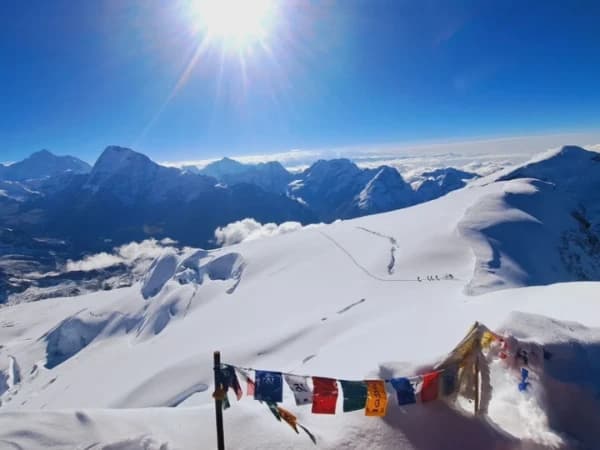 US$3,800
14 DaysMax 20
 US$3,900
14 DaysMax 20
(5 reviews)
Island Peak Climbing - 14 Days Expedition | Everest Region Summit
Starts From
ExploreUS$3,900
 US$1,655
19 DaysMax 20
Latest Travel Blogs
Christmas and New Year Treks from Pokhara 2026/27: 3 to 5 Days
<p>Short treks from Pokhara for Christmas and New Year 2026/27: Panchase 3 days, Poon Hill 4 days and Mardi Himal 5 days. Weather, snow, what is open, and prices by group size.</p>
Read More
Thamdanda and Surke: The Road Head for Everest Base Camp by Road
Thamdanda is the road head where our Everest Base Camp trek by road starts and ends on foot. How to get there from Phaplu and what the first walk to Paiya is like.
Read MorePoon Hill Trek Permits 2027: ACAP, TIMS, Cost and What You Need
Poon Hill needs two permits: ACAP at NPR 3,000 and a TIMS card at NPR 2,000. Who arranges them, where they are checked, SAARC rates and the 2027 trek prices.
Read More Chat with Shreejan