Honest comparison of Everest Base Camp vs Annapurna Base Camp: cost, difficulty, altitude, crowds, scenery. By a guide who has done both dozens of times.
Govt Regd. No.: 147653/072/073
Travel Agency Licence: 2838/072
Everest Base Camp or Annapurna Base Camp in 2027: Which One Should You Actually Choose?

Short answer: Choose Everest Base Camp if seeing Everest matters most and you have 12 days. It reaches 5,364 m and starts with flights to Lukla. Choose Annapurna Base Camp if you want a shorter, lower trek. It takes 9 days, reaches 4,130 m and starts by road from Pokhara. On Standard, for two to four people, EBC is USD 2,499 and ABC is USD 1,310 per person. Compare our 12-day Everest Base Camp trek with our Annapurna Base Camp trek.
Last updated 5 September 2026. Package prices below are read from our booking system on that date and hold for 2027 departures.
Everest Base Camp or Annapurna Base Camp in 2027: Which One Should You Actually Choose?
I get this question more than any other. Sometimes three times in a single day on WhatsApp. And my answer frustrates people because it's not what they want to hear: it depends entirely on you.
I'm Shreejan Simkhada. I've been running treks to both base camps since 2016, and I've walked to each of them more times than I can count. They're both extraordinary. They're also completely different experiences, and choosing the wrong one leaves you wondering what the fuss was about.
So here's my honest breakdown. No marketing spin. Just what I'd tell a friend who asked me over tea in Kathmandu.
Which is better, Everest Base Camp or Annapurna Base Camp?
Choose Everest Base Camp if the name Everest means something to you, if you want the iconic achievement, and if you're happy walking in the company of other trekkers. Choose Annapurna Base Camp if you want a shorter trek, more varied scenery, and a different mountain adventure without the crowds or the cost of Lukla flights.
Now let me explain why.
How many days are the EBC and ABC treks?
The EBC trek takes 12 days with us. You fly from Kathmandu to Lukla (35 minutes, roughly $508 return, and inside our package price rather than an extra), then walk for 10 days up and back. The ABC trek takes 9 days. You drive from Pokhara to the trailhead (about 2 hours), walk for 7 days, and drive back. No expensive internal flights.
That difference matters more than people think. The Lukla flight is weather-dependent. I've had clients stranded in Lukla for two days waiting for clouds to clear. I've had clients miss their international flight home because the return from Lukla was delayed. It happens every season, and there's nothing anyone can do about it. ABC doesn't have this problem. You drive to the trailhead, you drive back. Simple.
If you're working with a tight schedule and can't afford buffer days, ABC is the safer logistical choice.
How much do Everest and Annapurna Base Camp treks cost?
Our EBC trek starts from $1,399 (budget tier). Our ABC trek starts from $725. The difference is mainly the Lukla flights. The Lukla return flight alone is worth roughly $508 per person, and on our trips it sits inside the Everest price rather than arriving as an extra later.
There's also a hidden cost difference that nobody talks about. Teahouse food and drinks are more expensive in the Everest region than the Annapurna region. A cup of tea at 4,000 metres costs NPR 150-200 in Khumbu versus NPR 80-120 in Annapurna. A plate of dal bhat follows the same pattern. Over 10 days, those small differences add up to $30-50 in personal spending.
The Mountains
This is where it gets interesting, because both treks deliver exceptional mountain scenery, but the character is completely different.
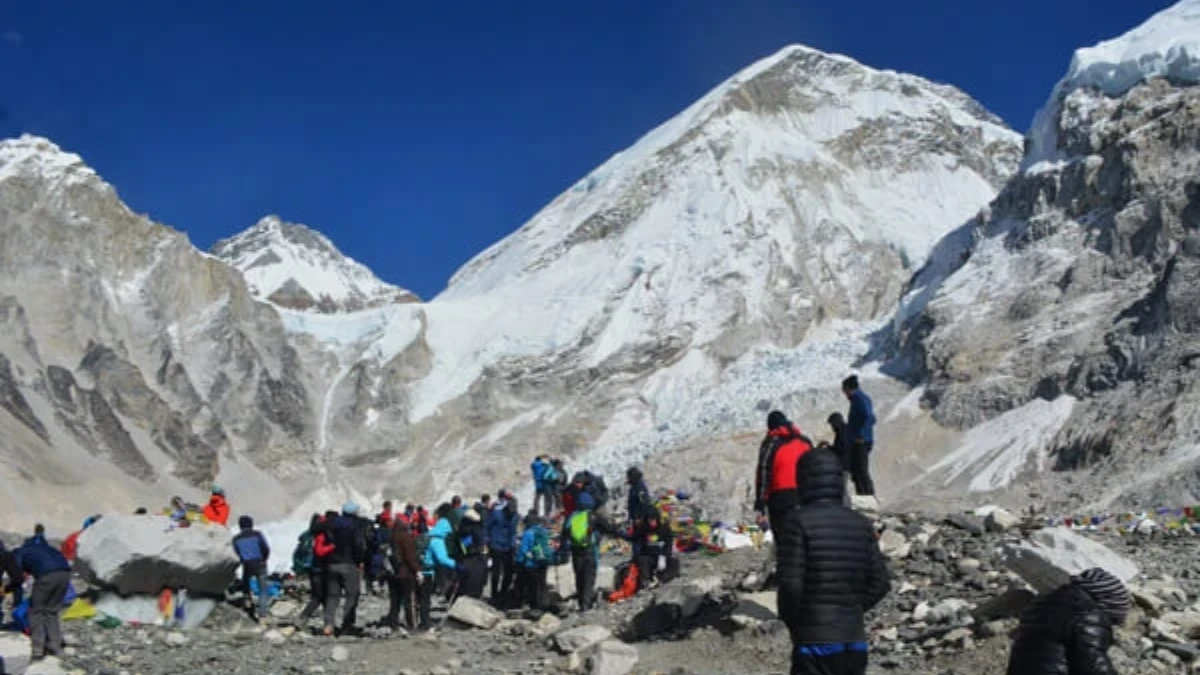
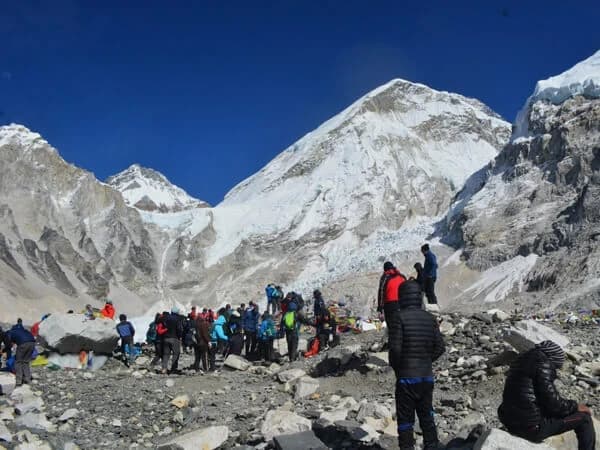
EBC is about one mountain. Everything builds towards Everest. You catch your first glimpse from Namche. You see it growing larger from Tengboche. You stand at Kala Patthar at 5,545 metres and watch the sunrise light up the summit. The entire trek is a pilgrimage to the highest point on Earth, and that focus gives it an emotional power that's hard to describe until you've felt it.
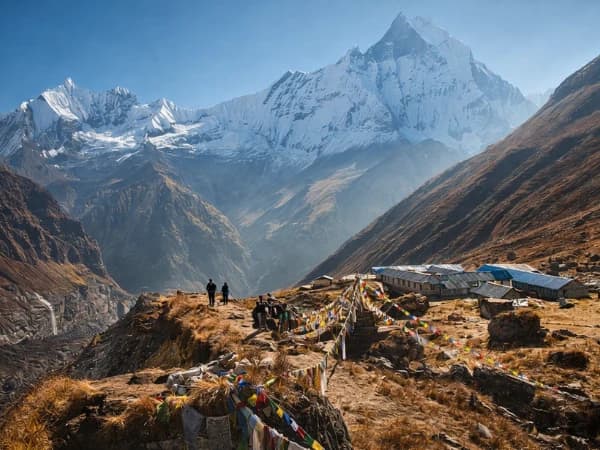
ABC is about a wall of mountains. When you reach Annapurna Base Camp at 4,130 metres, you're standing inside a natural amphitheatre. Mountains surround you in every direction: Annapurna I (8,091m), Annapurna South, Machhapuchhre (Fishtail), Hiunchuli, Gangapurna. It's not one peak. It's a 360-degree panorama. I've seen grown men stand there in silence for twenty minutes, just turning slowly in a circle.
Which is better? Honestly, neither. They're different kinds of awe. EBC is focused intensity. ABC is expansive grandeur. Both make you feel very small in the best possible way.
What Is the EBC vs ABC Trail Like?
EBC Trail Character
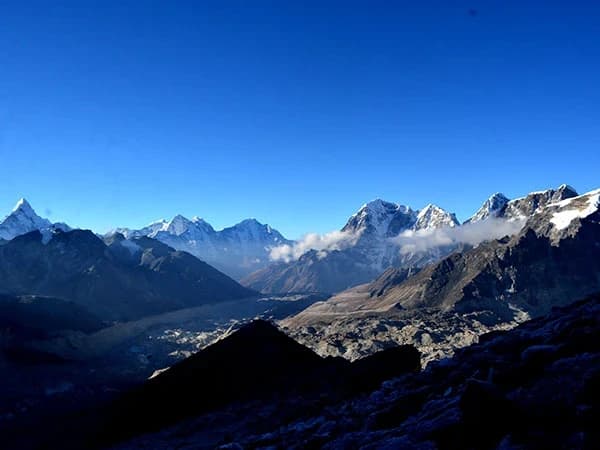
The Everest trail follows river valleys upward through Sherpa country. You cross suspension bridges over glacial rivers. You pass through Namche Bazaar, the trading capital of the Khumbu, where Sherpa merchants have been doing business for centuries. The monasteries at Tengboche and Pangboche are among the oldest and most atmospheric in Nepal. Above Dingboche, the landscape becomes stark and alpine: grey rock, thin air, and the feeling that you're approaching something sacred.
The downside: above Namche, the trail can feel busy in October and November. You won't be alone. Teahouses fill up by early afternoon, and you might share a dining room with thirty other trekkers. Some people love the social atmosphere. Others find it takes away from the wilderness feeling.
ABC Trail Character
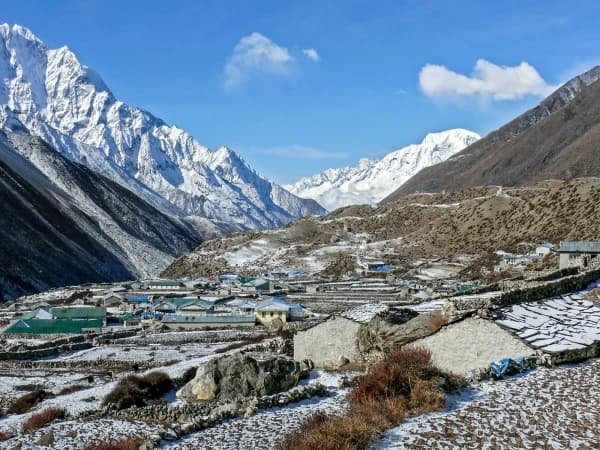
The Annapurna trail passes through more climate zones in fewer days. You start in lowland rice paddies, climb through rhododendron forests (spectacular in March-April when they bloom), cross bamboo groves, and emerge into high alpine terrain. The variety is remarkable. In a single day you might walk through jungle, cross a waterfall, and end up above the tree line looking at glaciers.
The downside: the lower sections involve stone steps. Thousands of them. Your knees will notice. And below 2,500 metres, leeches are present during monsoon season (June-September). They're harmless but annoying.
Which is harder, Everest Base Camp or Annapurna Base Camp?
| Factor | EBC | ABC |
|---|---|---|
| Maximum altitude | 5,545m (Kala Patthar) | 4,130m (ABC) |
| Nights above 4,000m | 4-5 nights | 1-2 nights |
| Acclimatisation days needed | 2 (Namche + Dingboche) | 0-1 |
| Daily walking hours | 5-7 hours | 5-7 hours |
| Altitude sickness risk | Moderate-High | Low-Moderate |
| Technical difficulty | None (walking only) | None (walking only) |
EBC goes 1,400 metres higher than ABC. That's significant. At 5,000 metres, you're breathing air with roughly half the oxygen available at sea level. Some people handle it fine. Others get headaches, nausea, and can't sleep. Our guides monitor oxygen levels daily with a pulse oximeter, and we've built two acclimatisation days into the EBC itinerary specifically to reduce altitude sickness risk.
If altitude makes you nervous, or if you have a medical condition that could be affected by reduced oxygen, ABC is the lower-risk choice. You still go high enough to feel the altitude (4,130m is no joke), but you spend fewer nights at extreme elevation.
Is Everest or Annapurna Base Camp less crowded?
I'll be direct: EBC is busier. In October 2025, the trail above Namche saw several hundred trekkers per day during peak weeks. Teahouses were full by 1pm. There were queues for meals at popular stops. Some trekkers were turned away from lodges and had to walk to the next village.
ABC sees perhaps a third of EBC's traffic. You'll still meet other trekkers, but you'll rarely feel crowded. In November our groups often have the base camp almost to themselves for sunset. That wouldn't happen at EBC in the same month.
If solitude matters to you, ABC wins. If you want the social energy of a shared pilgrimage, EBC has that in abundance.
Cultural Experience
Both treks pass through culturally rich areas, but the flavour is different.
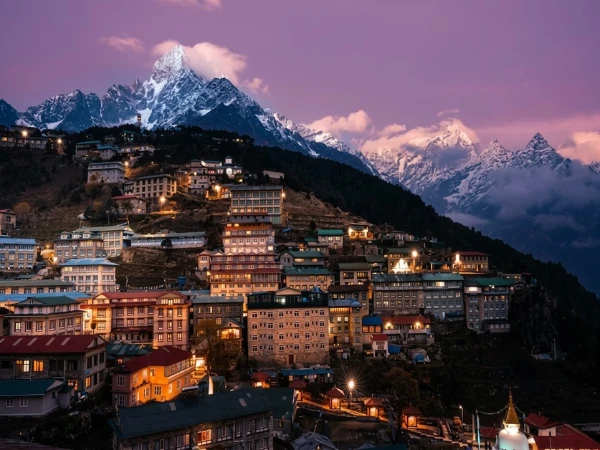
EBC is Sherpa country. The Khumbu Sherpas have a distinct Buddhist culture shaped by centuries of trading with Tibet and, more recently, by mountaineering expeditions. Namche Bazaar has the feel of a mountain trading town. The monasteries are active and atmospheric. You'll see yak trains on the trail and prayer flags on every pass.
ABC passes through Gurung country in the lower sections. The Gurung people have their own traditions, including the famous Gurung honey hunters (though you're unlikely to see them on the trail). The hot springs at Jhinu Danda are a highlight after days of walking. The cultural immersion is less concentrated than EBC but more varied because you pass through multiple ethnic zones.
When Is the Best Time for EBC vs ABC?
Both treks are best in the same seasons: October-November (autumn, clearest skies) and March-May (spring, warmer). But there are differences worth knowing.
EBC in spring means potential afternoon cloud at higher altitudes. You might reach Kala Patthar and have the summit of Everest hidden behind cloud. Autumn is more reliable for clear summit views. ABC in spring means rhododendron forests in full bloom below 3,000 metres, one of the most beautiful natural displays in Nepal. This doesn't happen on the EBC trail because those altitudes are above the rhododendron line.
Who should choose Everest Base Camp vs Annapurna Base Camp?
Choose EBC if you:
- Want the iconic "I stood at Everest" experience
- Have 12+ days available
- Are comfortable with higher altitude (5,000m+)
- Don't mind busy trails and social teahouses
- Want to experience Sherpa Buddhist culture
- Are content that the Lukla flight, worth roughly $508 return, sits inside the price
Choose ABC if you:
- Have 9-10 days available
- Prefer lower altitude risk (max 4,130m)
- Want more varied scenery (jungle to glacier)
- Prefer quieter trails
- Want a more affordable trek
- Are trekking in spring and want rhododendrons
Choose both if you: have 3+ weeks and want the complete Nepal trip. We can design a combined itinerary with EBC first, a rest in Kathmandu, then ABC. Several of our clients have done exactly this and called it the best month of their lives.
Can't Decide? Here's What I'd Do
If this is your first Himalayan trek and you're not sure about altitude, do ABC first. It's shorter, cheaper, lower, and equally spectacular. If you love it (you will), come back for EBC next year with the confidence of knowing your body handles altitude well.
If Everest has been on your dream list since you were twelve, do EBC. Don't compromise on a dream. The altitude is manageable with proper acclimatisation, and the feeling of standing at Base Camp with the Khumbu Icefall above you is worth every step.
And if you genuinely can't choose, look at our EBC with Gokyo Lakes (15 Days): it gives you Everest plus the turquoise lakes, which some trekkers rate even higher than ABC for pure visual impact.
Other comparisons people ask me for
If it is not really Everest against Annapurna Base Camp that you are weighing, one of these is probably the page you want: Everest Base Camp against the Annapurna Circuit, the Circuit against Base Camp, Annapurna Base Camp against Mardi Himal, Everest Base Camp against Gokyo, or Langtang against Everest. Two honest pages worth reading before you commit to Everest: is the Lukla flight safe and can you actually see Everest from Base Camp. For Annapurna, how difficult the ABC trek really is.
Our Packages Compared
| Package | Days | Max Alt | From |
|---|---|---|---|
| Annapurna Base Camp | 9 | 4,130m | $725 |
| Everest Base Camp Classic | 12 | 5,545m | $1,399 |
| EBC by Road (no flights) | 15 | 5,545m | $1,399 |
| EBC + Helicopter Return | 10 | 5,545m | $4,499 |
Every package includes the guide, all permits, teahouse accommodation and airport transfers. Meals and porters depend on the tier: Budget carries its own bag and pays for its own meals, Standard adds all meals and one porter between two trekkers, Luxury adds a dedicated porter and all drinks except alcohol. Kathmandu hotels are not included on any tier. You can move your dates within a year at no charge with 72 hours' notice, and. The 10% deposit itself is not refunded if you cancel.if we cannot run your trip we refund what you have paid, less taxes, bank and card charges and money already spent.
Full breakdowns, flights to tips, are in what Everest Base Camp really costs and what Annapurna Base Camp really costs.
What trekkers say about the two treks
One review from each base camp, from TripAdvisor, quoted as written (the first is shortened):
“The 14 days Trekking was Not easy for us as both of us are in our Fifties. The Guide assigned D.B Rai, was very Helpful & Experience. Step by Step, he helped us All the Way to Top of Kalapathar at 5545 meter. On that Pinnacle was the Sunset Glory of Everest. It was the Most Beautiful Sight one can see on this Earth. We also trekked to Everest Base Camp at 5,365 meter too see the Wonders of Khumbu Icefall and Iced Glacier.”
Thomas, TripAdvisor, January 2021
“It was a great experience with my guide Arjun Dura. I was well taken care of throughout the trip. It’s a very nice place. Every day in the journey, the view is unique, every day is fun, it is recommended to come.”
Sarawur, TripAdvisor, April 2022
Check us before you pay
Trekking scams in Nepal are real and in the news, so do not take my word for any of this. The Everest Holiday Pvt. Ltd. was registered in Kathmandu on 8 April 2016, company registration 147653/072/073, trekking licence 2090/072, Trekking Agencies’ Association of Nepal member 1586. Every legitimate operator holds the same paperwork and will send it without being offended that you asked. Ask me for a call before you send a deposit; I am on WhatsApp around the clock. Our reviews are on TripAdvisor and Google under our own name; read the critical ones as well as the kind ones.
The questions I get asked most when people are choosing
Which one for a first Himalayan trek? Annapurna Base Camp, unless Everest is the whole point of the trip. It is lower, shorter, cheaper and has no flight to worry about. People who do ABC first almost always come back for Everest with a body they already trust at altitude.
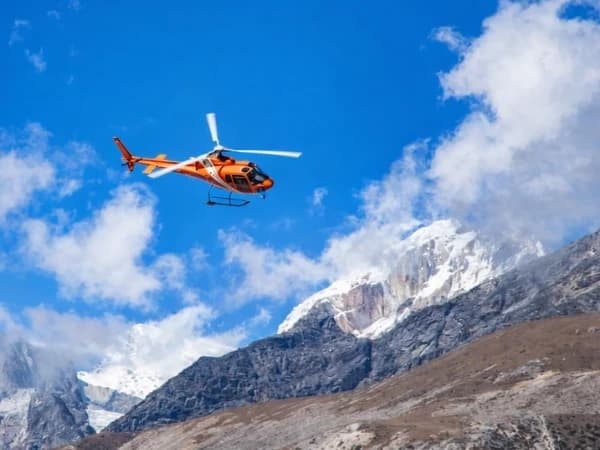
Where does the Lukla flight actually leave from? From late September to the end of November, and again from mid-March to mid-May, Lukla flights leave from Manthali airstrip, four to five hours by road from Kathmandu, with a pickup between midnight and 2 am. Everyone on the Everest trail in those months does this; the difference is whether your operator tells you before you pay. Helicopters are exempt and fly Kathmandu to Lukla direct all year, which is why our Luxury tier uses them.
Can I do either trek alone? Yes, as a solo traveller, with a licensed guide included. Neither is a restricted area, so a solo trekker needs only the park permits, which we arrange, and a solo trekker pays the one-to-four price on both.
Is the price the same for a private trek and a group? Yes. Every trek we run is private, your group only, and the discount comes from group size, not from sharing with strangers.
Are Kathmandu hotels included? No, on any tier of either trek. Tell us your budget and we will recommend and book one for you, or choose your own.
How much is the deposit and how do I pay? Ten per cent by card through Himalayan Bank’s secure gateway to confirm your dates; the balance is paid in Kathmandu before the trek. You can move your dates to any date within a year at no charge with 72 hours’ notice. The deposit itself is not refunded if you cancel.
Will the prices change for 2027? No. The prices on this page hold for 2027 departures.
If you want a quote for your own dates and group size rather than an article’s averages, write to me on WhatsApp and I will send the real numbers, including the unwelcome ones.
Still Not Sure?
Send me a message. Tell me your dates, your fitness level, and what matters most to you. I'll give you an honest recommendation, and if neither EBC nor ABC is right, I'll tell you that too. We run more than 60 treks and tours across Nepal. One of them is perfect for you.
WhatsApp: +977 9810351300
Email: [email protected]
I answer most messages within a few hours, Nepal time.
Shreejan Simkhada is the CEO of The Everest Holiday and a third-generation Himalayan guide. He has personally walked to both Everest Base Camp and Annapurna Base Camp more times than he's willing to count. TAAN Member #1586.
Decided which one? Book our EBC Trek 12 Days from USD 1,399 or our Annapurna Base Camp 9 Days from USD 725. Both fully supported, all permits, over 300 reviews on TripAdvisor, Google and Trustpilot. WhatsApp us if you need help choosing.
Planning a trip to Nepal?
Drop us your details and tell us what you have in mind. We will put together a personalised plan and get back to you.
Not sure which Nepal trek is right for you?
Take our free 2-minute quiz and get personalised recommendations based on your fitness, experience, and travel style.
Find Your Perfect Trek →Need Help? Call Us+977 9810351300orChat with us on WhatsApp
Related Trek Packages
 US$1,399
15 DaysMax 20
(6 reviews)
Everest Base Camp Trek By Road Trip - 15 Days Itinerary and Cost
Starts From
ExploreUS$1,399
Everest Base Camp with Gokyo Lakes Trek via Chola Pass - 15 Days
Starts From
ExploreUS$1,699
Latest Travel Blogs
Christmas and New Year Treks from Pokhara 2026/27: 3 to 5 Days
<p>Short treks from Pokhara for Christmas and New Year 2026/27: Panchase 3 days, Poon Hill 4 days and Mardi Himal 5 days. Weather, snow, what is open, and prices by group size.</p>
Read More
Thamdanda and Surke: The Road Head for Everest Base Camp by Road
Thamdanda is the road head where our Everest Base Camp trek by road starts and ends on foot. How to get there from Phaplu and what the first walk to Paiya is like.
Read MorePoon Hill Trek Permits 2027: ACAP, TIMS, Cost and What You Need
Poon Hill needs two permits: ACAP at NPR 3,000 and a TIMS card at NPR 2,000. Who arranges them, where they are checked, SAARC rates and the 2027 trek prices.
Read More Chat with Shreejan