Everest Base Camp Trek Cost From Malaysia: The Real All-In Numbers in Ringgit for 2027
Last updated 7 October 2026. Fares are for Kuala Lumpur (KUL) return trips, checked on 7 October 2026. Ringgit amounts use the European Central Bank reference rate of 6 October 2026, US$1 = MYR 4.085, which changes daily. What you pay us is in US dollars or euros.
Kuala Lumpur has an advantage that most cities in this series lack: Batik Air Malaysia and Malaysia Airlines fly it to Kathmandu without a change, about 4 hours 45 minutes in the air. Because the flight is that short, the trek package is the biggest part of what you spend, and the ticket is a smaller share than for a traveller from Europe or North America.
For two to four people the 12-day Everest Base Camp trek is charged per person at US$1,399 on Budget (about MYR 5,710), US$2,785 on Standard (about MYR 10,210) and US$4,999 on Luxury (about MYR 20,420). Those prices stay the same through 2027. Adding a Kuala Lumpur return, the visa, insurance and tips, one traveller should plan on roughly MYR 10,760 to MYR 13,360 for Budget, MYR 14,560 to MYR 16,690 for Standard travelling alone and MYR 25,260 to MYR 27,640 for Luxury.
What the KUL to KTM search turned up
I searched economy, one adult with a checked bag, leaving Sunday 25 October 2026 and returning Wednesday 11 November, no more than one change each way and no self-made connections. There were 15 itineraries between MYR 2,678 and MYR 3,768. Seven of them were nonstop in both directions.
The lowest, MYR 2,678, combined a nonstop Batik Air Malaysia flight out (10:20 to 12:50, or 18:10 to 20:35) with Air India home through Delhi. The 10:05 departure from Kathmandu is back in Kuala Lumpur at 22:00 the same day, about 9 hours 40 minutes door to door; the 17:10 one lands at 05:00 the next morning.
If you want nonstop both ways, the cheapest was MYR 2,997, with the way back (10:15 to 17:15) ticketed under Hahn Air, which is a ticketing airline, so look at the e-ticket to see who operates it. Batik Air out and Malaysia Airlines MH171 home (13:00 to 20:10) was MYR 3,112. Malaysia Airlines out (MH114, 19:15 to 21:45) with Batik Air home was MYR 3,688 to MYR 3,768. The Sichuan Airlines route through Chengdu (00:20 from Kuala Lumpur, 10:30 in Kathmandu) came to MYR 3,132 to MYR 3,212, and China Southern home via Guangzhou was MYR 3,019.
What it adds up to in ringgit
One traveller per row. The flight column spans the cheapest and the dearest fare in the search. The fourth column covers the 30-day visa, insurance, tips and, on Budget only, meals; on the other tiers it holds spending money instead. Kathmandu hotels are never part of a trek tier, and our family homestay is US$15 per person a night, about MYR 60.
| Who | Trek, 12 days | Kuala Lumpur return | Visa, insurance, tips, extras | Estimated total |
|---|---|---|---|---|
| Budget | MYR 5,710 | MYR 2,678 to MYR 3,768 | MYR 2,370 to MYR 3,880 | MYR 10,760 to MYR 13,360 |
| Standard, solo, no porter | MYR 10,210 | MYR 2,678 to MYR 3,768 | MYR 1,670 to MYR 2,720 | MYR 14,560 to MYR 16,690 |
| Luxury | MYR 20,420 | MYR 2,678 to MYR 3,768 | MYR 2,170 to MYR 3,450 | MYR 25,260 to MYR 27,640 |
Food is your own cost on Budget: allow US$25 to US$40 a day, which adds up to US$300 to US$480 across the 12 days. Standard and Luxury pay for the meals, leaving only hot showers, charging and snacks, for which 20,000 to 30,000 rupees (US$130 to US$195) is plenty. Rupees are best drawn in Kathmandu. Guides expect US$15 to US$20 a day as a tip, porters US$10 to US$15.
Visa for a Malaysian passport
Malaysia is not on the list of twelve countries whose citizens must apply before they travel, so you buy the visa at the airport in Kathmandu. US$30 buys 15 days, US$50 buys 30 days (about MYR 200) and US$125 buys 90 days, always in US dollars and with multiple entry. You can fill in the form online first, and you need a passport valid for six months and one photo. Our visa on arrival guide has the step-by-step.
Your Malaysian insurance, and takaful
A travel policy or a takaful travel plan, bought before you leave Malaysia, is the cover to look for; I would not buy cover in Nepal. Three things decide whether a policy is any use. The altitude limit must reach 6,000 metres (Kala Patthar is 5,545 m), because many leisure plans end at 3,000 or 4,000 m. It must pay for helicopter evacuation, which costs US$3,000 to US$5,000 (about MYR 12,300 to MYR 20,400) if you pay yourself. And it must cover illness as well as injury. Our helicopter cover to 6,000 m explains the wording. Send me a policy and I will read the small print with you.
Halal and food
I cannot promise halal-certified meat anywhere above Lukla, so I will not. Tell us at booking about halal or other food needs and we will plan around them, and see our Malaysia guide with halal notes for what we can arrange. Teahouse dal bhat, eggs and noodles are the staples; the how fit you need to be guide and the dal bhat guide explain how people eat at altitude.
What each tier gives you
Three tiers, one route. Budget means you carry your own bag, share rooms on the trail and pay for your meals, and the flight to Lukla is on a fixed-wing plane. On Standard every meal is paid, you have a private room, and a porter looks after the bags of two trekkers. Luxury has a porter of your own, a deluxe private room with its own bathroom, fruit, nuts and unlimited soft drinks, and helicopters both ways to Lukla. All three include a licensed guide, the permits (NPR 3,000, 3,000 and 2,000), airport transfers and a borrowed down jacket and sleeping bag rated to minus 15. A solo traveller on Standard has no porter, and the guide carries up to 10 kg. There is no single supplement on Standard or Luxury. On Budget, a solo Everest Base Camp trekker pays US$2,275 instead of US$1,399. Kathmandu hotels are quoted separately. See the trek itinerary.
Training in a country with no high mountains
Gunung Tahan, the highest point of Peninsular Malaysia, is 2,187 m. Mount Kinabalu in Sabah is 4,095 m, and Gorak Shep, where you sleep, is at 5,164 m, more than a kilometre higher than Kinabalu. Expect five to seven hours of walking on most days, with two rest days for acclimatisation among the 12. Stairs with a loaded pack, then back-to-back long days, are the best preparation; the how fit you need to be guide goes deeper.
Prices by group size, in ringgit
| Trekkers in the group | Budget | Standard | Luxury |
|---|---|---|---|
| 1 to 4 | MYR 5,710 | MYR 10,210 | MYR 20,420 |
| 5 to 8 | MYR 5,310 | MYR 10,000 | MYR 20,220 |
| 9 to 12 | MYR 4,900 | MYR 9,800 | MYR 20,010 |
| 13 to 20 | MYR 4,080 | MYR 9,600 | MYR 19,810 |
The price per person does not depend on whether the trip is private or in a group. Only the number of travellers changes it.
Leave, clocks and festivals
Nepal is 2 hours 15 minutes behind Malaysia all year, since neither changes its clocks. The 12-day trek needs about 14 days with flights and a spare day. Under the Employment Act 1955, an employee gets 8 days of paid annual leave in the first two years of service, 12 days from the third to the fifth year, and 16 days after that. Chinese New Year falls on 6 February 2027, which is deep winter in the Khumbu; March to May is the next good window. Nepal's calendar matters in the autumn: Dashain (17 to 23 October 2026) and Tihar (8 to 12 November) close government offices, and a permit takes 48 hours counted in working days. When the Lukla runway is busy, fixed-wing flights leave from Manthali instead of Kathmandu; the road is four to five hours and the pick-up is set between midnight and 2 am. Luxury guests avoid the drive by taking a helicopter from Kathmandu.
How payment works from Malaysia
Ten per cent holds your dates. The remainder falls due when you reach Kathmandu, in US dollars or euros; hand over cash and nothing is added, or use a card and 3.5 per cent goes on top. Ringgit and rupees are not taken. Cancel it yourself and the deposit stays with us and no money returns, but you can shift the trek, at no charge, to any date inside twelve months if you write at least 72 hours ahead (a week for Tibet, Kailash and restricted areas). When it is we who cannot run the trek, what you have paid comes back, minus taxes, bank and card charges, and whatever has been spent on permits or flights.
If you need your embassy
Malaysia has an embassy in Kathmandu, at Bakhundole-3, Lalitpur. Its page lists +977 1 5445680 and 5445681 for general enquiries, and an emergency-only duty officer line, +977 9801008000, with office hours Monday to Friday from 8.30 am.
Check us first
We have been registered in Kathmandu since 2016, and the family behind the company has guided for three generations. Our TAAN membership number is 1586, and more than 300 reviews sit on TripAdvisor, Google and Trustpilot. You can look up the company registrar, TAAN, the tourism licence and our forex certificate. A licence alone does not prove honesty, because licensed operators have been involved in scams, so ask for a video call before sending anything. A share of bookings supports the Nagarjun Learning Center.
Want prices for your own dates and group size? Message me on WhatsApp +977 9810351300 / [email protected].
More: the full cost guide, permits and fees, when the helicopter makes sense.
Shreejan Simkhada, CEO of The Everest Holiday. TAAN 1586.
Planning a trip to Nepal?
Drop us your details and tell us what you have in mind. We will put together a personalised plan and get back to you.
Not sure which Nepal trek is right for you?
Take our free 2-minute quiz and get personalised recommendations based on your fitness, experience, and travel style.
Find Your Perfect Trek →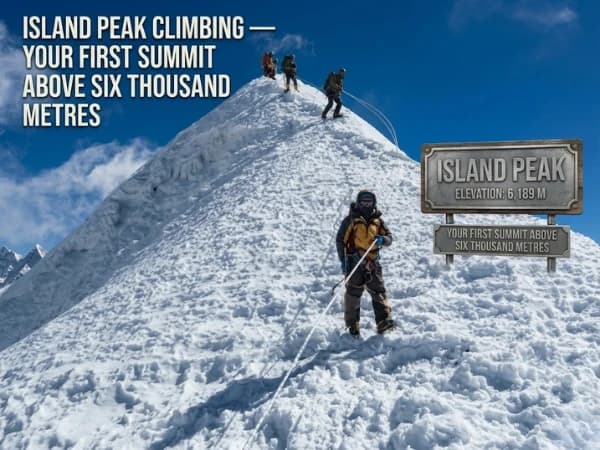
Island Peak Itinerary and Summit Day 2027: 14 Days, Base Camp to the Top
The 14-day Island Peak itinerary day by day, what summit day is like from base camp, where sources disagree on heights, best months and 2027 prices.
Read More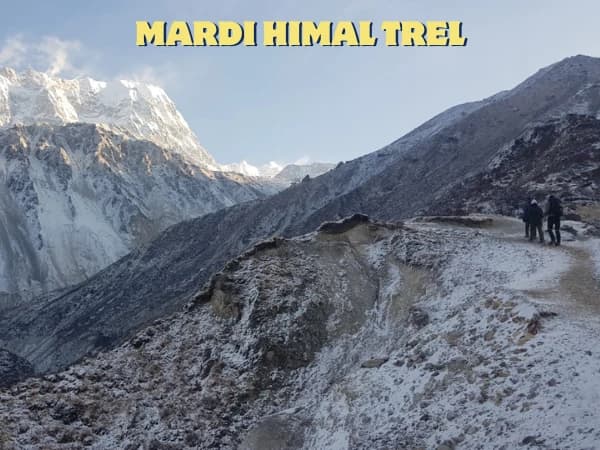
How Difficult Is the Mardi Himal Trek? An Honest Day-by-Day Rating for 2027
An honest day-by-day rating of the Mardi Himal trek: the steep climb to High Camp, the 4,500 m push to Base Camp, altitude risk, who finds it hard and 2027 prices.
Read More
Manaslu Circuit Reopened: What Changed After the 2026 Floods and How to Plan 2027
The Manaslu Circuit over the Larke Pass is open again with extreme caution. What changed in the lower valley after the two 2026 floods, 2027 prices and permits, and how I would plan.
Read More Chat with Shreejan