
Don't buy the wrong boots. A third-generation Nepal guide explains exactly what footwear you need, by trek, by season, and by budget. Plus what to avoid.
Govt Regd. No.: 147653/072/073
Travel Agency Licence: 2838/072
Choosing Trekking Boots for Nepal: The Only Guide You Need


How Do You Choose the Right Trekking Boots for Nepal? The Only Guide You Need
My father once told me that a trek fails or succeeds at the ankles. He wasn't being poetic. He'd spent thirty years watching trekkers limp into Namche Bazaar with blisters the size of coins, wearing boots they'd bought the week before at an airport shop. Some had spent three hundred pounds on the wrong boot. Others had spent forty pounds on the right one. The difference was never price. It was knowledge.
I've been guiding treks across Nepal since 2016 (Everest Base Camp, Annapurna Circuit, Manaslu, Kanchenjunga), and I've seen every footwear mistake possible. Trail runners on glaciers. Heavy mountaineering boots on gentle tea-house trails. Brand-new boots straight from the box on day one. Each time, the trekker pays with pain, and sometimes the trip itself.
This guide is everything I tell my own clients before they fly to Kathmandu. No filler. No affiliate links. Just what actually works on Nepali trails, from someone who walks them every season.
Why do trekking boots matter more in Nepal?
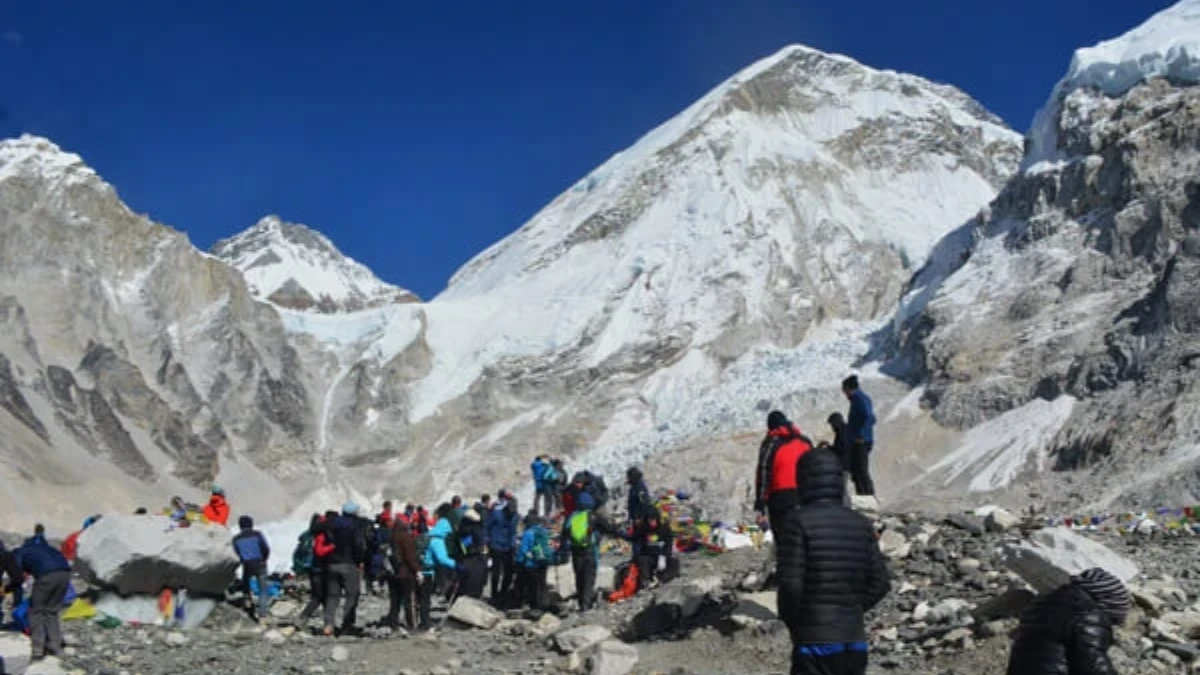
Nepal is not the Alps. It's not Patagonia. The trails here throw everything at you within a single day: river crossings, loose scree, stone staircases carved centuries ago, mud after rain, ice above 4,000 metres, and yak dung that's slipperier than either. The altitude changes are dramatic. On the Annapurna Circuit, you might start the morning at 2,500 metres in subtropical heat and end the day at 3,500 metres in freezing wind.
Your boots need to handle all of it. Not just the glamorous summit-day photo, but the fourteen days of wet, uneven, punishing trail that come before and after.
What ankle height boots do I need for Nepal trekking?
Forget brand. Forget colour. Forget what your mate wore on Kilimanjaro. The first question is ankle height, and it depends entirely on where you're going.
Low-cut (below the ankle)
Trail shoes and approach shoes. Fine for day hikes around Kathmandu, the Nagarkot sunrise walk, or city sightseeing. Not suitable for multi-day treks. Full stop. Even on relatively gentle routes like Ghorepani Poon Hill, the stone steps and uneven terrain demand ankle support. I've watched too many twisted ankles on the descent from Poon Hill to recommend anything less.
Mid-cut (just above the ankle)
The sweet spot for most Nepal treks. Mid-cut boots give you ankle support without the weight and stiffness of a full mountaineering boot. If you're doing Langtang Valley, Mardi Himal, Annapurna Base Camp, or the standard EBC trek, a good mid-cut boot is all you need.
High-cut (well above the ankle)
Stiffer, heavier, warmer. Required when you're crossing glaciers, walking on sustained snow, or carrying heavier loads. The Everest Three Passes, Island Peak, and high-altitude crossings like Larkya La on Manaslu need this level of support. If your trek involves crampon-compatible terrain, you need high-cut boots with a rigid sole.
Are Gore-Tex or leather boots better for Nepal trekking?
Nepal's trails are wet. Even in peak autumn season, you'll cross streams, walk through morning dew, and hit unexpected rain showers. In spring, snowmelt means wet trails above 3,500 metres almost daily.
Gore-Tex lined boots
The industry standard for waterproof breathability. They keep water out while letting sweat escape, in theory. In practice, Gore-Tex works brilliantly in cool, dry conditions and reasonably well in moderate rain. In heavy monsoon rain or deep river crossings, nothing stays dry. The advantage of Gore-Tex is that your feet dry faster afterwards.
For autumn and spring trekking (September to November, March to May), Gore-Tex lined boots are the best all-round choice. Expect to pay £120 to £200 for a good pair.
Treated leather boots
Full-grain leather boots treated with wax or waterproofing cream are heavier but more durable. They're warmer in cold conditions and can be re-treated repeatedly over years. Traditional leather boots suit trekkers who prefer a boot that moulds to their foot over time. The trade-off is weight and a longer break-in period. If you're heading to Upper Mustang in winter or doing a remote trek like Makalu Base Camp, treated leather holds up well in sustained cold.
Unlined boots
Some lightweight hiking boots skip the waterproof membrane entirely. They breathe better and dry faster when soaked. A few experienced trekkers swear by them paired with waterproof socks. But for most people on most Nepal treks, I wouldn't recommend this approach. The moment you hit a cold, wet morning above 4,000 metres with unlined boots, you'll wish you'd gone Gore-Tex.
How stiff should trekking boot soles be for Nepal?
Boot soles range from flexible (bends easily in your hands) to rigid (won't flex at all). This isn't about quality. It's about purpose.
| Sole Type | Best For | Examples |
|---|---|---|
| Flexible | Low-altitude treks, day hikes, gentle trails | Poon Hill, Nagarkot, Kathmandu Valley rim |
| Semi-rigid | Most multi-day treks up to 5,500m | EBC, Annapurna Circuit, Langtang, Manaslu, ABC, Mardi Himal |
| Rigid (crampon-compatible) | Glacier crossings, high passes, peak climbing | Three Passes, Island Peak, Mera Peak, Kanchenjunga |
A semi-rigid sole is the most versatile for Nepal. It supports your foot on rocky, uneven terrain without making you walk like a robot on flat ground. If your trek stays below 5,500 metres and doesn't involve glacier travel or crampons, semi-rigid is the answer.
Rigid soles are essential when crampons enter the picture. On Island Peak, you'll be wearing crampons on the summit push. A flexible boot under a crampon is dangerous: the crampon can shift, and your foot has no stability on ice. If you're doing any peak climbing in Nepal, invest in a B1 or B2-rated boot.
Which trekking boots are best for each Nepal trek?
Here's what I actually recommend to our clients, based on guiding hundreds of trekkers across Nepal.
Lightweight mid-cut (£80-£130)
- Ghorepani Poon Hill Trek (4-5 days, max 3,210m)
- Mardi Himal Trek (5-7 days, max 4,500m)
- Short treks under a week below 4,000m
A lightweight, waterproof mid-cut boot is plenty. You don't need anything heavy or stiff for these routes. Brands in this range include Merrell Moab, Columbia Newton Ridge, and Salomon X Ultra. Comfort and fit matter more than brand name.
Mid-weight mid-cut (£130-£200)
- Everest Base Camp Trek (12-14 days, max 5,364m)
- Annapurna Circuit Trek (12-16 days, max 5,416m)
- Langtang Valley Trek (7-10 days, max 4,984m)
- Manaslu Circuit Trek (14-16 days, max 5,160m)
- Annapurna Base Camp Trek (10-12 days, max 4,130m)
- EBC by Road Trip (15 days, max 5,364m)
This is where most trekkers in Nepal land. You need a boot that's comfortable for 10+ days of walking, warm enough for sub-zero mornings, waterproof, and supportive on rocky descents. Scarpa Terra, Lowa Renegade, Meindl Bhutan, and La Sportiva Nucleo are all proven performers on these routes. Gore-Tex lining is strongly recommended.
Heavy-duty high-cut (£180-£250+)
- Everest Three Pass Trek (18-21 days, max 5,545m with glacier crossings)
- Island Peak Climbing (requires crampon compatibility)
- Kanchenjunga Base Camp (remote, cold, sustained high altitude)
- Makalu Base Camp (remote, river crossings, variable terrain)
These treks are longer, colder, and more demanding. You need a boot that won't let you down three weeks in, with enough insulation for extended time above 5,000 metres. La Sportiva Trango, Scarpa Zodiac, and Meindl Island MFS are all good choices. For Island Peak specifically, ensure the boot is crampon-compatible (B1 rating minimum, B2 preferred).
How do I break in trekking boots before Nepal?
This is where most trekkers go wrong. They buy the perfect boot, pack it in the suitcase, and put it on for the first time in Kathmandu. By Monjo, they're in agony.
Walk at least 50 kilometres in your boots before you fly to Nepal. Not 50 kilometres on flat pavement. Walk on hills. Walk on rough ground. Walk downhill: long, sustained descents are what destroy feet in Nepal. If you can, do a full weekend in your boots with your daypack loaded. Your feet need to know the boot, and the boot needs to know your feet.
If you're buying boots less than a month before your trek, wear them every day. Walk to work. Walk to the shops. Sleep in them if you have to. (I'm only half joking.)
Signs your boots are properly broken in
- No hot spots or rubbing after 3-4 hours of walking
- Your heel doesn't lift when you walk uphill
- Your toes don't hit the front when walking downhill
- The leather or synthetic upper has softened around the ankle
- You've forgotten you're wearing them: that's the sweet spot
Should I buy trekking boots in Kathmandu or bring my own?
I get asked this every week. Here's the honest answer.
Bring boots from home if you can. You'll have time to break them in properly. You can try multiple pairs in a well-stocked shop. You can return them if they don't fit. And you'll arrive in Kathmandu already comfortable in your footwear, which is one less thing to worry about.
Kathmandu's Thamel district has hundreds of gear shops selling boots. Some are genuine brand-name boots (Scarpa, La Sportiva, Lowa) at similar or slightly lower prices than Europe. Many are excellent Nepali-made or Chinese-made boots at a fraction of the cost. And some are counterfeits that fall apart on day four.
If you're buying in Kathmandu:
- Go to established shops on the main Thamel streets, not the narrow alleyways
- Check soles, stitching, and lining quality carefully
- Wear the socks you'll trek in when trying boots
- Walk up and down the shop's stairs (most have them) to test heel lift and toe jam
- Budget 4,000-8,000 NPR (£25-£50) for a decent Nepali-made boot, or 15,000-30,000 NPR (£90-£180) for genuine branded boots
- You won't have time to break them in fully, so buy a size with generous toe room and bring blister plasters
One more thing. If your boots fail during the trek, every town on the main trekking routes (Namche, Lukla, Jomsom, Manang) has a boot shop. The selection narrows as you go higher, but in an emergency, you can always find something.
What trekking boot mistakes should I avoid in Nepal?
1. Buying boots the week before the trek. You need a minimum of three to four weeks of regular walking. Six weeks is better. Three months is ideal.
2. Choosing style over fit. The boot that looks best in the shop is irrelevant if it gives you blisters at 4,000 metres. Try on five pairs. Walk around. Take the ugly one that feels right.
3. Wrong size. Your feet swell at altitude and during long descents. Buy half a size larger than your normal shoe. When you try boots on, wear thick trekking socks and kick a wall gently: your toes should not touch the front.
4. Ignoring the socks. A two-hundred-pound boot paired with cheap cotton socks is a blister factory. Merino wool trekking socks (two pairs minimum, three is better) are as important as the boot itself. Bring liner socks too if you're prone to blisters.
5. Over-tightening laces. Tighten firmly around the ankle for support, but leave the toe box slightly loose. On descents, tighten the ankle; on ascents, loosen slightly. Learning to adjust laces for the terrain is a skill most people never think about.
6. No gaiters on muddy trails. In spring (March-May) and during early autumn before the trails dry out, lightweight gaiters keep mud, gravel, and water out of your boots. They weigh almost nothing and save you hours of discomfort. A pair costs £15-£25.
7. Bringing only one pair of footwear. You need your trekking boots AND a pair of lightweight sandals or camp shoes for teahouses in the evening. After eight hours on the trail, your feet need to breathe. Flip-flops work. Crocs work. Anything that isn't your boots.
How do I care for trekking boots on the trail?
Your boots work hard in Nepal. Look after them and they'll look after you.
- Dry them every night. Remove the insoles and place boots near (not on top of) the teahouse heater or drying rack. Stuff newspaper inside to absorb moisture. If there's no heat source, stuff dry socks inside overnight.
- Clean mud daily. Mud left to dry cracks leather and degrades waterproof coatings. A quick wipe with a damp cloth each evening adds months to your boot's life.
- Re-waterproof before the trek. Apply Nikwax or Grangers waterproofing treatment to your boots a week before departure, even if they were waterproof when new. Factory coatings degrade over time.
- Check laces. Bring one spare set of laces. A snapped lace at 5,000 metres is no joke. Tuck them into your first-aid kit.
- Don't dry boots with direct heat. Placing leather or Gore-Tex boots directly on a fire or heater will crack the leather, delaminate the membrane, and ruin the boot. Warmth is fine. Heat is destruction.
How much should I spend on trekking boots for Nepal?
You don't need to spend a fortune.
| Budget Range | What You Get | Best For |
|---|---|---|
| £80-£120 | Lightweight waterproof mid-cut. Synthetic upper, basic Gore-Tex or equivalent membrane. | Short treks (Poon Hill, Mardi Himal). One-trip use. |
| £120-£180 | Mid-weight Gore-Tex boot. Nubuck or suede upper. Vibram sole. Good ankle support. | EBC, Annapurna Circuit, Langtang, Manaslu, ABC. Will last 3-5 years with care. |
| £180-£250+ | Heavy-duty leather or synthetic. Crampon-compatible. Rigid sole. Excellent insulation. | Three Passes, Island Peak, Kanchenjunga, Makalu. Multi-year investment. |
The sweet spot for most Nepal trekkers is £130-£170. That range gets you a boot that's comfortable for two weeks, warm at altitude, waterproof in rain, and durable enough for future trips. Spending less is a gamble. Spending more is only necessary if your trek involves glaciers or crampons.
Frequently Asked Questions
Can I wear trail runners for Everest Base Camp?
Technically, people have done it. But I wouldn't recommend it. The trail to EBC includes loose rock, ice, steep stone steps, and sustained walking at high altitude where your balance is compromised. Trail runners offer no ankle support, minimal insulation, and poor grip on ice. A proper mid-cut boot with a semi-rigid sole is far safer and more comfortable over twelve to fourteen days. Save the trail runners for your rest day in Namche.
Are hiking shoes enough for the Annapurna Circuit?
The Annapurna Circuit crosses the Thorong La pass at 5,416 metres, often in snow. The descent from the pass is steep scree and ice. Low-cut hiking shoes won't give you the ankle stability or warmth you need at that altitude. Mid-cut waterproof boots are the minimum. If you're trekking in late autumn or early spring when snow is more likely, consider a heavier boot.
Should I buy one size bigger than normal?
Half a size to one full size bigger, yes. Your feet swell during long days of walking, especially at altitude where circulation changes. On steep descents, and Nepal has a lot of them, your foot slides forward. Extra room in the toe box prevents black toenails and blisters. Try boots on in the afternoon when your feet are naturally larger, wearing the thick socks you'll trek in.
How long do trekking boots last?
A mid-range boot (£130-£180) should last 800 to 1,200 kilometres of trail walking with proper care. That's roughly three to five major treks. The sole wears first: when the tread pattern is flat or the midsole feels compressed, it's time for new boots. Some higher-end boots can be resoled, which extends their life significantly. Check the sole before every trip, not during it.
What if my boots start hurting during the trek?
Don't push through pain hoping it will get better. It won't. Stop, remove the boot, and check for the cause. Hot spots can be covered with moleskin or zinc oxide tape before they become blisters. If the boot is genuinely too small or rubbing badly, most towns on the main trekking routes sell boots. A replacement boot bought in Namche or Manang is better than two weeks of agony. Your guide will have blister treatment in the first-aid kit; ask early, not after the damage is done.
The Short Answer
I've guided people who spent £250 on boots and people who spent £40 on boots from Thamel. The ones who had the best time were almost always the ones who'd broken their boots in properly, matched the boot to the trek, and brought good socks.
If I had to give you one piece of advice, it would be this: buy your boots three months before your trek, walk 50 kilometres in them, and bring merino wool socks. Everything else is detail.
Your feet carry you to the mountains. Take care of them and they'll take you anywhere.
Planning a trek in Nepal? We'll tell you exactly what boots to bring for your specific route, along with a complete gear list, altitude briefing, and everything else you need. Our team has guided hundreds of trekkers across every major trail in Nepal.
WhatsApp:+977 9810351300
Email:[email protected]
Browse treks:www.theeverestholiday.com
Written by Shreejan Simkhada, CEO of The Everest Holiday (TAAN #1586) and third-generation Himalayan guide. Shreejan has personally trekked every major route in Nepal and oversees all trip planning and guide training for the company.
Got your boots, now book your trek? Our Everest Base Camp Trek (12 Days) is private (your group only, no strangers), 2027 dates open, From USD $1399. WhatsApp us for tailored 2027 dates and current departures.
Planning a trip to Nepal?
Drop us your details and tell us what you have in mind. We will put together a personalised plan and get back to you.
Not sure which Nepal trek is right for you?
Take our free 2-minute quiz and get personalised recommendations based on your fitness, experience, and travel style.
Find Your Perfect Trek →Need Help? Call Us+977 9810351300orChat with us on WhatsApp
Latest Travel Blogs
Christmas and New Year Treks from Pokhara 2026/27: 3 to 5 Days
<p>Short treks from Pokhara for Christmas and New Year 2026/27: Panchase 3 days, Poon Hill 4 days and Mardi Himal 5 days. Weather, snow, what is open, and prices by group size.</p>
Read More
Thamdanda and Surke: The Road Head for Everest Base Camp by Road
Thamdanda is the road head where our Everest Base Camp trek by road starts and ends on foot. How to get there from Phaplu and what the first walk to Paiya is like.
Read MorePoon Hill Trek Permits 2027: ACAP, TIMS, Cost and What You Need
Poon Hill needs two permits: ACAP at NPR 3,000 and a TIMS card at NPR 2,000. Who arranges them, where they are checked, SAARC rates and the 2027 trek prices.
Read More Chat with Shreejan