
68 tigers. 700+ rhinos. Chitwan is Nepal's best wildlife experience, but most tourists waste their time. Here's how to see animals, not just trees.
Govt Regd. No.: 147653/072/073
Travel Agency Licence: 2838/072
Chitwan Jungle Safari: Tigers, Rhinos, and What to Actually Expect

Short answer: Chitwan National Park covers 952 sq km of lowland jungle in southern Nepal and holds more than 700 greater one-horned rhinos. Rhinos, deer and birds are common sightings, and tigers are rare, so go for the jungle rather than a promise. We explore by jeep, dugout canoe and jungle walk, with Tharu culture in the villages. Entry is NPR 2,000 per person for foreigners. See it on our 4-day Chitwan jungle safari.
What animals can you realistically see on a Chitwan safari?
Let me be honest with you. Most people who visit Chitwan National Park come back disappointed. Not because the park isn't extraordinary (it absolutely is), but because they booked a generic two-day package, sat in a jeep for three hours, saw nothing bigger than a deer, and left thinking Nepal's wildlife was overhyped.
I've been taking clients to Chitwan since I was nineteen, following my father's footsteps through the same sal forests he guided guests through in the 1990s. In those days, rhino numbers had dropped below 400. Poaching was rampant. The park felt half-empty.
Today? Chitwan holds over 700 greater one-horned rhinoceroses. The 2022 tiger census counted 93 in the broader Chitwan-Parsa landscape, with roughly 68 in the core Chitwan zone. That's a conservation success story most people don't know about. But seeing these animals requires more than luck. It requires knowing where to go, when to go, and what most tour operators won't tell you.
What Chitwan Actually Is (and Isn't)
Chitwan National Park covers 952 square kilometres of subtropical lowland in southern Nepal. It ranges from about 100 metres in the river valleys to 815 metres in the Siwalik Hills, and the low ground makes it brutally hot from April to June and pleasantly warm from October to March.
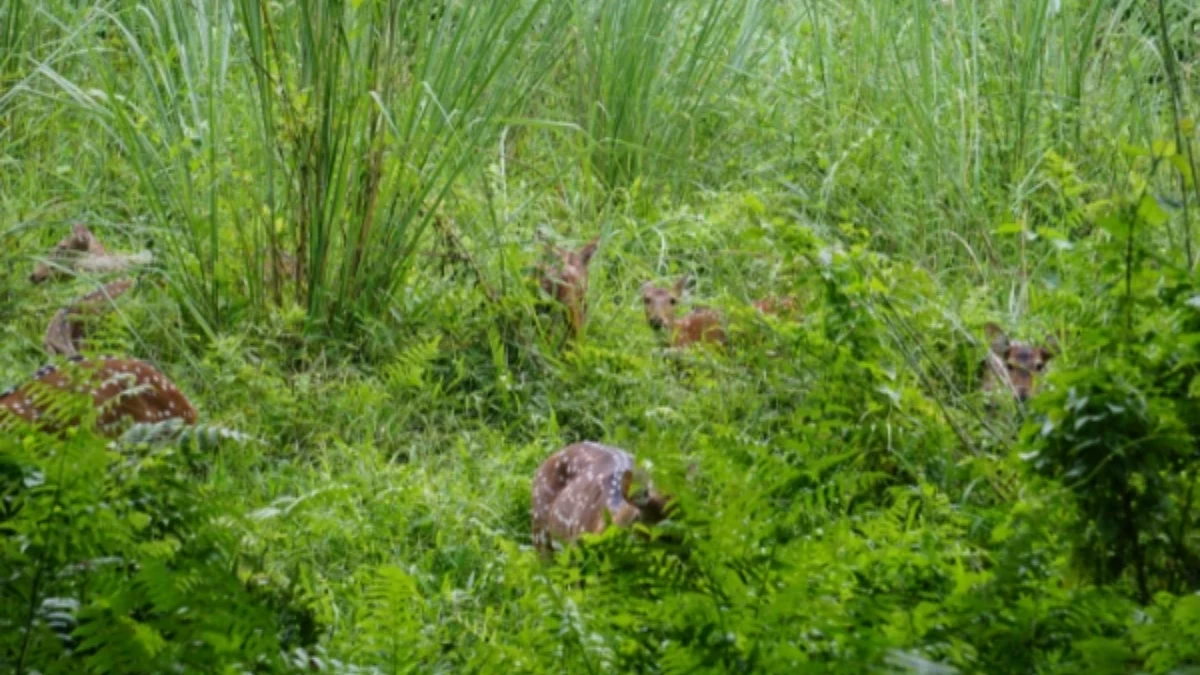
This isn't the Serengeti. You won't see vast herds crossing open plains. Chitwan is dense jungle: sal forests, grasslands up to 8 metres tall, and riverine forests along the Rapti and Narayani rivers. Animals here hide. The vegetation is thick. And that's precisely what makes spotting wildlife so thrilling when it happens.
The park is a UNESCO World Heritage Site and home to over 700 species of wildlife. Beyond tigers and rhinos, you might encounter sloth bears, wild elephants, gharial crocodiles, mugger crocodiles, gaur (wild bison), four species of deer, and over 500 bird species. It's one of the most biodiverse places on Earth, and it's sitting right at the bottom of the Himalayas.
The Wildlife You'll Realistically See
Let me set honest expectations. On a standard two-night, three-day visit:
| Animal | Chance of Sighting | Best Method |
|---|---|---|
| One-horned rhinoceros | 85-95% | Jeep safari or canoe |
| Spotted deer (chital) | 99% | Everywhere |
| Sambar deer | 70% | Forest edges, dawn/dusk |
| Mugger crocodile | 90% | Canoe trip on Rapti River |
| Gharial crocodile | 60% | Canoe trip |
| Wild boar | 75% | Grassland edges |
| Sloth bear | 15-20% | Deep jungle walk or jeep |
| Bengal tiger | 5-10% | Extended jeep safari, early morning |
| Wild elephant | 20-30% | Deep forest areas |
| Gangetic dolphin | 15% | Narayani River boat trip |
Yes, tiger sightings are rare. Anyone who guarantees you a tiger is lying. But 5-10% over a three-day visit means roughly one in every ten to twenty visitors sees one. Those odds improve significantly if you stay longer, go deeper into the park, and time your visits for early morning.
The Rhino Reality
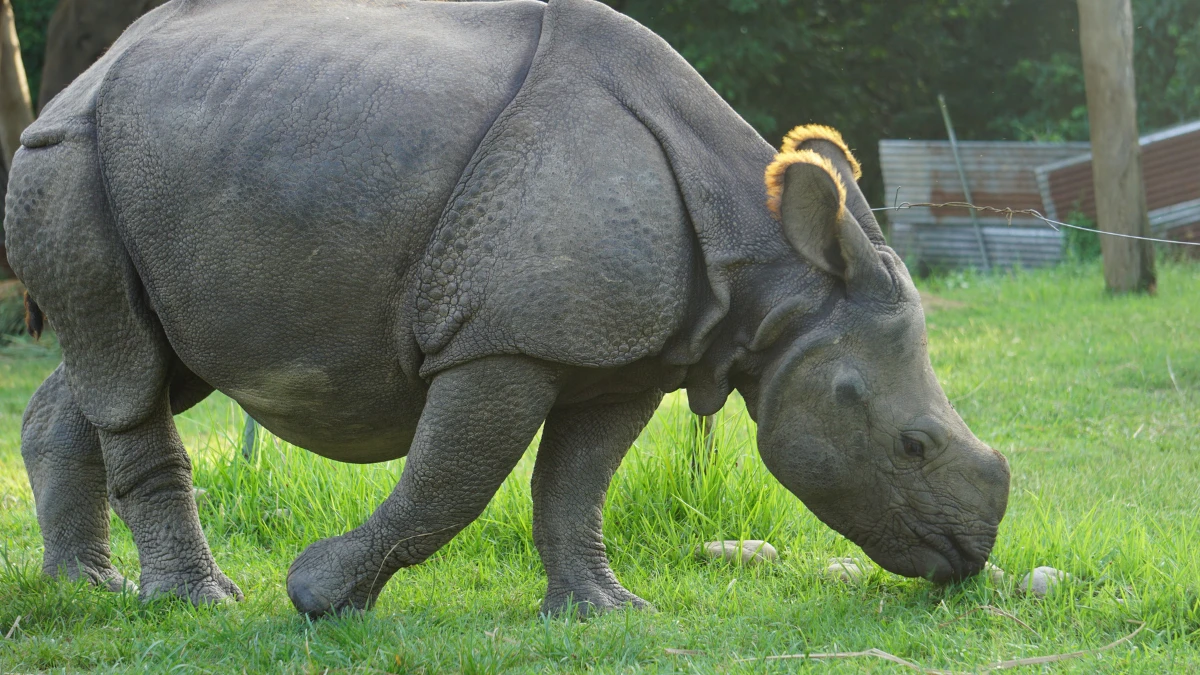
Rhinos are Chitwan's headline act, and they deliver. With over 700 in the park, sightings are almost guaranteed if you spend at least two full days. They're enormous (adults weigh up to 2,000 kg) and surprisingly unbothered by jeeps at a respectful distance. Most sightings happen near water sources or in the grasslands along the Rapti River.
My favourite rhino moment? A mother and calf crossing the river at dawn, water streaming off their armoured skin, mist rising behind them. One of our guests, a photographer from Berlin, was so moved she sat in the jeep crying. Wildlife does that to people.
What mistakes should you avoid on a Chitwan safari?
Here's what happens with the cheap bus-tour packages. You arrive mid-afternoon. You're taken to a concrete lodge near Sauraha. Next morning, you do a canoe trip and a short nature walk. Afternoon, a jeep safari on the most crowded route. Second morning, another short activity. Then you leave.
The problems with this approach:
- The most popular jeep routes near Sauraha are overcrowded. Animals have moved deeper into the park.
- Single jeep safaris of 3-4 hours cover only a fraction of the park.
- Mid-morning departures miss the prime wildlife hours (5:30-8:00 AM).
- Budget lodges near the road are noisy. You miss the dawn chorus entirely.
- No time for repeat visits to productive areas where animals were spotted.
I'm not saying budget trips are bad. I'm saying you need to know what you're optimising for. If you want a pleasant nature experience with guaranteed deer and likely rhinos, two days is fine. If you want a genuine chance at tigers, sloth bears, and wild elephants, you need at least three full days with morning and afternoon safaris. Related: How Much Does a Chitwan Jungle Safari Cost in 2027?
When is the best time to visit Chitwan National Park?
Timing
October to March is ideal. January and February mornings can be misty, which creates atmospheric conditions but reduces visibility. October, November, and March offer the best combination of comfortable temperatures and clear sighting conditions.
Avoid April to June unless you enjoy 40°C heat. The monsoon months (June to September) close most safari operations, though the park itself stays open and the lush green landscape is worth seeing if you can handle the rain and leeches.
Duration
Three nights minimum. Four or five if wildlife is your priority. Each additional day dramatically increases your chances of rare sightings. Animals have patterns. Guides learn where a particular tiger was seen yesterday and adjust routes accordingly.
Accommodation
Stay inside the park or at community-managed lodges on the park boundary. The difference between a Sauraha tourist-strip hotel and a lodge inside the buffer zone is enormous. Less light pollution means more nocturnal activity near your accommodation. Several of our clients have spotted rhinos from their lodge verandas.
Activities That Actually Work
Full-day jeep safari: This is the gold standard. Leave at 5:30 AM, stay out until 11:00 AM, return for lunch, then go back out from 3:00 PM until sunset. You'll cover more ground and catch both morning and evening activity windows.
Canoe trip on the Rapti: Don't skip this. The dugout canoe (locally called a dungha) drifts silently past crocodiles, water birds, and often rhinos bathing at the river's edge. It's peaceful, beautiful, and productive for wildlife.
Guided jungle walk: Walking through tiger habitat on foot is something that recalibrates your senses. You hear everything. Every snapped twig matters. Our guides carry no weapons. They read animal tracks, dung, scratch marks on trees, and alarm calls from deer and monkeys to navigate safely.
Bird watching: Over 500 species. If you're a birder, Chitwan is heaven. Specialities include the Bengal florican, giant hornbill, lesser adjutant stork, and the rare white-rumped vulture recovery population. Related: Shivapuri National Park Day Hike: Kathmandu's Backyard Wilderness.
Can you combine a Chitwan safari with a Nepal trek?
This is what we specialise in at The Everest Holiday. Nepal offers both Himalayan peaks and subtropical jungle, and combining them creates a trip that's hard to match anywhere on Earth.
Our most popular combination is the Kathmandu-Pokhara-Chitwan-Lumbini tour, which pairs cultural highlights with wildlife over 10-12 days. For photography enthusiasts, the Bardiya-Lumbini-Chitwan photography tour covers two national parks. And if you want Chitwan as a standalone deep experience, our Chitwan photography tour gives you four to five days with expert naturalist guides.
Many trekkers add Chitwan as a recovery after high-altitude treks. After two weeks at 5,000+ metres on the Everest Base Camp trek or the Annapurna Circuit, dropping to the warm lowlands feels like a different country. Your lungs fill completely. You eat fresh tropical fruit. You sleep in comfortable beds. And then you ride through the jungle at dawn watching rhinos graze.
Shorter treks pair beautifully with Chitwan too. The Ghorepani Poon Hill trek gives you mountain views in 4-5 days, then you head south for wildlife. The Langtang Valley trek works similarly.
Should you do the mountains first or the jungle first?
Mountains first, jungle second. After twelve days on a trail where everything is rock, ice and silence, the warm, green, noisy jungle feels like a different country, and the contrast makes both halves of the trip better. It is also kinder on your body: your legs rest, your lungs fill up, and you can eat fresh fruit and sleep in a proper bed before the flight home. Do it the other way round and you start the trek tired from the heat and the bus. At Chitwan we go by jeep, dugout canoe and on foot with a naturalist, and we do not offer elephant rides.
The Tharu People: Chitwan's Original Inhabitants
The Tharu community has lived in the Terai lowlands for centuries. They developed a natural resistance to malaria that allowed them to thrive where others couldn't survive. Before the malaria eradication programmes of the 1950s, this region was almost exclusively Tharu territory.
Visiting a Tharu village is a highlight most tourists underestimate. Their stick dances, mud-walled houses, and agricultural practices offer a window into a culture profoundly connected to the land. Several community homestay programmes now operate around Chitwan, providing income directly to Tharu families.
Our guides include Tharu naturalists who grew up in these forests. Their knowledge is different from trained wildlife biologists. It's intuitive, passed down through generations, and remarkably accurate. When our Tharu guide says "tiger was here this morning," he's reading signs most of us would never notice.
Chitwan vs. Bardiya: Which Park?
This question comes up constantly. Bardiya National Park, in far-western Nepal, is wilder and less visited. It has fewer tourists and arguably better tiger sighting odds per visitor. But it's harder to reach (a domestic flight to Nepalgunj plus a 4-hour drive, or a very long bus ride).
| Factor | Chitwan | Bardiya |
|---|---|---|
| Accessibility | 5-6 hours from Kathmandu by road | Flight + 4-hour drive, or 12+ hours by road |
| Tourist numbers | High (150,000+/year) | Low (15,000/year) |
| Tiger population | ~68 | ~30 |
| Rhino population | 700+ | ~40 |
| Tiger sighting chance | 5-10% (3-day visit) | 10-15% (3-day visit) |
| Accommodation quality | Wide range, budget to luxury | Limited, mostly mid-range |
| Wild elephant sightings | Moderate | Higher |
| Overall wildlife density | Higher | Lower but wilder feel |
My recommendation? If you have time for only one park, choose Chitwan. If you have time for both, do both. If you're specifically chasing tigers and don't mind the extra travel, Bardiya might edge it. Our Bardiya-Lumbini-Chitwan photography tour covers both parks for the serious wildlife enthusiast.
What should you pack for a Chitwan jungle safari?
- Neutral-coloured clothing: Olive, khaki, brown. Avoid white, bright colours, and anything that rustles loudly.
- Long sleeves and trousers: Mosquitoes are no joke. Dengue and malaria exist in the Terai, even if risk is low for tourists in managed areas.
- Binoculars: Essential. Even cheap 8x42s transform the trip.
- Insect repellent: DEET-based, 30% or higher.
- Camera with zoom lens: 200mm minimum. Animals are often at distance.
- Lightweight rain layer: Weather can shift quickly.
- Comfortable walking shoes: Not hiking boots. Trail shoes or sturdy trainers work best on jungle paths.
- Sunscreen and hat: The Terai sun is fierce, especially on river trips.
Safety: Let's Talk About It
Chitwan is home to tigers, rhinos, sloth bears, wild elephants, and crocodiles. These are genuinely dangerous animals. Every year, there are incidents, usually involving local villagers in the buffer zone, occasionally tourists who wander off without guides.
The rules are simple: never enter the park without a registered guide, stay in the vehicle during jeep safaris unless told otherwise, don't approach animals, and keep noise down. Our guides know exactly what distance is safe. They read animal body language. A rhino raising its head and pointing its ears forward is paying attention to you. Time to back up.
Sloth bears are statistically the most dangerous animal in Chitwan for humans. They're unpredictable, fast, and aggressive when surprised. On walking safaris, guides keep constant watch for bear signs. In twenty-seven years of guiding, I've had two close encounters. Both times, the guide's experience kept everyone safe.
The Experience Most People Miss
Beyond the headline wildlife, Chitwan offers something harder to quantify. There's a moment, usually on a canoe ride at dawn or during a quiet stretch of a jungle walk, when the noise of the world falls away completely. No engines, no phones, no voices. Just birdsong, water, and the vast breathing presence of the forest.
Many of our trekking clients tell me that their Chitwan days were the most peaceful part of their Nepal trip. The mountains are dramatic and overwhelming. The jungle is intimate and grounding. Together, they create a complete picture of what Nepal is.
If you're planning a Nepal trip that includes the Nepal motorbike tour, the ride from Kathmandu down to Chitwan through the winding Prithvi Highway is a highlight in itself. The Kathmandu Valley tour pairs well with a few days in Chitwan, as does a side trip from the Annapurna Base Camp trek if you return via Pokhara and head south.
For those seeking shorter mountain adventures before or after Chitwan, the Mardi Himal trek is a brilliant 5-day option. And if you want to explore Nepal's remote cultural heritage alongside wildlife, the Upper Mustang trek offers a sharp contrast: desert landscapes and ancient Tibetan monasteries, the polar opposite of Chitwan's lush jungle.
Frequently Asked Questions
What is the best time of year to visit Chitwan National Park?
October to March offers the best wildlife viewing conditions. The grass is shorter after the monsoon (October-November), making animals easier to spot. December to February mornings can be misty but midday is warm and clear. Avoid April to June due to extreme heat, and June to September due to monsoon rains and limited safari operations.
How many days do I need in Chitwan?
Three nights and two full days is the minimum for a satisfying experience. If wildlife is your main goal, four to five nights significantly improve your chances of rare sightings like tigers and sloth bears. Each additional day allows guides to adjust routes based on recent animal activity.
Is it safe to walk through the jungle in Chitwan?
Yes, with a registered guide. Walking safaris are one of Chitwan's most thrilling activities. Guides are trained to read animal signs, maintain safe distances, and respond to encounters. Never enter the park alone. The risk is very low with an experienced guide but real without one.
Can I see tigers in Chitwan?
Tiger sighting probability is roughly 5-10% over a three-day visit. Chitwan has approximately 68 Bengal tigers, but the dense vegetation makes sightings genuinely rare and genuinely special. Your best chance is during early morning jeep safaris in areas where tigers have been recently active. Even without seeing a tiger, you may see fresh pugmarks and scratch marks.
How do I get to Chitwan from Kathmandu?
Chitwan is approximately 150 km southwest of Kathmandu. By tourist bus, the journey takes 5-6 hours via the Prithvi Highway through Mugling. Private vehicles take 4-5 hours. Domestic flights to Bharatpur airport (the nearest airport) take 20 minutes but services are limited. Most visitors travel by road, and the journey itself, winding through river valleys and hills, is scenic.
Plan Your Chitwan Safari
If you're combining Chitwan with a Himalayan trek or visiting as a standalone wildlife trip, we build every itinerary around what you actually want to see and do, not a cookie-cutter package. Our guides are third-generation naturalists. We know where the animals are, when they move, and how to position you for the best time.
Get in touch and let's build your trip.
WhatsApp: +977 9810351300
Email:[email protected]
Written by Shreejan Simkhada, third-generation Himalayan guide and founder of The Everest Holiday. Licensed trekking operator, TAAN member #1586. Twenty-seven years of guiding experience across Nepal's mountains and jungles.
Chitwan safari? Try our Kathmandu-Pokhara-Chitwan loop. Our Kathmandu, Pokhara, Chitwan Tour (8 Days) is private (your group only, no strangers), 2027 dates open, From USD $949. WhatsApp us for tailored 2027 dates and current departures.
Planning a trip to Nepal?
Drop us your details and tell us what you have in mind. We will put together a personalised plan and get back to you.
Not sure which Nepal trek is right for you?
Take our free 2-minute quiz and get personalised recommendations based on your fitness, experience, and travel style.
Find Your Perfect Trek →Need Help? Call Us+977 9810351300orChat with us on WhatsApp
Latest Travel Blogs
Christmas and New Year Treks from Pokhara 2026/27: 3 to 5 Days
<p>Short treks from Pokhara for Christmas and New Year 2026/27: Panchase 3 days, Poon Hill 4 days and Mardi Himal 5 days. Weather, snow, what is open, and prices by group size.</p>
Read More
Thamdanda and Surke: The Road Head for Everest Base Camp by Road
Thamdanda is the road head where our Everest Base Camp trek by road starts and ends on foot. How to get there from Phaplu and what the first walk to Paiya is like.
Read MorePoon Hill Trek Permits 2027: ACAP, TIMS, Cost and What You Need
Poon Hill needs two permits: ACAP at NPR 3,000 and a TIMS card at NPR 2,000. Who arranges them, where they are checked, SAARC rates and the 2027 trek prices.
Read More Chat with Shreejan