Carry Me Back: How Our Everest Trekkers Help Keep the Khumbu Clean

Short answer: Carry Me Back is a campaign of the Sagarmatha Pollution Control Committee that asks Everest trekkers to carry bags of recyclable waste such as cans, bottles and tins from villages like Namche and Pangboche down to Lukla airport, so it can be taken out of the mountains. It is voluntary, and if your pack is already full, saying no is fine. Our guests can take part on the way down on our 12-day Everest Base Camp trek.
Last updated 3 October 2026. The campaign facts below come from the Sagarmatha Pollution Control Committee's own website (spcc.org.np), as at 3 October 2026. I have no reliable count of what our guests have carried, so there are no figures of ours on this page.
On 2 October 2026 an email arrived from the Sagarmatha Pollution Control Committee (SPCC) thanking us for taking part in its Carry Me Back campaign. I would rather explain what the campaign is than simply post a thank-you. Most trekkers have never heard of it, and it is one of the few things a visitor to the Khumbu can do that helps in a practical way.
What is the Carry Me Back campaign?
Carry Me Back (CMB) is a waste project run by SPCC, a non-profit founded in 1991 and based in Namche Bazaar. SPCC describes it as a joint effort with Sagarmatha Next, Sagarmatha National Park, the Park's Buffer Zone Management Committee, Khumbu Pasang Lhamu Rural Municipality, Tara Air, Sita Air and Blue Waste to Value.
The idea is simple. Trekkers, guides and local people volunteer to carry bags of semi-processed recyclable waste (aluminium cans, PET bottles, tins and glass) from upper Khumbu settlements such as Namche and Pangboche down to Lukla airport. From Lukla the waste is flown to Kathmandu to be recycled.
SPCC says the system was tested in autumn 2019, paused during the COVID-19 pandemic and restarted in spring 2022. It also reports that, as of 2024, 19,002 volunteers had taken part and 27,481 bags of recyclable waste had been carried from upper Khumbu to Lukla. Those are SPCC's numbers, not ours. You can read the project page at spcc.org.np.
Why is waste so hard to manage in the Khumbu?
SPCC calls the Everest region "one of the most remote and logistically difficult regions in the world" when it comes to moving waste. Above Lukla there is no road, so anything that leaves the valley goes down on a person's back, a yak's back or an aircraft.
The SPCC team put the problem in one sentence in their email to us: the Everest region faces a unique challenge in managing waste because of the lack of local recycling facilities and convenient transportation options.
SPCC's answer starts at the source. It places and maintains rubbish bins along the trekking routes, runs Environmental Stations in villages where waste is sorted and stored, and operates a Material Recovery Facility that semi-processes recyclables (all described on its home page). What is left is the hard part, getting those recyclables out of the valley to somewhere that can actually recycle them. That is the gap Carry Me Back fills.
If you want to see what the trail looks like without that effort, our Sagarmatha National Park guide is honest about the waste you can still see on the higher trail.
How do our guests take part?
The campaign fits our Everest Base Camp route well, because the way down is the way the bags travel. On our 12-day Everest Base Camp trek, you descend from Pangboche to Namche Bazaar on day 10 and on to Lukla on day 11, and you fly to Kathmandu on day 12. Pangboche, Namche and Lukla are exactly the places SPCC names.
We brief every guest before departure, and our guides can tell you about Carry Me Back on the trail. If you would like to carry a bag down, ask your guide. He will explain what goes in it and where it is handed in at Lukla. It is an invitation, never a requirement. After a week at altitude there will be days when your legs and your pack are full, and saying no is fine.
If you are still choosing a month, our Everest Base Camp weather guide will help. SPCC does not tie the campaign to one season in anything I could find. It tested the system in autumn and restarted it in spring, which are the two main trekking seasons. And since the waste leaves the Khumbu by air from Lukla, our guide to Nepal's domestic flights explains how that gateway works.
Is carrying a bag enough?
No. It sits on top of the basics, not in place of them. Carry out your own rubbish, use a reusable bottle with purification instead of buying plastic, and take your dead batteries back to Kathmandu. Our guide to responsible trekking in Nepal covers all of it, and our safe drinking water guide shows how to cut plastic bottles from the start.
What did SPCC say to us?
This is the main part of the email, sent on 2 October 2026 from the SPCC team:
"On behalf of the Sagarmatha Pollution Control Committee (SPCC), we extend our heartfelt gratitude for your participation in the Carry Me Back (CMB) campaign. The Everest Region faces a unique challenge in managing waste due to the lack of local recycling facilities and convenient transportation options. Your dedication to the CMB campaign plays a vital role in addressing this issue and brings us one step closer to a cleaner Everest."
The SPCC Team, Sagarmatha Pollution Control Committee, email to The Everest Holiday, 2 October 2026
Thank you to the SPCC team for the work they do in Namche every day, and to the guides and guests who carried bags down. If you are planning Everest Base Camp and would like to ask how it works on the trail, message me on WhatsApp at +977 9810351300. I answer it myself.
Sources: SPCC, Carry Me Back project page, SPCC home page, SPCC, About us, all read 3 October 2026.
Written by Shreejan Simkhada, CEO of The Everest Holiday, from a family of three generations of family guides. TAAN Member #1586.
Planning a trip to Nepal?
Drop us your details and tell us what you have in mind. We will put together a personalised plan and get back to you.
Not sure which Nepal trek is right for you?
Take our free 2-minute quiz and get personalised recommendations based on your fitness, experience, and travel style.
Find Your Perfect Trek →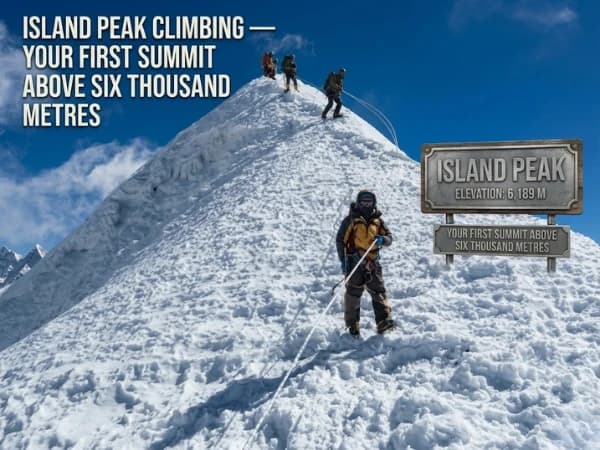
Island Peak Itinerary and Summit Day 2027: 14 Days, Base Camp to the Top
The 14-day Island Peak itinerary day by day, what summit day is like from base camp, where sources disagree on heights, best months and 2027 prices.
Read More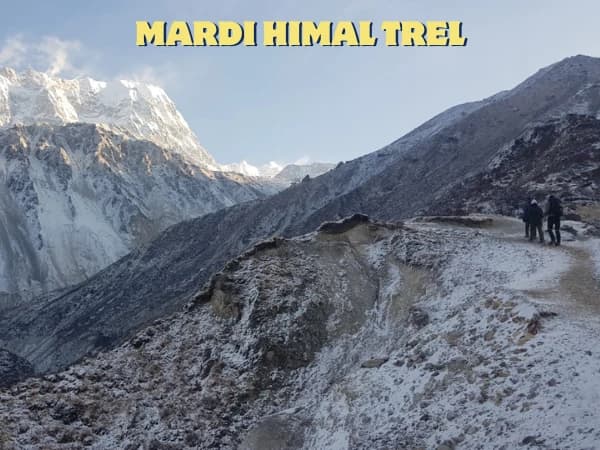
How Difficult Is the Mardi Himal Trek? An Honest Day-by-Day Rating for 2027
An honest day-by-day rating of the Mardi Himal trek: the steep climb to High Camp, the 4,500 m push to Base Camp, altitude risk, who finds it hard and 2027 prices.
Read More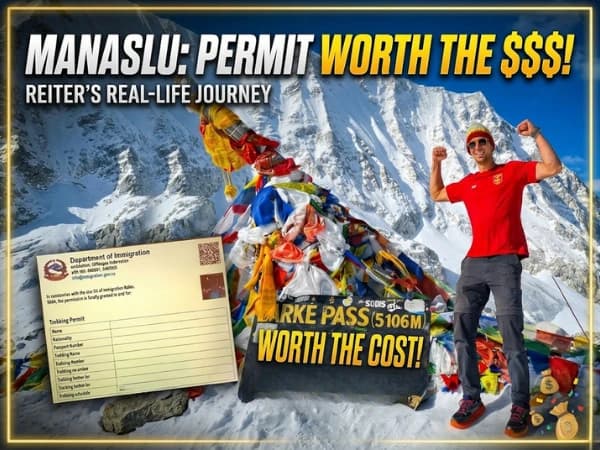
Manaslu Circuit Reopened: What Changed After the 2026 Floods and How to Plan 2027
The Manaslu Circuit over the Larke Pass is open again with extreme caution. What changed in the lower valley after the two 2026 floods, 2027 prices and permits, and how I would plan.
Read More Chat with Shreejan