
The summit of Everest is not visible from Base Camp. The real view is from Kala Patthar at 5,545m. Here is what you actually see and why it still matters.
Govt Regd. No.: 147653/072/073
Travel Agency Licence: 2838/072
Can You Actually See Everest from Base Camp? The Truth Nobody Posts on Instagram

Can You Actually See Everest from Base Camp? The Truth Nobody Posts on Instagram
Short answer: No. Everest Base Camp (5,364 m) sits in close under the Khumbu Icefall, and the wall of Nuptse (7,861 m) hides the summit of Everest. The view you came for is from Kala Patthar (5,545 m), which is 181 m higher and a pre-dawn climb from Gorak Shep (5,164 m). It is included on our 12-day Everest Base Camp trek.
| Viewpoint | Altitude | What you see of Everest | On our trek |
|---|---|---|---|
| Namche Bazaar viewpoint (Everest View Hotel) | 3,880 m | Everest, Lhotse, Nuptse and Ama Dablam on the horizon, distant | Day 3, acclimatisation hike (12-day EBC) |
| Tengboche Monastery | 3,860 m | Everest in the background with Ama Dablam behind the monastery | Day 4 (12-day EBC) |
| Everest Base Camp | 5,364 m | Icefall and glacier close up; Nuptse hides the summit of Everest | Day 8 (12-day EBC) |
| Kala Patthar | 5,545 m | Full south face, summit pyramid and South Col | Day 9, sunrise (12-day EBC) |
| Gokyo Ri | 5,357 m | Panorama of Everest, Lhotse, Makalu and Cho Oyu | Gokyo treks only |
| Months | Views of Everest |
|---|---|
| March to May | Clear mornings, with cloud building through the afternoon. Base Camp is a tent city of climbing teams. |
| June to September | Monsoon cloud hides the mountains for much of the day. Not the season for views. |
| October and November | The clearest skies of the year and the best chance of a cloud-free Kala Patthar sunrise. November is colder. |
| December to February | Often clear but very cold. |
By Shreejan Simkhada, CEO & Co-Founder, The Everest Holiday | TAAN #1586 | Third-Generation Himalayan Guide
Scroll through Instagram. Search #EverestBaseCamp. You'll find thousands of photos showing a golden pyramid of rock and ice towering above a sea of cloud, the sun rising behind it, prayer flags catching the wind in the foreground. Striking. Iconic. And almost certainly not taken from Everest Base Camp.
I've guided trekkers to Base Camp for over a decade. I've stood at 5,364 metres with hundreds of people from dozens of countries and watched the same thing happen every single time. They look around. They scan the peaks. Then the question comes: "So... which one is Everest?"
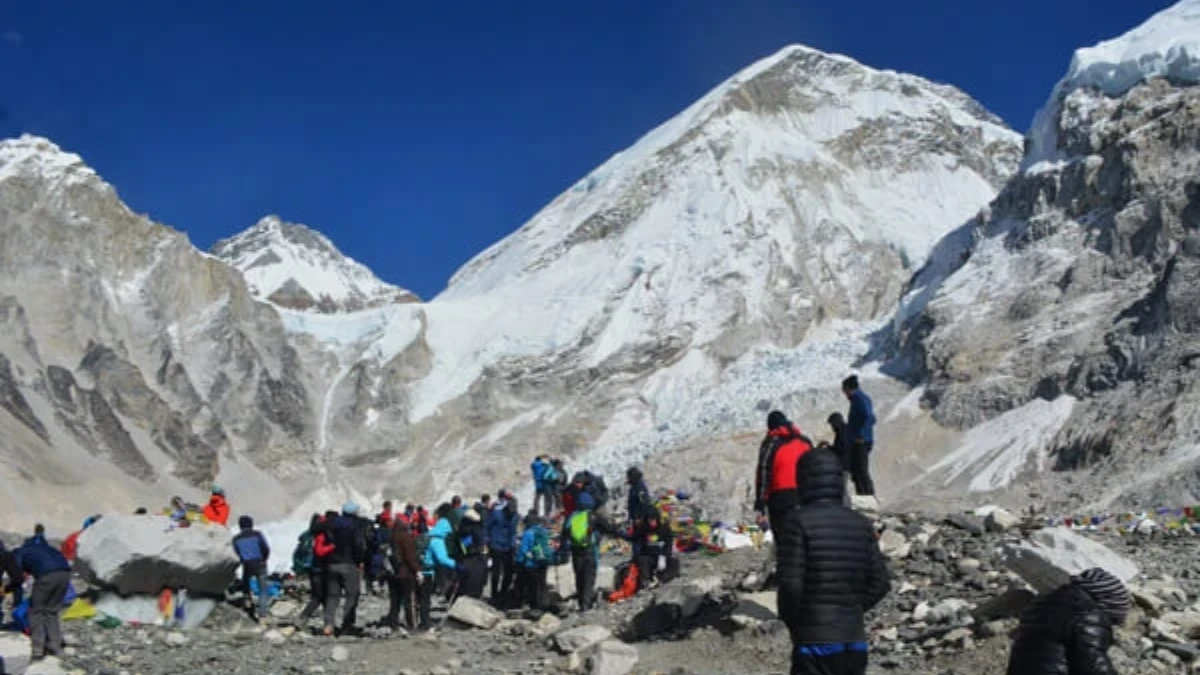
The short answer to "can you see Everest from Base Camp?" is: no. The summit of Everest is not visible from Base Camp; you see it from Kala Patthar. If nobody tells you that before you go, you will spend your first ten minutes at Base Camp feeling confused instead of amazed.
This is the honest guide I wish someone had written before my first trekkers started asking me this question. No Instagram filters. No misleading captions. Just the truth, the actual viewpoints, and exactly how to get the view you came for.
Can you actually see Mount Everest from Everest Base Camp?
When you arrive at Everest Base Camp (5,364m), you're standing on the Khumbu Glacier at the foot of the Khumbu Icefall. You're surrounded by enormous mountains on every side. The scale is staggering, genuinely difficult to process. But the classic pyramid of Everest, the image burned into everyone's brain from documentaries and posters, isn't the view that greets you.
Here's the geography that nobody explains on social media.
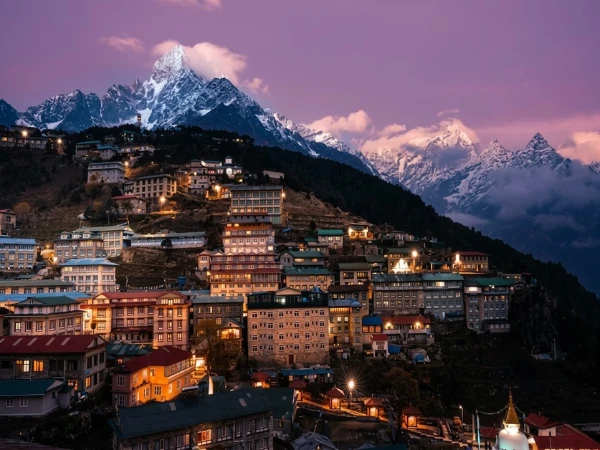
Base Camp sits on the south side of Everest, tucked in close to the mountain's base. From this angle, the massive wall of Nuptse (7,861m) stands directly between you and the main Everest summit. Nuptse is Everest's neighbour, and it's huge, a sheer wall of rock and ice that dominates your entire field of vision to the east. The Lho La ridge blocks the view to the north-west.
The summit of Everest is not visible from Base Camp. Nuptse and the Lho La ridge hide it completely, and from the glacier you cannot see the South Col, the pyramid shape or the sweeping ridgeline that defines every famous photograph. The geometry simply does not work from this angle. You are too close and too low.
This surprises almost everyone. And it doesn't need to. Because the places where you CAN see Everest properly are already part of every good Everest Base Camp trek itinerary.
Where Can You Actually See Everest Clearly?
The Khumbu region has several viewpoints where Everest reveals itself fully. Here they are, ranked from best to good.
1. Kala Patthar (5,545m), The Definitive View
This is it. The one. Nearly every "Everest from Base Camp" photo on Instagram was actually taken from Kala Patthar.
Kala Patthar is a rocky outcrop at 5,545 metres, sitting on the southern flank of Pumori across the valley from Everest. From this angle, Nuptse no longer blocks the view. The full south face of Everest opens up, the summit pyramid, the South Col, the Lhotse face, the Khumbu Glacier flowing below. It's the complete picture.
The hike starts from Gorak Shep (5,164m) and takes two to three hours up. Most trekkers leave at 4:00 or 4:30 AM in pitch darkness, climbing by head torch, arriving just as the first light touches Everest's summit. Watching the mountain turn from grey to gold to blazing white as the sun rises is one of the most powerful things I've ever witnessed, and I've seen it dozens of times.
Every EBC trek we run at The Everest Holiday includes Kala Patthar. We'd never send someone all that way without including the best viewpoint on the route.
2. Gokyo Ri (5,357m), The Panoramic Alternative
If Kala Patthar gives you the close-up, Gokyo Ri gives you the wide shot. From this summit above the turquoise Gokyo Lakes, you can see four of the world's six highest mountains: Everest, Lhotse, Makalu, and Cho Oyu. All at once. In a single 360-degree sweep.
Gokyo Ri is part of a different route through the Khumbu, following the Ngozumpa Glacier up the Gokyo Valley instead of the main EBC trail. The view of Everest is slightly more distant than from Kala Patthar, but the panorama is arguably even more spectacular because you're seeing the entire Himalayan chain rather than one mountain up close.
Our Gokyo Valley Lakes Trek takes you here, and it's one of my personal favourite routes in all of Nepal. Fewer trekkers, turquoise lakes, and that sunrise view from Gokyo Ri that makes you forget how cold your fingers are.
3. Tengboche Monastery (3,860m), The Classic Composition
Tengboche might be the most photographed scene in Nepal trekking, and for good reason. The monastery sits on a forested ridge with Ama Dablam rising behind it and Everest visible in the background. It's the kind of view that makes you put your trekking poles down and just stand there.
You're still far enough away that the full peak is visible, and the monastery in the foreground gives the photograph scale and cultural weight that pure mountain views lack. If you're a photographer, this is your composition shot.
4. Namche Bazaar Viewpoint (3,880m), Your First "There It Is" Moment
Most trekkers get their first proper view of Everest on the acclimatisation day hike above Namche Bazaar, near the Everest View Hotel at 3,880 metres. Everest, Lhotse, Nuptse, and Ama Dablam are all arrayed along the horizon. The mountain is distant but unmistakable.
I've watched hundreds of trekkers see Everest for the first time from this viewpoint. There's always the same reaction, a sharp intake of breath, then silence, then the cameras come out. It's still a few days' walk away, but seeing it with your own eyes for the first time changes something.
Is the Everest Base Camp trek worth it?
I've just told you that you can't properly see Everest from Base Camp. So why do thousands of people trek there every year? Why do I keep guiding people there? Because Base Camp isn't about the view. It's about something deeper.
By the time you arrive at 5,364 metres, you've walked for days through some of the most extraordinary terrain on Earth. You've crossed suspension bridges over glacial rivers. You've acclimatised through headaches and breathlessness. You've slept at 4,000 metres with frost on the inside of the windows and kept going. Every step at this altitude takes effort.
And then you're there. Standing where the great expeditions begin.
The Khumbu Icefall is right above you, a chaotic, frozen river of seracs and crevasses that expedition climbers must cross to reach higher camps. The same frozen obstacle course that Hillary and Tenzing navigated in 1953. The same route that climbers are crossing right now during spring season.
The glacier groans and cracks beneath your feet. It's alive. The ground is rough, uneven moraine, loose stones with ice visible in patches below. It's not a tidy campsite. It feels wild and exposed, like a place where serious things happen.
During spring climbing season (late March through May), Base Camp transforms into a colourful tent city, expedition teams from around the world preparing for summit attempts. Prayer flags snap in the wind. You can feel the energy, the tension, the ambition. In autumn, it's quieter. The tents are gone. Just you, the glacier, and the mountains. Some trekkers prefer it this way.
I've seen people cry at Base Camp. I've seen quiet, reserved trekkers suddenly embrace their guide. I've watched a seventy-year-old sit on a rock and stare at the Icefall with tears on her face for twenty minutes without speaking.
The view from Kala Patthar is for your camera. The feeling at Base Camp is for your soul. You need both.
Can you see Everest from Kala Patthar at sunrise?
Let me walk you through this morning, because it's the highlight of the entire trek and it deserves more than a one-line mention in an itinerary.
Your alarm goes off at 3:30 AM. It's dark. It's cold, properly cold, minus 15 to minus 25 degrees Celsius depending on the season. You're at Gorak Shep, 5,164 metres, and your body doesn't want to leave the sleeping bag. Mine never does either, and I've done this dozens of times.
You pull on every warm layer you have. Down jacket, windproof shell, double gloves, balaclava. Your guide is already outside, head torch on, checking the sky. If the stars are out, you're going.
The trail is steep and rocky. In the beam of your head torch, you can see the boots of the person ahead. Your breathing is loud, at this altitude, the air holds roughly half the oxygen you're used to. Each step requires conscious effort. You stop often. That's normal. Everyone stops.
After two to three hours, the sky begins to lighten behind you. The mountains emerge as dark silhouettes. And then the sun touches Everest's summit.
It starts as a thin line of gold along the very top of the pyramid. Then it spreads, creeping down the south face, turning grey rock to amber, then to blazing white. Lhotse catches the light next, then Nuptse. The Khumbu Glacier below glows. The entire amphitheatre of peaks ignites in a sequence that takes maybe ten minutes but feels like it could go on for ever.
This is the photograph that ends up on Instagram captioned "Everest Base Camp." This is what everyone is actually imagining when they picture the trek. And standing there, watching it happen with your own eyes at 5,545 metres after everything it took to get there, no photo will ever do it justice.
How do you take the best photos of Everest on the trek?
I've watched thousands of trekkers take photos at these viewpoints. Here's what I've learnt about getting good ones.
Kala Patthar (5,545m)
- Keep your battery warm. Cold kills batteries faster than anything. Keep your phone or camera inside your down jacket, against your body, until the moment you need it. I've watched trekkers reach the summit and discover their phone died in their pocket overnight.
- Arrive before the light. The best photos happen in the ten minutes as the sun creeps down the summit. Once Everest is fully lit, you've missed the drama. Be ready to shoot the moment the first gold appears.
- Include a person for scale. Everest photographs without something human in the frame often look flat. A silhouette against the sunrise, a trekker with prayer flags, these give the image the scale it needs.
- Panorama mode works here. The full sweep from Pumori to Everest to Lhotse to Nuptse is wider than any standard lens captures well. A slow panorama on your phone, keeping it level, will give you the complete scene.
- Don't forget to put the camera down. Ten minutes watching this sunrise with your own eyes is worth more than fifty photos you'll scroll past in six months.
Gokyo Ri (5,357m)
- Shoot in every direction. The 360-degree panorama is the whole point of Gokyo Ri. Don't just point your camera at Everest, turn around. The Ngozumpa Glacier stretching below you, the turquoise Gokyo Lakes, Cho Oyu to the north, it's all worth capturing.
- Use the lakes as foreground. If visibility is good, you can frame Everest above the third Gokyo Lake. That combination of turquoise water and 8,000-metre peaks is one of the most striking compositions in the Himalaya.
- Morning light is best. Same principle as Kala Patthar, go early. Afternoon cloud builds fast in the Gokyo Valley.
Tengboche Monastery (3,860m)
- Early morning or late afternoon. The monastery faces south, so morning light hits it well. Late afternoon can give you warm side-lighting on the building with Ama Dablam behind.
- Frame the monastery small. The temptation is to zoom in on the monastery itself. Resist it. Pull back and let the mountains dwarf it, that contrast between human architecture and Himalayan scale is what makes this viewpoint special.
- Stay for the monks' puja if you can. The sound of chanting mixed with that view is something photos can't capture, but it'll be a memory you keep.
Namche Bazaar Viewpoint (3,880m)
- Go on your acclimatisation day. You'll be hiking without your full pack, which means steadier hands and more energy for finding good angles.
- This is your wide establishing shot. Everest is distant but clearly identifiable. Frame it as a panorama of the entire Khumbu skyline rather than trying to zoom in on one peak.
- Cloud clears early here too. Aim to reach the viewpoint by 8:00 or 9:00 AM for the clearest conditions.
When do you first see Everest on the EBC trek?
Here's when and where you'll see Everest as you walk the trail, so you know what to expect each day.
Day 3: Namche Bazaar. Your first clear view of Everest from the viewpoint above town at 3,880m. It's distant but unmistakable. This is also when most trekkers realise just how many other peaks surround it, Lhotse, Nuptse, Ama Dablam, Thamserku.
Day 4: Namche to Tengboche. Intermittent views through gaps in the ridge as you walk. Weather-dependent, but on a clear morning you'll catch glimpses that remind you where you're headed. The trail drops and rises through rhododendron forest, and every clearing offers a potential view.
Day 4: Tengboche. The monastery viewpoint. Arguably the most beautiful single scene on the trek. Everest and Ama Dablam framing the monastery.
Day 5 to 6: Dingboche. As you climb higher into the valley, Everest becomes partially hidden again by closer peaks. The landscape grows more stark and alpine. Island Peak and the Lhotse wall dominate. The views are spectacular, but they're of different mountains.
Day 7 to 8: Lobuche, then Gorak Shep and EBC. You're deep in the glacier valley now. Pumori and Changtse are your companions. At Base Camp itself, Everest's summit is hidden behind Nuptse, as we've discussed.
Day 9: Kala Patthar. The main event. Everything I've described above. This is the morning that defines the trek.
Which treks have better Everest views than Base Camp?
Not everyone wants or needs to trek to Base Camp. If seeing Everest clearly is your primary goal, several alternative routes give you outstanding views, sometimes from different and equally dramatic angles.
Gokyo Lakes Trek
The Gokyo Lakes trek follows a parallel valley to the west of the main EBC trail, along the Ngozumpa Glacier (Nepal's longest). You pass a chain of turquoise glacial lakes and climb Gokyo Ri (5,357m) for that four-8,000-metre-peak panorama I mentioned earlier.
This route is quieter than the main EBC trail. There are fewer teahouses, fewer trekkers, and a completely different atmosphere. If you've already done the classic EBC trek and want to return to the Khumbu with fresh eyes, Gokyo is where I'd send you.
Everest Base Camp via Gokyo and Cho La Pass
Want the best of both worlds? The EBC via Gokyo and Cho La Pass trek combines the Gokyo Valley, Gokyo Ri, the Cho La Pass (5,420m), and the classic EBC route with Kala Patthar. You see Everest from multiple angles over two weeks. It's more demanding, the Cho La crossing requires good fitness and favourable weather, but if you want the most complete Everest experience possible from a single trek, this is it.
Everest Three Passes Trek
The Everest Three Passes Trek is the big one, 17 days crossing Kongma La (5,535m), Cho La (5,420m), and Renjo La (5,360m). You visit EBC, climb Kala Patthar, see the Gokyo Lakes, and summit Gokyo Ri. You'll see Everest from so many angles over those 17 days that by the end of the trek, you'll recognise it like an old friend. This is for experienced trekkers with solid fitness. It's physically demanding, but it's the ultimate Khumbu experience.
EBC with Gokyo Ri Trek
Our EBC with Gokyo Ri trek combines the classic Base Camp route with a side trip to Gokyo Ri, giving you both the Kala Patthar sunrise and the Gokyo panorama without committing to the full Three Passes route. It's a middle ground that works well for trekkers who want more than the standard EBC itinerary but aren't ready for three high passes.
Everest View Trek
If altitude is a concern, or you simply have less time, the Everest View Trek takes you to 3,880 metres in seven days. You'll see Everest clearly from the Namche viewpoint, the same view EBC trekkers get on their acclimatisation day. It's ideal for older trekkers, families with children, or first-timers who want to see Everest without the physical demands of going above 5,000 metres.
Frequently Asked Questions
Can you see Everest from Everest Base Camp?
No. The summit of Everest is hidden behind Nuptse (7,861m) and the Lho La ridge from the Base Camp angle. You see it from Kala Patthar (5,545m), which is included in all our EBC itineraries.
Where is the best place to see Everest on the EBC trek?
Kala Patthar at sunrise. It's 5,545 metres, reached by a two-to-three-hour pre-dawn hike from Gorak Shep. This is where virtually all the famous "Everest Base Camp" photos are actually taken. Other excellent viewpoints include Gokyo Ri (5,357m), Tengboche Monastery (3,860m), and the Namche Bazaar viewpoint (3,880m).
Is Kala Patthar harder than reaching Base Camp?
In terms of altitude, yes, Kala Patthar (5,545m) is 181 metres higher than EBC (5,364m). The hike is steep, you're doing it before dawn in freezing darkness, and you're already fatigued from days of trekking. Physically, it's the toughest morning of the trip. But it's short, and the reward is the single best view on the entire trek. Our guides monitor everyone's condition and set a pace that gets you there safely.
What if the weather is bad on Kala Patthar day?
October to November and March to May give the best chance of a clear sunrise from Kala Patthar, but no month is guaranteed. If conditions aren't right, some itineraries allow a second attempt the following morning. Our guides know the Khumbu's weather patterns and will adjust timing where possible.
Can I see Everest without trekking to Base Camp?
Yes. The Everest View Trek (seven days, maximum 3,880m) gives you a clear view from the Namche viewpoint. You can also see Everest from Nagarkot (2,175m) near Kathmandu on very clear days, though it's distant. For close-up views without the full EBC commitment, the Everest View Trek or the Gokyo Lakes Trek are the best options.
Why do people on Instagram say they saw Everest from Base Camp?
Because the Kala Patthar sunrise and the Base Camp visit happen on consecutive days of the same trek. The memories blend. People come home, sort through their photos, and the Kala Patthar sunrise shot becomes the defining image of their "Base Camp experience." When they post it, they caption it with the trip name, not the exact GPS location. Nobody's lying, they're just simplifying. But it creates an expectation that doesn't match reality.
Ready to See Everest for Yourself?
Now you know what most people don't: Base Camp gives you the experience, Kala Patthar gives you the view, and together they make the Everest Base Camp trek one of the most complete adventures on Earth.
I've been guiding people to these mountains for over a decade, and I still get a chill when the sunrise hits Everest's summit from Kala Patthar. It never gets old. And the look on a trekker's face when they realise what they've just accomplished by standing at Base Camp, that never gets old either.
Here's where to start:
- Classic EBC Trek (12 days):Full itinerary with Kala Patthar included
- EBC + Gokyo + Cho La (15 days):See Everest from every angle
- Everest View Trek (7 days):Great views without going above 3,880m
- Not sure which trek?Tell us about yourself and we'll recommend the best fit
Every trek with The Everest Holiday includes a licensed guide, all permits, and the knowledge that your booking supports 70 children's education through the Nagarjun Learning Center.
Message me directly on WhatsApp: +977 9810351300
Email: [email protected]
I'll respond personally within 30 minutes during Nepal business hours. No chatbot. No sales team. Just me.
See you in the mountains.
Shreejan Simkhada
CEO & Co-Founder, The Everest Holiday
TAAN #1586 | Third-Generation Himalayan Guide
Want to see Everest with your own eyes? Our Everest Base Camp Trek (12 Days) is private (your group only, no strangers), 2027 dates open, From USD $1399. WhatsApp us for tailored 2027 dates and current departures.
Planning a trip to Nepal?
Drop us your details and tell us what you have in mind. We will put together a personalised plan and get back to you.
Not sure which Nepal trek is right for you?
Take our free 2-minute quiz and get personalised recommendations based on your fitness, experience, and travel style.
Find Your Perfect Trek →Need Help? Call Us+977 9810351300orChat with us on WhatsApp
Related Trek Packages
 US$1,399
15 DaysMax 20
(6 reviews)
Everest Base Camp Trek By Road Trip - 15 Days Itinerary and Cost
Starts From
ExploreUS$1,399
Everest Base Camp with Gokyo Lakes Trek via Chola Pass - 15 Days
Starts From
ExploreUS$1,699
Latest Travel Blogs
Christmas and New Year Treks from Pokhara 2026/27: 3 to 5 Days
<p>Short treks from Pokhara for Christmas and New Year 2026/27: Panchase 3 days, Poon Hill 4 days and Mardi Himal 5 days. Weather, snow, what is open, and prices by group size.</p>
Read More
Thamdanda and Surke: The Road Head for Everest Base Camp by Road
Thamdanda is the road head where our Everest Base Camp trek by road starts and ends on foot. How to get there from Phaplu and what the first walk to Paiya is like.
Read MorePoon Hill Trek Permits 2027: ACAP, TIMS, Cost and What You Need
Poon Hill needs two permits: ACAP at NPR 3,000 and a TIMS card at NPR 2,000. Who arranges them, where they are checked, SAARC rates and the 2027 trek prices.
Read More Chat with Shreejan