
Teahouses cost $500-800 less. Camping gives total freedom. A third-generation guide compares comfort, cost, routes, and who each style suits best.
Govt Regd. No.: 147653/072/073
Travel Agency Licence: 2838/072
Camping vs Teahouse Trekking in Nepal: Which Is Right for You?

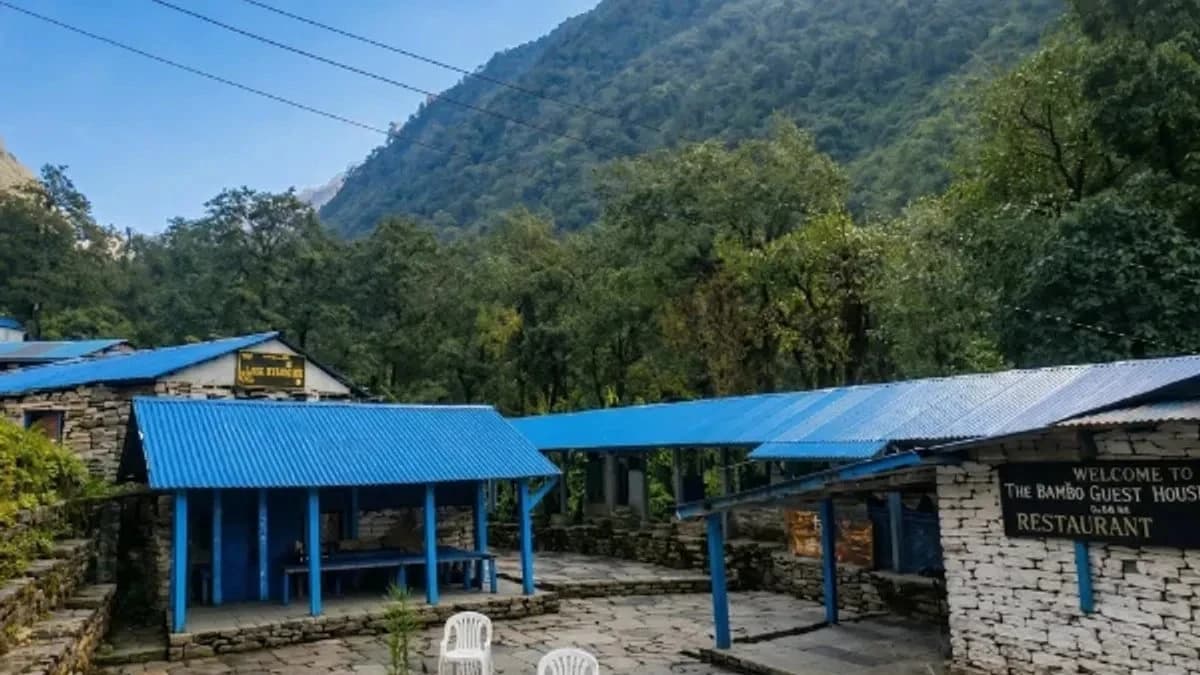
Short answer: Teahouse trekking means sleeping and eating in lodges along the trail, and it covers the popular routes such as Everest, Annapurna and Langtang. Camping treks carry tents, a cook and supplies, and are needed only on remote routes where lodges do not exist. Teahouses are cheaper and simpler. Camping costs more but takes you further from the crowds. Most people start with a teahouse trek such as our 12-day Everest Base Camp trek.
Camping vs Teahouse Trekking in Nepal: Which Is Right for You?
My grandfather carried canvas tents on bamboo poles to Everest Base Camp in 1973. No lodges existed above Namche Bazaar. If you wanted to trek, you camped. Full stop.
Fifty years later, you can walk to Base Camp, sleep in a warm bed every night, charge your phone, and order pizza in Namche. Nepal's teahouse network has changed everything about how people experience the Himalaya.
But camping hasn't gone anywhere. Some of the most rewarding routes in the country still require it. And even on popular teahouse trails, a handful of trekkers choose tents every year for reasons that have nothing to do with nostalgia.
I've guided both styles for years. Here's what each actually involves, what they cost, and how to decide which suits you.
What is teahouse trekking in Nepal really like?
The word "teahouse" sounds quaint. And some of them are: a grandmother running two rooms above her kitchen in a stone house older than you. But the reality across most popular routes is closer to budget guesthouse.
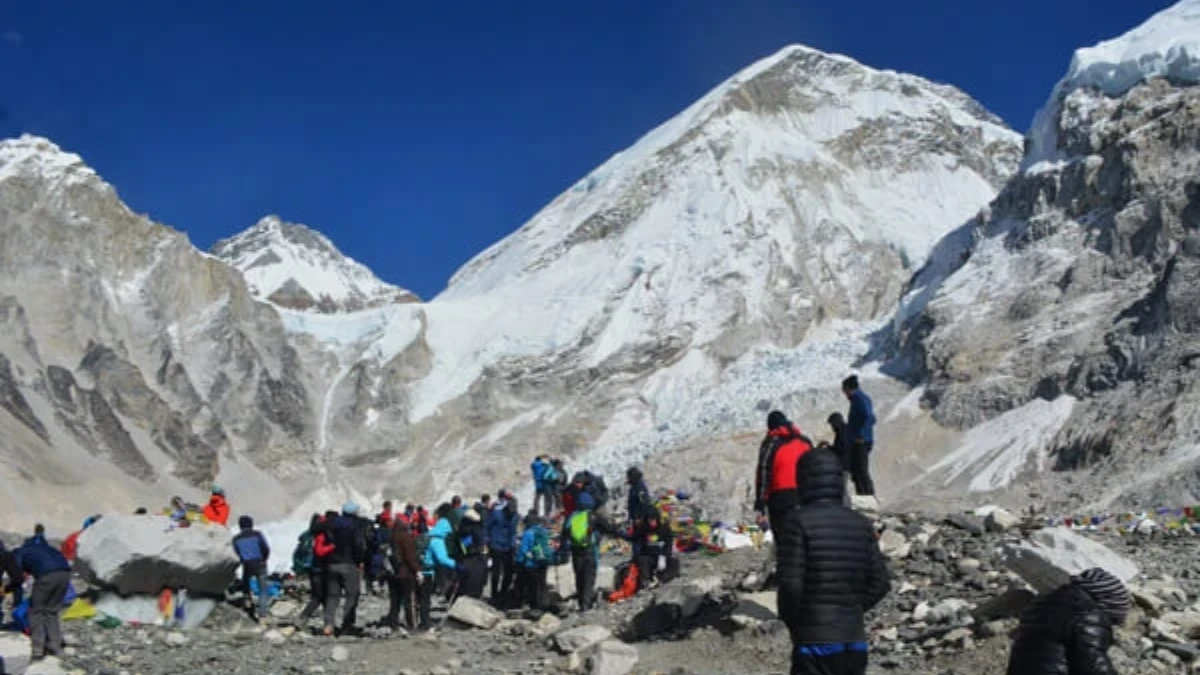
On the Everest Base Camp trek, teahouses in Namche and Lukla have hot showers, Wi-Fi, and menus running to six pages. Higher up, at Gorak Shep (5,164m), you'll share a plywood-walled room with a stranger, the toilet is outside, and the only heat comes from a yak-dung stove in the common room that costs 500 rupees per hour.
That range, from surprisingly comfortable to genuinely rough, catches people off guard.
What you'll get at a typical teahouse
- Room: Twin beds with foam mattresses and thin pillows. Bring your own sleeping bag; the blankets aren't enough above 3,500m. Most rooms have no heating and no lock.
- Food: Dal bhat (rice, lentils, vegetables) is the staple, unlimited refills at most places. Egg fried rice, noodle soups, and momos appear on almost every menu. Above 4,000m, portions shrink and prices double.
- Toilets: Squat toilets are standard. Western-style toilets exist at lower elevations. Hot water for showers costs extra (300-600 NPR) and isn't available everywhere above Dingboche.
- Charging: Most teahouses charge 300-500 NPR per device. Bring a power bank. Solar panels at high altitude are unreliable in cloudy weather.
- Privacy: Minimal. Walls are thin. Rooms are small. Snoring carries. Earplugs are worth their weight in gold.
The social element is genuinely one of teahouse trekking's biggest draws. You're sharing a dining room with trekkers from a dozen countries. Stories get swapped over lemon tea. Trail advice flows freely. If you're travelling solo, you won't feel alone.
The honest downsides
Peak season (October-November) means competition for beds. On the Everest trail, teahouses above Tengboche fill by early afternoon. Arrive late and you'll sleep in the dining room, or walk another hour to the next village in the dark.
Menu fatigue hits around day five. You'll eat dal bhat happily the first three nights. By night eight, you'd trade your trekking poles for a fresh salad.
And noise. Trekkers coughing through the night at altitude, groups leaving at 4am with headlamps blazing, generator hum until 9pm. Light sleepers struggle.
What does camping trekking in Nepal involve?
Camping in Nepal doesn't mean hauling your own tent and cooking instant noodles on a portable stove. Organised camping treks come with a crew: cook, kitchen assistant, porter team, and guide. Your job is to walk.
A typical camping setup for a group of four:
- Sleeping tents: Two-person dome tents, one per two trekkers (or one per trekker on premium trips)
- Dining tent: A mess tent with a folding table, chairs, and sometimes a heater
- Toilet tent: A private toilet tent with a portable commode. Far better than most high-altitude teahouse toilets, frankly
- Kitchen tent: Where the magic happens. Good Nepali trek cooks produce meals that genuinely shock first-timers
- Crew: For a party of four, expect 8-12 support staff including porters
Camp gets set up before you arrive. You walk in, your tent is ready, tea is being poured. After dinner, a hot water bottle goes into your sleeping bag. In the morning, someone brings bed tea to your tent flap.
The honest downsides of camping
It costs more. Significantly more. A full camping crew, food supplies, and equipment add $500-800 to the trek price compared to the same route done teahouse-style.
You miss the social atmosphere. Dining in your mess tent means you won't meet the Australian couple doing the same trek, or the retired Japanese professor who's been coming to Nepal for twenty years. Some people consider this a feature, not a bug.
Nights are colder. Teahouse dining rooms have stoves. Tents don't. Even a four-season sleeping bag gets tested at 4,500m in November.
And the environmental footprint is larger. More waste, more fuel, more impact on campsites. Responsible operators minimise this, but camping is inherently harder on the land.
How much does teahouse vs camping trekking cost in Nepal?
Numbers matter. Here's what each style typically costs for a 14-day trek in the Everest or Annapurna region, based on our 2025 pricing:
| Category | Teahouse Trek | Camping Trek |
|---|---|---|
| Accommodation | $0-5/night (often free with meal purchase) | Included in package (tents provided) |
| Food (per day) | $15-25 (menu prices increase with altitude) | Included (cook prepares 3 meals + snacks) |
| Guide + porters | $35-50/day total | $80-120/day total (larger crew) |
| Equipment | Sleeping bag only | All camping gear provided |
| Extras (showers, charging, Wi-Fi) | $3-8/day | Solar charger included; no shower facilities |
| Typical total (14 days, per person, group of 2) | $1,200-1,800 | $1,800-2,600 |
The gap narrows for larger groups. Camping costs are largely fixed, the crew, equipment, and food supply scale slowly. A group of six on a camping trek might pay only $200-300 more per person than teahouse style.
Solo trekkers feel the camping premium hardest. You'll bear the full crew cost alone. Unless money is no object, solo travellers almost always go teahouse.
Which Routes Are Teahouse, Which Require Camping?
This is where the decision often gets made for you.
Well-established teahouse routes
These trails have lodges every 1-3 hours. No tent needed:
- Everest Base Camp: Nepal's most developed trail. Teahouses from Lukla to Gorak Shep.
- Annapurna Circuit . Lodges the entire circuit, including Thorong La pass.
- Ghorepani Poon Hill: Short trek, excellent teahouses throughout.
- Langtang Valley . Rebuilt beautifully after the 2015 earthquake. Comfortable lodges.
- Mardi Himal: Basic teahouses, but they exist at every stop.
- Annapurna Base Camp . Good lodges all the way to ABC at 4,130m.
Routes that require camping (or partial camping)
- Makalu Base Camp: Very few lodges above Tashigaon. Camping essential for the upper section.
- Kanchenjunga Base Camp . Remote eastern Nepal. Some basic lodges exist, but camping is strongly recommended for reliability.
- Upper Mustang: A mix. Lodges in Lo Manthang and larger villages, but quality varies wildly. Many trekkers prefer camping for consistency.
Routes where either works well
- Manaslu Circuit . Teahouses have improved dramatically since 2020. Still basic above Samdo, but workable. Camping gives a more reliable experience.
- Everest Three Pass Trek: Teahouses cover the main Everest trail, but the high passes require early starts and sometimes a night at basic shelters. Camping gives more flexibility on timing.
What is a hybrid teahouse and camping trek in Nepal?
Here's what most people don't realise: you don't have to choose one or the other for the entire trek.
Hybrid treks use teahouses where they're comfortable and switch to camping for remote sections or high camps. This is how we run several of our routes, including the Island Peak climb, where you'll sleep in teahouses through the Khumbu and camp at Island Peak's high camp.
Our own rule is simple. Why carry tents through Namche when there is a lodge with a wood fire? Save camping for where it matters, the quiet places nobody else reaches.
A hybrid approach typically adds $200-400 to a pure teahouse trek, far less than full camping. You get the social atmosphere of lodges on the main trail and the freedom of tents when the trail gets wild.
Who should choose teahouse trekking in Nepal?
- First-time trekkers. The structure and social atmosphere make acclimatisation days less boring and the learning curve gentler.
- Solo travellers. Cost-effective and social. You'll make friends within hours.
- Budget-conscious trekkers. Your money goes further. That $500-800 saving could fund another week in Nepal.
- Anyone on classic routes. If you're doing EBC, Annapurna Circuit, or Langtang, teahouses are the obvious choice. The infrastructure exists, use it.
- People who value a warm dining room. After eight hours of walking in November, sitting around a stove with hot tea and other trekkers is genuinely one of life's good experiences.
Who should choose camping trekking in Nepal?
- Trekkers heading to remote areas. Makalu, Kanchenjunga, Dolpo, far-western Nepal. You simply can't do these without tents.
- Groups of 4+. The per-person cost premium drops sharply. And you'll have your own little travelling village.
- People who need dietary control. Severe allergies, coeliac disease, or specific nutritional needs are hard to manage at teahouses where kitchens are basic. Your own cook solves this entirely.
- Light sleepers and privacy lovers. No snoring strangers. No 4am headlamp invasions. Just you and the mountains.
- Those chasing wilderness. If your reason for coming to Nepal is to feel properly remote, camping delivers that in a way teahouses can't. Waking up in a tent at 4,800m with no building in sight is a different experience from waking in a lodge.
What gear do I need for camping vs teahouse trekking?
Your personal kit stays largely the same either way, boots, layers, rain gear, first aid. The differences:
| Item | Teahouse | Camping |
|---|---|---|
| Sleeping bag | Comfort rating -10°C is fine for most routes | -15°C to -20°C recommended (colder without lodge walls) |
| Sleeping mat | Not needed (beds provided) | Provided by operator, but bring a liner for hygiene |
| Power bank | 10,000-20,000 mAh is sufficient | 20,000+ mAh (fewer charging options) |
| Pillow | Teahouses provide thin pillows | Bring an inflatable travel pillow |
| Earplugs | Essential | Optional (only wind noise) |
| Wet wipes | Useful between showers | Essential (limited washing facilities) |
On organised camping treks, the operator supplies all communal gear: tents, kitchen equipment, dining furniture, toilet setup. You don't need to buy or rent any of it. We include everything on our camping itineraries.
What About the Everest Base Camp by Road Trip?
Worth mentioning because it sits outside both categories. This route drives from Kathmandu to Salleri, cutting out the Lukla flight entirely. You'll use teahouses on the trek, but the road section adds a completely different dimension. It's become one of our most popular alternatives for trekkers nervous about the Lukla flight, and yes, those nerves are completely reasonable.
Frequently Asked Questions
Can you do Everest Base Camp as a camping trek?
Yes. Some operators offer fully-catered camping on the EBC trail. It's more expensive and less common, but it works well for private groups who want isolation from the crowds. We occasionally run camping EBC trips for groups of six or more on request.
Are teahouses safe for solo female trekkers?
Generally, yes. Most teahouses are family-run and the trekking community is protective of solo travellers. That said, rooms rarely lock, and shared rooms with strangers of the opposite sex happen during peak season. Booking through an operator who arranges private rooms where possible helps. Bringing a small padlock for your bag is sensible anywhere.
Do I need a sleeping bag for teahouse trekking?
Absolutely. Teahouse blankets above 3,000m aren't warm enough, and hygiene is a concern. Rent one in Thamel for $1-2/day if you don't want to buy, but bring or rent a sleeping bag either way. Non-negotiable.
Is the food safe at teahouses?
Stick to cooked food, freshly prepared. Dal bhat is your safest bet, cooked at high temperature with every serving. Avoid salads above 3,000m (washed in untreated water) and meat above 4,000m (no refrigeration, carried up by porter). Vegetarian is the smart choice at altitude. Stomach issues happen to about one in five trekkers regardless of precautions; carry Imodium and oral rehydration salts.
How far in advance should I book teahouses?
On popular routes during peak season (October-November), your guide should book 1-2 days ahead by phone. Walk-ins work in spring and off-season, but October on the Everest trail without reservations is a risk. Your trekking company handles this, it's one of the main reasons to book through an operator rather than going fully independent.
Is teahouse or camping better for trekking in Nepal?
Teahouse trekking suits 80% of Nepal visitors. It's cheaper, more social, and works perfectly on the country's most popular routes. If you're coming to Nepal for the first time and trekking to Everest Base Camp or Annapurna, go teahouse. Save your money for a longer trip or a better sleeping bag.
Camping makes sense when the route demands it, when you're travelling in a group that can split the cost, or when solitude matters more to you than savings. Some of the most extraordinary places in Nepal, the Makalu valley, the approach to Kanchenjunga, the far west, simply aren't accessible any other way.
And if you can't decide? Go hybrid. Let the trail dictate the style. That's what the mountains have been doing for fifty years, long before any of us showed up with our spreadsheets and comparison tables.
If you're unsure which style fits your trip, talk to us. We've run both for over fifteen years and we'll give you a straight answer, even if that answer is "you don't need camping, save your money."
WhatsApp:+977 9810351300
Email:[email protected]
Written by Shreejan Simkhada, third-generation Himalayan guide and founder of The Everest Holiday. Licensed trekking operator, TAAN member #1586. Based in Kathmandu, leading treks across Nepal since 2016.
Camping or teahouse? EBC is teahouse-served all the way. Our Everest Base Camp Trek (12 Days) is private (your group only, no strangers), 2027 dates open, From USD $1399. WhatsApp us for tailored 2027 dates and current departures.
Planning a trip to Nepal?
Drop us your details and tell us what you have in mind. We will put together a personalised plan and get back to you.
Not sure which Nepal trek is right for you?
Take our free 2-minute quiz and get personalised recommendations based on your fitness, experience, and travel style.
Find Your Perfect Trek →Need Help? Call Us+977 9810351300orChat with us on WhatsApp
Latest Travel Blogs
Christmas and New Year Treks from Pokhara 2026/27: 3 to 5 Days
<p>Short treks from Pokhara for Christmas and New Year 2026/27: Panchase 3 days, Poon Hill 4 days and Mardi Himal 5 days. Weather, snow, what is open, and prices by group size.</p>
Read More
Thamdanda and Surke: The Road Head for Everest Base Camp by Road
Thamdanda is the road head where our Everest Base Camp trek by road starts and ends on foot. How to get there from Phaplu and what the first walk to Paiya is like.
Read MorePoon Hill Trek Permits 2027: ACAP, TIMS, Cost and What You Need
Poon Hill needs two permits: ACAP at NPR 3,000 and a TIMS card at NPR 2,000. Who arranges them, where they are checked, SAARC rates and the 2027 trek prices.
Read More Chat with Shreejan