
Village-by-village guide to Langtang Valley teahouses. Rebuilt after 2015, what to expect at Syabrubesi, Lama Hotel, Langtang Village, and Kyanjin Gompa.
Govt Regd. No.: 147653/072/073
Travel Agency Licence: 2838/072
Best Teahouses on the Langtang Trek: Where to Stay Each Night

Last updated 2 October 2026. Two things to know before you read on. First, the Langtang trek cannot start at the moment, because the road to Syabrubesi has not reopened since the flood of 26 August (the position, with sources, is in the next section). Second, my notes on individual teahouses come from our guides' visits before that flood. Treat the lodge lines for Syabrubesi as unverified since the flood.
The short answer: on the 8-day Langtang trek you sleep in simple, family-run teahouses at five places over seven nights: Syabrubesi, Lama Hotel, Langtang village, Kyanjin Gompa (two nights) and back at Lama Hotel and Syabrubesi. The lodges get more basic as you climb. Expect a stove-heated dining room, a plain room, a shared bathroom above Syabrubesi and good dal bhat. The table below gives the night-by-night plan from our live itinerary.
Is the Langtang trek open right now?
No. As at 2 October 2026, I know of no report that the road into Syabrubesi has reopened. Here is what has been published:
- On 26 August a flood came down the Bhote Koshi river and damaged Timure and Syabrubesi. The Langtang Khola, which the trek itself follows, is a different river and was not on the flooded drainage. The open questions are the road, the town and the bridge at Syabrubesi, not the valley trail. My own 29 September post, Langtang trek and the Rasuwa flood, explains the geography and says I am treating the corridor as not currently accessible.
- Onlinekhabar (1 October) reported that displaced Syabrubesi residents want to return home, that the roads are not accessible and that the village is devastated.
- Onlinekhabar (1 October) also reported that a track has reopened on the flood-damaged Galchhi to Betrawati road, with a Bailey bridge promised within a week by Infrastructure Minister Sunil Lamsal. The report does not say the road reaches Syabrubesi, and does not say which vehicles may use the track.
- The Kathmandu Post (1 October) said the direct Rasuwa to Nuwakot link is still being rebuilt.
- Onlinekhabar (22 September) said the Department of Roads aimed to restore traffic between Galchhi and Syabrubesi "by Dashain" (Dashain is 17 to 23 October this year) and described the roughly 15 km from Syabrubesi to Rasuwagadhi as severely affected.
So a track is being cut towards the area, which is progress, but nothing I can find says you can reach Syabrubesi. I will update this page when that changes. My post on which treks are open after the Rasuwa flood has the wider list, and the late-September travel update has the country position. We have no Langtang departure listed for this autumn; the first date on our calendar is 5 April 2027, so contact me for dates. Our rule for every departure is the same: we confirm the road is open 48 hours before you go, and if it is shut we find an alternative route and tell you before you travel. Related: Langtang Trek in November and December: Road Status, Cold and Short Days.
Which teahouse is on which night of the 8-day trek?
This is the plan from our live 8-day Langtang itinerary. Distances and times are from that itinerary.
| Night | Stay | Altitude | The day's walk or drive |
|---|---|---|---|
| 1 | Syabrubesi | about 1,500 m | Drive from Kathmandu, 7 to 9 hours |
| 2 | Lama Hotel | 2,470 m | 11.3 km, about 6 hours, through forest by the Langtang Khola |
| 3 | Langtang village | 3,430 m | 14.8 km, about 6 hours, via Ghoda Tabela (3,030 m, army checkpoint) |
| 4 and 5 | Kyanjin Gompa (two nights) | 3,870 m | 6.8 km, about 3 hours; day 5 is the rest and exploring day |
| 6 | Lama Hotel | 2,470 m | 21 km, 7 to 8 hours, all downhill |
| 7 | Syabrubesi | about 1,500 m | Walk out |
| 8 | Home (no night) | Drive to Kathmandu |
Syabrubesi is the roadhead, about 113 km from Kathmandu. Our itinerary lists it at 1,503 m on the first day. Because the trek is an out-and-back, you sleep in the same lodges on the way down, and a Kyanjin rest day is built in for acclimatisation.
What are the teahouses like, place by place?
These notes come from our guides' visits before the flood. Treat every line as "what it was like", not "what you will find tomorrow".
Syabrubesi, night 1 and night 7
Before the flood Syabrubesi was a small town with a dozen or so lodges, shops and restaurants, and it was the last place with a proper bathroom and a reliable charge point. After the flood we can't tell you which lodges are standing. Private rooms, attached bathrooms and Wi-Fi there have not been verified since 26 August, so I don't repeat claims from before. Ask me about night 1 and night 7 when the road reopens.
Lama Hotel, night 2 and night 6
Lama Hotel is a cluster of lodges in a forest clearing; there is no actual hotel and no lama in it. Our itinerary text mentions Bamboo on the way up. Our guides describe simple rooms, shared bathrooms, a damp, cool forest setting and small dining rooms that are warm once the stove is lit. The food is standard teahouse fare: dal bhat, noodle soup, fried rice and pancakes.
Langtang village, night 3
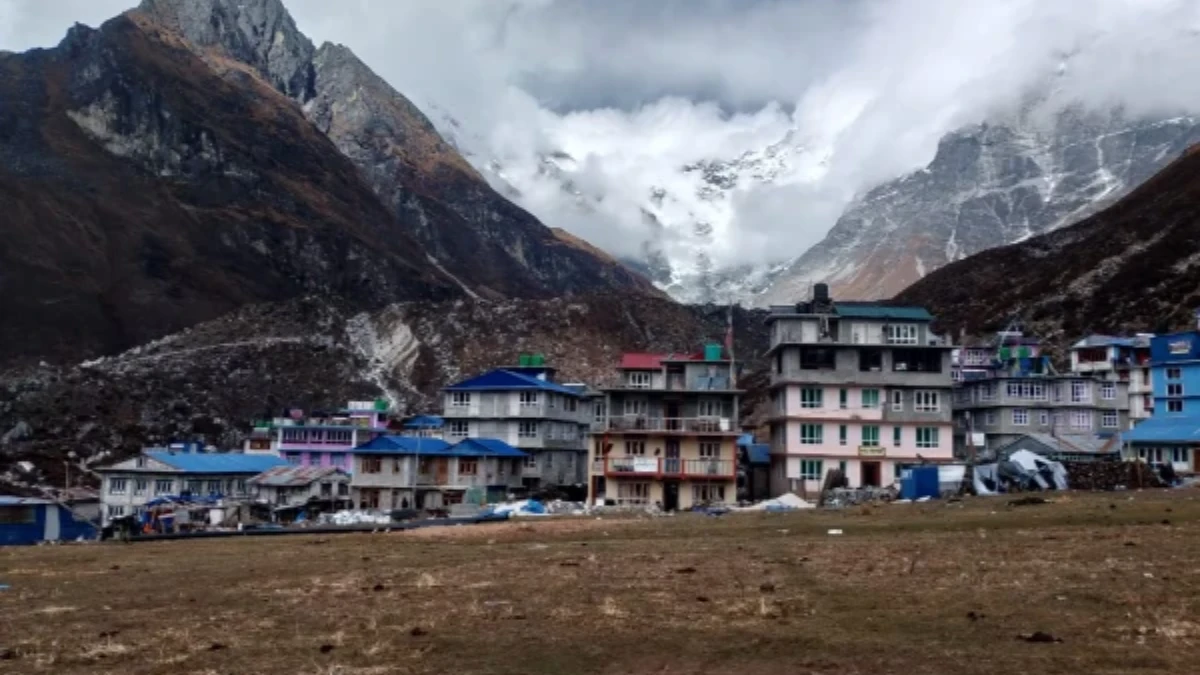
The old village was buried by the avalanche that followed the April 2015 earthquake, and the village you stay in today was rebuilt higher up the valley. My earlier post on Langtang as it is in 2027 describes the rebuilt lodges: thick stone walls, proper roofing, solar power and a memorial mani wall for the dead. Published figures for the 2015 deaths differ between sources, so I give no single number, but it was hundreds of lives, and the wall is worth ten minutes of your time. Our guides' notes: clean, fairly new rooms, shared bathrooms, solar electricity that can fail in bad weather, and good thukpa and momo from Tamang cooks (not gluten-free).
Kyanjin Gompa, nights 4 and 5
Kyanjin Gompa is the highest settlement on the trek and your base for the rest day. The village's gompa and settlement were rebuilt by early 2018. Expect a monastery, a small yak-cheese factory and a handful of lodges around a flat meadow below Langtang Lirung, which stands over 7,200 m (sources give 7,234 to 7,245 m). Our guides' notes: warm dining rooms where everyone gathers round the stove in the evening, solar showers that are often only lukewarm, and cheese worth carrying as a trail snack. For the rest day, the classic climb is Tserko Ri; see my Tserko Ri guide for timing, and my Kyanjin Gompa guide for the village.
How do the tiers change where you sleep?
Teahouse rooms are the same lodges for everyone, but what you get differs by tier. On Budget you share a room, you carry your own bag and meals are not included. On Standard you have a private room, all meals, and one porter for every two trekkers (a solo Standard trekker has no porter; the guide carries a share). On Luxury you have a dedicated porter, all meals with fruit and nuts, and a private deluxe room with ensuite where the lodge has one. Ask me which of the seven nights that applies to. Upper-valley lodges are simple, and I would rather you heard that now than at Langtang village. Kathmandu hotels are not included in any trek tier.
The 8-day Langtang trek is US$365 Budget, US$650 Standard and US$1,000 Luxury for one person, with a lower price per person for larger groups. A 10 per cent deposit holds your dates and you pay the balance in Kathmandu. If your plans change, you can reschedule for free, with at least 72 hours' notice, to any date within one year; if we cannot run the trip, we refund what you paid less taxes, bank charges and money already spent on permits or flights. The deposit itself is not refunded if you cancel.
How do Langtang teahouses compare with Everest?
Simpler, smaller and more personal, in our guides' experience. Everest lodges are larger and busier, and you are one of many groups. In Langtang the lodges are family-run, the menu is shorter, hot water is less reliable and rooms are smaller, but you often know the owner by the second night. The Langtang trek is the third most popular in Nepal, so it can still be busy in October. My autumn Langtang guide and October Langtang guide cover the seasons.
What permits do I need?
Langtang National Park entry is NPR 3,000, and TIMS is NPR 2,000. I arrange TIMS for every trekker. The Nepal Tourism Board lists Langtang among the routes where an agency-issued TIMS card and a licensed guide are required. My earlier post says Langtang National Park made guided trekking mandatory from 15 February 2025. Do not plan around an unmanned checkpoint; the army and park posts at Dhunche and Syabrubesi check permits and guide documents.
Who should not do Langtang right now?
Anyone who needs certainty about a date this autumn. Until the road to Syabrubesi is open and the bridge is confirmed, we cannot promise a start. If you have a fixed holiday window, tell me and I will suggest a trek that is open; our open-treks post is the starting point. If you can move your dates, a spring 2027 departure is open to book, and rescheduling is free with at least 72 hours' notice to any date within one year.
More about the valley
For the places on the trail see Syabrubesi, Lama Hotel, Langtang village and Langtang National Park. For the full route see our 8-day Langtang Valley trek guide and the Langtang packing list. Tell me your dates on WhatsApp, +977 9810351300, or email [email protected].
Sources: Nepal Tourism Board TIMS page (rules and fee). Road status: Onlinekhabar 22 September and 1 October 2026; Kathmandu Post 1 October 2026. Teahouse descriptions are our guides' notes from before the 26 August flood and are marked as such.
About The Everest Holiday
We are a family company in Kathmandu, three generations of Himalayan guides, registered in 2016 and a member of the Trekking Agencies' Association of Nepal, number 1586. When you book with us you deal with the family, not a call centre.
Every booking helps fund our Nagarjun Learning Center. We fully run the centre at Saldum, where 70 children learn with a teacher I pay for personally.
Written by Shreejan Simkhada, CEO of The Everest Holiday and third-generation Himalayan guide. TAAN Member #1586.
Langtang is not open for starts at the moment. Our Langtang Trek (8 Days) is private (your group only, no strangers), from USD $365. WhatsApp us for dates and the current road position.
Planning a trip to Nepal?
Drop us your details and tell us what you have in mind. We will put together a personalised plan and get back to you.
Not sure which Nepal trek is right for you?
Take our free 2-minute quiz and get personalised recommendations based on your fitness, experience, and travel style.
Find Your Perfect Trek →Need Help? Call Us+977 9810351300orChat with us on WhatsApp
Latest Travel Blogs
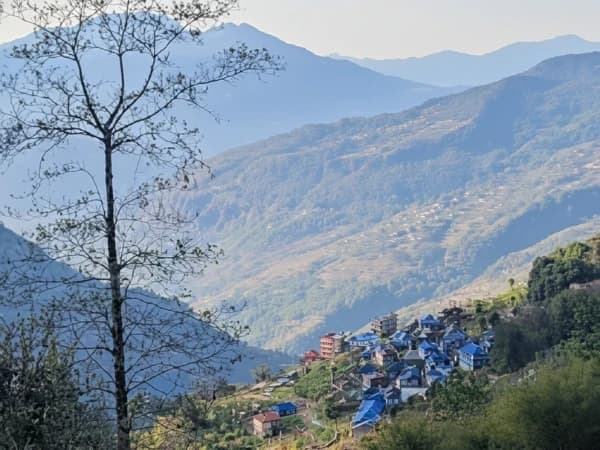
Tikhedhunga: The First Night on the Poon Hill Yoga Trek and the Foot of the Stone Steps
Tikhedhunga is a village at about 1,500 m at the foot of the Ulleri stone steps. Distances to Ghorepani, permits, best months and the trips that pass through.
Read More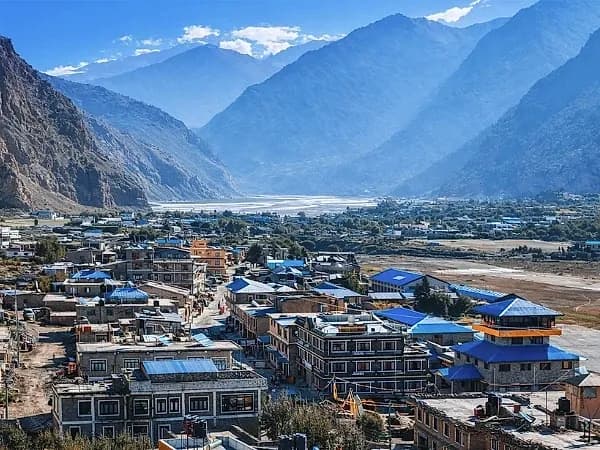
Tukuche: The Thakali Village on the Kali Gandaki Road
Tukuche is a Thakali trading village at about 2,590 m in the Kali Gandaki valley. Distances to Marpha and Kalopani, permits, best months and the trips that pass through.
Read More
Everest Base Camp Trek Cost from Uzbekistan: Soum Prices, Flights, Visa and Payment
Everest Base Camp trek cost from Uzbekistan: trek prices in dollars and soum, Tashkent to Kathmandu fares, visa on arrival, halal food and how to pay.
Read More Chat with Shreejan