
Fewer crowds, cheaper lodges, crystal-clear skies, but Thorong La might be closed. A local guide's honest take on winter trekking the Annapurna Circuit.
Govt Regd. No.: 147653/072/073
Travel Agency Licence: 2838/072
Annapurna Circuit in Winter: Is It Worth the Cold?

Is the Annapurna Circuit Safe in Winter? Worth the Cold?
The dining room at Manang is empty except for you, your guide, and the teahouse owner's grandmother, who is knitting a yak-wool hat by the stove. Outside, the Annapurna III massif glows pink against a sky so clear you can count the ridgelines all the way to Tibet. It is nine in the morning, minus twelve degrees, and you have not seen another trekker in three days.
That is the Annapurna Circuit in winter. Quiet, cold, and spectacularly beautiful. But also unpredictable, physically demanding, and occasionally impossible.
I have sent trekkers on winter circuits since 2017. Some came back calling it the best trek of their lives. Others turned around at Manang because Thorong La was buried under two metres of snow. This guide tells you what actually happens on the Annapurna Circuit between December and February, so you can decide whether the cold is worth it.
What Do Guides and Trekkers Say About Winter on the Circuit
Before we get into the details, here are three honest voices from people who have done this trek in winter.
Dawa, senior guide (17 winters on the circuit): "December is my favourite month on the Annapurna Circuit. The air is so dry that Thorong La feels closer than it is. But I always tell clients the same thing: be ready to change the plan. The pass does not care about your itinerary."
Claire, trekker from Manchester (January 2025): "The cold was brutal at night. I wore every layer I owned inside my sleeping bag. But the morning views from Manang were so sharp and so beautiful I actually cried. No queue for anything, no fighting for beds, no noise. Just mountains."
Raj, teahouse owner in Upper Pisang: "In October we cook for sixty people and sleep four hours. In January we cook for two people and sit by the fire telling stories. Winter guests become friends. October guests become numbers."
How cold is the Annapurna Circuit in winter?
Let me break the circuit into three sections, because winter affects each one differently.
Lower Section: Besisahar to Chame (800m to 2,670m)
The lower Marsyangdi valley barely feels like winter. Daytime temperatures between Besisahar and Chame sit around 8 to 15 degrees Celsius, dropping to minus two or three at night. The trail is dry, the teahouses are comfortable, and most lodges are open. You will notice fewer trekkers than autumn, but the villages are still lively.
This section is pleasant in winter. No real challenges beyond shorter daylight hours.
Middle Section: Chame to Manang (2,670m to 3,540m)
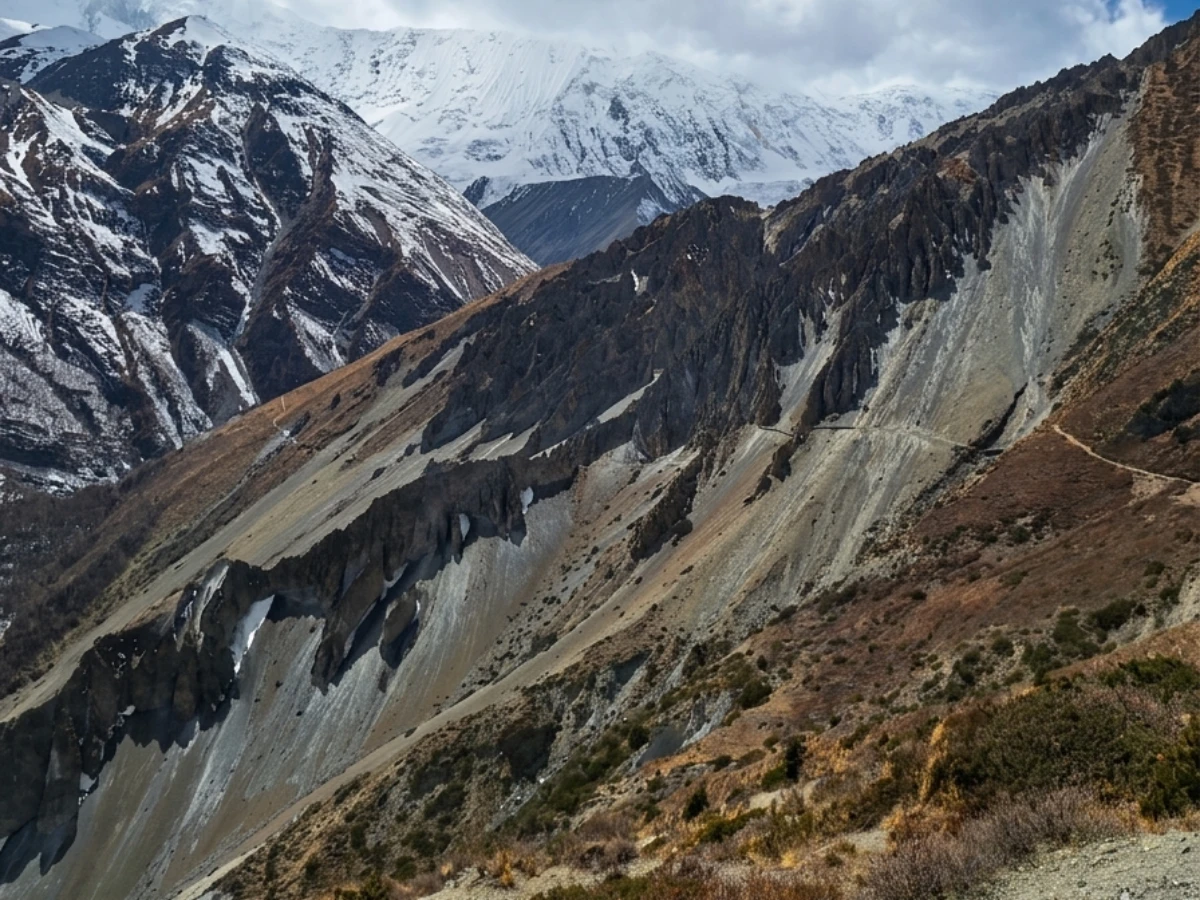
Things start to bite above Chame. Daytime highs drop to 2 to 6 degrees. Nights fall to minus ten or fifteen. The trail passes through pine forests that block the sun in the morning, so the first two hours of walking each day are genuinely cold. By midday, when the sun hits the valley, you will be stripping off layers and enjoying the warmth.
Manang is the acclimatisation stop, and in winter it has a particular charm. The village is quiet. The bakeries are still open (fewer options on the menu, but the cinnamon rolls at the same bakeries are still worth the walk). The views of Gangapurna, Annapurna III, and Tilicho Peak from Manang are at their sharpest in December and January.
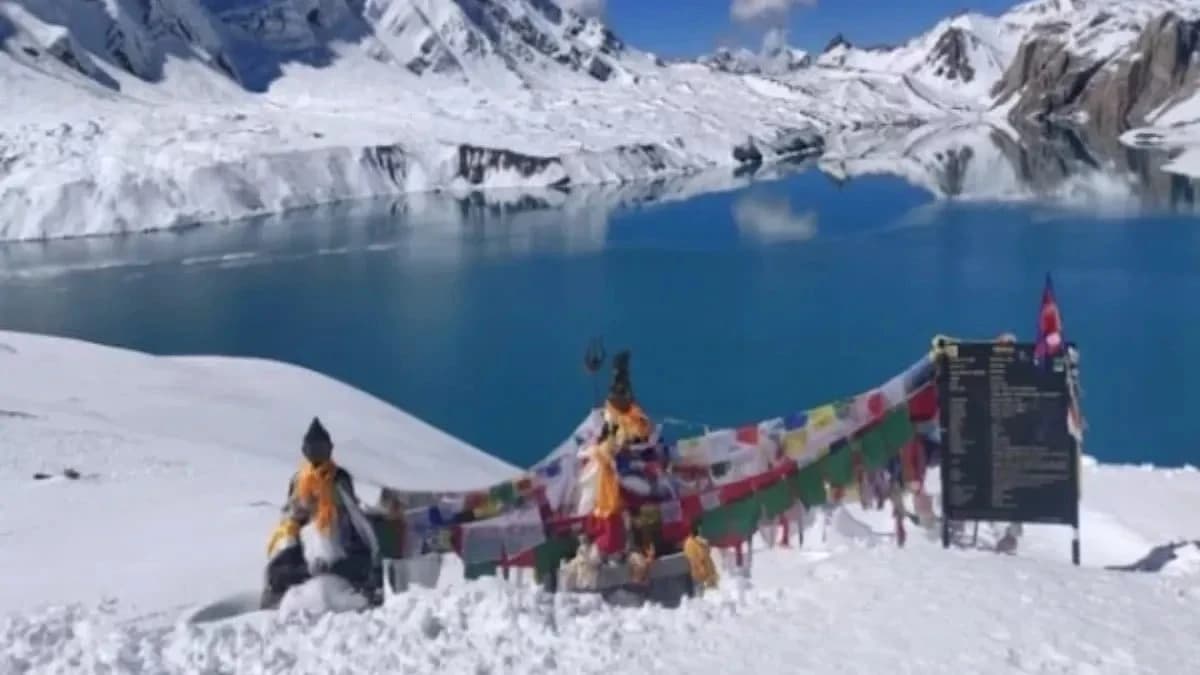
If you are considering adding Tilicho Lake to your circuit trek, winter is actually a remarkable time to do it. The lake sits at 4,919 metres and can partially freeze, creating an otherworldly blue-white surface. But the trail to Tilicho is exposed and can be icy, so your guide needs to assess conditions on the day.
Upper Section: Manang to Thorong La to Muktinath (3,540m to 5,416m to 3,800m)
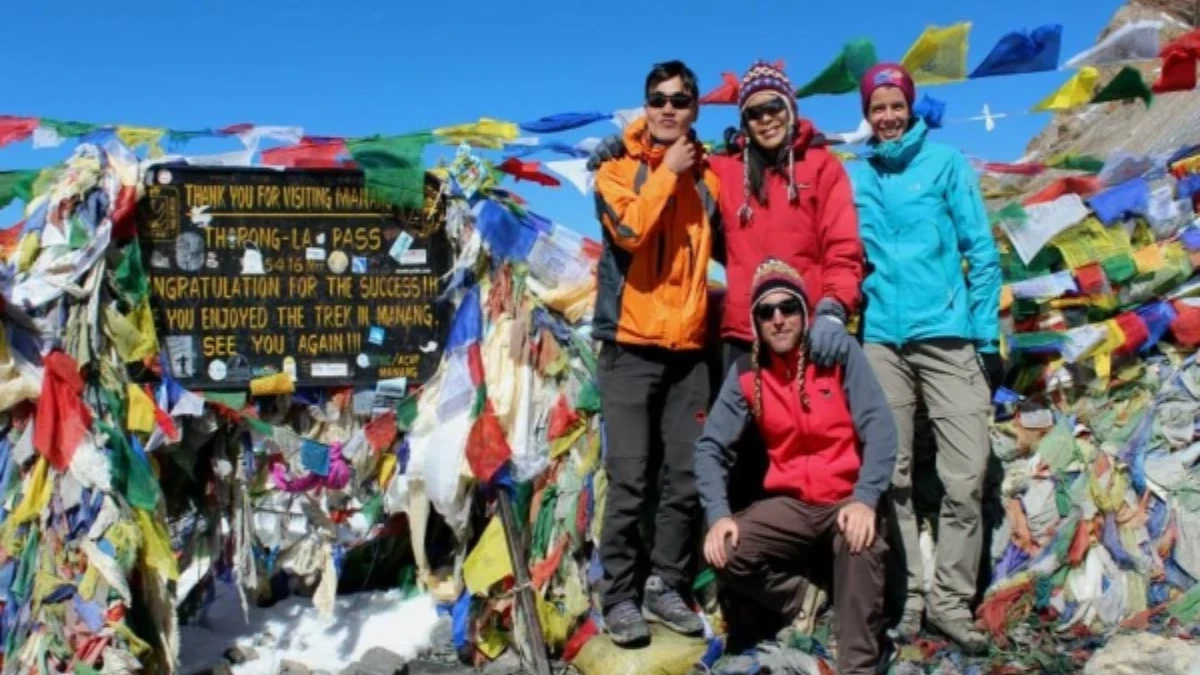
This is where winter becomes serious. The climb from Manang to Thorong Phedi (4,525m) and then over Thorong La pass (5,416m) is the crux of the entire circuit, and in winter it is the section that determines whether your trek succeeds or not.
| Location | Altitude | Daytime High (Dec-Feb) | Night Low (Dec-Feb) |
|---|---|---|---|
| Chame | 2,670m | 4°C to 8°C | -5°C to -10°C |
| Upper Pisang | 3,300m | 2°C to 6°C | -8°C to -14°C |
| Manang | 3,540m | 0°C to 5°C | -10°C to -16°C |
| Yak Kharka | 4,018m | -2°C to 3°C | -14°C to -20°C |
| Thorong Phedi | 4,525m | -5°C to 0°C | -18°C to -25°C |
| Thorong La Pass | 5,416m | -12°C to -6°C | -25°C to -35°C |
| Muktinath | 3,800m | 0°C to 5°C | -10°C to -15°C |
At Thorong Phedi, the teahouse is basic. The toilet is outside. The water in your bottle will freeze overnight unless you sleep with it. And the pass crossing, which starts at 3 or 4 in the morning, happens in the coldest hours of the coldest part of the trek. Related: Thorong Phedi Guide: Base Camp for Thorong La Pass Crossing.
The Big Question: Will Thorong La Be Open?
This is the fear that stops most people from booking a winter circuit, and it is a legitimate one.
Thorong La closes when heavy snowfall makes the trail dangerous or impassable. There is no official body that declares the pass open or closed. Your guide, local teahouse owners, and other trekkers coming from the other side are your information sources. Our guides check conditions with contacts in Manang and Muktinath every day during a winter circuit.
Here is the honest picture based on our records:
- December: Thorong La is often passable, though less reliably as the month goes on. Early December is often clear, with conditions deteriorating in the second half of the month after snowfall events.
- January: The most unpredictable month. The pass is open on some days and shut on others. After a big storm, the pass can remain closed for a week or more.
- February: Conditions improve in the second half. Late February is often excellent, with cold but stable weather and a well-packed snow trail.
If the pass is closed, you have two options. Wait in Manang for conditions to improve (sometimes two or three days is enough). Or retrace your steps and exit the circuit without crossing. Neither option is ideal, and this uncertainty is the single biggest downside of a winter Annapurna Circuit.
Our guides carry satellite communicators and check weather forecasts daily. We build flexible itineraries with buffer days specifically for winter departures. But no amount of planning can guarantee the pass will be open on the day you need it.
Is the Annapurna Circuit worth trekking in winter?
Views That Autumn Cannot Match
The winter Himalaya is a different world from the autumn one. The monsoon moisture is months gone. The haze that sometimes softens October views has cleared completely. The result is a visual clarity that makes mountains look closer and more detailed than you have ever seen them. The Annapurna range from Manang in January, lit by low winter sun, is one of the finest mountain views in Nepal.
Solitude That Changes the Experience
In peak October, the Annapurna Circuit sees roughly 3,000 to 4,000 trekkers per month. In January, that number drops to a few hundred. You will walk for hours without passing another group. Teahouses that turn people away in autumn will have three or four guests in winter. The dining room conversations are longer, the service more personal, and the pace entirely your own.
Cultural Encounters You Cannot Get in Season
Winter is when mountain communities slow down. Festivals happen. Families gather. Teahouse owners have time to talk, to share food, to explain the monastery paintings on the wall. In Manang, you might be invited to watch a local archery competition. In Muktinath, the temple is peaceful rather than crowded. These moments are not on any itinerary, but they are often what trekkers remember most.
Lower Costs Across the Board
Flights to Nepal are cheaper in December and January. Some teahouses offer reduced room rates. Guide and porter availability is higher. If budget is a factor, winter is worth serious consideration. Our Annapurna Circuit trek pricing reflects the season, and we are always transparent about what winter costs look like.
What are the downsides of the Annapurna Circuit in winter?
I would not be doing my job if I only talked about the views. Here is what winter on the circuit genuinely costs you in comfort and certainty.
Pass Closure Risk
Already covered above, but it bears repeating. If you cannot emotionally or financially accept the possibility of not crossing Thorong La, do not book a winter circuit. Choose spring or autumn instead.
Cold Toilets, Cold Everything
Above Manang, most teahouse toilets are outside, unheated, and sometimes partially frozen. The squat toilet at Thorong Phedi at 4am is something that tests your commitment. Hot showers are available at some lodges, but above 4,000 metres in winter, many simply do not offer them. You will go days without a proper wash.
Limited Menus
In October, a Manang teahouse menu might list thirty items. In January, that drops to eight or ten. Fresh vegetables do not arrive regularly when the trails are quiet. Expect dal bhat, noodle soup, fried rice, and pancakes. The food is hot and filling, but variety shrinks the higher and later in winter you go.
Closed Teahouses
Not every teahouse stays open in winter, particularly above Yak Kharka. Your guide needs to know which lodges are operating and plan the itinerary accordingly. Walking an extra hour because your planned stop is shuttered is not uncommon. This is not a trek where you can wing the accommodation.
Shorter Days
Sunrise is around 6:45am and sunset around 5:15pm in January. That gives you roughly ten hours of daylight, which sounds enough until you factor in the cold mornings (you will not want to start before the sun hits the valley) and the need to reach your teahouse before temperatures drop in late afternoon. Practical walking hours are more like six to seven per day.
Frostbite Risk Above 4,500m
This is real. Exposed skin on fingers, toes, nose, and cheeks is vulnerable above 4,500 metres in winter, particularly on the Thorong La crossing when wind chill can push felt temperatures to minus thirty or below. Proper gear is not optional. Expedition-grade gloves, a down jacket rated to minus twenty, insulated boots, and a balaclava or buff for your face are all necessary.
Who should trek the Annapurna Circuit in winter?
Winter circuit is not a beginner trek. If this is your first time in the Himalaya, I would recommend starting with a lower-altitude option like the Ghorepani Poon Hill trek or the Mardi Himal trek. Both are excellent in winter and far more forgiving.
The ideal winter circuit trekker has:
- Previous high-altitude experience above 4,000 metres
- Cold-weather trekking or camping experience
- A flexible schedule with at least three buffer days
- Good-quality cold-weather gear (or willingness to rent it in Kathmandu)
- A genuine desire for solitude over convenience
- The mental resilience to accept that the pass might not open
If you tick most of those boxes, a winter circuit can be one of the finest treks in Nepal.
Is winter or autumn better for the Annapurna Circuit?
| Factor | Winter (Dec-Feb) | Spring (Mar-May) | Autumn (Oct-Nov) |
|---|---|---|---|
| Crowds | Very few (200-400/month) | Moderate | High (3,000-4,000/month) |
| Thorong La | Often passable, but can close for days | Usually passable | Usually passable |
| Views | Exceptional clarity | Good (some haze) | Very good |
| Teahouse availability | Limited above Manang | All open | All open |
| Temperature at Thorong La | -25°C to -35°C | -10°C to -18°C | -8°C to -15°C |
| Cost | Lowest | Moderate | Highest |
| Daylight hours | ~10 hours | ~12 hours | ~11 hours |
What About Other Winter Treks Instead?
If the Thorong La uncertainty puts you off but you still want to trek in Nepal during winter, there are excellent alternatives at lower altitudes where weather is more predictable.
- Annapurna Base Camp trek: Reaches 4,130 metres. The trail is well-established and lower than Thorong La. Snow is common above Deurali but rarely blocks the route entirely.
- Poon Hill trek: Maximum 3,210 metres. Comfortable teahouses, reliable weather, and one of the best sunrise panoramas in the Himalaya. Ideal for winter beginners.
- Mardi Himal trek: A newer route that reaches 4,500 metres but with shorter exposure time. The lower forests are beautiful in winter, and the high camp views are spectacular.
- Langtang Valley trek: Close to Kathmandu, reaching 3,870 metres at Kyanjin Gompa. A manageable winter trek with proper gear and a guide who knows the route.
- Everest View trek: If you want the Khumbu in winter without the extreme altitude, this shorter route gives you mountain views without going above 3,880 metres.
- Upper Mustang trek: The rain shadow behind the Annapurna range means Upper Mustang receives almost no precipitation in winter. It is cold but dry, with clear skies almost guaranteed.
For those who prefer the Everest region, our Everest Base Camp 12-day trek is also possible in winter, though it brings its own set of challenges. And if you want something less demanding, the short trek to Namche Bazaar keeps you at a more comfortable altitude while still delivering genuine Khumbu scenery.
What gear do I need for the Annapurna Circuit in winter?
Your gear list for a winter circuit is significantly heavier than an autumn one. Here is what our guides consider non-negotiable:
- Sleeping bag: Comfort-rated to minus twenty degrees. Teahouse blankets above Manang are not sufficient in winter.
- Down jacket: A proper expedition-grade down jacket, not a fashion puffer. You will wear it from 4pm to 8am every day above Chame.
- Insulated boots: Four-season trekking boots with thermal insoles. Lightweight trail shoes are not warm enough above 3,500 metres in winter.
- Glove system: Liner gloves plus insulated shell gloves plus expedition mitts for the pass crossing. Three layers, not one.
- Face protection: Balaclava or heavy buff for the Thorong La crossing. Exposed skin at minus thirty with wind is a frostbite risk within minutes.
- Microspikes or crampons: Lightweight crampons for icy trail sections above 4,000 metres. Not optional.
- Thermos: For keeping water liquid above 4,500 metres. Your water bottle will freeze.
- Hand and toe warmers: Disposable chemical warmers for the pass day. Cheap insurance against numb extremities.
Most of this gear can be rented or purchased in Kathmandu's Thamel district for a fraction of what it costs at home. Our team can help you sort gear the day before your trek begins.
Is December, January, or February best for the Annapurna Circuit?
December
Early December often brings stable, clear weather. The first heavy snowfall of winter may not arrive until mid to late December. If you time it right, early December offers autumn-quality conditions with winter-level solitude. The risk increases in the second half of the month. Our Annapurna Circuit early-December departures usually see the most stable conditions of the winter months for Thorong La.
January
The coldest and most unpredictable month. Thorong La closures are most common in January. But January also delivers the clearest skies of the year. If you are lucky with weather windows, a January circuit is one you will not forget. If you are not, you may spend three days in Manang watching snow fall and playing cards with your guide.
February
The transition month. Early February still feels like deep winter. By mid to late February, days are noticeably longer, temperatures begin to climb, and the first spring trekkers start appearing on the trail. Late February is arguably the best time for a winter circuit: cold enough for clear skies and empty trails, warm enough that the pass is more reliably open.
Can you take a jeep on the Annapurna Circuit in winter?
The jeep road along the Marsyangdi valley has changed the lower sections of the Annapurna Circuit significantly. In winter, many trekkers now drive from Besisahar to Chame or even Manang to avoid the lower, less scenic section and focus their energy on the high pass and the descent to Muktinath. This is a legitimate strategy in winter when daylight hours are short and you want to reach the good stuff quickly.
However, if you are a purist who wants to walk the full circuit, the lower section is still beautiful in winter and far quieter than the road might suggest. Your guide can advise on the best approach based on your fitness, timeline, and priorities.
Combining Winter Treks
Some experienced trekkers use winter to combine shorter routes. After the Annapurna Circuit, you could add a few days on the Poon Hill Yoga trek for recovery at lower altitude. Or, if you are heading to the Everest region afterwards, the Manaslu Circuit is another high-pass trek that shares similar winter conditions but with even fewer trekkers.
Frequently Asked Questions
Is the Annapurna Circuit safe in winter?
Yes, with a qualified guide and proper gear. The main risks are pass closure (which means turning back, not a safety emergency), cold-related injuries from inadequate equipment, and altitude sickness (which is a risk in any season). Our licensed guides carry pulse oximeters, first aid kits, and satellite communicators. They monitor weather and trail conditions daily and will not attempt Thorong La if conditions are unsafe.
Can I trek the circuit solo in winter?
A licensed guide is required on the Annapurna Circuit under the Nepal Tourism Board rule from April 2023, so fully solo trekking is not permitted in any season. In winter, having a guide is even more important. They know which teahouses are open, which trail sections are icy, and when the pass is safe to attempt. Going without a guide in winter would be genuinely dangerous.
What happens if I get stuck on the wrong side of Thorong La?
If the pass closes while you are on the Manang side, you wait for it to reopen or retrace your route back down the Marsyangdi valley. If it closes after you have crossed to Muktinath, you continue down to Jomsom and fly or drive to Pokhara. You will not be stranded. Our team monitors conditions from both sides and coordinates your itinerary accordingly.
How much does a winter Annapurna Circuit cost compared to autumn?
The trek cost itself is similar, though some teahouses offer slightly lower rates in winter. The bigger savings come from cheaper international flights to Nepal (December and January are off-peak), lower accommodation costs in Kathmandu and Pokhara, and better availability of guides and porters. Overall, a winter circuit can be 15 to 25 percent cheaper than an identical autumn trip.
Should I take the Annapurna Circuit or Everest Base Camp in winter?
Different challenges, different rewards. The circuit has Thorong La as a pass-closure risk. EBC has Lukla flight cancellations and more extreme cold at higher sleeping altitudes. The circuit has more cultural variety (Hindu and Buddhist villages, different ethnic groups, varied landscapes). EBC has the draw of standing at the foot of the world's tallest mountain. Both are possible in winter. If flexibility and cultural immersion matter more, choose the circuit. If reaching a single iconic destination matters more, choose EBC.
The Short Answer
The Annapurna Circuit in winter is not the comfortable, well-serviced trek that autumn offers. Teahouses close, menus shrink, toilets freeze, and the pass might send you home without crossing. But for trekkers who have the experience, the gear, and the flexibility to handle what winter throws at them, it offers something autumn never can: a Himalaya that feels wild, personal, and completely yours.
If you are fit, prepared, and genuinely comfortable with uncertainty, a winter Annapurna Circuit might be the best trek you ever do. If any part of you is hoping to just push through the cold without proper preparation, wait for spring. The mountains will still be there.
Want honest advice on whether a winter circuit is right for you? Tell me your experience level, your dates, and your gear situation. I will give you a straight answer.
WhatsApp:+977 9810351300
Email:[email protected]
Written by Shreejan Simkhada, CEO of The Everest Holiday and third-generation Himalayan guide. Licensed by TAAN (Trekking Agencies' Association of Nepal) #1586. Leading treks across Nepal since 2016.
Winter Annapurna Circuit is possible, with the right guide. Our Annapurna Circuit Trek (12 Days) is private (your group only, no strangers), 2027 dates open, From USD $995. WhatsApp us for tailored 2027 dates and current departures.
Planning a trip to Nepal?
Drop us your details and tell us what you have in mind. We will put together a personalised plan and get back to you.
Not sure which Nepal trek is right for you?
Take our free 2-minute quiz and get personalised recommendations based on your fitness, experience, and travel style.
Find Your Perfect Trek →Need Help? Call Us+977 9810351300orChat with us on WhatsApp
Latest Travel Blogs
Christmas and New Year Treks from Pokhara 2026/27: 3 to 5 Days
<p>Short treks from Pokhara for Christmas and New Year 2026/27: Panchase 3 days, Poon Hill 4 days and Mardi Himal 5 days. Weather, snow, what is open, and prices by group size.</p>
Read More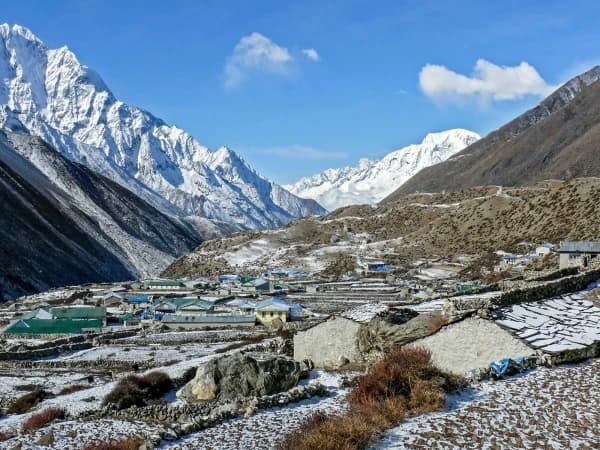
Thamdanda and Surke: The Road Head for Everest Base Camp by Road
Thamdanda is the road head where our Everest Base Camp trek by road starts and ends on foot. How to get there from Phaplu and what the first walk to Paiya is like.
Read MorePoon Hill Trek Permits 2027: ACAP, TIMS, Cost and What You Need
Poon Hill needs two permits: ACAP at NPR 3,000 and a TIMS card at NPR 2,000. Who arranges them, where they are checked, SAARC rates and the 2027 trek prices.
Read More Chat with Shreejan