
Complete November guide for the Annapurna Circuit. Thorong La snow risk, temperature by elevation, teahouse closures, and why the first two weeks are still excellent.
Govt Regd. No.: 147653/072/073
Travel Agency Licence: 2838/072
Annapurna Circuit in November: Last Chance Before Winter

Is November Too Late for the Annapurna Circuit?
No, but it is cutting it close. November is the last reliable month for the Annapurna Circuit before winter sets in. The first two weeks are excellent: clear skies, cold nights, empty trails, and a Thorong La crossing that feels like a private expedition. The last week carries more risk: snow on the pass, closed teahouses above Manang, and temperatures that test even good gear.
I have sent trekkers on the circuit in November for years. The ones who start before November 10th almost always complete the full circuit without issues. Those who start after November 15th need more flexibility, better cold-weather gear, and a willingness to adjust the itinerary if the pass is snowed in.
What Is the Weather Like?
Lower section (800-2,500m): Still pleasant. Daytime 15 to 22°C. The rice harvest is finishing, the terraces are golden, and the air is dry and clear. This stretch from Besisahar through the lower Marsyangdi valley feels like late autumn: warm sun, cool shade, crisp mornings.
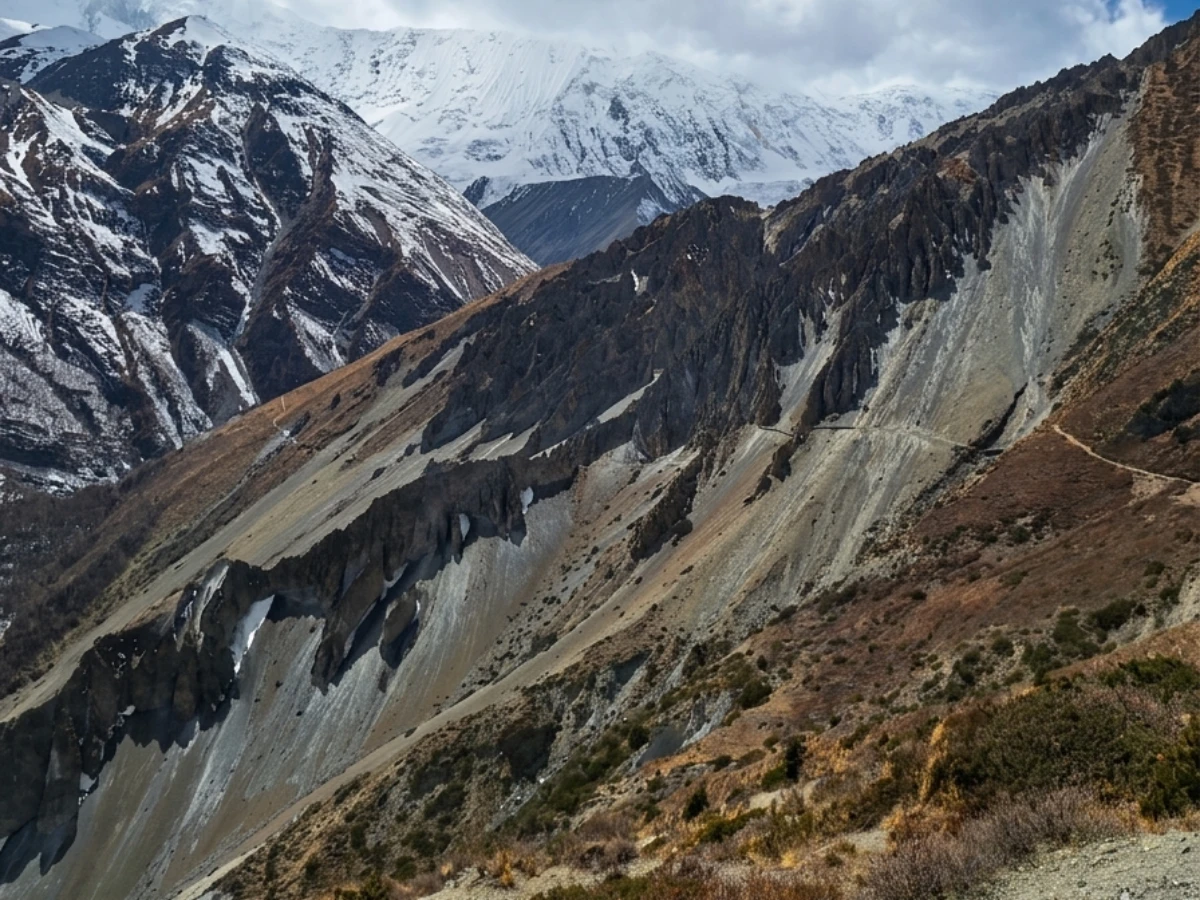
Manang area (3,500-4,000m): Cold and dry. Daytime 5 to 12°C, nights -5 to -10°C. The landscape is arid and stark: brown grass, bare rock, and towering snow peaks. Manang itself sits in a rain shadow, so precipitation is rare even when other parts of Nepal see weather. The acclimatisation day here is cold but beautifully clear.
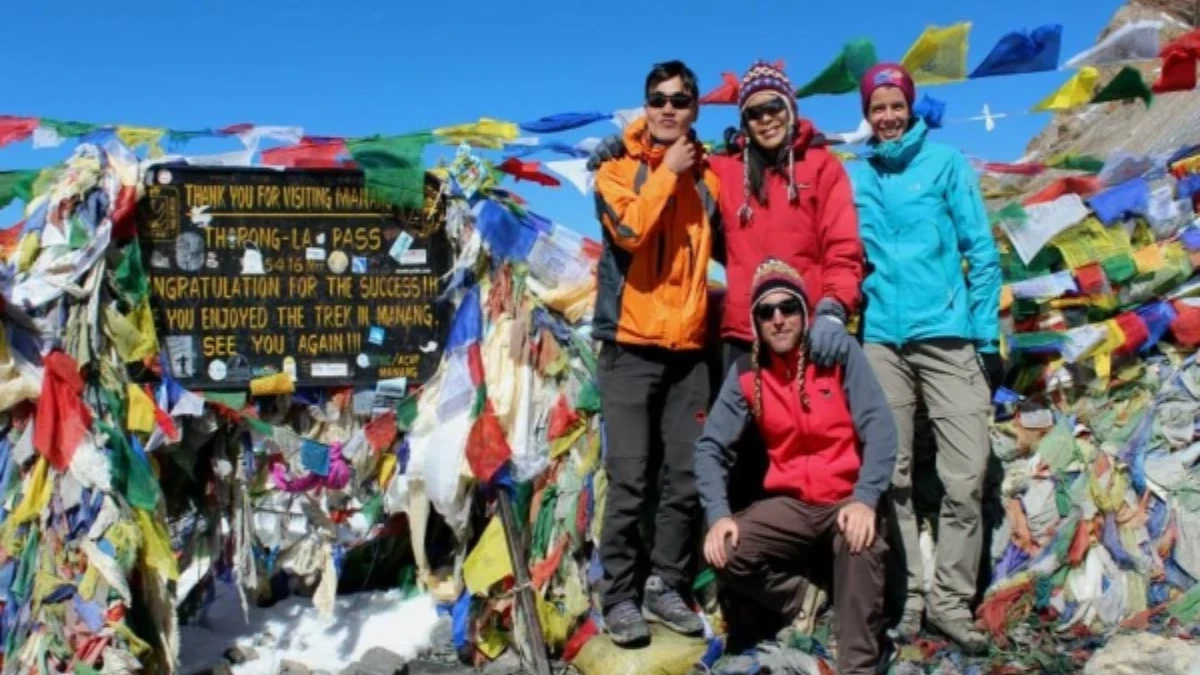
Thorong La (5,416m): The pass is the crux. Early November temperatures: -10 to -5°C during the crossing, -20 to -25°C overnight at Thorong Phedi. Wind chill on the pass can push the effective temperature below -30°C. Snow is possible. Light dustings are common, significant snowfall that blocks the pass happens once or twice per November on average.
Muktinath and Kali Gandaki (3,800-2,700m): Drier and warmer than the north side. The descent from Thorong La into the Kali Gandaki valley feels like walking into a different climate: sunny, sheltered, and surprisingly warm for November.
How Crowded Is the Trail?
This is November's biggest selling point. The crowds of October have gone home. You will share teahouse dining rooms with a handful of trekkers rather than fifty. Between Manang and Thorong Phedi, you might walk for hours without seeing another group.
The quiet changes the character of the trek entirely. Teahouse owners have time to talk. Your guide can adjust the pace without worrying about room availability. And the pass crossing at dawn feels like a genuine adventure rather than a queue.
The trade-off: some smaller teahouses close after mid-November. Our guides know which lodges stay open and plan the itinerary accordingly. You will not be left without accommodation, but your options narrow above 4,000m.
Will Thorong La Be Open?
In most years, Thorong La remains passable throughout November. The pass closes for extended periods only in exceptional snowfall years, and even then, it usually reopens within a few days once the weather clears.
Our approach: we monitor weather forecasts daily during November treks. If heavy snow is predicted, we adjust the schedule, sometimes waiting a day in Manang, sometimes pushing ahead to cross before the storm. Our guides have crossed Thorong La in every month of the year and know how to read the conditions.
If the pass does close and cannot reopen within your timeframe, we arrange alternative routes, either a side trip to Tilicho Lake or a return via the same route. This is rare but it does happen, and flexibility is the price of November trekking.
What Should You Pack?
November on the Annapurna Circuit requires serious cold-weather gear. This is not a "bring a fleece and hope for the best" situation above 4,000m.
Essentials: a down jacket rated to -15°C (we provide one free of charge), thermal base layers (merino, not cotton), insulated trekking trousers for above Manang, a balaclava or buff for the pass crossing, insulated gloves with liner gloves, a sleeping bag rated to -20°C, and microspikes for icy sections above Thorong Phedi.
We also provide a sleeping bag and a down jacket free on every tier, and a duffel bag on the Standard and Luxury packages. Your porter carries it, so your daypack should have water, snacks, camera, a warm layer, and your microspikes.
How Much Does It Cost?
Same as peak season. Permit fees, guide costs, and our package prices do not change month to month. You may find teahouse room rates slightly lower in November when the lodges are not full, but the savings are marginal.
See our Nepal trekking cost guide for a full breakdown.
What each tier costs. The 12-day Annapurna Circuit trek is USD 720 on Budget, USD 999 on Standard and USD 1,499 on Luxury, per person for one traveller; larger groups pay less each. The tier decides what is included. Budget has no porter and meals are not included, so you carry your own bag and pay for food as you go. Standard includes all meals on the trek and one porter for every two trekkers (a solo trekker on Standard has no porter, and the guide carries part of the load). Luxury gives you your own porter, all meals with fruit and nuts, and private deluxe rooms with attached bathrooms where available. Every tier includes a licensed guide, the ACAP and TIMS permits, the transport from Kathmandu to the start and from Muktinath back, and a night in Pokhara with breakfast. Kathmandu hotels are not included in any trek tier, so we quote them separately.
November vs October for the Annapurna Circuit
October: Warmer, busier, higher pass completion rate. Better for first-time trekkers who want the safest conditions.
November: Colder, quieter, slightly more adventurous. Better for experienced trekkers who value solitude and can handle cold.
Both are good months. If you can handle -20°C nights and want the trail to yourself, November rewards you with something that peak-season trekkers do not get.
Ready for a November Circuit?
We recommend starting between November 1st and November 12th for the best balance of weather and pass conditions. Late November starts are possible but carry more risk.
WhatsApp us to check dates or ask about current conditions. Our team monitors Thorong La conditions daily during November and can give you real-time updates.
November Annapurna Circuit: the last clean window before winter. Our Annapurna Circuit Trek (12 Days) is private (your group only, no strangers), 2027 dates open, From USD $720. WhatsApp us for tailored 2027 dates and current departures.
Planning a trip to Nepal?
Drop us your details and tell us what you have in mind. We will put together a personalised plan and get back to you.
Not sure which Nepal trek is right for you?
Take our free 2-minute quiz and get personalised recommendations based on your fitness, experience, and travel style.
Find Your Perfect Trek →Need Help? Call Us+977 9810351300orChat with us on WhatsApp
Latest Travel Blogs
Trekking in Nepal in September 2027: Weather, Best Treks and Departures
Plan a September 2027 trek in Nepal: monsoon-tail weather, why Upper Mustang works, which treks to avoid and our departures on 6, 13, 20 and 27 September.
Read More
Trekking in Nepal in March 2027: Weather, Best Treks and Departures
Plan a March 2027 trek in Nepal: weather figures, the treks that suit the month, crowds, festivals and our departures on 8, 15, 22 and 29 March.
Read More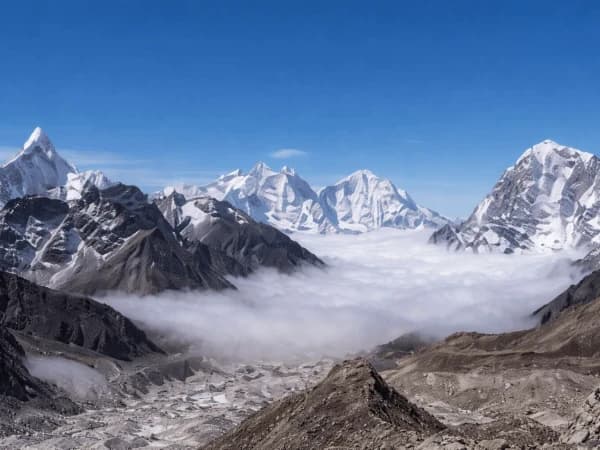
Trekking in Nepal in April 2027: Weather, Best Treks and Departures
Plan an April 2027 trek in Nepal: weather figures, the treks that suit the month, crowds, the Manthali flights and our departures on 5, 12, 19 and 26 April.
Read More Chat with Shreejan