
Short answer: Amjilosha is a small teahouse stop in the forest above the Tamor River on the Kanchenjunga Base Camp trek, reached after about five hours of walking from Mitlung. It is quiet and basic, a typical early-trek overnight. It is on our 19-day Kanchenjunga Base Camp trek.
What is Amjilosha on the Kanchenjunga Base Camp trek?
The rain had stopped an hour ago, but the forest hadn't noticed. Water still dripped from every leaf, every branch, every strand of old-man's beard moss hanging from the oaks above. The trail from Mitlung had been climbing gently all morning: nothing dramatic, just a steady upward pull through trees so dense the sky was more rumour than fact. Then the canopy opened slightly, a few tin roofs appeared through the green, and our guide turned around with that familiar half-smile: "Amjilosha. We stop here tonight."
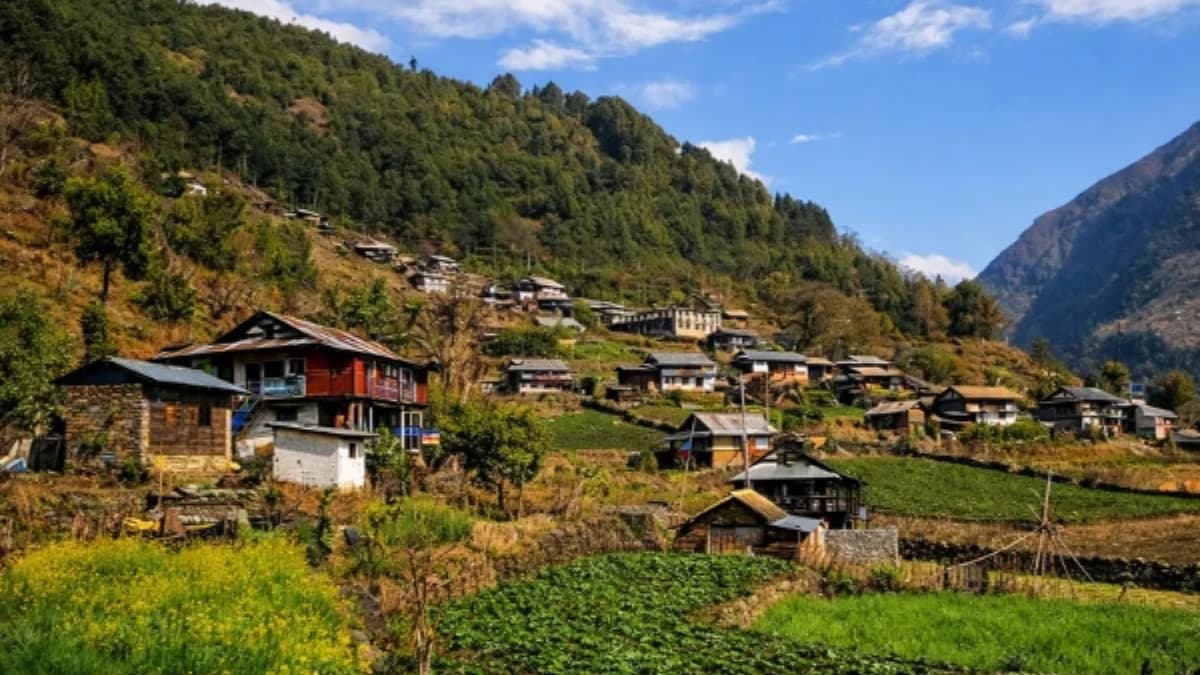
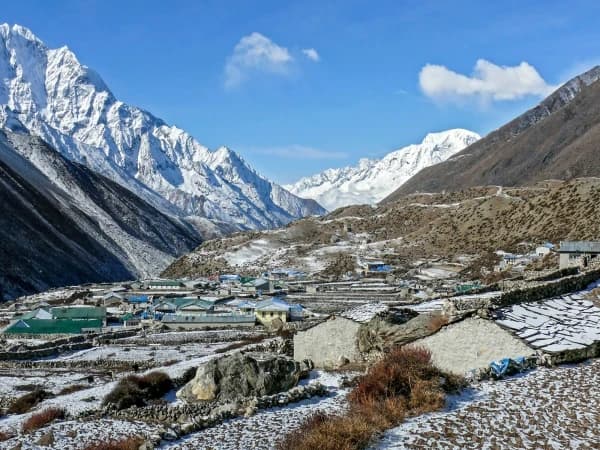
It wasn't much to look at. A handful of teahouses pressed against the hillside, prayer flags strung between wooden poles, a dog asleep in a doorway. But after five hours of walking through subtropical forest with the Tamor River roaring somewhere below, Amjilosha felt like exactly the right place to be. Quiet. Unhurried. The kind of stop that doesn't appear on anyone's highlight reel but somehow stays in your memory longer than the summits do.
Where Exactly Is Amjilosha?
Amjilosha (you'll also see it written as Amjilesa or Amjilassa on different maps and in different guidebooks) sits at approximately 2,510 metres on the Kanchenjunga Base Camp trek. It's a small settlement in the Tamor River valley, tucked into the forested slopes of far eastern Nepal. If you're walking the standard route northward from Taplejung, Amjilosha falls between the lower settlements of Chirwa and Mitlung to the south and Gyabla to the north.
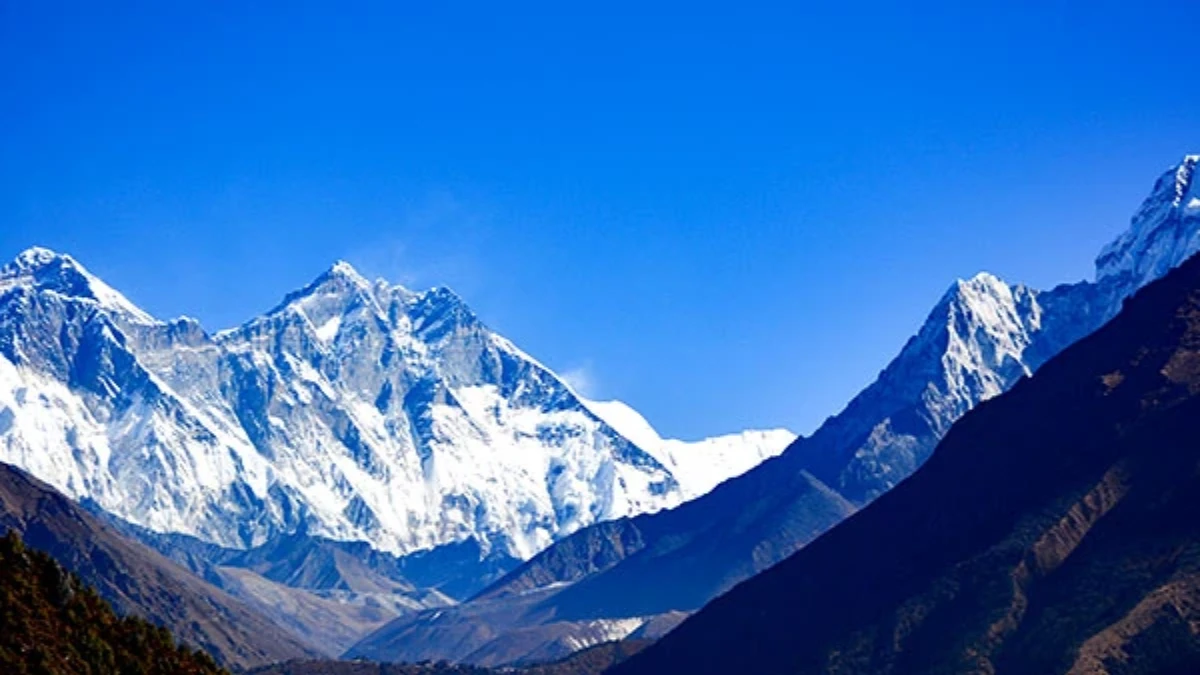
Geographically, you're deep in the Kanchenjunga Conservation Area, one of Nepal's most biodiverse protected regions. The valley here runs roughly north-south, carved by the Tamor River over millennia. The surrounding hills rise steeply on both sides, covered in dense forest that thins only where landslides or small clearings have interrupted the canopy. It's remote in the truest sense: no roads reach here, no mobile signal most of the time, no sounds except the river, the birds, and the wind moving through bamboo.
Culturally, you've entered Limbu territory. The Limbu people are one of Nepal's oldest indigenous groups, with their own language, their own Kirat religion predating both Hinduism and Buddhism, and a relationship with these eastern hills that stretches back centuries. You'll notice this in small ways: the style of the houses, the faces of the people running the teahouses, the food on offer. This isn't Sherpa country. It's something older and, for most trekkers, entirely new.
How Long Is the Walk to Amjilosa?
Most trekkers reach Amjilosha from Chirwa or Mitlung, depending on where they spent the previous night and how their itinerary is structured. From Chirwa (1,270m), the walk takes roughly five to six hours. From Mitlung, it's shorter, around three to four hours. The trail follows the Tamor River valley upstream, gaining altitude gradually rather than in any single punishing climb.
Don't let the word "gradually" fool you into thinking it's easy. The trail here is narrow, often muddy, and crosses several side streams that can swell after rain. You'll pass through sections of dense forest where the path is barely wider than your shoulders, with tree roots creating natural stairs that are slippery when wet. There are suspension bridges over tributaries, functional but the kind that creak and sway enough to make you grip the handrails properly.
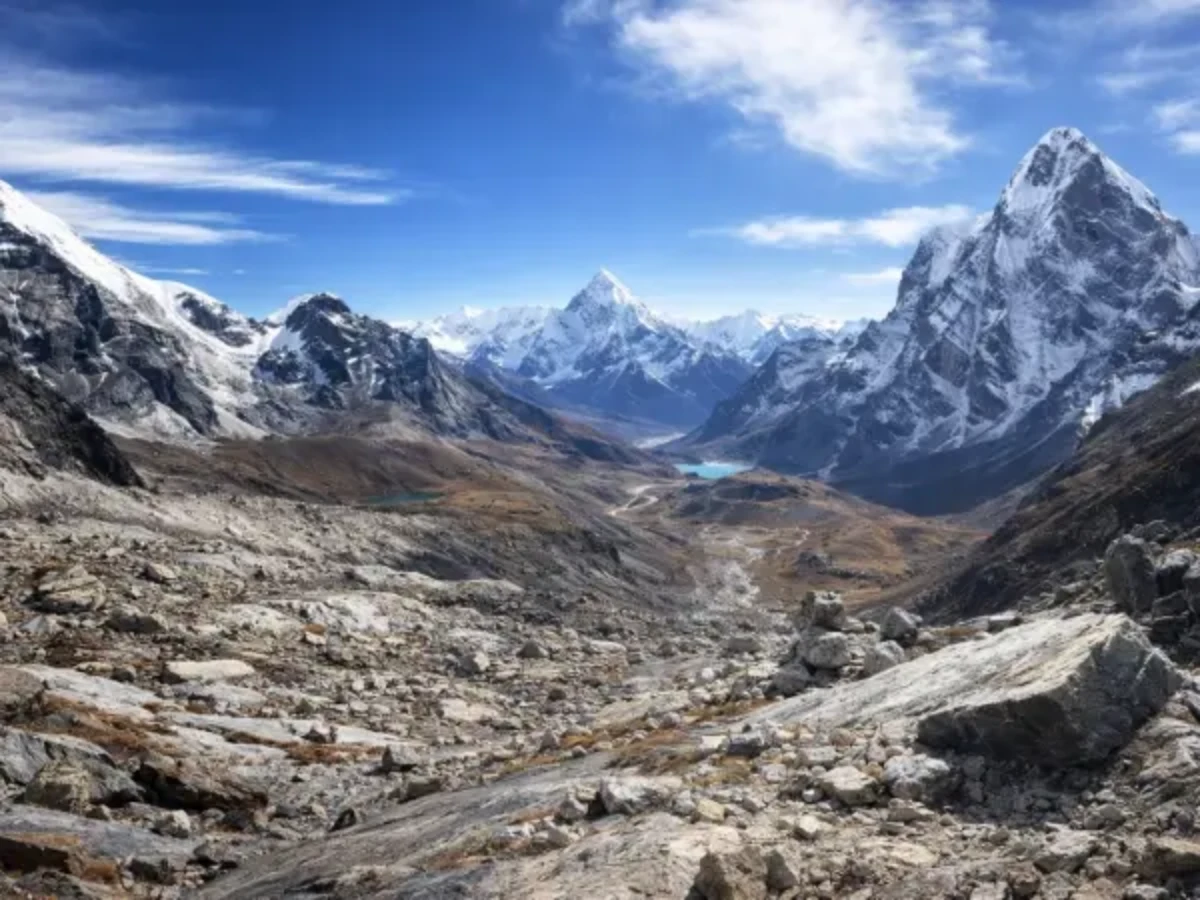
The Tamor River is your constant companion on this section, though you won't always see it. Sometimes it's right beside you, close enough to feel the spray. Other times it drops away into a gorge far below, and you only know it's there by the sound, that deep, continuous roar that becomes background noise after the first hour but never quite lets you forget where you are.
What makes this walk genuinely special is the forest. Between Chirwa and Amjilosha, you pass through some of the most intact subtropical and temperate forest left in Nepal. The lower sections are dominated by sal and chilaune trees, with wild banana plants and ferns crowding the understorey. As you gain altitude, these give way to oaks, rhododendrons, and stands of bamboo that grow so thick they form green tunnels over the trail. In spring, late March through May, the rhododendrons bloom in reds and pinks that seem almost artificial against the dark green of everything else. Related: Kanchenjunga Trek Distance and Difficulty: Nepal's Toughest Standard Trek.
What are the teahouses like in Amjilosha?
Amjilosha is small. Properly small. We're talking a cluster of perhaps a dozen buildings, most of them homes with a few operating as teahouses during the trekking season. There's no village square, no shops worth the name, no internet cafe. What there is: warmth, shelter, food, and a place to rest your legs.
Accommodation is basic teahouse-style. You'll get a room with two beds, thin mattresses, and blankets. Some teahouses have plywood walls between rooms; others use curtains. Toilets are outside, squat toilets, usually clean enough. There's no hot shower here, though you can get a bucket of warm water heated over the fire if you ask nicely and don't mind waiting. Charging your phone is sometimes possible but depends on whether the solar panel is working or the generator is running. Don't count on it.
The food, though, the food is better than you'd expect. Dal bhat is the staple, served twice a day in portions generous enough to fuel another five hours of walking. The dal at these lower-altitude teahouses tends to be richer than what you'll get higher up, with locally grown lentils and whatever vegetables the family has in their garden. You might get fresh greens, potatoes, or seasonal squash alongside the rice. If you're lucky, someone will offer you sel roti, a ring-shaped rice bread, slightly sweet, fried until crispy on the outside and soft within. It's the Limbu equivalent of a welcome gift.
Don't expect a menu with twenty options. At Amjilosha, you eat what the family is cooking. And that's exactly how it should be.
What wildlife lives in the forest around Amjilosha?
The Kanchenjunga Conservation Area protects over 2,000 square kilometres of some of the most ecologically rich terrain in the eastern Himalayas. The forest around Amjilosha sits in the transition zone between subtropical and temperate ecosystems, which means biodiversity is exceptionally high.
The birdlife alone would justify the trek for anyone with even a passing interest. This section of the valley is home to more than 250 recorded bird species. You'll hear the calls before you see anything, the flute-like song of the white-capped redstart near the river, the rattling alarm of laughingthrushes in the undergrowth, the occasional flash of scarlet as a minivet passes through the canopy above. If you're walking quietly and paying attention, you might spot a great barbet, a heavy, colourful bird that sounds like it's hammering on a hollow log. Keep your eyes on the treetops for raptors: mountain hawk-eagles and black eagles patrol these valleys.
Mammals are harder to spot but very much present. Red pandas live in the bamboo forests at this altitude, though seeing one requires serious luck and serious patience. Himalayan black bears range through these woods, particularly in autumn when they're fattening up on berries and acorns. You're unlikely to encounter one on the trail, they avoid humans, but your guide will know the signs. Langur monkeys are more visible, moving through the canopy in family groups, their long tails trailing behind them like grey ropes.
The insect life deserves mention too, particularly the butterflies. Eastern Nepal is one of the richest butterfly regions in the country, and on warm days the trail between Chirwa and Amjilosha can feel like walking through a living kaleidoscope. Blues, swallowtails, and fritillaries drift along the path, and near stream crossings you'll sometimes find dozens of butterflies gathered on wet sand, drinking minerals from the mud.
A Word About Leeches
If you're trekking between June and September, monsoon season, there's no polite way to say this: the leeches are significant. The warm, wet forest between Mitlung and Amjilosha is prime leech habitat. They sit on leaves and in the grass, waving their front ends in the air, waiting for the vibration and body heat of something warm-blooded passing by. That something will be you.
They're not dangerous. They don't carry disease. But they're deeply unpleasant, and finding one attached to your ankle or inside your sock is a particular kind of horror that no amount of prior warning fully prepares you for. Salt or a lighter flame detaches them. Leech socks, tight-woven fabric gaiters that tuck over your trouser legs, are the best prevention. Some trekkers swear by insect repellent sprayed on boots and socks. Your guide will have dealt with thousands of leeches in their career and will be remarkably unfazed.
If you can choose your season, the autumn months of October and November avoid the worst of the leeches while still offering good weather. Spring (March to May) is also excellent, with the added bonus of rhododendron season.
What is the Tamor River on the Kanchenjunga trek?
The Tamor River shapes everything on this trek. It carved the valley you're walking through. It provides water to every settlement along its banks. Its constant presence, the sound of it, the sight of it, the cold air rising from its surface on warm afternoons, defines the atmosphere of the lower Kanchenjunga trail in a way that's hard to appreciate until you've been walking beside it for days.
The Tamor is one of Nepal's seven major rivers, rising from glaciers near the Kanchenjunga massif and flowing south to join the Arun and Sun Koshi rivers before eventually reaching the Ganges. At Amjilosha's altitude, it's a powerful, fast-moving river, milky with glacial sediment in summer, clearer and bluer in the dry months. The gorge sections between Chirwa and Amjilosha are dramatic, with the water funnelling between rock walls in a continuous white-water surge that makes conversation impossible if you're standing near the bank.
For the communities along its banks, the Tamor is both provider and threat. It irrigates the terraced fields that produce rice and millet at the lower altitudes. It powers small micro-hydro generators that give some villages their only electricity. But during monsoon floods, it can rise metres in hours, sweeping away bridges, trails, and occasionally entire sections of hillside. The trail you walk on has been rebuilt many times.
If you're interested in rafting, the Tamor is considered one of Nepal's finest whitewater rivers. But that's a different trip entirely.
Limbu Culture: Older Than the Mountains' Names
The Limbu people, they call themselves Yakthung, have lived in the hills of eastern Nepal for centuries, probably millennia. Their homeland, known as Limbuwan, stretches across much of the territory you'll trek through on the Kanchenjunga trail. Understanding even a little about Limbu culture changes how you experience this landscape.
The Limbu follow the Kirat religion, one of the oldest spiritual traditions in the Himalayan region. It predates both Buddhism and Hinduism in this part of Nepal, though today many Limbu families practise a blend of all three. The Kirat tradition centres on nature worship and ancestor veneration, the rivers, mountains, and forests are not simply scenery but living presences deserving respect. When you walk through the forest near Amjilosha, you're walking through what is, for the Limbu, a sacred landscape.
You'll notice the Mundhum tradition if you stay long enough to talk with your hosts. The Mundhum is the Limbu oral scripture, a vast body of chants, stories, and ritual texts passed down through generations by priests called Phedangma. It covers everything from the creation of the world to the proper way to plant rice. It has never been written in one definitive text; it lives in the memory of its keepers, which makes every elder who knows the chants a kind of living library.
Tongba is the Limbu drink you'll be offered, and you should accept. It's fermented millet served in a wooden or bamboo container with a metal straw. Hot water is poured over the millet, left to steep, and then sipped through the straw, which has a filter at the bottom. The first pour is mildly alcoholic, slightly sweet, and warming. Subsequent pours get progressively stronger. It's sociable, tongba is meant to be shared, and sitting around a tongba pot in a teahouse kitchen while the fire crackles is one of those trekking moments that photographs can't capture.
The Limbu language, Limbu or Yakthungpan, has its own script, Sirijanga, though many younger Limbu now use Devanagari or Romanised forms. You'll hear it spoken between family members in the teahouses. A few words go a long way: "Sewaaro" is a general greeting. Smiling and making the effort matters more than pronunciation.
Is Amjilosha worth stopping at on the Kanchenjunga trek?
The Kanchenjunga Base Camp trek is one of Nepal's great walks. At roughly three weeks and reaching altitudes above 5,000 metres, it's a serious undertaking that demands proper planning, good fitness, and experienced support. Within that larger journey, a stop like Amjilosha might seem unremarkable, just another night in another teahouse at another middling altitude.
But here's the thing: the lower sections of the Kanchenjunga trek are where you build the foundation for everything that comes later. The days between Taplejung and Ghunsa, of which Amjilosha is one, are where your body adjusts to walking six hours a day with a pack. They're where your digestive system adapts to dal bhat twice daily. They're where you learn the rhythm of teahouse life, the early starts, the afternoon tea stops, the evenings in smoke-filled kitchens learning card games with your guide.
These lower days are also where you experience Nepal at its most authentic. Higher up, where the glaciers and the famous peaks dominate, the landscape becomes more dramatic but also more stark. Down here in the forest, surrounded by birdsong and flowing water and the smell of woodsmoke, you're experiencing the Nepal that most of the country actually lives in. The farms, the forests, the river valleys, the small communities connected by footpaths. This is the real Nepal, not the postcard version.
Amjilosha is a reminder that great treks aren't just about their highest points. They're about every step between.
What Do You Need to Know About Amjilosa?
Getting to Amjilosha
The standard approach is by road from Kathmandu to Taplejung (domestic flight to Bhadrapur or Suketar, then jeep), followed by one to two days of walking depending on trail conditions and itinerary. Amjilosha is typically reached on the second or third day of trekking from the roadhead.
Altitude
Approximately 2,510 metres. At this altitude, acute mountain sickness is extremely unlikely. You're still well within the comfort zone for almost everyone. The acclimatisation challenges begin later, above Ghunsa.
Accommodation
Basic teahouses only. Expect twin rooms with thin mattresses, outside squat toilets, and no reliable electricity. Bring a headlamp, a sleeping bag rated to at least -10C for the higher sections, and patience.
Food and Water
Dal bhat, noodle soup, and fried rice are the standard options. Bottled water is available but expensive, bring purification tablets or a filter bottle to treat local water. This saves money and reduces plastic waste on the trail.
Best Season
October to November for clear skies and dry trails. March to May for rhododendron blooms and warmer lower-altitude temperatures. Avoid June to September unless you're comfortable with heavy rain, leeches, and potentially difficult trail conditions.
Permits Required
Kanchenjunga Conservation Area Permit (KCAP) and a Restricted Area Permit are both required. You must trek with a registered guide; while a solo permit is now legally possible, we run Kanchenjunga as a small-group trek with a two-person minimum. All permits are arranged in Kathmandu before departure.
What to Carry
Rain gear regardless of season, the valley creates its own weather. Leech socks if trekking March through September. Binoculars for birdwatching. A power bank and extra batteries. A good book for the teahouse evenings, there's no wifi to scroll through.
Health Notes
The trail between Chirwa and Amjilosha is relatively safe, but stream crossings can be slippery. Trekking poles help enormously on the muddy sections. Drink plenty of water, the walking is warm at this altitude, especially in spring. Carry basic first aid supplies; the nearest medical facilities are back in Taplejung.
The Evening at Amjilosha
The best part of Amjilosha happens after you stop walking. Late afternoon, when the shadows fill the valley and the temperature drops just enough to make a fleece feel welcome, the teahouse comes alive in its quiet way. The kitchen fire gets stoked. Someone starts chopping vegetables. Your guide sits cross-legged near the fire, chatting in Nepali with the owner while you stretch out your legs and feel the particular satisfaction of a day well walked.
The dal bhat arrives in metal plates, rice heaped in the centre, dal in a small bowl, a scoop of vegetable curry, a smear of pickle. You eat with your right hand if you're feeling brave, or with a spoon if you're not. Seconds are offered. You accept.
Later, if the clouds have cleared, you step outside and look up. Without light pollution, without buildings, without anything between you and the sky except two thousand five hundred metres of thin air, the stars are extraordinary. The Milky Way arcs overhead like a river of light. You can hear the Tamor somewhere below, still running, still carving its valley as it has for a hundred thousand years.
Tomorrow you'll walk to Gyabla, and the day after that the valley will begin to narrow and the altitude will start to climb in earnest. The forests will thin. The air will sharpen. Kanchenjunga will reveal itself, piece by piece, summit by summit, until it fills the entire northern sky.
But tonight you're at Amjilosha, in a wooden teahouse, in a forest, beside a river, and that's enough.
Amjilosa is on the Kanchenjunga Base Camp Trek, between Shekathum and Gyabla in the forested lower section of the trail.
Amjilosha is one of those Kanchenjunga trail stops that nobody writes about but everybody remembers. The forest is thick, the trail is quiet, and the sound of the river below follows you for hours. It is the kind of walking that clears your head in ways that a mountain summit never does.
Amjilosha is on our Kanchenjunga Base Camp Trek (19 days). One of Nepal's least-visited trails, and our guides love it for exactly that reason.
WhatsApp:+977 9810351300
Email:[email protected]
Written by Shreejan Simkhada, CEO of The Everest Holiday and third-generation Himalayan guide. TAAN Member #1586.
Amjilosha is day 4 into Kanchenjunga Base Camp. Our Kanchenjunga Base Camp Trek (19 Days) is private (your group only, no strangers), 2027 dates open, From USD $1655. WhatsApp us for tailored 2027 dates and current departures.
Continue planning your trek
This is one stop on the Kanchenjunga Base Camp trail. For the full route, read our Kanchenjunga gateway guide. When you are ready for dates and prices, see the Kanchenjunga Base Camp Trek (19 days) or WhatsApp us directly. We reply personally.
 Chat with Shreejan