

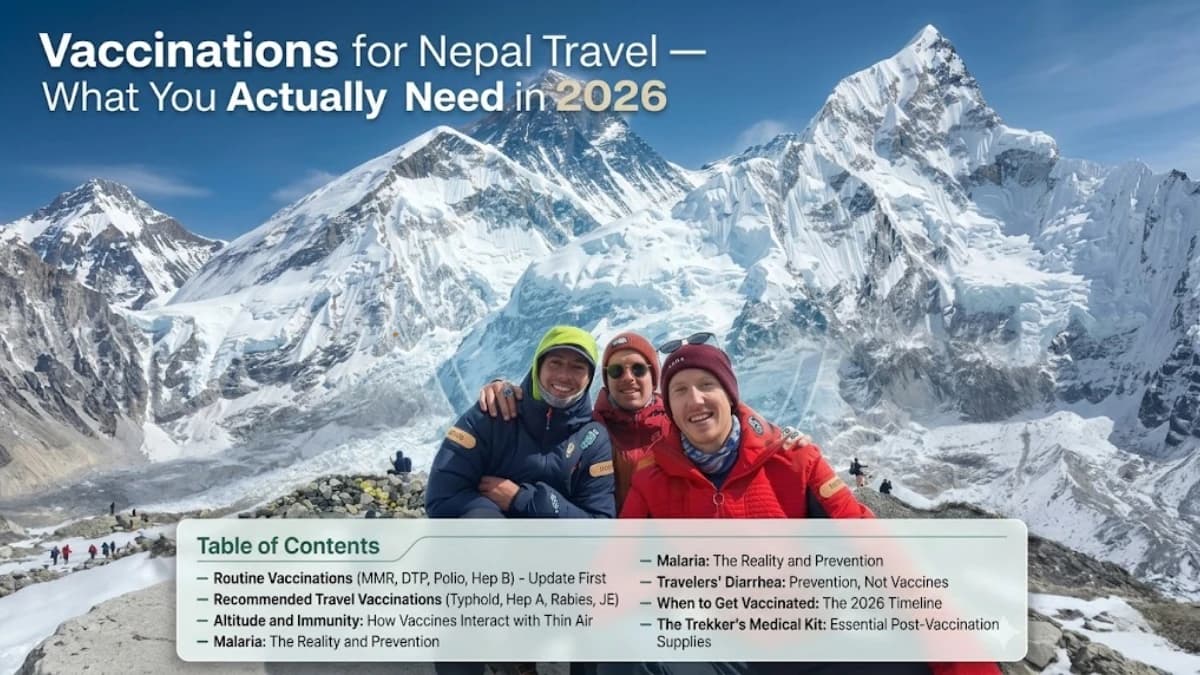
No vaccinations are legally required to enter Nepal, unless you are arriving from a country with yellow fever risk, in which case a yellow fever vaccination certificate is mandatory. That is the legal answer. The medical answer is different, and the medical answer is the one that matters when you are three days' walk from the nearest hospital and the water in your bottle came from a glacier that a yak walked through yesterday.
Nepal is not a dangerous country in any medical sense. The diseases that vaccinations protect against are not uniquely Nepali; they exist throughout South Asia and beyond. But Nepal's combination of variable sanitation infrastructure, remote trekking routes far from medical facilities, and the altitude-stressed immune system of a trekker at 4,000 metres creates a context in which preventive medicine is not paranoia but pragmatism.
This guide covers what travel medicine professionals currently recommend, what each vaccination protects against, and how the specific risks of trekking, as opposed to a city holiday, affect the calculation.
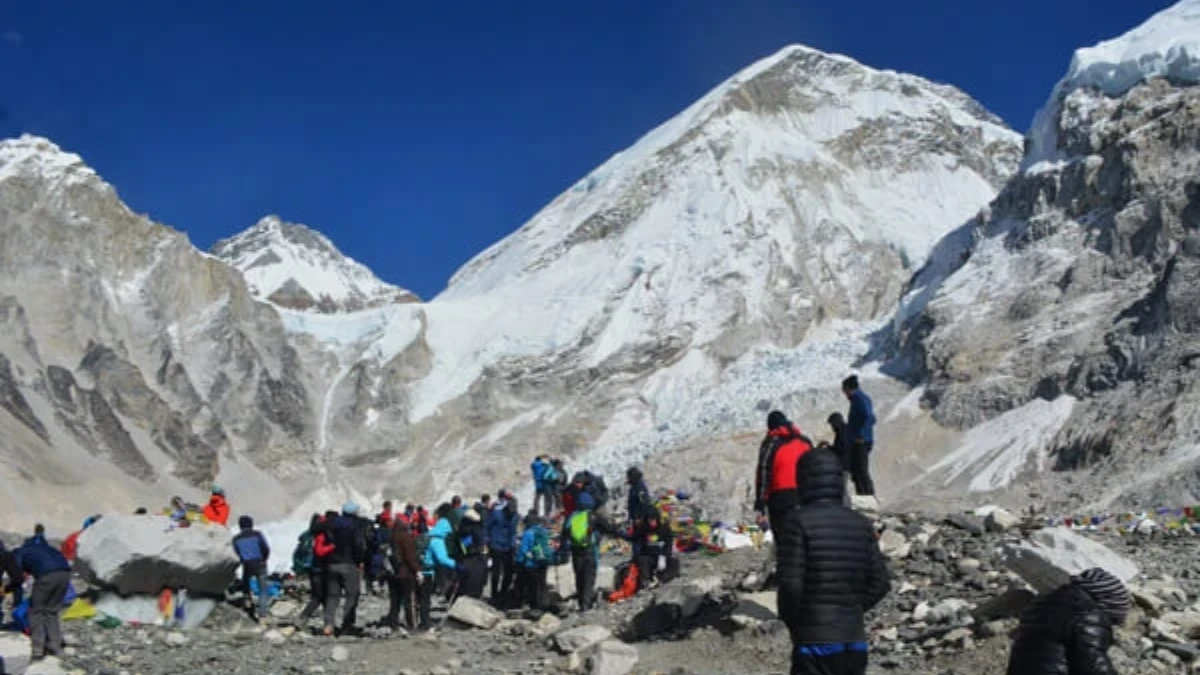
Which routine vaccinations should I update before visiting Nepal?
Before considering Nepal-specific vaccinations, ensure your routine vaccinations are up to date. These are the vaccinations that most people in developed countries received as children but that may need boosting for adult travel:
Tetanus/Diphtheria/Pertussis (Tdap): Boosted every ten years. The tetanus component is particularly relevant for trekkers: cuts and scrapes on rocky terrain introduce the tetanus bacterium through broken skin. If your last booster was more than ten years ago, get one before departure.
Measles/Mumps/Rubella (MMR): Two doses in childhood provide lifelong protection for most people. If you are unsure of your vaccination history, a blood test can confirm immunity. Nepal has periodic measles outbreaks, particularly in areas with lower vaccination coverage.
Polio: Nepal was declared polio-free in 2014, but the WHO still recommends ensuring your polio vaccination is current for South Asia travel.
Influenza: The seasonal flu vaccine is recommended for all travellers, particularly those whose trek coincides with the northern hemisphere flu season (October-March). Flu at altitude is not just uncomfortable, the respiratory compromise of influenza combined with the reduced oxygen at high altitude can lead to serious complications.
COVID-19: Nepal's entry requirements for COVID-19 vaccination change periodically. Check the current requirements before departure. Regardless of entry requirements, being up to date on COVID vaccination and boosters is prudent for any international travel.
What vaccinations are recommended for travel to Nepal?
The following vaccinations are recommended by most travel medicine clinics for Nepal. They are not legally required, but they are medically advisable.
Hepatitis A. Recommended for virtually all travellers to Nepal. Hepatitis A is transmitted through contaminated food and water, a risk that is present throughout Nepal and elevated on the trekking trail where water sources and food preparation standards vary. The vaccine is given as two doses: the first dose provides protection within two to four weeks and lasts approximately one year; the second dose (given six to twelve months later) provides protection for twenty years or more. If you are leaving in less than two weeks, the first dose still provides rapid protection.
Typhoid. Recommended for all travellers to Nepal. Typhoid fever is transmitted through contaminated food and water. The risk is highest in areas with poor sanitation, which includes parts of Kathmandu and the lower-altitude trail sections. An injectable vaccine provides protection for two to three years. An oral vaccine is also available. Neither is one hundred percent effective, continued food and water hygiene remains essential even after vaccination.
Hepatitis B. Recommended for travellers who may have medical procedures in Nepal (including dental work or emergency medical treatment), who may have intimate contact with locals, or who are travelling for more than a few weeks. Hepatitis B is transmitted through blood and bodily fluids. The vaccine is a three-dose series that provides long-term protection. Many people born after the 1990s in developed countries received Hepatitis B vaccination as infants, check your records.
Rabies (pre-exposure). Recommended for trekkers, especially those on longer or more remote routes. Nepal has a high incidence of rabies, primarily in dogs and monkeys. Stray dogs are present in every village and on every trail. Monkeys are common in lower-altitude forests and around temples. A bite or scratch from an infected animal, even a minor one, can transmit rabies, which is virtually one hundred percent fatal once symptoms appear.
The pre-exposure vaccine is a three-dose series that does not eliminate the need for treatment after a bite but simplifies and speeds the post-exposure protocol. Without pre-exposure vaccination, a bite requires five doses of post-exposure vaccine plus rabies immunoglobulin (RIG), and RIG may not be available in Nepal. With pre-exposure vaccination, a bite requires only two booster doses and no RIG. On a remote trek, this difference matters enormously, you may be days from a facility that stocks RIG, but booster doses are more widely available.
The pre-exposure rabies vaccine is expensive (approximately one hundred to two hundred pounds for the three-dose series in the UK) and not covered by many insurance plans. Whether to get it depends on your risk tolerance, your trek remoteness, and your budget. For treks in the Everest or Annapurna regions, where medical facilities exist along the route, the risk is manageable without pre-exposure vaccination if you exercise caution around animals. For remote treks, Manaslu, Upper Mustang, Kanchenjunga, where medical facilities are scarce, pre-exposure vaccination is strongly recommended.
Japanese Encephalitis. Consider for travellers spending extended time (more than one month) in rural areas, particularly the Terai lowlands. Japanese encephalitis is transmitted by mosquitoes and is a risk primarily in the southern plains during and after monsoon season (June-November). Trekkers who are only passing through the Terai briefly and spending most of their time at altitude (above 2,000 metres where mosquitoes are rare) face minimal risk. Trekkers combining a trek with an extended safari in Chitwan or Bardia National Park should consider the vaccine.
Does high altitude weaken your immunity when trekking in Nepal?
An important consideration specific to trekking: altitude suppresses immune function. Research shows that the immune system operates less effectively above 3,000 metres, white blood cell activity decreases, inflammatory responses change, and the body's ability to fight infection is reduced. This means that the vaccines you received are more important at altitude, not less. The protection they provide becomes more valuable precisely because your body's natural defences are compromised.
This also means that minor infections, a cold, a stomach bug, a small wound infection, can escalate more quickly at altitude than at sea level. Hygiene practices that seem excessive at home are appropriate on the trail: hand washing before meals, water purification for every drink, wound cleaning and covering for every cut.
Do I need malaria pills for trekking in Nepal?
Nepal has malaria risk in the Terai lowlands (below 1,200 metres), particularly in the eastern and central Terai during monsoon season. The risk is low by global standards, Nepal has made enormous progress in malaria reduction, and the species present (primarily P. vivax, with some P. falciparum) respond to standard prophylaxis.
For trekkers: if your entire trek is above 2,000 metres (which includes EBC, Annapurna Circuit, Langtang, Manaslu, and most other popular routes), malaria prophylaxis is not recommended. Mosquitoes that carry malaria do not survive at these altitudes.
If you are spending time in the Terai, particularly for wildlife safaris in Chitwan or Bardia, discuss malaria prophylaxis with your travel medicine provider. Options include atovaquone-proguanil (Malarone), doxycycline, or mefloquine. The choice depends on your medical history, the duration of exposure, and the specific area visited.
Regardless of medication, mosquito bite prevention, DEET-based repellent, long sleeves and trousers at dusk and dawn, permethrin-treated clothing, is the first line of defence in malaria-risk areas.
Travellers' Diarrhoea: Not a Vaccination Issue But a Survival Issue
There is no vaccine for the most common illness among Nepal travellers: gastroenteritis, colloquially known as "Delhi belly" or "Kathmandu quickstep." An estimated thirty to fifty percent of travellers to Nepal trip some form of gastrointestinal upset. The causes are bacterial (E. coli, Salmonella, Campylobacter), viral (norovirus, rotavirus), or parasitic (Giardia, Cryptosporidium).
Prevention is behavioural, not pharmaceutical: drink only purified water, eat food that is cooked and served hot, avoid salads and raw vegetables (which may have been washed in contaminated water), peel your own fruit, and wash your hands before every meal. On the trek, the teahouse food is generally safe because it is cooked to order at high temperatures. The risk is higher in Kathmandu, where street food and restaurant hygiene vary widely.
Carry treatment: loperamide (Imodium) for symptom management, oral rehydration salts for fluid replacement, and a course of ciprofloxacin or azithromycin (prescribed by your doctor before departure) for bacterial infection. Your guide carries a first aid kit, but having your own antibiotics means treatment can start immediately rather than waiting for a pharmacy that may be days away.
How far in advance should I get vaccinated for Nepal?
Ideally, start the vaccination process six to eight weeks before departure. Some vaccines require multiple doses spaced weeks apart (Hepatitis A and B, rabies pre-exposure). Starting early ensures full protection before you leave.
If you are leaving in less than four weeks, you can still get single-dose vaccines (typhoid injectable, Hepatitis A first dose) and some accelerated courses (rabies and Hepatitis B can be given on compressed schedules). Visit a travel medicine clinic as soon as possible, even partial protection is better than none.
In the UK, some travel vaccines are available free on the NHS (Hepatitis A, typhoid, tetanus boosters) while others (rabies, Japanese encephalitis, Hepatitis B) must be purchased privately. In the US and Australia, travel vaccines are typically not covered by standard insurance and must be paid out of pocket. Costs vary by clinic, specialist travel medicine clinics are generally more expensive than GP surgeries but provide more detailed advice.
The Trekker's Medical Kit
Vaccinations are preventive. The medical kit is reactive. Both are necessary. A basic trekking medical kit should include:
Pain relief: paracetamol and ibuprofen. Altitude headache relief and general pain management. Anti-diarrhoeal: loperamide. Antibiotics: ciprofloxacin or azithromycin (prescription needed). Oral rehydration salts. Altitude sickness medication: acetazolamide (Diamox), discuss with your doctor before departure. Antihistamines: for allergic reactions and insect bites. Plasters and wound care: adhesive plasters, antiseptic wipes, wound closure strips. Blister treatment: Compeed or similar hydrocolloid plasters. Sunscreen: SPF 50+, essential at altitude where UV is dramatically stronger. Lip balm: with sun protection, essential above 3,000 metres. Insect repellent: DEET-based, for lower-altitude sections. Hand sanitiser: alcohol-based, for when water is unavailable. Water purification: tablets or UV device.
Your guide carries a larger first aid kit including a pulse oximeter, emergency medications, and communication equipment. But your personal kit provides immediate self-treatment for the common ailments, headache, blister, stomach upset, that do not warrant stopping the trek but do warrant attention.
How serious is the disease risk when trekking in Nepal?
Nepal is not a medical danger zone. Millions of people live there in good health. Hundreds of thousands of tourists visit each year without medical incident. The diseases that vaccinations prevent are real but uncommon among careful travellers. The most likely health issue you will face on a Nepal trek is not typhoid or rabies but altitude headache, blisters, and the specific gastrointestinal rebellion that your stomach mounts in response to cuisine that is unfamiliar, water that is different, and a body that is stressed by altitude and exertion.
Vaccinations reduce risk. They do not eliminate it. Good hygiene, food and water care, and the supervision of a trained guide reduce risk further. And the risk that remains, the irreducible minimum of travelling to a developing country in a remote mountain environment, is the price of something that no sanitised, pre-vaccinated, risk-eliminated destination can provide.
Get vaccinated. Pack a medical kit. Wash your hands. Purify your water. And walk into the mountains knowing that you have done what modern medicine recommends and that the Himalayas, which existed for millions of years before vaccines were invented, will provide the rest of what you need: clean air, exercise, altitude-enhanced appreciation for being alive, and a view that cures ailments no doctor can treat.
Vaccination guidance is included in our pre-departure briefings for all treks.
The short version: get your Hepatitis A and Typhoid jabs, make sure your Tetanus is current, and talk to your travel clinic about Rabies if you plan to spend time in rural areas. The long version is in the blog above. Nepal is not a dangerous country for disease, but the healthcare infrastructure outside Kathmandu is limited, so prevention matters more than treatment.
We brief all our guests on health precautions before departure. If you have specific medical concerns, let us know and we will advise accordingly.
WhatsApp:+977 9810351300
Email:[email protected]
Written by Shreejan Simkhada, CEO of The Everest Holiday and third-generation Himalayan guide. TAAN Member #1586.
Vaccines done: now book your EBC trek. Our Everest Base Camp Trek (12 Days) is private (your group only, no strangers), 2026 dates open, From USD $1399. WhatsApp us for tailored 2026 dates and current departures.

 Chat with Shreejan