
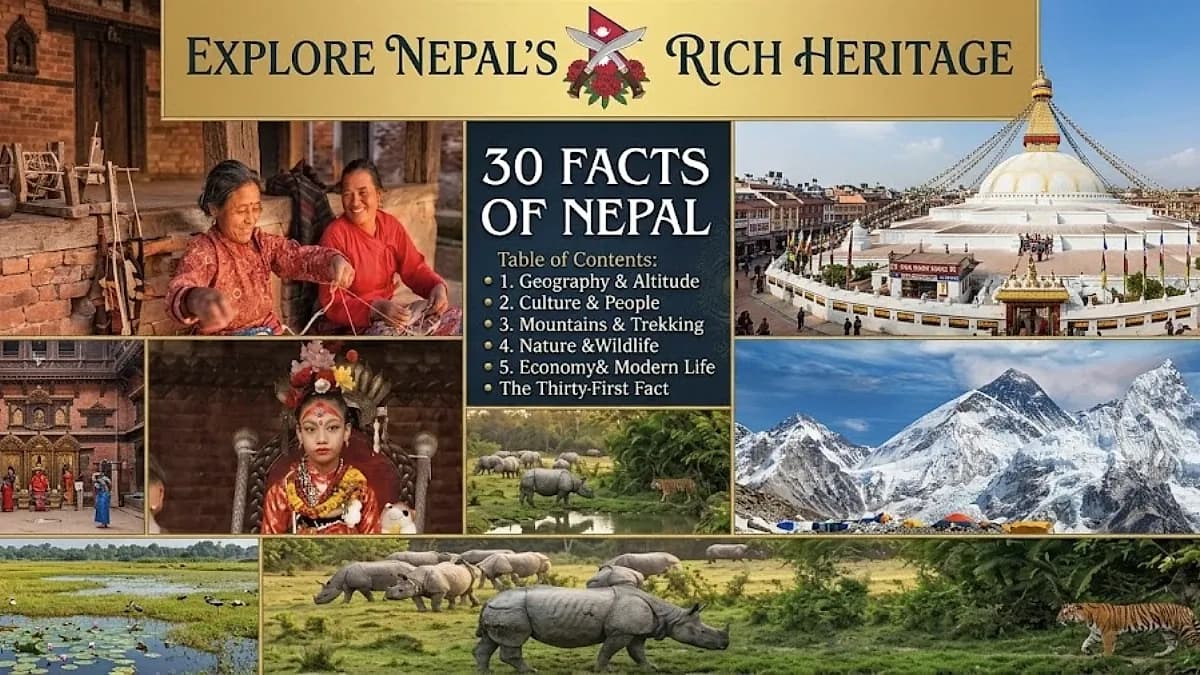
Nepal is the country that most travellers think they understand before they arrive and realise they did not understand at all. The mental image (Everest, prayer flags, Sherpas, temples) is accurate in the way that a postcard is accurate: it shows the surface but misses the depth. The depth is where the surprises live. And Nepal, compressed into a strip of land between India and Tibet that is roughly the size of England and Wales combined, contains more surprises per square kilometre than almost any country on earth.
These are not tourist trivia. They are facts that change the way you see the landscape you are walking through, the people you are meeting, and the country you are visiting. Some are geographical. Some are cultural. Some are simply strange. All of them are true.
How Big Is Nepal and Where Is It?
1. Nepal contains the greatest altitude range of any country on earth. From Kechana Kalan in the southeastern Terai at 59 metres above sea level to the summit of Everest at 8,849 metres, an altitude range of 8,790 metres within a country that is only 200 kilometres wide at its broadest point. No other country spans from near sea level to the highest point on the planet.
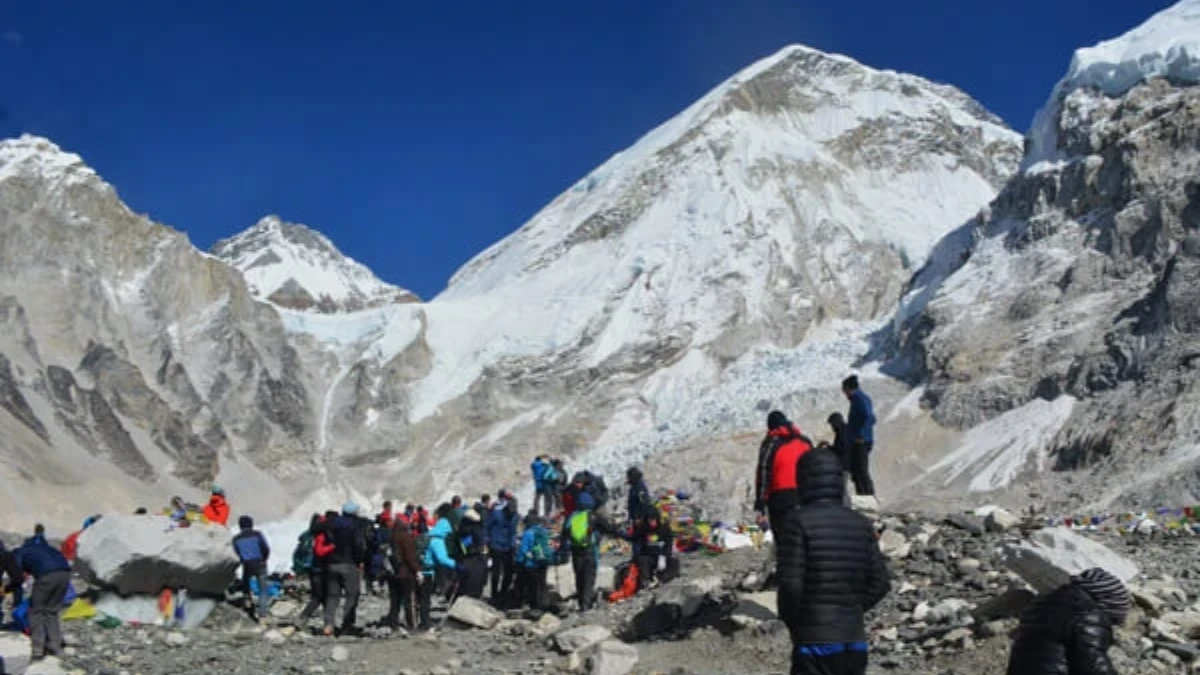
2. Nepal has eight of the world's fourteen peaks above 8,000 metres. Everest (8,849m), Kanchenjunga (8,586m, shared with India), Lhotse (8,516m), Makalu (8,485m), Cho Oyu (8,188m), Dhaulagiri (8,167m), Manaslu (8,163m), and Annapurna I (8,091m). No other country comes close. Pakistan has five. China has one (the north side of Everest).
3. The Kali Gandaki gorge is the deepest gorge on earth. Between Annapurna (8,091m) and Dhaulagiri (8,167m), the Kali Gandaki River cuts a gorge that, measured from the summits on either side to the river below, drops over 5,500 metres. Trekkers on the Annapurna Circuit walk through it. Most do not realise they are at the bottom of the deepest canyon on the planet.
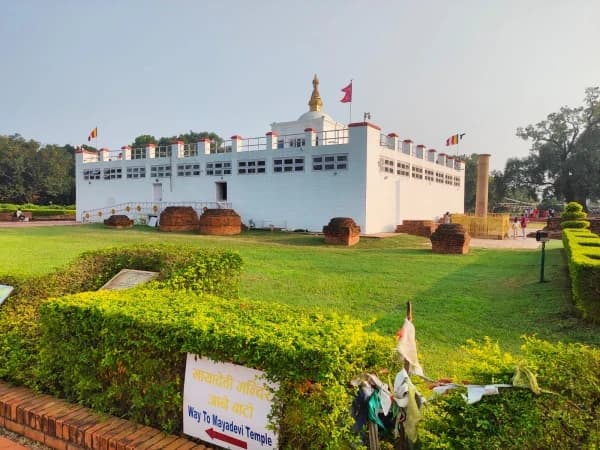
4. Lumbini, the birthplace of the Buddha, is in Nepal, not India. Siddhartha Gautama was born in approximately 563 BCE in Lumbini, in the plains of southern Nepal near the Indian border. The Mayadevi Temple marks the exact spot. This is one of the most commonly confused facts in world religion, and Nepalis will gently correct you if you get it wrong.
5. Nepal has never been colonised. In a region where British, French, Portuguese, and Dutch colonial powers carved up virtually every territory, Nepal maintained its independence throughout the colonial era. The Anglo-Nepalese War of 1814-1816 ended not in colonisation but in a treaty, the Treaty of Sugauli, that ceded some territory but preserved Nepal's sovereignty. The Nepali soldiers fought with such ferocity that the British, rather than conquering them, recruited them. The Gurkha regiments of the British and Indian armies are the direct result.
6. Nepal's flag is the only national flag in the world that is not rectangular. It consists of two stacked triangular pennants, crimson red with blue borders. The upper triangle contains a crescent moon. The lower triangle contains a twelve-pointed sun. The design represents the Himalaya (the two triangles) and the hope that Nepal will last as long as the sun and moon. No other country has a non-rectangular flag.
What are the most surprising cultural facts about Nepal?
7. Nepal has 123 languages. Not dialects. Languages. The 2011 census recorded 123 distinct mother tongues spoken across the country. Nepali is the national language and the lingua franca, but a trek from the Terai to the Khumbu crosses through communities speaking Maithili, Bhojpuri, Tharu, Tamang, Newari, Sherpa, and dozens of others. Many of these languages have no written form and are transmitted entirely through oral tradition.
8. The Nepali calendar is approximately 56 years ahead of the Western calendar. Nepal uses the Bikram Sambat calendar, in which 2026 CE corresponds roughly to 2082-2083 BS. The new year falls in mid-April (Baisakh). When your guide writes the date on your permit, the year will be different from what you expect.
9. The living goddess of Kathmandu is a real child. The Kumari is a prepubescent girl selected from the Shakya caste of the Newari community, who is worshipped as the incarnation of the Hindu goddess Taleju. She lives in the Kumari Ghar in Kathmandu's Durbar Square, appears at her window during specific times, and is carried through the streets during festivals. When she reaches puberty, she is replaced by a new Kumari. The tradition has continued for centuries.
10. Nepal has the densest concentration of UNESCO World Heritage Sites in the world relative to its size. Four cultural sites (Kathmandu Valley including seven monument zones, Lumbini, Chitwan National Park, and Sagarmatha National Park) are crammed into a country smaller than many US states. The Kathmandu Valley alone contains more medieval temple architecture than most European countries.
11. Cows are sacred and it was illegal to kill one. Nepal was the world's only Hindu kingdom until 2008, and the cow is Hinduism's most sacred animal. Killing a cow was a criminal offence punishable by imprisonment. The law has been modified since Nepal became a secular republic, but cows still roam freely through Kathmandu's streets, lying in traffic circles, eating vegetable scraps from market stalls, and being navigated around by everyone from taxi drivers to motorcycle couriers.
12. The Nepali word for the colour blue and the colour green is the same. "Hariyo" can mean either green or blue depending on context. The Nepali colour spectrum is divided differently from the English one. This is not a vision difference, it is a linguistic one, and it occasionally creates amusing confusion when discussing the colour of things.
Mountains and Trekking
13. Everest is not the tallest mountain, depending on how you measure. From base to summit, Mauna Kea in Hawaii is taller (10,210 metres from its ocean floor base versus Everest's approximately 4,600 metres from the Tibetan Plateau). Measured from the Earth's centre, Chimborazo in Ecuador is further from the centre than Everest, due to the Earth's equatorial bulge. Everest's claim, highest point above sea level, is the conventional measure, but it is not the only one.
14. The first confirmed summit of Everest by a woman was in 1975. Junko Tabei of Japan reached the summit on May 16, 1975, via the South Col route. She was also the first woman to complete the Seven Summits. Phantog, a Tibetan woman, summited from the north side just eleven days later.
15. More than 300 people have died on Everest. The mountain has claimed over 300 lives since the first recorded death in 1922. Most deaths occur in the "Death Zone" above 8,000 metres, where the human body is actively dying from oxygen deprivation. Many bodies remain on the mountain, at extreme altitude, recovery is too dangerous. Some bodies have become landmarks that climbers use for navigation.
16. Nepal's trekking industry employs more people than any other sector except agriculture. An estimated one million Nepalis depend directly or indirectly on trekking tourism, guides, porters, teahouse operators, transport providers, permit administrators, equipment retailers, and the agricultural producers who supply the trail economy. When you buy a cup of tea at 4,500 metres, you are participating in an economic chain that stretches from the tea grower in the eastern hills to the teahouse owner's children's school fees.
17. The Sherpa people are not a profession. "Sherpa" is an ethnic group, not a job title. The Sherpa people migrated from eastern Tibet approximately 500 years ago and settled in the Khumbu region of Nepal. Their cultural adaptation to high altitude, genetic advantages in oxygen metabolism, cultural familiarity with extreme terrain, made them natural partners for mountaineering expeditions, and "Sherpa" became colloquially associated with high-altitude guiding. But not all mountain guides are Sherpa, and not all Sherpas are guides. Many are farmers, traders, monks, and teachers.
18. The Lukla airport runway is 527 metres long and tilted at 12 degrees. Tenzing-Hillary Airport (formerly Lukla Airport) has one of the shortest and most dramatic runways in the world. It sits at 2,860 metres on a mountain shelf, with a wall at one end and a 600-metre cliff at the other. The runway slopes upward at 12 degrees to help slow landing planes. There is no go-around, if the approach fails, there is nowhere to go. It is consistently ranked among the world's most dangerous airports.
19. Yaks cannot survive below approximately 3,000 metres. True yaks are high-altitude animals adapted to cold, thin air. Below 3,000 metres, they overheat and become ill. The "yaks" you see at lower altitudes on the trail are usually dzopkyo (yak-cow hybrids) or naks (female yaks). The distinction matters to the people who raise them, calling a dzopkyo a yak in front of its owner is mildly insulting, like calling a thoroughbred a donkey.
20. Dal bhat is eaten twice a day by most Nepalis. Rice with lentil soup, vegetable curry, and pickle, the same meal, for lunch and dinner, every day. The saying "Dal bhat power, twenty-four hour" is not a joke. It is a nutritional philosophy. The meal provides complete protein (rice plus lentils), complex carbohydrates, and essential nutrients. Trekkers who eat dal bhat at teahouses are eating the fuel that has powered Himalayan life for centuries.
What wildlife and bird species can you see in Nepal?
21. Nepal has more than 900 bird species. In a country one-seventh the size of the United Kingdom, Nepal contains more bird species than the entire continent of Europe. The extreme altitude range, from subtropical Terai to alpine tundra, creates a corresponding range of habitats. The spiny babbler (Turdoides nipalensis) is found only in Nepal and nowhere else on earth.
22. The Bengal tiger and the one-horned rhinoceros live in Nepal's lowlands. While trekkers focus on the mountains, Nepal's southern Terai region contains some of Asia's most important wildlife habitat. Chitwan and Bardia National Parks protect populations of Bengal tigers, greater one-horned rhinoceroses, Asian elephants, gharial crocodiles, and Gangetic dolphins. Nepal's tiger population has nearly tripled since 2009, one of the world's great conservation success stories.
23. The red panda is Nepal's national animal in some classifications. The original panda, before the black-and-white giant panda took the name, the red panda (Ailurus fulgens) lives in the bamboo forests of Nepal's eastern hills at altitudes between 2,200 and 4,800 metres. They are elusive, nocturnal, and rarely seen, but they are present in the forests through which many trekking trails pass.
24. Nepal contains four climate zones. Tropical (below 1,000 metres in the Terai), subtropical and temperate (1,000-3,000 metres in the mid-hills), alpine (3,000-5,000 metres in the high mountains), and arctic (above 5,000 metres in the permanent snow and ice zone). A road trip from the Terai to the Khumbu crosses all four in a single day.
Economy and Modern Life
25. Remittances from overseas workers account for approximately 25 percent of Nepal's GDP. Millions of Nepalis work abroad, in the Gulf states, Malaysia, South Korea, Japan, and elsewhere, and send money home. This remittance economy is larger than the tourism economy and funds much of the construction, education, and healthcare that visitors see in Nepali communities.
26. Nepal's electricity comes almost entirely from hydropower. The country's rivers, fed by Himalayan glaciers and monsoon rainfall, generate over 95 percent of Nepal's electricity. The irony is that a country with some of the world's greatest hydropower potential suffered decades of chronic power shortages (up to 18 hours of daily blackouts in some years) due to inadequate infrastructure. The situation has improved dramatically in recent years, and Nepal now exports electricity to India.
27. Nepal abolished its monarchy in 2008. After 240 years of royal rule, Nepal became a federal democratic republic following a decade-long civil conflict (1996-2006). The last king, Gyanendra, left the Narayanhiti Palace in 2008. The palace is now a museum open to the public. Nepal's political transition, from absolute monarchy to constitutional monarchy to republic, is one of the most dramatic political transformations in modern Asian history.
28. The 2015 earthquake killed nearly 9,000 people and destroyed entire villages. The magnitude 7.8 earthquake of April 25, 2015, and its aftershocks devastated Nepal's central region. Centuries-old temples in Kathmandu's Durbar Squares collapsed. The village of Langtang was buried by an avalanche with no survivors. The impact on the trekking industry was severe, trails were damaged, teahouses destroyed, and tourism dropped sharply. The recovery has been remarkable, but evidence of the earthquake, partially rebuilt temples, new construction replacing what was lost, remains visible throughout the country.
29. Nepal time is UTC+5:45, one of only three time zones in the world at a 45-minute offset. Most time zones are offset from UTC in whole hours or half hours. Nepal's 5:45 offset is shared only by the Chatham Islands (UTC+12:45) and a small part of Australia. The 15-minute difference from India (UTC+5:30) is a deliberate assertion of national identity, Nepal sets its own time, literally.
30. Namaste means more than hello. The word is a contraction of "namah" (bow) and "te" (to you), literally, "I bow to you." But the deeper meaning, rooted in Hindu philosophy, is "the divine in me recognises the divine in you." When a trekker says "namaste" to a teahouse owner and receives it back with pressed palms and a smile, the exchange carries more weight than either participant may consciously recognise. It is an acknowledgment of shared humanity, spoken in a single word, in a language most visitors barely speak, in a country most visitors barely know, on a trail that brings strangers together in the thinnest air on earth.
The Thirty-First Fact
Here is one more, because round numbers are arbitrary and Nepal does not deal in arbitrariness.
31. Nepal will surprise you. Not with the mountains, you expect the mountains. Not with the temples, you have seen the photographs. Not with the food or the prayer flags or the suspension bridges, these are in the guidebook. Nepal will surprise you with the specific thing you did not expect: the hospitality that feels personal rather than professional, the child who runs alongside you practising English vocabulary, the sunset that turns Machhapuchhre a colour that does not have a name in any of Nepal's 123 languages, and the moment, it comes to every visitor, usually around the fourth or fifth day of a trek, when you realise that the country is not what you imagined but something richer, stranger, more beautiful, and more human than any expectation could contain.
That moment is the fact that no list can include and no statistic can capture. It is the fact that brings people back, not once but repeatedly, year after year, to a country that is the size of England, the age of civilisation, and the height of the sky.
Discover more surprising facts by experiencing Nepal yourself. Browse our full range of treks and tours.
Nepal surprises people. They come for mountains and leave talking about the food, the people, the festivals, the chaos of Kathmandu traffic, and the silence of a monastery at dawn. The mountains are extraordinary, but it is everything around them that makes Nepal the country you keep wanting to come back to.
If any of these facts made you curious, we are happy to answer questions. No sales pitch, just honest answers from someone who lives here.
WhatsApp:+977 9810351300
Email:[email protected]
Written by Shreejan Simkhada, CEO of The Everest Holiday and third-generation Himalayan guide. TAAN Member #1586.
Nepal surprised us too: that's why we run private treks. Our Everest Base Camp Trek (12 Days) is private (your group only, no strangers), 2027 dates open, From USD $1399. WhatsApp us for tailored 2027 dates and current departures.
 Chat with Shreejan