
Nepal Travel Guide & Expert Trekking Tips
Pulse Oximeter on Nepal Treks: Useful or Misleading?

Updated 19 October 2026.
Short answer: A pulse oximeter is a useful tool on a Nepal trek, but it is not a diagnosis. It shows the oxygen level in your blood and your pulse. Readings fall as you climb, they vary a lot from person to person, and they can be wrong when your fingers are cold. Your symptoms, how you walk, how you talk and whether you are eating tell your guide more than the number does. Use the oximeter to watch your own trend, and never use it to decide that you are fine to go higher.
I am Shreejan. Every trek and climb we run carries a pulse oximeter in the first-aid kit, and most trekkers ask me about it before they leave home. Some buy their own. Here is what it can and cannot do.
What does a pulse oximeter measure?
It clips on your fingertip and shines light through it to estimate the share of your red blood cells that are carrying oxygen. The result is a percentage, called SpO2, and a pulse rate. At sea level most healthy people read high. As you go up, the air has less oxygen, and your reading falls. That is normal and expected. A lower number at 4,000 m does not mean you are ill, and a good number does not mean you are safe.
What does the CDC say about oximeters?
The US CDC Yellow Book chapter on altitude illness says that pulse oximeters are now cheap, and that travellers may want to bring one to gauge their acclimatisation progress. It does not say the reading replaces watching for symptoms. The CDC describes altitude sickness by symptoms: a headache, plus nausea, dizziness, tiredness or a poor appetite, and, in the serious forms, confusion, unsteady walking, a cough and breathlessness at rest. I explain these in AMS, HAPE and HACE on a Nepal trek.
When can the reading be wrong?
| Problem | What happens | What to do |
|---|---|---|
| Cold fingers | The device struggles to find your pulse and can read low or fail | Warm your hands first, inside your jacket or around a cup of tea |
| Moving or shaking hand | Unstable readings | Sit still and rest your hand on your knee |
| Just after hard walking | The number is lower and the pulse is high | Rest for several minutes before you test |
| Cheap devices | Accuracy at altitude is not well tested | Compare your own readings over days, not one reading against a chart |
One small study from the Mont Blanc area, published in 2018, followed a single mountain guide from 1,210 m to 3,856 m. During the climbing parts of the day, between 16.8 and 34.5 per cent of the readings were incorrect, which shows how often these devices can miss in the mountains. The authors also said the result may not apply to people who get cold fingers, and many trekkers do. It is one person, so I use it only as a reminder to be careful, not as a rule. You can read it here: Usability of pulse oximetry during severe physical exercise at high altitude.
How should I use one on a trek?
This is my practical advice, not a medical protocol.
| Step | What to do |
|---|---|
| 1 | Test at the same time each day, for example in the evening after you have rested |
| 2 | Warm your hand and sit still for a few minutes |
| 3 | Write down the number and your pulse, with how you feel |
| 4 | Watch the trend. A sudden drop from your own earlier readings at the same altitude, or a number that is low and comes with symptoms, is a reason to talk to your guide |
| 5 | Never use a good reading to decide that a headache does not matter |
If you have symptoms, the rule from the CDC comes first: do not go higher to sleep. If symptoms get worse, you go down. The number is secondary.
Should I buy my own oximeter?
You do not need to. Our first-aid kits include one on every trek, as the trip pages say. If you like to track your own numbers, a small fingertip device is cheap and light. Treat it as a curiosity that can help you notice a trend, and as a way to talk with your guide, and nothing more.
Frequently asked questions
What should my oxygen level be at Everest Base Camp? There is no single number that is right for everyone. Readings fall with height and vary between people. Your guide looks at the number together with your symptoms and how you are walking.
Can a pulse oximeter diagnose altitude sickness? No. Altitude sickness is judged mainly by symptoms such as headache, nausea and dizziness. The oximeter is a supporting tool.
Why is my reading low when my fingers are cold? Cold fingers make it harder for the device to detect your pulse, so it can read low or fail. Warm your hand and try again.
Do your guides carry an oximeter? Yes. A first-aid kit and a pulse oximeter come with every trek and climb we run. Our guides are trained to watch for altitude illness.
Is a normal reading proof that I am safe to go higher? No. If you have a headache or other symptoms, do not go higher to sleep, whatever the number says.
Do I need travel insurance for the high treks? Yes, bought at home, with helicopter evacuation up to the highest point of your trek. See travel insurance for Everest Base Camp.
What else helps with altitude? A slow ascent, rest days, water, and telling your guide early. Read how to prevent altitude sickness, and sleeping at altitude if you worry about bad nights.
How do payment and cancellation work if I book a trek?
If you book a trek with us, the 10 per cent deposit is non-refundable and there is no refund if you cancel, but you can move your trip free of charge to any date within one year with at least 72 hours notice. If we cannot run the trip, we refund what you have paid, less taxes, bank or card charges and any money already spent on your behalf. Group size, payment and card charges are all on our deposit and rescheduling page.
What is the next step?
If you want to talk through acclimatisation for the 12-day Everest Base Camp trek or another high trip, message me on WhatsApp on +977 9810351300 with your dates and the highest you have slept before.
Sources: CDC Yellow Book, High-Altitude Travel and Altitude Illness, read 19 October 2026.
Written by Shreejan Simkhada, CEO of The Everest Holiday, from a family of three generations of family guides. TAAN Member #1586. WhatsApp +977 9810351300.
Planning a trip to Nepal?
Drop us your details and tell us what you have in mind. We will put together a personalised plan and get back to you.
Take our free 2-minute quiz and get personalised recommendations based on your fitness, experience, and travel style.
Find your trekMore from the travel blog
All stories and guides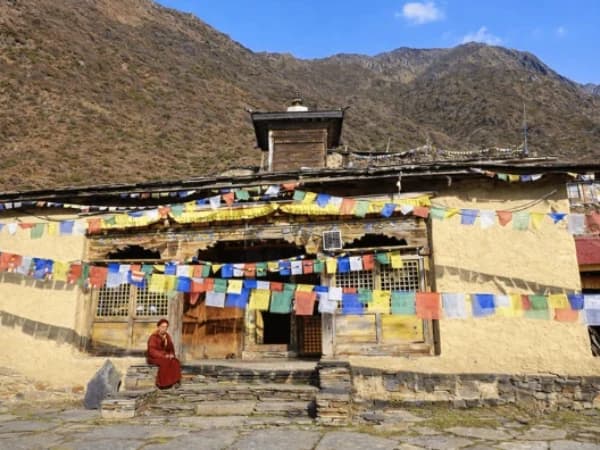 Nepal Travel Guide & Expert Trekking TipsTsum Valley Trek Itinerary 2027: 16 Days Day by Day, Permits and CostTsum Valley trek in 16 days from Kathmandu, day by day to Mu Gompa. From USD 895 pp for 2-4 (Budget), 2,235 Standard, 4,045 Luxury. Permits included, solo welcome.
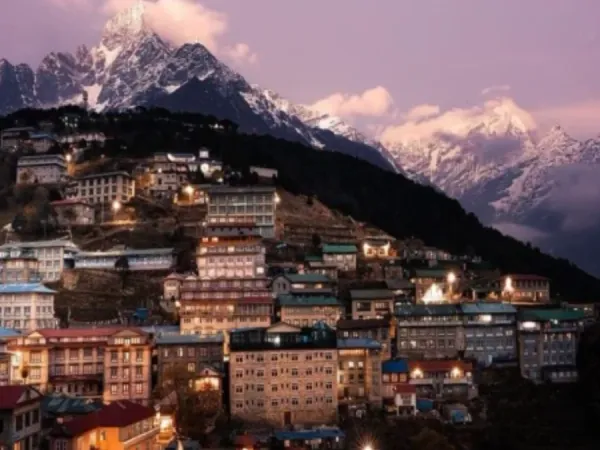 Nepal Travel Guide & Expert Trekking TipsPikey Peak Trek Itinerary 2027: 6 Days Day by Day, Cost and Best TimePikey Peak trek in 6 days by road, day by day to 4,065 m. From USD 380 pp for 2-4 (Budget), 960 Standard, 1,815 Luxury. No flight, works in winter.
 Nepal Travel Guide & Expert Trekking TipsKanchenjunga Base Camp Trek Itinerary 2027: 19 Days Day by Day, Permits and CostKanchenjunga Base Camp trek in 19 days, day by day to 5,140 m. From USD 1,720 pp for 2-4 (Budget), 3,335 Standard, 5,515 Luxury. Flights and permits included.