
Honest comparison of Nepal and Peru for trekking. EBC vs Inca Trail — altitude, cost, culture, scenery, logistics. When to choose each destination.
Govt Regd. No.: 147653/072/073
Travel Agency Licence: 2838/072
Nepal vs Peru: Which Should You Trek First?

Nepal vs Peru: Which Should You Trek First?
This is the question every serious trekker asks at some point. Nepal has Everest. Peru has Machu Picchu. Both offer world-class mountain trekking, ancient cultures, and life-changing experiences. And both are affordable by Western standards, making the choice even harder.
Having spoken to hundreds of trekkers who have done both, the answer depends on what you value most. Here is an honest comparison from someone who will obviously recommend Nepal — but who will try to be fair about it.
Which is better, Everest Base Camp or the Inca Trail?
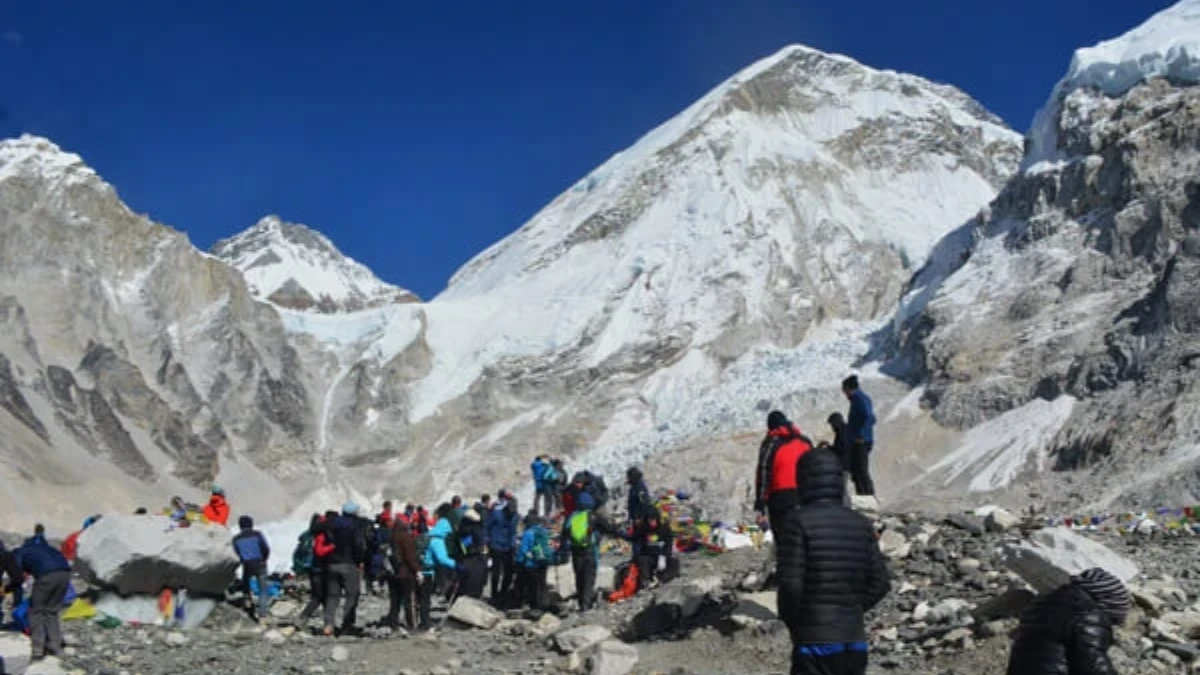
Nepal's flagship: Everest Base Camp (12-14 days, max 5,545m). You walk through Sherpa villages, past Buddhist monasteries, and across glacial moraine to the foot of the tallest mountain on earth. The altitude is the main challenge — the walking is long but not technical. The reward is standing at 5,545m on Kala Patthar watching sunrise light up Everest.
Peru's flagship: Inca Trail to Machu Picchu (4 days, max 4,215m). You walk along ancient Inca roads through cloud forest and high passes, arriving at the Sun Gate overlooking Machu Picchu at dawn. The trek is shorter and lower than EBC, but more regulated — permits are limited to 500 people per day and sell out months in advance.
The difference: The Inca Trail is a 4-day hike with a specific destination (Machu Picchu). EBC is a 12-day immersion in mountain culture and extreme altitude. One is a highlight reel; the other is a full season.
How high is Everest Base Camp compared to the Inca Trail?
Nepal is significantly higher. EBC reaches 5,545m. The Annapurna Circuit crosses Thorong La at 5,416m. These altitudes require careful acclimatisation over multiple days, and altitude sickness is a real risk that shapes every itinerary.
Peru's highest trekking point on the Inca Trail is Dead Woman's Pass at 4,215m, high, but 1,300m lower than Kala Patthar. The Ausangate Circuit reaches higher (5,200m), but it is far less popular. For most trekkers, Peru's altitude is challenging but manageable without extended acclimatisation stops.
If altitude worries you, Peru is the easier introduction. If you want to test yourself, Nepal pushes harder.
Is trekking cheaper in Nepal or Peru?
Nepal is cheaper per day, and per day is the honest comparison when one trek is four days and the other is twelve. Our Everest Base Camp trek is USD 1,399 on the budget tier and USD 2,499 on the standard tier, which is roughly USD 117 to USD 208 a day with your guide, your permits and your bed inside it. Peru's Inca Trail permit alone starts at USD 250 before a guide, a cook or a tent is paid for. Nepal's teahouse system is what keeps the daily figure down, you sleep in family-run lodges rather than camping, so there is no crew to feed and no camp to carry.
Peru's costs are pushed up by the Inca Trail permit system ($250+ per person), mandatory guide requirement, and camping logistics. The alternative Salkantay or Lares treks to Machu Picchu are cheaper but still more expensive per day than Nepal.
Flights are the variable: Nepal is closer to Europe and the Middle East; Peru is closer to North and South America. Factor in your airfare when comparing total trip cost.
Culture
Both are deeply cultural treks, but in different ways.
Nepal: Buddhist and Hindu influences. Sherpa villages with prayer flags, monasteries with chanting monks, and a trekking culture that goes back decades. The teahouse experience, eating dal bhat in a family's dining room while their children do homework, is intimate and genuine.
Peru: Inca heritage. Ancient stone pathways, the dramatic reveal of Machu Picchu, and Andean communities that maintain pre-colonial traditions. The cultural payoff is concentrated at the end. Machu Picchu is the climax, and it delivers.
Which has better scenery for trekking, Nepal or Peru?
Nepal wins on mountain scale. Eight of the world's fourteen 8,000m peaks are in Nepal. The views on the EBC trek. Everest, Lhotse, Nuptse, Ama Dablam — are the highest you can see from a trekking trail anywhere on earth. The Annapurna Circuit adds variety: subtropical forest, alpine desert, and the deepest gorge in the world.
Peru wins on archaeological drama. Walking into Machu Picchu through the Sun Gate is one of the most powerful moments in all of trekking. The Inca stonework, the cloud forest setting, and the sheer improbability of the location create a visual that nothing in Nepal matches.
Different spectacles. Mountains vs ruins. Both extraordinary.
How far in advance should you book a Nepal or Peru trek?
Peru's Inca Trail requires advance booking — permits sell out 3 to 6 months ahead. Nepal's EBC trek can be booked much closer to departure, with permits available on arrival.
Peru's trek is 4 days. Nepal's is 12+. If you have limited time, Peru fits into a shorter trip.
Peru's infrastructure (trains, buses, domestic flights) is more developed. Nepal's domestic flights are notoriously weather-dependent — Lukla flight delays are common and should be expected.
Is Nepal or Peru better for your first trek?
Trek Peru if: you have limited time (1 week), you want a specific destination (Machu Picchu), altitude above 4,500m concerns you, or you are combining with other South American travel.
Trek Nepal if: you have 2+ weeks, you want extended mountain immersion, you want to challenge yourself at extreme altitude, you prefer tea house trekking to camping, or the idea of standing at the base of Everest moves you.
Most trekkers do both eventually, so the real question is which one first, and the honest answer turns on altitude rather than on country. If you have never been above 4,000 metres then Everest Base Camp is not where to begin, and most people take that to mean beginning somewhere other than Nepal. It does not. Langtang tops out at 3,865 metres over eight days and starts at USD 365. Mardi Himal reaches 3,580 metres over seven days from USD 454. Ghorepani Poon Hill is lower again over six days from USD 499. Each of those is a genuine Himalayan trek at a first-timer's altitude, on the same teahouse trails, with the same guides. If you have already walked high and want something longer and more immersive, come straight to Everest.
And when you are ready for Nepal, WhatsApp us. We will help you choose the right trek and make sure your first Himalayan experience is one you remember forever.
Never been above 4,000 metres? Start lower, not elsewhere. Our Langtang Trek (8 Days) reaches 3,865 metres and is From USD $365, private, your group only with no strangers added. When you are ready for the big one, the Everest Base Camp Trek (12 Days) is From USD $1399. WhatsApp us and we will tell you honestly which of the two fits you now.
Planning a trip to Nepal?
Drop us your details and tell us what you have in mind. We will put together a personalised plan and get back to you.
Not sure which Nepal trek is right for you?
Take our free 2-minute quiz and get personalised recommendations based on your fitness, experience, and travel style.
Find Your Perfect Trek →Need Help? Call Us+977 9810351300orChat with us on WhatsApp
Latest Travel Blogs
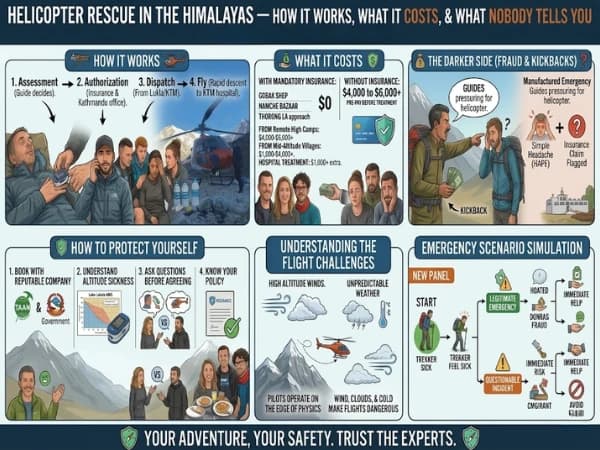
When a Helicopter Evacuation Is Not a Rescue: What We Refused and Why
A helicopter flew one of our clients off the mountain in August. We did not arrange it, we refused to authorise it, and this is why.
Read More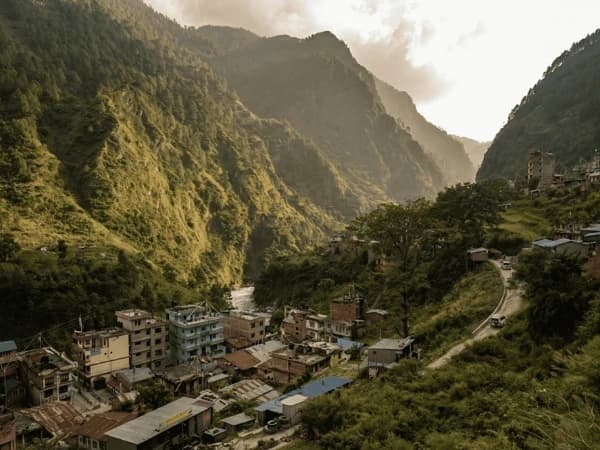
Rasuwa Flood 2026: How to Trace Someone Missing, and What Happened
Verified helplines, the corrected disaster hotline, the official register of who is unaccounted for, what caused the flood, and why a second one is still feared. Written by an operator whose team was standing at Timure the afternoon before.
Read MoreIs the Langtang Trek Affected by the Rasuwa Flood? The Honest Answer
Two rivers meet at Syabrubesi and only one of them flooded. The Langtang trail follows the other one. What that actually means for trekking this autumn, the three questions that decide it, and why the Tamang Heritage route is more exposed than the Langtang valley.
Read More Chat with Shreejan