Honest comparison of trekking in Nepal vs climbing Kilimanjaro. Altitude, difficulty, accommodation, cost, culture, and which you should do first.
Govt Regd. No.: 147653/072/073
Travel Agency Licence: 2838/072
Nepal vs Kilimanjaro: Two Altitude Treks, Two Different Worlds

How are the Nepal and Kilimanjaro treks different?
People compare these all the time, and I understand why. Both are bucket-list altitude treks. Both take roughly the same time. Both cost a similar amount. And both end with you standing somewhere very high, very cold, and very happy.
But the experiences could not be more different, and choosing the wrong one for your personality leaves you disappointed. Here is what nobody puts in the brochure.
Is Everest Base Camp a summit climb like Kilimanjaro?
Kilimanjaro: You are climbing a mountain. One mountain. You start at a gate, walk upward for 5 to 7 days through changing vegetation zones, and summit Uhuru Peak (5,895m) in the middle of the night. Then you walk back down. The entire experience is focused on the summit — reaching the top is the goal, and everything else is the journey there.
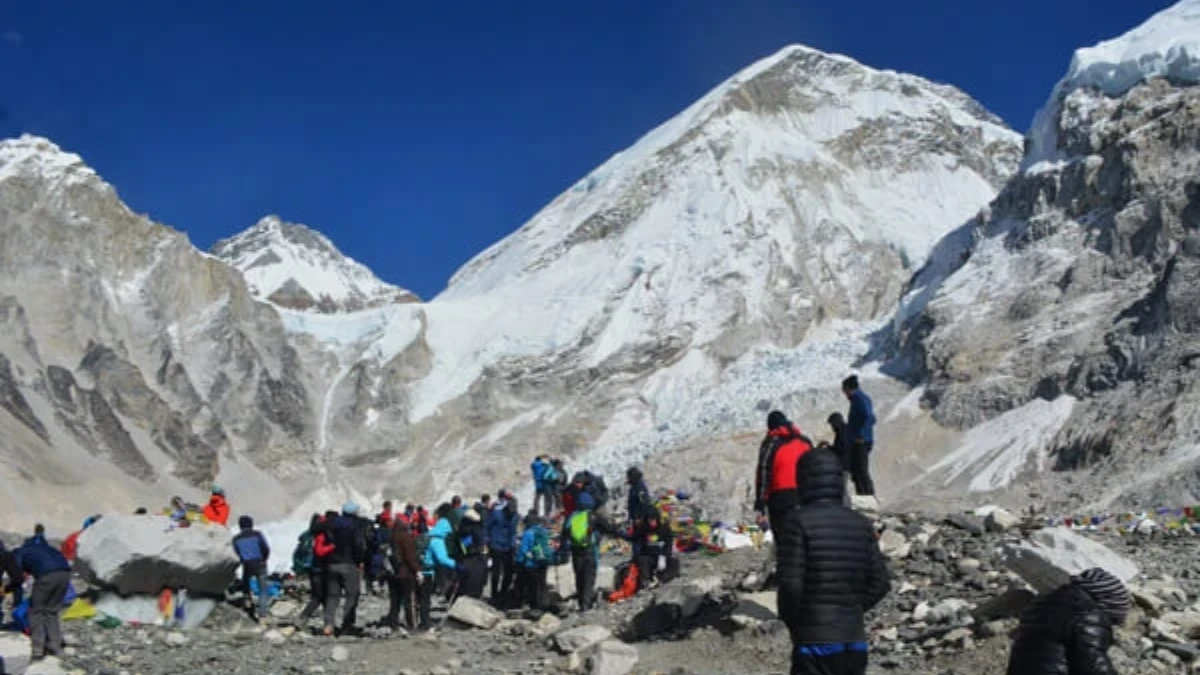
Nepal (EBC): You are walking through a region. You pass through villages, cross suspension bridges, visit monasteries, eat in family homes, and see multiple mountains above 8,000m from different angles over 12 days. Base camp (5,364m) is not a summit — it is a glacier campsite surrounded by the highest peaks on earth. The experience is the journey, not the destination.
If you want to summit something: Kilimanjaro. If you want a two-week immersion in mountain culture and landscape: Nepal.
Which is harder, Kilimanjaro or Everest Base Camp?
Kilimanjaro summit: 5,895m. Higher than EBC. The summit push is brutal — you leave camp at midnight, climb for 6 to 8 hours in the dark and cold, reach the top at sunrise, and descend the same day. The success rate is 65 to 70% on the most popular routes. Altitude sickness is the main reason people fail.
EBC + Kala Patthar: 5,545m (Kala Patthar viewpoint). Lower than Kilimanjaro. The approach is gradual, 12 days with rest days built in. The success rate is above 90% for trekkers who follow the acclimatisation schedule. There is no summit push, you walk to base camp in the afternoon and climb Kala Patthar the next morning at dawn.
Kilimanjaro is harder because the ascent is faster. You gain 4,000m in 5 to 7 days. On EBC, you gain 2,700m over 12 days. The extra acclimatisation time on EBC makes a huge difference, your body has twice as long to adjust.
What are the trails like on Kilimanjaro vs Nepal?
Kilimanjaro: The trail is well-marked and non-technical. You walk on volcanic scree, moorland, and rocky paths. There are no villages, no teahouses, no cultural stops, just the mountain, your group, and the changing landscape. It can feel monotonous on the longer routes.
Nepal: The trail passes through inhabited valleys. You cross rivers on suspension bridges, walk through rhododendron forests, pass prayer wheels and mani stones, and stop at teahouses for tea and dal bhat. The cultural dimension is constant, you are not just walking in nature, you are walking through a living community.
Do you camp or stay in lodges trekking Kilimanjaro vs Nepal?
Kilimanjaro: Camping. You sleep in tents carried by porters. No teahouses, no lodges, no dining rooms with stoves. Your meals are cooked by a camp chef in a cook tent. The camping is well-organised (especially on reputable operators), but it is still camping — cold nights, basic toilet facilities, and packing up every morning.
Nepal: Teahouses. Stone or wood lodges with beds, dining rooms, and (at lower elevations) hot showers. You sleep indoors every night. The dining room stove is the social hub where trekkers from every country share stories over tea. It is more comfortable than camping and more social.
If you enjoy camping and want a wilderness experience: Kilimanjaro. If you prefer a bed, a warm meal, and company: Nepal.
How much does Kilimanjaro cost compared to Everest Base Camp?
Kilimanjaro: $2,000 to $6,000 for a guided trek depending on the operator and route. Park fees alone are $800+ per person. Tips for the guide team (expected) add $200 to $300. Flights to Kilimanjaro Airport (JRO) vary by origin.
Nepal EBC: Our packages start well under $2,000 including guide, porters, meals, accommodation, and permits. Nepal is significantly cheaper because the teahouse system eliminates camping logistics, park fees are lower, and the local economy is less expensive than Tanzania.
Nepal is better value per day and per experience. You get more days, more cultural exposure, and more mountain views for less money.
When is the best time to trek Kilimanjaro or Nepal?
Kilimanjaro: Year-round, with best conditions January to March and June to October. The mountain creates its own weather, so conditions vary by route and elevation regardless of season.
Nepal: Two main seasons — spring (March to May) and autumn (September to November). The best months are October and April.
Which Should You Do First?
If you have never trekked at altitude: Nepal. The gradual acclimatisation, teahouse comfort, and cultural richness make it a better introduction to high-altitude trekking. You learn how your body responds to altitude over 12 days rather than being thrown at it in 5.
If you want a summit experience: Kilimanjaro. Standing on top of Africa at sunrise is something Nepal cannot offer — EBC is not a summit, it is a glacier camp.
If you can only do one: Nepal. More days, more variety, more culture, lower cost, higher success rate. That is my honest opinion, and yes, I run a Nepal trekking company, so take it with appropriate salt. But talk to anyone who has done both and most will say the same thing.
WhatsApp us if you are choosing between the two. We will give you an honest answer based on your experience and priorities.
Nepal vs Kilimanjaro — Nepal is cheaper and deeper. Our Everest Base Camp Trek (12 Days) is private (your group only, no strangers), 2026 dates open, From USD $1399. WhatsApp us for tailored 2026 dates and current departures.
Planning a trip to Nepal?
Drop us your details and tell us what you have in mind. We will put together a personalised plan and get back to you.
Not sure which Nepal trek is right for you?
Take our free 2-minute quiz and get personalised recommendations based on your fitness, experience, and travel style.
Find Your Perfect Trek →Need Help? Call Us+977 9810351300orChat with us on WhatsApp
Latest Travel Blogs
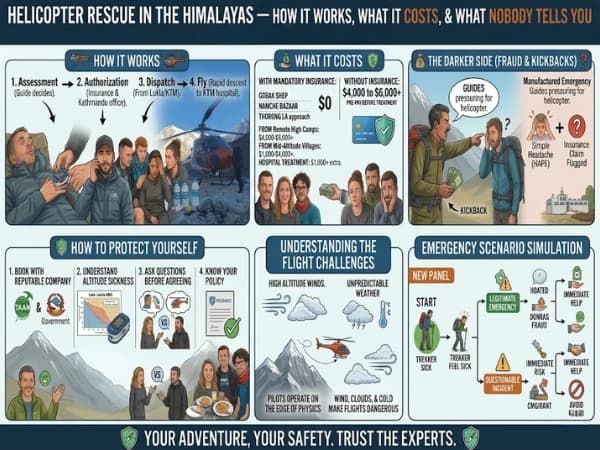
When a Helicopter Evacuation Is Not a Rescue: What We Refused and Why
A helicopter flew one of our clients off the mountain in August. We did not arrange it, we refused to authorise it, and this is why.
Read More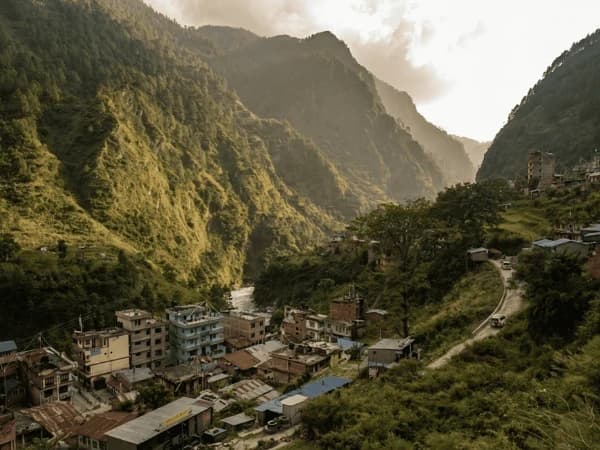
Rasuwa Flood 2026: How to Trace Someone Missing, and What Happened
Verified helplines, the corrected disaster hotline, the official register of who is unaccounted for, what caused the flood, and why a second one is still feared. Written by an operator whose team was standing at Timure the afternoon before.
Read MoreIs the Langtang Trek Affected by the Rasuwa Flood? The Honest Answer
Two rivers meet at Syabrubesi and only one of them flooded. The Langtang trail follows the other one. What that actually means for trekking this autumn, the three questions that decide it, and why the Tamang Heritage route is more exposed than the Langtang valley.
Read More Chat with Shreejan