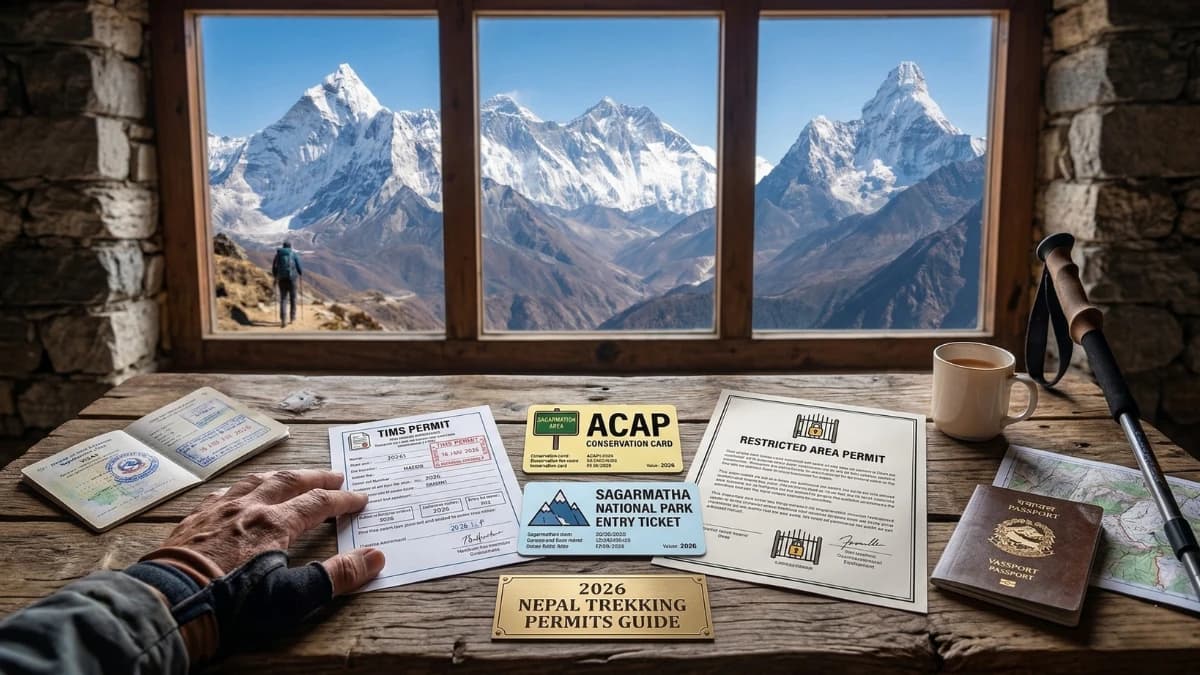
Every trek in Nepal needs its own mix of permits, and a checkpoint will turn you back if one is missing. The table below lists them trek by trek, with what each costs a foreign trekker in 2027. If you book with a registered agency, the agency buys them for you, and on our treks they are already in the package price.
The park and TIMS fees are from the Nepal Tourism Board pages and the restricted-area fees on the Department of Immigration page on 4 October 2026. The Khumbu local fee has no published page that I could find. It is the figure we pay at the counter.
Which permits do I need for each trek, and what do they cost?
| Trek | Permits you need | Foreign trekker, per person | SAARC citizen (Nepal Tourism Board fees only) |
|---|---|---|---|
| Everest Base Camp, Gokyo, Three Passes | Sagarmatha National Park entry, Khumbu Pasang Lhamu fee, TIMS card | NPR 8,000 (3,000 + 3,000 + 2,000), about USD 52 | NPR 5,500 |
| Mera Peak | The same three Everest permits, plus the Nepal Mountaineering Association royalty | NPR 8,000, plus USD 350 in spring or USD 175 in autumn, winter and summer | NPR 5,500, plus the royalty |
| Annapurna Circuit, Annapurna Base Camp, Poon Hill, Mardi Himal | Annapurna Conservation Area (ACAP) entry, TIMS card | NPR 5,000 (3,000 + 2,000), about USD 33 | NPR 2,000 |
| Langtang Valley, Tamang Heritage, Gosaikunda | Langtang National Park entry, TIMS card | NPR 5,000, about USD 33 | NPR 2,500 |
| Rara Lake | Rara National Park entry, TIMS card | NPR 5,000, about USD 33 | NPR 2,500 |
| Manaslu Circuit | Manaslu Conservation Area (MCAP) entry, Annapurna Conservation Area (ACAP) entry because the route exits through Dharapani, TIMS card, Manaslu restricted-area permit | NPR 8,000 (3,000 + 3,000 + 2,000), plus USD 100 for the first week from September to November (USD 15 a day after that) or USD 75 for the first week from December to August (USD 10 a day after that) | NPR 3,000, plus the restricted-area permit |
| Tsum Valley | MCAP entry, TIMS card, Tsum Valley restricted-area permit | NPR 5,000, plus USD 40 for the first week from September to November or USD 30 from December to August | NPR 2,000, plus the restricted-area permit |
| Nar Phu | ACAP entry, TIMS card, Nar Phu restricted-area permit | NPR 5,000, plus USD 100 for the first week from September to November or USD 75 from December to August | NPR 2,000, plus the restricted-area permit |
| Upper Mustang | ACAP entry, TIMS card, Upper Mustang restricted-area permit | NPR 5,000, plus USD 50 for every day | NPR 2,000, plus the restricted-area permit |
| Kanchenjunga | Kanchenjunga Conservation Area (KCAP) entry, TIMS card, Kanchenjunga restricted-area permit | NPR 4,000 (2,000 + 2,000), plus USD 20 a week | NPR 1,500, plus the restricted-area permit |
| Lower Dolpo | TIMS card, Lower Dolpo restricted-area permit, and Shey-Phoksundo National Park entry where your route enters the park | NPR 2,000, plus USD 20 for the first week and USD 5 a day after that, plus NPR 3,000 for the park where it applies | NPR 1,000, plus the permit (park NPR 1,500) |
| Upper Dolpo | TIMS card, Upper Dolpo restricted-area permit, Shey-Phoksundo National Park entry | NPR 2,000 + NPR 3,000, plus USD 500 for the first 10 days and USD 50 a day after that | NPR 2,500, plus the restricted-area permit |
- Entry to a national park or conservation area is NPR 3,000 per person per entry for foreign nationals, except Kanchenjunga at NPR 2,000. The Nepal Tourism Board lists children under 10 as free in all protected areas.
- The TIMS card is NPR 2,000 for foreign nationals and NPR 1,000 for SAARC nationals. A restricted-area permit never replaces it.
- Restricted-area permits are charged in US dollars. A trek that crosses from one season into the next is charged month by month at each month's rate.
- Dollar figures against rupees use about NPR 154 to the dollar. The rupee amount is the one you pay.
The Everest permits are explained one by one in our Everest Base Camp permits and fees guide. For the restricted areas, see restricted-area permits in Nepal. Other restricted zones exist too. Humla, for example, is USD 50 for the first week and USD 10 a day after that, and Solukhumbu (the Nangpa side), Rasuwa and Dolakha are USD 20 a week.
What does each permit actually do?
Think of TIMS, the Trekkers' Information Management System, as Nepal's way of knowing where you are. The card records your name, nationality, route, guide and emergency contact. If someone is reported missing, hurt or caught in a natural disaster, the TIMS record is the first place the authorities look. The Nepal Tourism Board says the card is issued through government-registered trekking agencies, and for a route on its list you cannot buy it yourself. The agency fills in an online form and an eCard is generated for each trekker. Our TIMS card guide goes into more detail.
The park or conservation area entry permit pays for the area you walk through: Sagarmatha for Everest, Langtang for Langtang, ACAP for Annapurna, MCAP for Manaslu. It is checked at the park gate and sometimes at posts along the trail. Our guide to Nepal's national parks covers the areas.
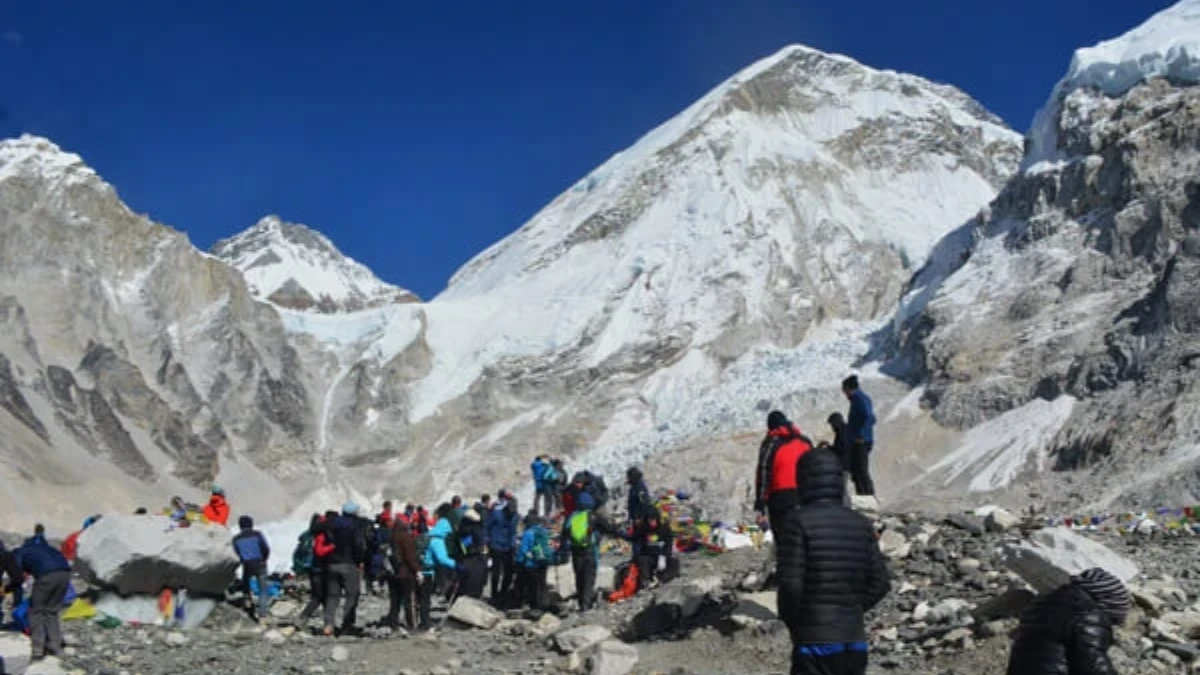
The Khumbu Pasang Lhamu fee is the local government's own charge in the Everest region. A restricted-area permit is a separate permit again. Only the Department of Immigration issues it, only through a registered agency, and the licensed guide who walks with you is named on it.
Do I need a licensed guide for my trek?
A licensed guide and agency-issued TIMS card are required on most trekking routes under the Nepal Tourism Board rule from 31 March 2023; the rule covers the Everest (Khumbu) region too, and we always trek with a licensed guide.
The list in that rule, revised on 31 March 2023, is long. Besides the restricted areas, it names Everest Base Camp, Gokyo, Cho La, the Three Passes and Mera Peak, Langtang, Gosaikunda and Tamang Heritage, the Annapurna Circuit, Poon Hill to Annapurna Base Camp and Mardi Himal, Kanchenjunga, Dolpo and more, and it asks for an agency-issued TIMS card on the same routes. You can read it on the Nepal Tourism Board TIMS page. Every trek we run has a licensed guide in every tier, so for our guests the question does not arise. In a restricted area the guide is named on the permit, and you cannot walk apart from the guide.
The longer discussion is in can you trek to Everest Base Camp without a guide and is solo trekking banned in Nepal.
Who buys which permit, you or the company?
- TIMS card: we buy it, as your agency, in Kathmandu before the trek.
- Park and conservation area entry: we arrange it as part of your package.
- Khumbu Pasang Lhamu fee (Everest region only): your guide pays it on the trail at Lukla or Monjo.
- Restricted-area permit: we apply through the Department of Immigration, with your guide named on it.
You send us a scan of your passport photo page, two passport-size photographs, your emergency contact, your dates and route, and your insurance details. Buy your insurance at home, and check that it covers trekking at altitude and helicopter evacuation. Our travel insurance guide lists what to look for.
How early do the permits have to be arranged?
Restricted-area and climbing permits need at least 48 hours, counted in government working days. The application is online now, but a government office still processes it, so Nepali weekends and public holidays do not count. That matters around Dashain and Tihar, so send your passport page and dates as early as you can. For the standard Everest Base Camp trek this does not apply.
Can I get a restricted-area permit as a solo trekker?
Yes, since 22 March 2026. The old two-trekker minimum has gone, and the Department of Immigration permit form now accepts one trekker. It still has to go through a registered agency, with a licensed guide, and one guide may take no more than 7 trekkers. We have issued two solo restricted-area permits since the change, one for the Manaslu Circuit and one for Tsum Valley. The details are in what changed in 2026 and the Manaslu solo permit guide.
What is included in our packages?
These are the permit lines on our package pages as at 4 October 2026.
- Everest Base Camp, Everest Base Camp with Gokyo and Cho La, Gokyo Valley and Lakes, and the 17-day Three Passes: Sagarmatha National Park entry, the Khumbu Pasang Lhamu fee and TIMS.
- Mera Peak climbing: the Mera Peak permit, Sagarmatha National Park entry, the Khumbu Pasang Lhamu fee and TIMS.
- Annapurna Circuit, Annapurna Base Camp, Ghorepani Poon Hill and Mardi Himal: ACAP and TIMS.
- Langtang, Tamang Heritage and Gosaikunda: Langtang National Park entry and TIMS.
- Rara Lake: Rara National Park entry and TIMS.
- Manaslu Circuit: the Manaslu special permit with the conservation area permit, ACAP and TIMS.
- Upper Mustang: ACAP, the restricted-area permit and TIMS.
- Kanchenjunga: the restricted-area permit, KCAP and TIMS.
- Lower Dolpo: the restricted-area permit and TIMS.
For Tsum Valley and Nar Phu the package pages name the special permits, but not every line in the table above. Ask us to list each permit on your written quote before you pay. Kathmandu hotels are not part of any trek price, so add those separately. For the peak fees, see Mera Peak cost and permits.
What happens if I reach a checkpoint without the right permit?
You are turned back. There is no fine to pay and no way to talk your way through, and the staff at the posts are polite but firm. On the Everest route the first check is at Monjo, as you enter Sagarmatha National Park. If a permit is lost on the trail, your guide calls our Kathmandu office to arrange a replacement, which takes time. Photograph each receipt the day it is issued, and keep the originals in a waterproof bag in your daypack.
Do SAARC citizens and children pay less?
SAARC citizens pay less on the Nepal Tourism Board fees: NPR 1,000 for TIMS, and from NPR 500 to NPR 1,500 for park and conservation area entry depending on the area. The Khumbu Pasang Lhamu fee is the same NPR 3,000 for every nationality as far as we know. There is no published SAARC or child rate for restricted-area permits, so we do not quote one. Children under 10 are free in the protected areas according to the park fee page, and the TIMS page says nothing about children. Tell us at booking if anyone in your group holds a SAARC passport or is under 10.
Will permit fees change for 2027?
No change has been announced for 2027 as of 4 October 2026, and the figures above are what we are paying this autumn. Permit rules do move. The solo rule changed in March 2026, and the Khumbu fee has gone up within the last few years. We update this page when an official change is published, and the permits stay included and handled by us on our treks either way.
WhatsApp: +977 9810351300
Email: [email protected]
Permits are covered in our booking. Our Everest Base Camp Trek (12 Days) is private (your group only, no strangers), from USD 1,399. WhatsApp us for current dates.
Reviewed and updated on 4 October 2026 by Shreejan Simkhada, CEO of The Everest Holiday. We are three generations of family guides. TAAN Member #1586.
 Chat with Shreejan