Planning a Nepal trek from Australia? Flights, AUD costs, insurance, jet lag, DFAT advice, and why Aussies love the Himalayas more than the Great Walks.
7 Days
20
Everest View Trek - 7 Days Itinerary & Costs
Starts From
US$795

Planning a Nepal trek from Australia? Flights, AUD costs, insurance, jet lag, DFAT advice, and why Aussies love the Himalayas more than the Great Walks.
By Shreejan Simkhada | April 2026
Australians are some of my favourite trekkers. I mean that. You lot show up fit, relaxed, unbothered by discomfort, and carrying an esky mentality that translates perfectly to teahouse life. You've grown up with big landscapes and outdoor culture, so the Himalayas don't intimidate you the way they sometimes intimidate trekkers from flatter countries. And you're used to long flights, which helps.
I'm Shreejan Simkhada, CEO of The Everest Holiday, a family-run trekking company based in Kathmandu. My family has been involved in Himalayan guiding since the 1960s, and I've personally designed treks for hundreds of Australian clients. This guide covers everything you need to know about getting from Australia to Nepal, what it costs in AUD, and the specific questions Australian trekkers always ask.
There are no direct flights from Australia to Kathmandu. You'll connect through Southeast Asia or the Middle East. The total journey is typically 12-14 hours depending on your layover.
From Sydney (SYD): The most popular routes go via Bangkok (Thai Airways or budget carriers to Bangkok, then separate flight to Kathmandu), Singapore (Singapore Airlines to SIN, then connect), or Kuala Lumpur (AirAsia or Malaysia Airlines to KL, then connect). Bangkok is usually the cheapest and most convenient connection. Flight time Sydney to Bangkok is about 9 hours, then Bangkok to Kathmandu is 4 hours.
From Melbourne (MEL): Same routing options as Sydney. Melbourne to Bangkok is about 9.5 hours. Some travellers prefer the Singapore route as Melbourne-Singapore is only 7.5 hours, giving you a shorter first leg.
From Brisbane (BNE): Bangkok is your best bet. Brisbane to Bangkok is roughly 9 hours direct. There are also options through KL and Singapore.
From Perth (PER): Perth has the advantage of being closer to Asia. Perth to KL is only 5.5 hours, and Perth to Singapore is 5 hours. You'll get the shortest total journey time of any Australian city -- as little as 10-11 hours door to door with a tight connection.
What you'll pay: Return flights range from AUD $600-1,200 depending on season and how far ahead you book. The sweet spot is booking 2-3 months ahead. Budget carriers like AirAsia or Scoot can get you to Bangkok or KL cheaply, and then you book a separate ticket to Kathmandu. Full-service options (Singapore Airlines, Thai Airways, Malaysia Airlines) cost more but give you luggage allowance and lounge access on a single booking.
A tip: if you're flying via Bangkok, consider spending a night there on the way out. Bangkok is cheap, the food is incredible, and it breaks up the journey. On the way back, you'll probably want to get home, so book a tighter connection.
Here's something most Aussie trekkers don't realise until they arrive: Nepal is only 4 hours and 15 minutes behind Australian Eastern Standard Time (AEST). That's one of the smallest time differences between Australia and any adventure destination in Asia.
Compare that with trekking in South America (14-16 hour difference), Africa (8-10 hours), or even Europe (8-10 hours). When you land in Kathmandu, your body barely notices. You might feel slightly off on Day 1, but by Day 2 you're adjusted. There's no week of jet lag recovery eating into your holiday.
This also means you can call home at reasonable hours. When it's 7pm in Kathmandu, it's 11:15pm in Sydney (or 12:15am during daylight saving). Your family isn't asleep on the other side of the world -- they're just getting ready for bed.
As of early 2026, one Australian dollar buys approximately 85-90 Nepali rupees. Nepal is remarkably affordable by Australian standards. Here's what things cost in AUD:
| Item | Cost (AUD) |
|---|---|
| Nepal visa (30 days, on arrival) | $75 |
| Hotel in Kathmandu (mid-range) | $40-80/night |
| Hotel in Kathmandu (budget) | $15-30/night |
| Meal at tourist restaurant | $5-12 |
| Meal at local restaurant | $1.50-3 |
| Beer (650ml bottle) | $3-5 |
| Coffee in Thamel | $2-4 |
| Taxi across Kathmandu | $3-6 |
| SIM card with data (30 days) | $5-10 |
| 1L bottled water | $0.50 |
| Trekking permit (Annapurna/Langtang) | Included in our packages |
Total trip budget for a typical 14-day Nepal holiday including trek:
| Category | Budget (AUD) | Mid-Range (AUD) |
|---|---|---|
| Return flights | $600-800 | $900-1,200 |
| Trek package (12-day EBC or 9-day ABC) | $1,700-2,100 | $2,100-2,700 |
| Kathmandu accommodation (3 nights) | $45-90 | $120-240 |
| Food in Kathmandu (3 days) | $20-40 | $40-80 |
| Visa | $75 | $75 |
| Travel insurance | $100-200 | $150-300 |
| Spending money, tips, extras | $150-300 | $300-500 |
| Total | $2,690-3,605 | $3,685-5,095 |
For context, a two-week trip to New Zealand's South Island with Great Walk bookings, car hire, accommodation, and food will set you back AUD $4,000-6,000 easily. Nepal gives you bigger mountains, more dramatic scenery, and a completely different cultural experience for less money.
Australian trekkers often compare Nepal to New Zealand's Great Walks. Both offer stunning mountain scenery and well-maintained trails. But there are significant differences that consistently surprise Aussie visitors.
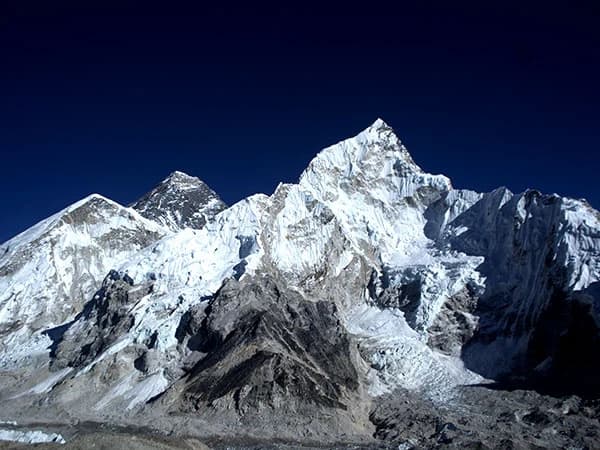
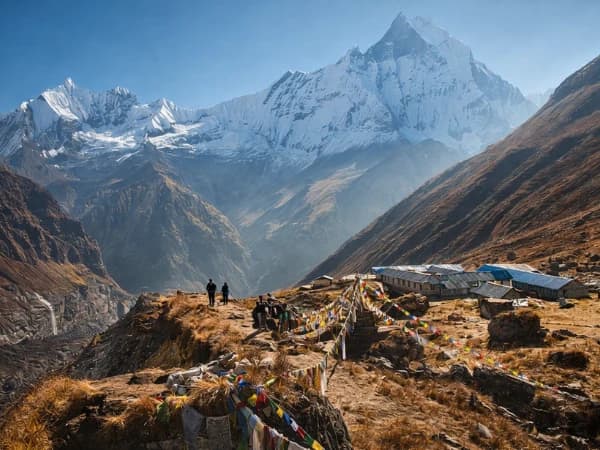
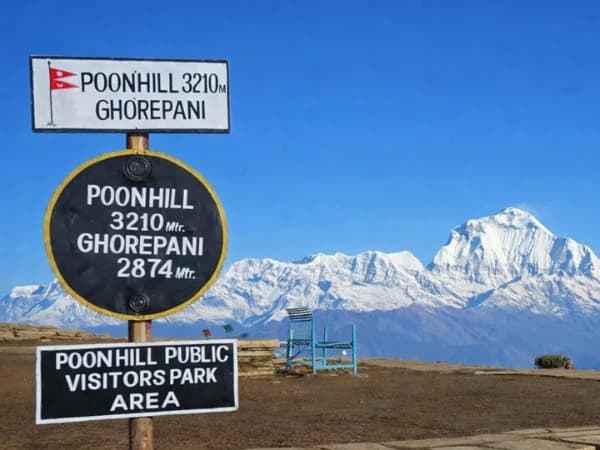
Scale. Nepal's mountains are simply bigger. The Milford Track's highest point is 1,154 metres. Everest Base Camp is at 5,364 metres. Even the "easy" Poon Hill trek reaches 3,210 metres. The Himalayas operate on a scale that nothing in Australasia prepares you for. When you see Annapurna I from the Annapurna Base Camp amphitheatre, rising 4,000 metres above you in a single sweep, it genuinely changes your understanding of what mountains can be.
Culture. New Zealand's Great Walks are nature experiences. Brilliant ones, but fundamentally you're walking through landscapes. Nepal's treks are cultural experiences wrapped in natural ones. You walk through villages, sleep in family-run teahouses, eat local food, pass monasteries, and interact with people whose lives are completely different from yours. The mountains are the backdrop, not the whole show.
Cost. The Milford Track costs around AUD $200 per night in the DOC huts plus transport. Our Poon Hill Trek costs about AUD $900 total for six days, including guide, porter, meals, and accommodation. Our 12-Day Everest Base Camp Trek costs from AUD $1,700 all-inclusive. Nepal gives you more days, more support, and more adventure for comparable or less money.
Support. On Great Walks, you carry your own pack, cook your own food, and navigate yourself. In Nepal, you have a guide who knows the trail, a porter who carries your bag, and teahouses that cook your meals. Some Aussie trekkers feel this is "cheating." It's not. It's the Nepali trekking model, it supports local employment, and it lets you focus on the experience rather than the logistics.
Coming from Australia, this is understandable. You've grown up checking your boots for redbacks and watching where you step.
Good news: Nepal's trekking regions have essentially no dangerous snakes or spiders. Venomous snakes exist in the lowland Terai (the flat southern strip near the Indian border) but not above 2,000 metres. There are no funnel-webs, no redbacks, no brown snakes, no anything that will kill you. The most dangerous creatures on the Everest trail are yaks, and they're only dangerous if you stand between them and the edge of the path. Always step to the mountain side when a yak passes. Your guide will remind you.
Don't drink tap water anywhere in Nepal. Not in Kathmandu, not in teahouses, not anywhere. Australians are used to safe tap water, so this adjustment can catch you off guard on Day 1.
Options: buy bottled water (cheap but creates plastic waste), use purification tablets (Katadyn Micropur work well and are available in Australia at Kathmandu stores and Anaconda), use a SteriPEN, or buy boiled/filtered water from teahouses. On the Everest route, Safe Drinking Water Stations sell purified water for about AUD $0.80 per litre.
Bring a reusable 1-litre water bottle from home. A Nalgene is perfect. You'll drink 3-4 litres per day at altitude.
If something goes seriously wrong at altitude, you'll be helicoptered to Kathmandu. From there, depending on severity, you might be treated at CIWEC Hospital in Kathmandu (excellent for travel medicine) or evacuated to Bangkok or Singapore for more complex treatment.
This is where travel insurance becomes critical. A helicopter evacuation from the Everest region costs AUD $5,000-8,000. Hospital treatment in Kathmandu is affordable by Australian standards, but a medical evacuation to Singapore can cost AUD $30,000-50,000. Without insurance, that's coming out of your pocket.
Australians know sun. But altitude sun is different. At 5,000 metres, UV radiation is roughly 50% stronger than at sea level. You'll burn faster than you expect, even on overcast days. Bring SPF 50+ (your Australian sunscreen is fine), quality sunglasses with UV protection, and a wide-brimmed hat or cap with neck coverage. Your lips will crack and burn at altitude -- bring SPF lip balm and apply it constantly.
Your standard travel insurance policy almost certainly does not cover trekking above 2,500 metres or helicopter evacuation. You need specialist cover. Here are the options Australian trekkers actually use:
World Nomads Australia: The most popular choice for Aussie trekkers. Their Explorer plan covers trekking up to 6,000 metres, which includes Everest Base Camp (5,364m) and Kala Patthar (5,545m). Online purchase and claims process. Approximately AUD $150-300 for a 3-4 week trip depending on your age.
Cover-More: Comprehensive policies with altitude trekking add-ons. Cover-More is Australian-based, so dealing with claims from home is straightforward. Check their altitude limits carefully before purchasing.
nib Travel Insurance: Another solid Australian option. Their Comprehensive plan can cover adventure activities including trekking, but you'll need to verify the altitude ceiling. Call them directly and ask specifically about helicopter evacuation cover above 5,000 metres.
Whatever you choose, make sure your policy explicitly covers: trekking to the altitude you'll be reaching, helicopter evacuation, trip cancellation, and medical treatment abroad. Print your policy details, carry a copy on trek, and make sure your guide has your insurance provider's emergency contact number.
The Australian Department of Foreign Affairs and Trade (DFAT) maintains travel advice for Nepal at smartraveller.gov.au. As of early 2026, the overall advice level is "Exercise a high degree of caution" -- the same level as Indonesia, India, and many other popular Australian travel destinations.
DFAT's specific concerns are: political demonstrations (avoid them -- your guide will steer you clear), altitude sickness (follow your guide's advice), road conditions (Nepal's roads are rough -- our vehicles are well-maintained but expect a bumpy ride), and natural disasters (earthquake risk exists, but teahouse construction has improved significantly since 2015).
Register with DFAT's crisis registration service before you travel. It's free and takes two minutes. If something goes wrong in Nepal, the Australian Embassy in Kathmandu can assist you. Yes, Australia has an embassy in Kathmandu -- it's in Bansbari, about 20 minutes from Thamel.
Nepal's two trekking seasons are spring (March-May) and autumn (September-November). Here's how they align with Australian life.
Autumn trekking season (September-November): This is Nepal's peak season with the clearest skies and best mountain views. For Australians, it falls during the Australian spring. The AFL Grand Final is typically late September, and the NRL Grand Final is early October. If you're a die-hard fan, schedule your departure for mid-October after the grand finals. You'll catch the best weather in Nepal and won't miss the footy.
Spring trekking season (March-May): Warmer weather, rhododendrons blooming, slightly fewer crowds. This coincides with the end of the Australian summer and the start of autumn. School holidays in April (Easter break) can work well for families.
Anzac Day (25 April): Some Australian trekkers ask about observing Anzac Day while on trek. Nepal doesn't have formal Anzac Day services, but I've had groups hold their own dawn service on a hillside, which was deeply moving. If this matters to you, let me know when planning your itinerary and we'll make sure you're somewhere with a good viewpoint for a sunrise moment.
Christmas/New Year: Some Australians come to Nepal over the Christmas break to escape the heat. December and January are cold at altitude and trails above 4,000m can have snow, but lower-altitude treks like Poon Hill and Kathmandu Valley walks are perfectly viable. Kathmandu celebrates New Year's Eve with enthusiasm.
Based on years of guiding Australian trekkers, here are my recommendations based on what Aussies typically want:
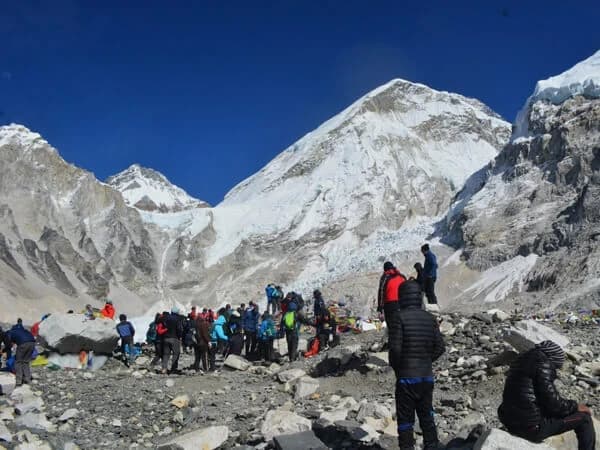
If you want the classic bucket-list trek: Our 12-Day Everest Base Camp Trek (from AUD $1,700). You'll stand at the foot of the world's highest mountain. Most Aussie trekkers who've done multi-day bushwalks in Australia handle this well.
If you want spectacular views with less commitment: Our Annapurna Base Camp Trek (from AUD $1,350). Nine days, lower altitude than EBC, and the Annapurna amphitheatre at sunrise is as dramatic as anything in the Himalayas.
If you're short on time: Our Poon Hill Trek (from AUD $900). Six days, manageable altitude, stunning sunrise viewpoint. Perfect if you've only got two weeks including travel time.
If you want to combine culture and trekking: Spend a week exploring Kathmandu, Bhaktapur, and Patan, then do the Poon Hill or ABC trek. This gives you a complete Nepal experience in 2-3 weeks.
Bring your own snacks. Teahouse food is good but repetitive. Aussie trekkers consistently wish they'd packed more trail mix, muesli bars, and Tim Tams (seriously -- chocolate at altitude hits different). You can buy snacks in Kathmandu, but the selection isn't what you're used to at Woolies.
Your Kathmandu gear works. If you shop at Kathmandu (the Australian outdoor store, not the city), you already own most of what you need. Their down jackets, base layers, and trekking pants are perfectly adequate for Nepal. You don't need to buy expensive specialist gear.
Medicare won't cover you. This is obvious, but worth stating. Australia has no reciprocal healthcare agreement with Nepal. Everything medical is out of pocket without travel insurance. See the insurance section above.
Power adapters. Nepal uses Type C, D, and M plugs. Bring a universal adapter. Australian plugs don't fit. Charging at teahouses above Namche costs about AUD $3-5 per device, and power is unreliable. Bring a power bank (10,000mAh minimum).
Data and phone. Buy a Nepali SIM card at the airport when you arrive. Ncell or NTC both work. A SIM with 10GB of data costs about AUD $5-10. Coverage is good in the Kathmandu Valley and on the lower parts of popular trekking routes. Above Namche on the Everest trail, coverage becomes patchy. Above Dingboche, assume you'll have no signal.
Check out our Plan Your Trip page for a comprehensive overview, or read about our risk-free booking policy which lets you reserve your trek with just a 10% deposit.
I've guided enough Australians to know what you need, what you're worried about, and what will make your trip brilliant. Drop me a message and we'll plan it properly.
Got questions? I answer every message personally.
WhatsApp: +977 9810351300
Email: info@theeverestholiday.com
Shreejan Simkhada is the CEO of The Everest Holiday and a third-generation Himalayan guide. TAAN Member #1586.