Planning a Nepal hiking trip from the USA? Flight routes, USD costs, jet lag tips, insurance, State Department advisory reality. Complete guide for Americans.
7 Days
20
Everest View Trek - 7 Days Itinerary & Costs
Starts From
US$795

Planning a Nepal hiking trip from the USA? Flight routes, USD costs, jet lag tips, insurance, State Department advisory reality. Complete guide for Americans.
By Shreejan Simkhada | April 2026
"So how big are the portions?"
That was the first question from a guy from Texas last October. Not "how hard is the trek" or "will I see Everest." Portions. I loved him immediately.
Americans ask different questions than everyone else. More direct. More practical. And usually more worried about altitude than any other nationality, which is actually smart because most of you live at or near sea level. A firefighter from Denver once told me he thought living at 5,280 feet gave him an advantage. It does. A little. He still got a headache at 4,000 metres.
I've guided hundreds of American hikers through Nepal's mountains, and I know the specific things you want answered. Not the inspirational stuff -- you've seen the YouTube videos. You want logistics. You want to know if your phone will work, if you can find an ATM, and whether the food will destroy your stomach.
Here's all of it.
There's no sugarcoating this part. Nepal is far from America. You're looking at 18-24 hours of total travel time, with at least one connection. Nobody flies nonstop.
| Departing From | Best Routes | Typical Travel Time | Approximate Cost (USD) |
|---|---|---|---|
| New York (JFK/EWR) | Qatar via Doha, Emirates via Dubai, Turkish via Istanbul | 18-22 hours | $800-$1,300 |
| Los Angeles (LAX) | Qatar via Doha, Cathay Pacific via Hong Kong, Korean Air via Seoul | 20-24 hours | $900-$1,400 |
| Chicago (ORD) | Qatar via Doha, Turkish via Istanbul, Emirates via Dubai | 19-23 hours | $850-$1,300 |
| San Francisco (SFO) | Singapore Airlines via Singapore, Cathay via Hong Kong, Qatar via Doha | 20-24 hours | $900-$1,500 |
| Dallas/Houston | Qatar via Doha, Emirates via Dubai | 20-24 hours | $900-$1,400 |
The Gulf carriers (Qatar Airways, Emirates) are your best bet for comfort and reliability. Turkish Airlines through Istanbul is often the cheapest option. Some trekkers route through Delhi on a combination of a US-to-Delhi flight plus a separate Delhi-to-Kathmandu ticket -- this can save money but adds complexity and requires collecting and rechecking baggage.
Pro tip that saves headaches: Book your flights through a single airline or alliance if possible. If your Doha-to-Kathmandu leg gets delayed and you're on separate tickets, you're on your own for rebooking. On a single ticket, the airline handles it.
Another tip: Google Flights is your friend. Set up price alerts 4-5 months before your trip. The sweet spot for booking is usually 8-12 weeks out for the best prices. I've seen fares from JFK drop from $1,400 to $850 within a two-week window.
Nepal is 9 hours and 45 minutes ahead of Eastern Time. 12 hours and 45 minutes ahead of Pacific. This is brutal, and I won't pretend otherwise.
You'll arrive in Kathmandu feeling like your brain has been put in a blender. Most American trekkers land in the evening, go to bed at 8pm, then wake up at 2am wide awake and stare at the ceiling listening to Kathmandu's street dogs having their nightly conference.
Here's what actually works:
By day two in Kathmandu, most people feel about 80% normal. By the time you're on the trail, the physical exertion takes over and you'll sleep like the dead every night regardless of time zones.
Americans get visa on arrival at Kathmandu's Tribhuvan International Airport. You can also apply online beforehand to skip part of the queue, but it's not required.
| Duration | Cost (USD) | Best For |
|---|---|---|
| 15 days | $30 | Short treks (Poon Hill, Everest View) |
| 30 days | $50 | Most treks including EBC and ABC |
| 90 days | $100 | Extended trips, multiple treks |
Bring a passport photo, have your Kathmandu hotel address handy, and make sure your passport is valid for at least six months. Pay in cash (USD bills accepted) or card. The process takes 20-60 minutes depending on crowds.
The U.S. State Department has Nepal listed as a Level 2: "Exercise Increased Caution." Americans see this and freak out. Don't.
For context, France, the UK, Germany, Italy, and Spain have all been Level 2 at various times. Level 2 basically means "it's not Connecticut, use your head." The advisory for Nepal specifically mentions political demonstrations and crime in urban areas -- not trekking.
The major trekking regions (Everest, Annapurna, Langtang, Manaslu) are safe. Thousands of Americans trek them every year. The risks are altitude-related, not security-related. You're far more likely to get a headache from elevation than encounter any safety issue.
Register with the Smart Traveler Enrollment Program (STEP) before you go. It's free and the U.S. Embassy in Kathmandu can reach you in an emergency.
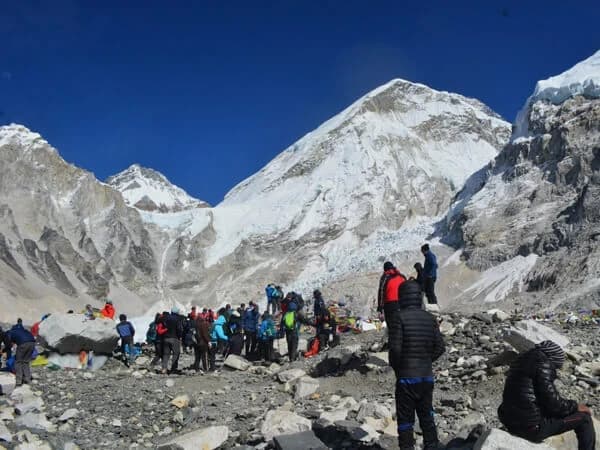
This is concern number one for Americans, and rightly so. Most of you live between sea level and 1,000 feet. You're going to 17,600 feet at Everest Base Camp. That's a massive jump, and your body knows it.
Here's what happens: above about 8,000 feet (2,500m), the reduced oxygen starts affecting you. Headache, fatigue, slight nausea, shortness of breath. This is normal. It doesn't mean you're dying. It means your body is adjusting.
What turns it dangerous is going too high too fast and ignoring symptoms. Acute Mountain Sickness (AMS) can progress to HACE (brain swelling) or HAPE (fluid in the lungs), both of which are life-threatening. This sounds terrifying, but it's preventable.
Our itineraries are designed with acclimatisation days built in. On the Everest Base Camp trek, you spend an extra day in Namche Bazaar at 3,440m. You hike high during the day and sleep low at night. This is the golden rule. Your body produces more red blood cells, adjusts its breathing rate, and adapts.
Some trekkers ask about Diamox (acetazolamide). It's a prescription medication that speeds up acclimatisation. Talk to your doctor before the trip. Many of our American trekkers use it and find it helpful. Side effects include tingling fingers and more frequent urination -- annoying but manageable.
The honest truth: about 20-30% of trekkers experience mild AMS symptoms. About 2-3% need to descend early. Serious altitude illness requiring evacuation is rare when itineraries include proper acclimatisation. But it happens, which is why insurance and experienced guides matter.
Americans tip. Nepalis don't, traditionally. So there's always confusion.
Here's the standard: at the end of your trek, tip your guide $15-25 per day total (not per person -- the whole group contributes), and each porter $10-15 per day total. For a 12-day trek, that means roughly $150-300 for the guide and $100-150 per porter, split among the group.
Hand tips directly to each person, not to the company. We don't take a cut. This matters to our staff, and it's the right way to do it.
In Kathmandu restaurants, 10% is generous and appreciated. Hotel staff, taxi drivers -- small tips ($1-2) are welcomed but not expected.
Nepal uses a mix of plug types (mostly Indian-style round pins and European two-prong). Bring a universal adapter. In Kathmandu and Pokhara, electricity is reliable. On the trek, teahouses charge $1-3 per device. Above Namche, charging points become scarce and you'll be competing with other trekkers for outlets.
Bring a 20,000mAh power bank. Fully charge it in Kathmandu. It'll get you through 4-5 days of phone charging if you use airplane mode (which you should -- there's barely any signal above Namche anyway).
Ncell is the best network for trekking regions. You can buy a SIM card at the airport for about $5-10, including data. You'll have decent 4G coverage in Kathmandu and Pokhara, 3G in lower trekking areas, and spotty-to-nothing above 4,000m.
Teahouse Wi-Fi exists but it's slow and costs $2-5 per day. It's enough to send a text message or a photo to family. It's not enough to stream anything or do a video call. Think of it as "proof of life" internet.
My honest advice: tell your family you'll check in once a day when you have signal, and otherwise go offline. You've flown halfway around the world to be in the mountains. Be in the mountains.
Kathmandu and Pokhara have ATMs everywhere. Most accept American debit and credit cards (Visa and Mastercard work best). Your bank will charge a foreign transaction fee, usually 1-3%.
On the trail, there are ATMs in Namche Bazaar (Everest) and a few in the Annapurna region, but they run out of cash during peak season and sometimes have connectivity issues. Don't depend on them.
Bring $300-500 in cash for trail expenses. USD exchanges easily in Kathmandu. Newer bills in larger denominations ($50s and $100s) get better rates. Torn, marked, or old-series bills may be refused -- this is a real thing, not a scam.
Back to that Texas question. The portions are generous, especially dal bhat, which comes with unlimited refills. You will not go hungry. The food is carb-heavy (rice, noodles, potatoes, bread) because that's what your body needs at altitude.
Teahouse menus look the same everywhere: dal bhat, fried rice, noodles, soup, pizza (don't expect New York quality), pancakes for breakfast, and momos if you're lucky. It's simple, hot, and filling. By day four you'll have a favourite and order it on autopilot.
If you have dietary restrictions, let us know beforehand. Vegetarian is easy -- Nepal is practically built for it. Vegan is doable with advance notice. Gluten-free is harder but manageable (rice-based meals, skip the bread and noodles). Severe allergies require careful planning.
If your hiking experience is Yosemite, Glacier, the Grand Canyon, or the Appalachian Trail, Nepal is a different animal. Here's how:
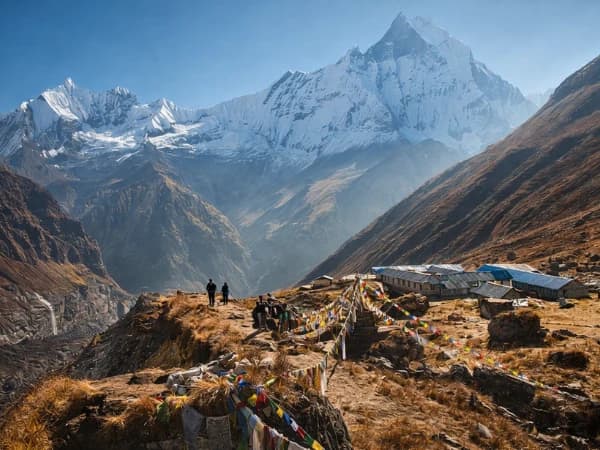
Accommodation: In the US, you're in a tent or a campground. In Nepal, you're in teahouses -- stone or wooden lodges along the trail, run by local families. You get a bed (usually twin or bunk), a dining room with a wood or yak-dung stove, and shared bathrooms. It's basic but social. You eat with other trekkers, share stories, and go to bed early because there's nothing else to do. It's wonderful.
Trail infrastructure: No NPS signs every 200 yards. No maintained boardwalks. Nepal's trails are stone paths, suspension bridges over roaring rivers, and steep switchbacks carved into mountainsides. They've been walked for centuries. They're not manicured. They're magnificent.
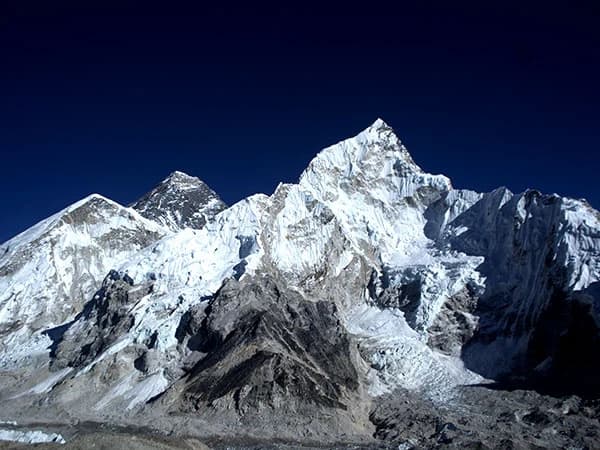
Elevation: The highest point in the contiguous US is Mt. Whitney at 14,505 feet. Everest Base Camp is 17,598 feet. You're going higher than the highest mountain in the lower 48, and you're walking there over multiple days. The altitude changes everything -- your pace, your breathing, your appetite, your sleep.
Guides and porters: In the US, you carry your own pack. In Nepal, porters carry the heavy stuff (up to 55 pounds total, split between two trekkers), and you walk with a daypack of 6-8 kg. Your guide walks with you, sets the pace, explains the culture, and manages logistics. It's a completely different experience from solo backcountry hiking.
Cost: A week of backcountry hiking in a US national park might cost you $200-300 in permits, gas, and food. A 12-day Nepal trek with us costs $1,000-1,400, including guide, porters, accommodation, food, and permits. Add flights ($800-1,500) and you're looking at $2,000-3,000 total for a once-in-a-lifetime trip. Compare that to a guided hiking trip in the US -- REI Adventures charges $2,000-4,000 for domestic trips.
Don't buy everything at REI before you come. Some things are better from home, some are better (and much cheaper) in Kathmandu's Thamel district.
Buy at home (REI, Moosejaw, Backcountry):
Buy in Thamel (Kathmandu):
The Thamel gear isn't genuine brand-name stuff, and it won't last five years of heavy use. But for a two-week trek? It's fine. I've seen trekkers spend $800 at REI on gear they could have got for $150 in Thamel.
The exception: don't cheap out on boots. Your feet carry you up the mountain. Blisters at 14,000 feet are miserable in a way that's hard to describe until you've been there.
Your regular health insurance does NOT cover you in Nepal. Not your HMO, not your PPO, not your employer plan. You need separate travel insurance with these specifics:
World Nomads: Popular, flexible, covers adventure activities including trekking to high altitude. Explorer plan is what you want. Around $80-150 for a 3-week trip.
Allianz Travel Insurance: Good reputation, straightforward claims. Make sure you get the plan that covers trekking above 3,000m.
IMG (International Medical Group): Specifically designed for international travel. Their Patriot plan covers emergency evacuation and is well-regarded among adventure travellers.
Global Rescue: If you want the gold standard in evacuation coverage, this is it. More expensive ($300+) but they'll get you out of anywhere on earth. Popular with serious mountaineers.
Whatever you choose, read the fine print on altitude limits. Some "adventure" policies cap coverage at 4,000m, which is below Everest Base Camp. That's useless.
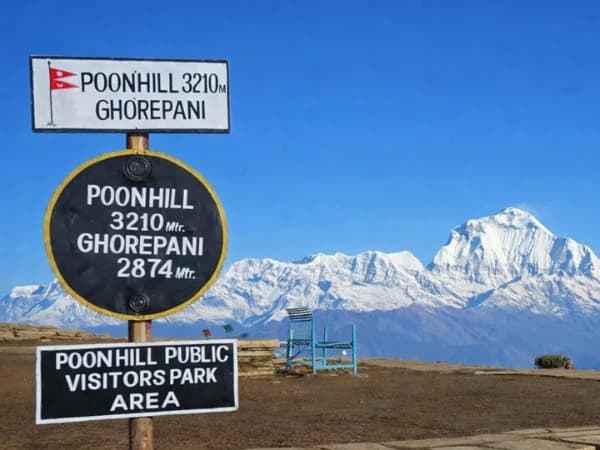
Americans tend to go big. The most-booked treks from US visitors:
Visit Plan Your Trip for the full list, or check our Risk-Free Booking policy -- we know long-haul plans change.
Nepal is incredible and imperfect. The flight is long. The jet lag is real. The bathrooms at altitude won't remind you of home. Your cell phone will be mostly useless, which turns out to be one of the best parts.
What you get in exchange: mountains that make the Rockies look like foothills, a culture that's genuinely warm without being performative, and the quiet satisfaction of doing something hard and extraordinary. Every American trekker I've guided has said the same thing at the end: "I should have done this years ago."
You probably should have too. But today works.
WhatsApp: +977 9810351300
Email: info@theeverestholiday.com
Shreejan Simkhada is the CEO of The Everest Holiday and a third-generation Himalayan guide. TAAN Member #1586.