
Mardi Himal Trek Accommodation: Where You Sleep Each Night, Rooms and Food

Last updated 7 October 2026.
On the Mardi Himal trek you sleep in simple teahouses, one night at Forest Camp, two nights at High Camp and one night in Siding on our 5-day trek from Pokhara. The rooms are basic, the dining halls are warm and the food is the usual hearty trekking fare. High Camp is the coldest night, so the bed matters less than a warm layer.
This guide follows the night-by-night plan of our Mardi Himal Trek, 5 days from Pokhara. The 7-day Mardi Himal Base Camp Trek from Kathmandu uses the same ridge nights, with hotel nights in Pokhara.
Where do you sleep on the Mardi Himal trek?
| Night | Where | Height | Day's walk |
|---|---|---|---|
| 1 | Teahouse at Forest Camp | 2,520 m | Kande to Forest Camp, 4 to 5 hours |
| 2 | Teahouse at High Camp | 3,580 m | Forest Camp to High Camp, 5 to 6 hours |
| 3 | Teahouse at High Camp | 3,580 m | Base Camp (4,500 m) and back, full day |
| 4 | Teahouse in Siding | 1,885 m | High Camp to Siding, 6 to 7 hours |
| 5 | Back in Pokhara | 820 m | Drive from Siding, 3 to 4 hours |
Low Camp at 2,970 m has teahouses too, and we pass it between Forest Camp and High Camp, but we do not sleep there. Mardi Himal Base Camp has no lodges, so you visit it as a day walk from High Camp, which is why you sleep there twice.
What is Forest Camp like?
Forest Camp sits in rhododendron and oak forest at 2,520 m, after a climb through terraced farmland and past Australian Camp at 2,060 m. It is a small teahouse stop, quiet, with a dining room and simple rooms. You arrive with time to rest and sort your bag. Read our Dhampus and Kande guide for the start of the route.
What is High Camp like?
High Camp is a cluster of small lodges on a grassy shoulder at 3,580 m, and it is the last accommodation on the trek. Machhapuchhre rises directly ahead and Annapurna South and Hiunchuli lie to the west. Rooms are basic and it gets cold once the sun drops, but the dining halls are warm and the evening is the time to sit with tea and watch the light change.
Your guide checks everyone's oxygen level with a pulse oximeter in the evening. Walk slowly and drink plenty of water. For more on this stop, read our High Camp guide.
What is Siding like?
Siding is a Gurung village of terraced fields at about 1,885 m, with warmer air than the ridge. It is where you sleep after the long descent from High Camp. Your vehicle meets you there in the morning. Our Siding guide covers the village and the descent.
What are the rooms and bathrooms like?
Expect simple rooms with beds and blankets, and basic bathrooms. On Budget the rooms are shared. Lodges on this ridge are small and seasonal, so facilities are limited and anything extra, such as hot showers, charging and bottled water, is charged on the spot and costs more at High Camp than lower down. Our guide to what Nepal teahouses are really like explains rooms, showers and toilets in more detail.
What do you eat?
The menu is the standard trekking one built around dal bhat. On Standard and Luxury, breakfast, lunch and dinner are included on the trek. On Budget, trek meals are not included, and you pay at the teahouses. If you want to plan snacks, our teahouse menu guide lists what is usually available.
How cold is it at High Camp?
It is cold at night at 3,580 m, particularly outside the main trekking months. Pack a warm sleeping layer and a down jacket, and ask us about the sleeping bag and down jacket we can lend you. Our Mardi Himal best time guide shows how night temperatures change through the year. March to May and October to November are our best months.
How does the tier change where you sleep?
The route and the lodges' locations are the same on every tier. What changes is the room and the support.
| Budget | Standard | Luxury | |
|---|---|---|---|
| Rooms | Simple lodges, shared rooms | Private room where the lodge has one | The best available lodge rooms, private and ensuite where the lodge has them |
| Porter | None, you carry your own bag | One porter for every two trekkers | A dedicated porter for each trekker |
| Meals | Not included | All meals on the trek | All meals, fruit and nuts, unlimited soft drinks |
A solo Standard trekker has no porter, and the guide carries up to 10 kg of your bag. Because the ridge lodges are small, ensuite rooms are not guaranteed on any tier, and we say so plainly. For a full price comparison, read our Mardi Himal trek cost guide.
What permits and cover do you need?
We arrange the Annapurna Conservation Area permit and the TIMS card, and both are included. A licensed guide and agency-issued TIMS card are required on most trekking routes under the Nepal Tourism Board rule from 31 March 2023; the rule covers the Everest (Khumbu) region too, and we always trek with a licensed guide. Buy travel insurance at home before you travel, with helicopter rescue and evacuation cover to 4,500 m. We do not recommend buying insurance in Nepal.
Hotel nights in Kathmandu or Pokhara are not included in any trek tier, and we quote them separately. Group size is 1 to 20, and you can also trek solo. Plans change? You can reschedule free of charge with at least 72 hours notice to any date within one year. The 10 per cent deposit itself is not refunded if you cancel. The balance is paid on arrival in Kathmandu in USD or EUR, cash or by card. Card carries 3.5 per cent and cash in Kathmandu carries none. We do not take Nepali rupees from foreign clients.
Questions people ask
Is there a lodge at Mardi Himal Base Camp? No. High Camp is the last accommodation, and Base Camp is a day walk from there.
Do I need to book lodges in advance? Not yourself. We arrange every night of the trek for you.
Can I charge my phone? Charging costs extra and is limited at the ridge lodges. Bring a power bank.
Are there hot showers? Hot showers cost extra where they are offered. Do not count on them at High Camp.
Is it a good first trek? Yes, if you are fit and comfortable with basic lodges. For a comparison, see our Poon Hill and Mardi Himal guide.
Written by Shreejan Simkhada, CEO of The Everest Holiday, from a family of three generations of family guides. TAAN Member #1586. WhatsApp +977 9810351300.
Planning a trip to Nepal?
Drop us your details and tell us what you have in mind. We will put together a personalised plan and get back to you.
Not sure which Nepal trek is right for you?
Take our free 2-minute quiz and get personalised recommendations based on your fitness, experience, and travel style.
Find Your Perfect Trek →
Ghorasinga Village Guide: Height Above Rara Lake and the Walk for 2027
Ghorasinga is the high point of our 10 and 12-day Rara Lake treks, at 3,050 m. The height, the 6-hour walk each way, what is not published, permits, best months and 2027 prices.
Read More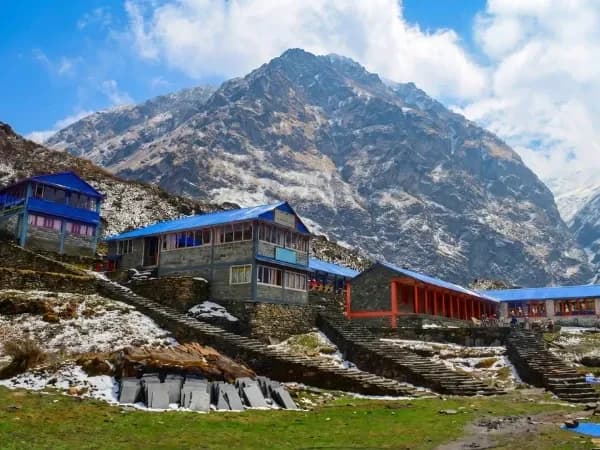
Hot Air Balloon or Paragliding in Pokhara? Which One Suits You in 2027
Hot air balloon or paragliding in Pokhara: which suits children from age 3, nervous flyers, families and older guests, with the feel, views, timing, weather and 2027 prices side by side.
Read More
Hot Air Balloon Flight in Pokhara 2027: Cost, Season, Age Rules and How the Morning Runs
What a hot air balloon flight in Pokhara costs in 2027, how the morning runs, which months it flies, age rules, what you can see and how to book and pay.
Read More Chat with Shreejan