

The Manaslu Circuit is a 12-day guided trek around the eighth-highest mountain on earth, crossing the Larkya La pass at about 5,160 m. It needs a restricted-area permit and a licensed guide, and our package is USD 799 Budget, USD 1,599 Standard and USD 2,099 Luxury per person for a group of one to four, with every permit included. It is quieter than the better-known circuits, but it is a hard trek with a long drive at each end, and it is not the right choice for everyone. This page is my full guide to the route. It answers the questions people ask me most and sends you to the detailed posts for the rest.
Written by Shreejan Simkhada, CEO of The Everest Holiday. We are three generations of family guides, and I am a TAAN member (#1586). Last updated 4 October 2026. Package prices and itinerary are read from our booking system; permit fees are from the Department of Immigration and Nepal Tourism Board tables.
What is the Manaslu Circuit trek?
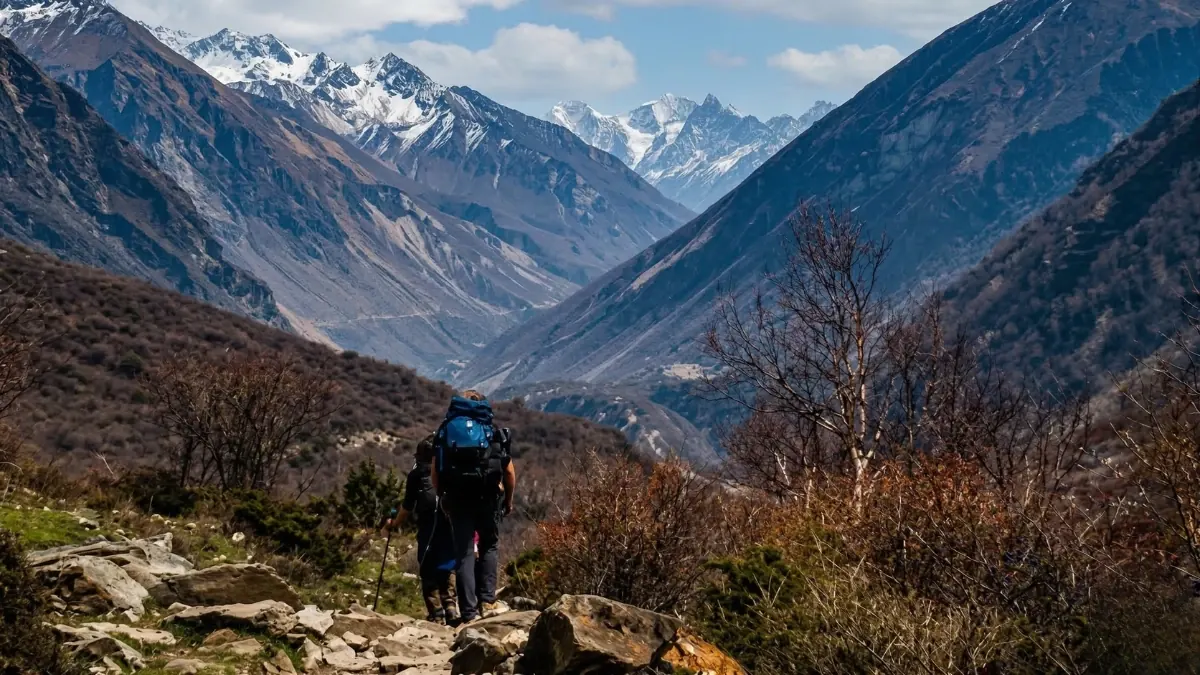
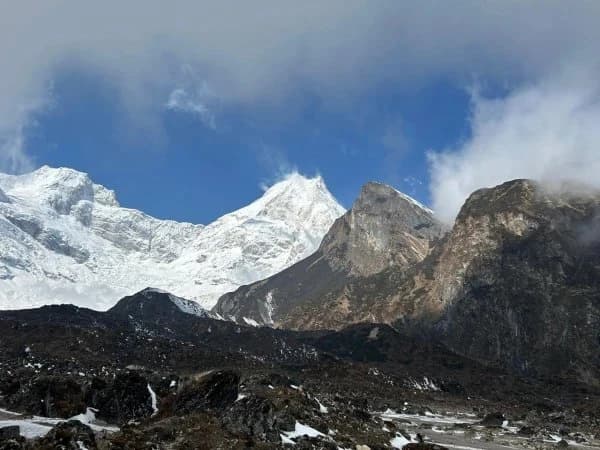
It is a loop around Manaslu (8,163 m, first climbed on 9 May 1956 by a Japanese team) that follows the Budhi Gandaki river up into the high villages of Gorkha district, crosses the Larkya La, and drops into the Annapurna side at Dharapani. It is about 177 km long, and the government only opened the circuit to trekkers in 1991. The route lies inside the Manaslu Conservation Area, which was declared in December 1998 and covers 1,663 square kilometres.
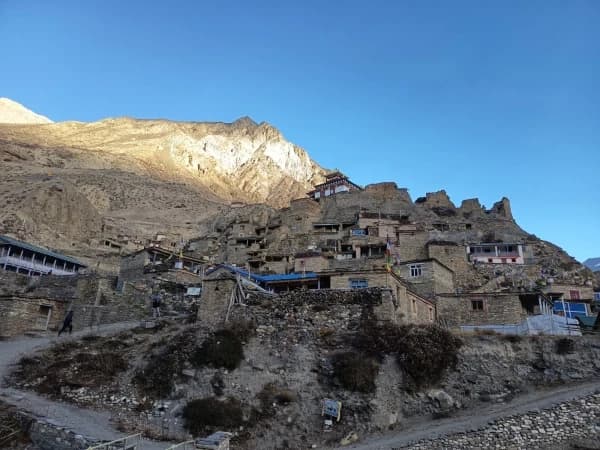
On our itinerary you drive from Kathmandu to Machha Khola, walk nine days through the restricted zone, and drive out from Dharapani to Besisahar and on to Kathmandu. Lodges are simple teahouses. The villages above Namrung have a strong Tibetan Buddhist culture, with prayer walls, monasteries and yak herds, and that is a large part of why people choose this trek over a busier one.
If you want a trek with a reliable hot shower and a phone signal, this is not it. I would rather you knew that now.
How many days does it take and what does each day look like?
Our standard trek is 12 days, including the two drive days and one acclimatisation day at Samagaon. The table below is taken from our itinerary in the booking system. I have left out the daily distances because they differ between sources; the day-by-day distance guide goes through them.
| Day | Route | Sleeping altitude | Walking or driving time |
|---|---|---|---|
| 1 | Kathmandu (1,324 m) to Machha Khola, by road | 890 m | 8 to 10 hours drive |
| 2 | Machha Khola to Jagat | 1,400 m | 5 to 6 hours |
| 3 | Jagat to Deng | 1,860 m | 6 to 7 hours |
| 4 | Deng to Namrung | 2,630 m | 6 to 7 hours |
| 5 | Namrung to Shyala | 3,500 m | about 7 hours |
| 6 | Shyala to Samagaun | 3,530 m | 6 to 7 hours |
| 7 | Rest and acclimatisation day at Samagaon | 3,530 m | short walk only |
| 8 | Samagaon to Samdo | 3,875 m | 3 to 4 hours |
| 9 | Samdo to Dharamsala | 4,480 m | 3 to 4 hours |
| 10 | Dharamsala over Larkya La (5,160 m) to Bhimtang | 3,720 m | 7 to 8 hours |
| 11 | Bhimtang to Dharapani | 1,910 m | 7 to 8 hours |
| 12 | Dharapani to Besisahar and on to Kathmandu, by road | 760 m at Besisahar | long drive |
Two things stand out. The first is day 5: Namrung to Shyala sleeps you almost 900 m higher, which is the biggest single step of the trek, and it is the day I watch people most closely. The second is the order of the high days. After the rest day at Samagaon you sleep at 3,875 m, then 4,480 m, then cross the pass. That gradual order is the reason the schedule works, and it is the reason I will not shorten it for you.
Some sources print the Larkya La as 5,106 m and our itinerary says 5,160 m. Either way it is the highest point of the trek. If you want the pass in detail, read the Larkya La guide.
How hard is the Manaslu Circuit?
We grade it 4 out of 5, Very Strenuous. The difficulty is not technical. There is no rope work on the standard route. It is the combination of long days, rough trail, repeated altitude and a pass day of 7 to 8 hours, with about 680 m of climbing from Dharamsala to the top and about 1,440 m of descent to Bhimtang. Most of that descent is on loose ground and it is hard on the knees.
You do not need to be an athlete. You do need to have trained for several weeks, to be comfortable walking six to eight hours a day on consecutive days, and to be honest with your guide if you feel unwell. Altitude sickness does not depend on fitness. A very fit trekker can still get it, and the rule is the same for everyone: if symptoms get worse, we do not climb higher. Our itinerary includes a first-aid kit with a pulse oximeter, and your guide checks you each evening. Read how difficult the Manaslu Circuit is for the pass day itself and how fit you need to be for the training side.
How much does the Manaslu Circuit cost?
Our 12-day package starts at USD 799 Budget, USD 1,599 Standard and USD 2,099 Luxury per person for one to four trekkers. Prices fall as the group grows. The price is the same whether you book privately or join a fixed departure. We never add strangers to a private booking.
| Group size | Budget (USD pp) | Standard (USD pp) | Luxury (USD pp) |
|---|---|---|---|
| 1 to 4 | 799 | 1,599 | 2,099 |
| 5 to 8 | 749 | 1,549 | 2,049 |
| 9 to 12 | 699 | 1,499 | 1,999 |
| 13 to 20 | 649 | 1,449 | 1,949 |
The tiers differ in who carries your bag, what you eat and where you sleep:
| Budget | Standard | Luxury | |
|---|---|---|---|
| Porter | None. You carry your own bag. | One porter for two trekkers | One dedicated porter per trekker |
| Meals on the trail | Not included | All meals | All meals, fruit and nuts, soft drinks |
| Rooms | Shared | Private twin where the lodge has one | Best room in each village |
| Guide ratio | Licensed guide | Licensed guide | One guide per two trekkers |
If you are travelling alone, Luxury still gives you your own porter. On Standard there is no porter for a single trekker, because porters are shared one to two, so your guide carries up to 10 kg of your gear instead. Budget never includes a porter. Porters carry 20 kg between two trekkers, which means 10 kg each, so pack with that in mind.
Every tier includes all permits, your licensed guide, the road transport at both ends, a sleeping bag and down jacket on loan, a SIM card, free luggage storage in Kathmandu and a farewell meal with a certificate. It does not include Kathmandu hotels, international flights, your visa, insurance, tips or drinks and snacks on Budget. Allow roughly USD 20 a day for extras. For a full trip total including flights from your country, read the Manaslu Circuit cost breakdown. For tipping, see the tipping guide, and for cash and cards see the currency guide.
Payment is a 10% deposit to confirm, and the balance in Kathmandu. Foreign guests pay in US dollars or euros, cash or card, not in rupees. A card payment of the balance carries a 3.5% bank charge, while cash in Kathmandu carries none. Rescheduling is free with at least 72 hours notice, to any date within a year. The deposit is not refundable if you cancel.
What permits do you need and what do they cost?
Manaslu needs more paperwork than any other standard trek in Nepal. All of it is inside our package price. The figures below are so that you can compare quotes.
| Document | Cost | Why |
|---|---|---|
| Restricted-area permit | USD 100 for the first 7 days plus USD 15 a day (September to November); USD 75 for 7 days plus USD 10 a day (December to August) | Jagat to Dharapani, which is 9 days on our itinerary |
| Manaslu Conservation Area permit | NPR 3,000 | The conservation area itself |
| Annapurna Conservation Area permit | NPR 3,000 | The circuit exits through Dharapani, inside the Annapurna Conservation Area |
| TIMS card | NPR 2,000 | Issued by the agency; the restricted-area permit does not replace it |
On our 12-day route the restricted-area permit works out at USD 130 from September to November and USD 95 from December to August, which includes the spring season. Add the three NPR fees and the total is roughly USD 183 in the autumn and USD 148 in spring. The restricted-area permit is the biggest part of the difference between Manaslu and a trek like the Annapurna Circuit.
Under the Nepal Tourism Board rule from 31 March 2023, the Manaslu Circuit, the Manaslu and Tsum Valley trek and the Tsum Valley trek are all on the list of routes where a licensed guide and an agency-issued TIMS card are mandatory. Several operator pages say no TIMS is needed for Manaslu. That is wrong on both official sources. For the full set of restricted areas and what each costs, see Nepal restricted-area permits.
The permits need about 48 government working hours to process, so send your passport details well before you fly. Do not arrive in Kathmandu on a Friday evening expecting to leave on Sunday.
Can you trek the Manaslu Circuit solo?
You can be the only paying trekker, but you cannot walk it unaccompanied. Since the Department of Immigration decision of 22 March 2026, a restricted-area permit can be issued to a single trekker. The application must still go through a registered agency, a licensed guide must go with you, and the agency carries the responsibility for your rescue. A restricted area also has a ceiling of seven trekkers per licensed guide. We have already issued a solo Manaslu permit under the new rule. The full detail is in Can you trek Manaslu solo in 2026/27?
When is the best time to go?
March to May and September to November. In spring, our package notes daytime temperatures of about 18 to 24°C and nights down to about minus 4°C. In autumn it is about 15 to 25°C by day and about minus 6°C at night. These are the figures from the trek notes on our package page, and the cold at Dharamsala is sharper than the numbers sound, because you start before dawn.
Autumn has the clearest skies and is the busiest, spring has the rhododendrons, and the summer monsoon months are wet, though a few people seek them out. I do not recommend the Manaslu Circuit in December, because the crossing depends on a pass above 5,100 m and snow increases from that month. Read the season posts for the month you have in mind: autumn, spring and monsoon.
Is the route open right now?
I do not want to guess, so I will point you to the dated reports. A flash flood hit Namrung on 6 September 2026, the Gorkha district administration suspended trekking the same day, and the route reopened on 8 September on a locally built bypass with temporary wooden bridges. A landslide above Samagaun on 26 September then caused further disruption. My last check, reported in our November post, was 28 September: passable, with disruption. Conditions change faster than a blog can be updated, so ask us for the latest before you book.
The full account is in Manaslu Circuit Trek After the September 2026 Flood. For what else is open in the month you plan to travel, see Trekking in Nepal in November 2026 and Trekking in Nepal in December 2026. If you book, I will check the route with our people in the valley a week before departure and tell you straight what they say. Message me on WhatsApp if you want the current position.
What is the Larkya La crossing really like?
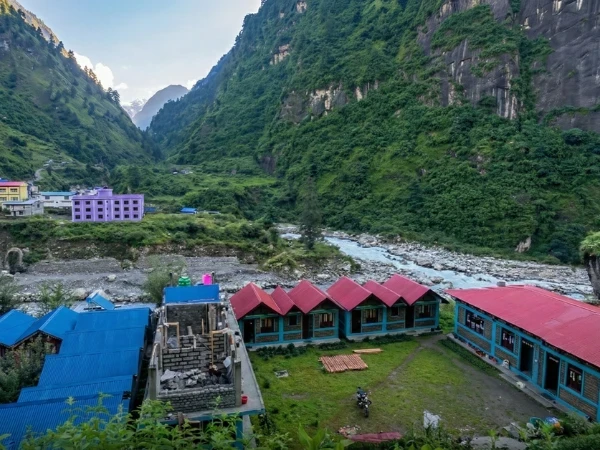
It is the longest day of the trek. You leave Dharamsala (4,480 m) in the dark, climb steadily to the pass at about 5,160 m, then descend a long way to Bhimtang at 3,720 m. Plan on 7 to 8 hours of walking. The climb is slow rather than steep. The cold, the wind and the thin air are what wear people down, and the descent is longer than most people expect. A weather or snow problem on the morning of the crossing means we wait, which is why a spare day in your plans is worth having. Mobile signal is limited above Samagaon, so you will be out of contact for several days. The decision to cross is made that morning, on the conditions.
The detail of the pass, including what to carry and when to turn back, is in the Larkya La guide. Packing is in the Manaslu packing list.
How does Manaslu compare with the Annapurna Circuit and Tsum Valley?
Manaslu and the Annapurna Circuit both cross a high pass and both end at Dharapani, but they are different treks. Manaslu needs a restricted-area permit and a registered agency, and it runs through remote Tibetan-influenced villages. The Annapurna Circuit has parts that have been affected by road building, which we cover in the road construction post and the is the Annapurna Circuit open post. The honest comparison, with prices and permit costs side by side, is in Manaslu Circuit vs Annapurna Circuit.
Tsum Valley is a side valley that leaves the main trail in the lower valley and adds a sacred, remote Buddhist valley. It is a separate permit zone, and it takes longer, so we sell it as a 19-day trek. If you have the time, read Tsum Valley vs Manaslu Circuit and see the Tsum Valley and Manaslu Circuit trek (19 days). For the wider region, the Manaslu region guide covers the other treks, and Kang La from Nar Phu is the harder cousin for people who have done this before.
Who should not choose the Manaslu Circuit?
Be honest with yourself on these:
- You have less than 12 days on the ground, or you cannot afford a spare day if the weather closes the pass.
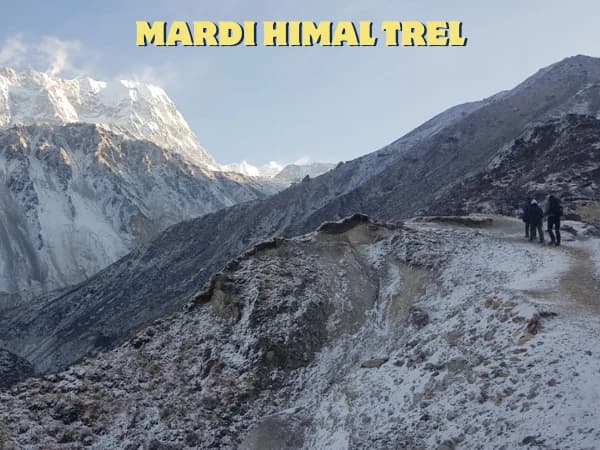
- It is your first multi-day trek. A shorter route such as Poon Hill or Mardi Himal is a better start.
- You are going in December. I do not recommend the crossing then.
- You are uncomfortable with a full day on a rough road at each end, and with simple lodges where the rooms are cold and the signal is weak.
- You want a fixed schedule that nothing can change. This is a mountain route that has had a flood and a landslide this season. Plans may change by a day or two.
- You have a medical condition that makes altitude above 4,000 m a problem. Talk to your doctor before booking.
What about insurance and getting in?
Buy travel insurance at home, before you leave. It must cover emergency helicopter evacuation up to 6,000 m, and you should read the policy rather than trust the brochure. Our insurance guide explains what to check. Do not buy cover in Nepal. Most visitors can get a visa on arrival in Kathmandu; the visa guide has the current fees and the form. Kathmandu hotels are not included in the trek price, so add the nights you need before and after.
How do I book?
Start with the Manaslu Circuit Trek (12 days) page, where the full itinerary and dates are. If you would rather talk it through, message me on WhatsApp and tell me when you plan to go, how many of you there are and whether you have trekked at altitude before. I will tell you whether this is the right trek for you, and if it is not, I will say so. If you want a sacred side valley as well, the 19-day version is on the Tsum Valley and Manaslu Circuit page.
WhatsApp: +977 9810351300
Email: [email protected]
Manaslu Circuit, 12 days. Private for your group only, all permits included, from USD 799. See the Manaslu Circuit Trek (12 Days) or WhatsApp us for current dates and the route position.
 Chat with Shreejan