


Update, 7 October 2026: The Manaslu Circuit is passable with disruption, as last reported on 28 September, so check with us before booking. We check 48 hours before departure; if the road is not open we move your dates free.
The Manaslu Circuit in monsoon is a proposition that any honest trekking company will tell you to avoid and that any honest trekker who has done it will describe in terms that make avoidance sound like good advice. The rain is heavy. The leeches are abundant. The trails are rivers of mud. The Budhi Gandaki gorge (narrow, steep-walled, and prone to landslides) becomes genuinely dangerous when the monsoon delivers its full volume of water to the catchment. And the Larkya La at 5,160 metres, which is the crux of the entire circuit, can receive snowfall that makes crossing hazardous or impossible.
These are not theoretical risks. The monsoon (June through September) transforms the Manaslu region from a challenging but manageable trekking environment into a hostile one. The same landscape that is spectacular in October is treacherous in July. The same trail that is dusty and stable in autumn is a mudslide waiting to happen in August. And the same teahouses that buzz with trekkers in peak season are nearly empty in monsoon, which tells you everything you need to know about what experienced trekkers think of the timing.
How does monsoon affect the Manaslu Circuit trail conditions?
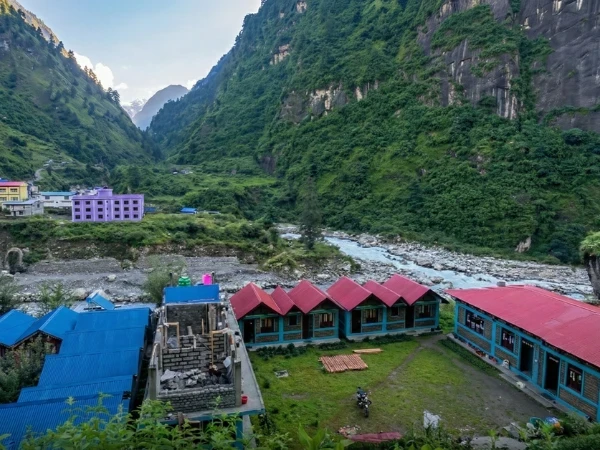
The lower sections of the Manaslu Circuit, from Soti Khola to Jagat, pass through subtropical forest in the Budhi Gandaki gorge. During monsoon, this gorge receives the full force of the rainfall that feeds Nepal's rivers. The trail, which follows the river upstream, is subject to flooding, mudslides, and rockfall. Sections of trail wash out. Temporary bridges replace permanent ones. The river rises to levels that make some crossings impassable.
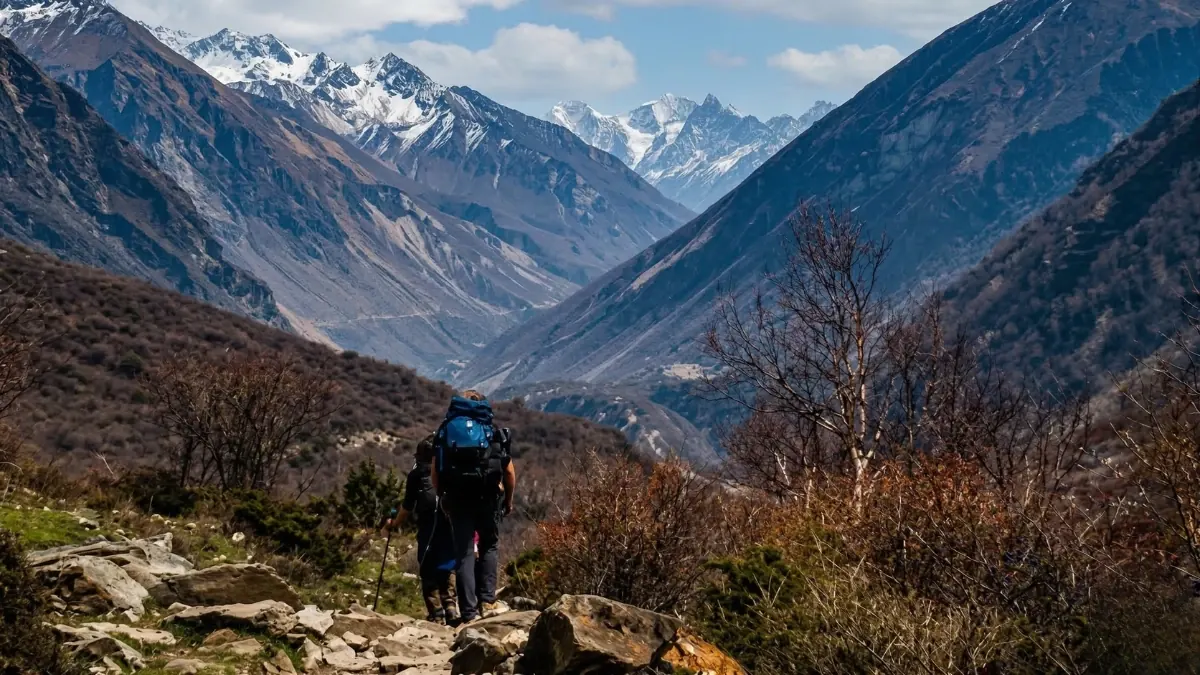
Above Jagat, the rainfall decreases with altitude but does not disappear. The forest sections between Deng and Namrung are wet, muddy, and leech-infested. The trails through the rhododendron and birch forests are slippery underfoot. Visibility is often limited to the immediate surroundings as cloud fills the valley.
Above Samagaon (3,530 metres), the monsoon's direct effects diminish, the high-altitude terrain is drier than the lower forest, but the indirect effects persist. Cloud cover obscures the views of Manaslu that are the circuit's scenic highlight. Afternoon precipitation, rain at lower altitudes, snow at higher altitudes, is frequent. And the Larkya La, which requires a full day of sustained effort in challenging conditions even in perfect weather, becomes significantly more dangerous when fresh snow covers the approach trail and reduces visibility on the pass.
How bad are leeches on the Manaslu Circuit during monsoon?
Between 1,500 and 3,000 metres, in the wet forest sections, leeches are present in numbers that can be genuinely distressing. They are small (one to three centimetres when unfed), dark, and extraordinarily persistent. They attach to exposed skin, ankles, legs, arms, often without being felt until the blood begins to flow. They are not dangerous. They do not transmit disease. The bite is painless and the blood loss is trivial. But the psychological effect of finding leeches on your body, sometimes in numbers, is significant for most people.
Prevention: tuck trousers into socks. Wear gaiters. Apply DEET-based repellent to socks and lower trousers. Check for leeches at every rest stop. Removal: salt, a flame (lighter), or simply pulling them off, they do not burrow, and detaching them is straightforward if unpleasant. The bite bleeds freely for ten to thirty minutes after removal due to the anticoagulant in the leech's saliva. Apply pressure and continue walking.
Leeches disappear above approximately 3,000 metres. The upper sections of the Manaslu Circuit, from Lho onwards, are leech-free regardless of season.
Is the Larkya La pass safe to cross during monsoon?
The Larkya La at 5,160 metres is the decision point. In October, the pass is typically clear of heavy snow and crossable with standard trekking equipment. In monsoon, the pass can receive snowfall from the moisture-laden weather systems that the monsoon pushes up against the Himalayan barrier. Fresh snow on the approach trail makes footing treacherous. Reduced visibility on the pass, which is broad, exposed, and featureless in cloud, creates navigation risk. And wet cold at 5,100 metres is significantly more dangerous than dry cold at the same altitude.
Crossing the Larkya La in monsoon is possible. It is done by experienced trekkers and guides who monitor conditions, wait for weather windows, and carry equipment (microspikes, additional warm layers) for snow conditions. But it is not reliable. Some weeks in July and August, the pass is crossable. Some weeks it is not. The decision is made day by day, based on conditions that cannot be predicted more than twenty-four to forty-eight hours in advance.
A trekker who commits to the Manaslu Circuit in monsoon must accept the possibility of reaching Dharamsala (Larkya Base Camp) and being unable to cross. The alternatives, waiting for a weather window (potentially several days) or turning back and retracing the route, are both unappealing. This uncertainty is the Manaslu monsoon's defining characteristic. Related: Annapurna Circuit in Monsoon: Can You Trek in the Rain?
Why do some trekkers choose the Manaslu Circuit in monsoon?
Given the litany of hazards, why does anyone trek the Manaslu Circuit in monsoon? Three reasons, each legitimate.
Schedule constraints. Some trekkers can only take leave in July or August. The choice is monsoon or nothing. For these trekkers, the monsoon Manaslu, with its risks acknowledged and prepared for, is better than no Manaslu at all.
Extreme solitude. The Manaslu Circuit is already quiet compared to EBC or Annapurna. In monsoon, it is nearly deserted. A trekker who values absolute solitude, the trail to themselves, the teahouses empty, the mountains private, finds in monsoon Manaslu an isolation that no other season or route can provide. The silence of the trail, broken only by rain and birdsong, is profound in a way that peak season's social atmosphere is not.
The green landscape. The Manaslu region in monsoon is at its most lush. The forests are deep green. Waterfalls cascade from every cliff face. The rivers are full and powerful. The landscape vibrates with life in a way that the dry, brown autumn landscape does not. For trekkers who value the living landscape over the clear mountain view, monsoon delivers a beauty that is different from, not lesser than, autumn's crystalline panoramas.
What gear and planning do you need for the Manaslu Circuit in monsoon?
Choose an experienced company with monsoon-specific knowledge. Your guide must have crossed the Larkya La in monsoon conditions and must have the judgment to turn back if conditions do not allow safe passage.
Carry superior rain gear. Not "waterproof", genuinely waterproof. Gore-Tex or equivalent membrane jacket and overtrousers. Waterproof gaiters. Waterproof pack cover plus dry bags inside the duffel for everything that must stay dry (sleeping bag, electronics, spare clothing). Assume everything not proactively waterproofed will get wet.
Carry leech protection. DEET repellent, leech socks, salt, and the mental preparation to deal with leeches calmly and routinely for the lower sections of the trek.
Build buffer days into your itinerary. Monsoon weather is unpredictable. Landslides may block the trail for hours or days. The Larkya La may require waiting for a weather window. An itinerary with no flex is an itinerary that monsoon will break.
Carry extra food. Trail snacks, energy bars, instant noodles in zip-lock bags. If you are delayed by weather or trail conditions, having your own food reserves means you are not dependent on teahouses that may be closed or under-stocked in the off-season.
Accept the conditions. The monsoon Manaslu trekker who expects autumn conditions will be miserable. The one who expects rain, mud, leeches, limited views, and challenging trail conditions, and who finds beauty and solitude within those conditions, will have something that is genuinely unique. The monsoon does not deliver the postcard. It delivers the thrill of walking through a living, breathing, raining mountain landscape with nobody else in sight. That experience, for the trekker who values it, is worth the mud.
Should you trek the Manaslu Circuit in monsoon or wait for a better season?
If you have the flexibility to choose your dates, trek the Manaslu Circuit in October or early November. The weather is stable, the views are clear, the trails are dry, the pass is crossable, and the experience is the best the route has to offer.
If you can only trek in monsoon and you want the Himalaya, consider Upper Mustang, which sits in a rain shadow and is dry and warm during monsoon, or Ladakh in India, which offers similar trans-Himalayan landscape without the monsoon hazards.
If you specifically want the Manaslu Circuit in monsoon, because of the solitude, the green landscape, or the challenge itself, go with your eyes open, your gear waterproofed, and your expectations calibrated to the season. The Manaslu Circuit in monsoon is not the best version of the trek. It is a different version, harder, wetter, lonelier, and more uncertain. For the small number of trekkers who are drawn to exactly those qualities, it delivers something that the crowded, clear, comfortable autumn season cannot.
See our Manaslu Circuit Trek for monsoon departure availability.
Can you trek the Manaslu Circuit in monsoon? Technically yes. Practically, it is miserable. The leeches are relentless, the trails are slippery, the views are hidden behind cloud, and the Larkya La crossing becomes genuinely dangerous with fresh snow on top of rain-soaked rock. Save Manaslu for October or March. You will see the mountain instead of the inside of a rain cloud.
We run the Manaslu Circuit Trek in spring and autumn only.
WhatsApp:+977 9810351300
Email:[email protected]
Written by Shreejan Simkhada, CEO of The Everest Holiday and third-generation Himalayan guide. TAAN Member #1586.
Monsoon Manaslu has its champions: quiet trails. Our Manaslu Circuit Trek (12 Days) is private (your group only, no strangers), 2026 dates open, From USD $799. WhatsApp us for tailored 2026 dates and current departures.
 Chat with Shreejan