

The Manaslu Circuit is a difficult trek. Not the hardest in Nepal (that distinction belongs to the Everest Three Passes or Kanchenjunga) but harder than most trekkers expect because the difficulty is concentrated into one savage day. The Larkya La crossing at 5,160 metres is 24.7 kilometres of pre-dawn climbing, snow, thin air, and a descent that does not end until your knees beg for mercy at Bimthang.
What Is the Difficulty Rating?
We rate the Manaslu Circuit at 4 out of 5, the same as EBC and the Annapurna Circuit, but with different characteristics.
- Physical fitness: High. On our own itinerary the days run from 6.5 km to 24.7 km, and the longest of them is the pass.
- Altitude: High. Larkya La at 5,160m, with the last camp before it at Dharmasala, 4,480m.
- Technical skills: None. It is a walk over a high pass, not a climb. No rope, no harness and no mountaineering experience are needed at any point. In a heavy snow year a pair of microspikes makes the frozen section above Dharmasala easier and they are worth packing, but most crossings do not need them.
- Remoteness: High. No helicopter rescue above Samagaon in bad weather. Limited teahouse options.
- Duration: Moderate-High. Our twelve-day trip is ten walking days with a road day at each end.
What Makes the Larkya La So Hard?
The pass day starts at 3:00 in the morning from Dharmasala (4,480m). You eat breakfast in the dark, strap on your headlamp, and begin climbing. The temperature is minus fifteen to minus twenty. The trail is steep and often covered in snow or ice from the previous night.
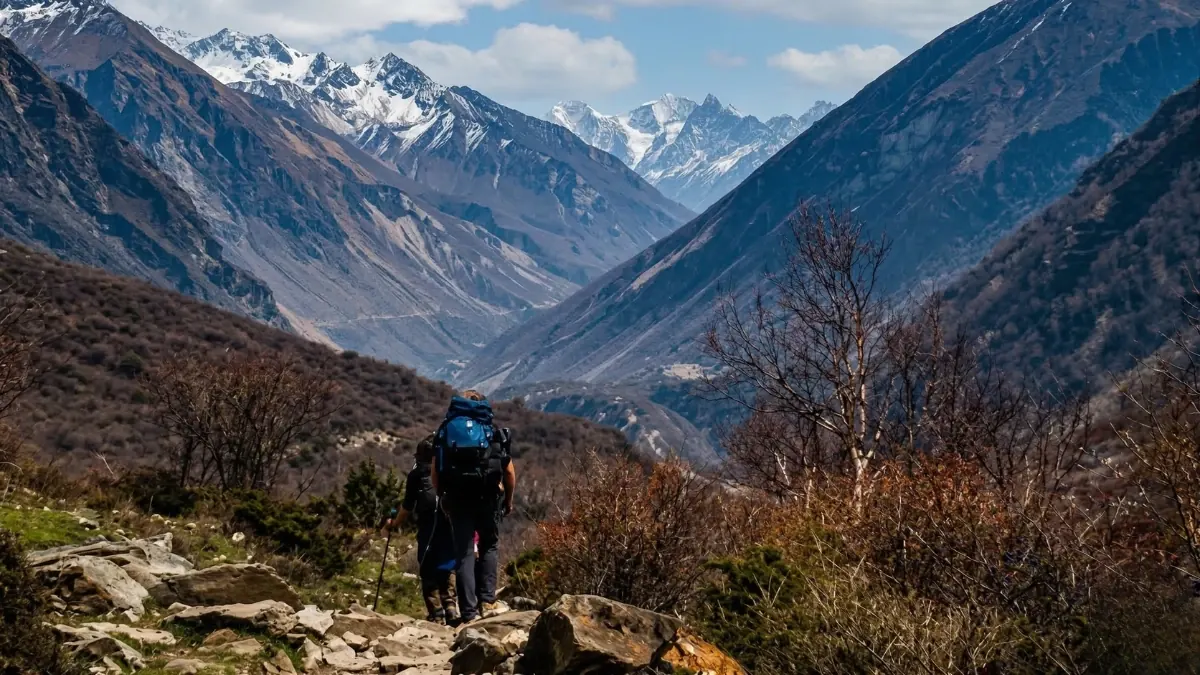
The climb to the pass takes four to five hours. The final section traverses a snow-covered moraine with cairns marking the route. In poor visibility, which happens frequently, the cairns are the only navigation. Your guide knows the way, but the landscape is featureless white in every direction.
At the pass (5,160m), you have roughly half the oxygen available at sea level. Every step is a conscious decision. You breathe three times for every step. Your pack feels twice as heavy as it did at Dharmasala. The prayer flags at the top are the most welcome sight in trekking.
The descent from the pass to Bimthang (3,720m) drops 1,440 metres over 14 kilometres. The first section is steep scree and loose rock. The middle section crosses glacial moraines. The final section drops through forest to Bimthang. Total walking time for the day: nine to eleven hours. Total altitude change: 680 metres up plus 1,440 metres down equals 2,120 metres of vertical movement.
How Does the Budhi Gandaki Gorge Compare?
The first four days through the Budhi Gandaki gorge are not technically difficult but they are physically relentless. The trail carves through one of the deepest gorges in Nepal, crossing suspension bridges, climbing cliff staircases, and losing altitude to river crossings only to regain it immediately on the other side.
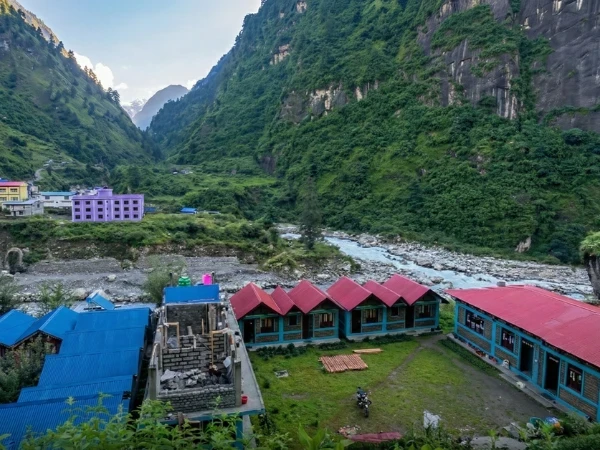
The net altitude gain per day is modest (200 to 800 metres) but the total up-and-down is much more. A day that gains 500 metres on the map may involve 1,000 metres of actual climbing when you account for all the dips and climbs along the gorge walls. This catches trekkers who trained on flat trails.
How Fit Do You Need to Be?
Fitter than for ABC or Poon Hill. You should be able to walk 20 kilometres on mountain terrain with a daypack, and you should be able to do it on consecutive days. The pass day itself is 24.7 kilometres, so if twenty feels like your absolute ceiling you will find that day very long. The Manaslu Circuit has no easy days. Even the rest days at Samagaon and Samdo involve acclimatisation hikes to 4,000 metres or above.
An eight-week training plan: walk five times per week, building from 10 to 20 kilometres. Include steep hills. Find the longest staircase or hill in your area and walk it repeatedly. Add a weighted pack in the last four weeks, and be honest with yourself about how much weight that should be. On our Standard tier a porter carries most of your kit and you walk with 7 to 10 kg. On Budget there is no porter at all, so you carry everything you brought, over a 5,160 metre pass. Train for whichever of those two you have actually booked. Do one long walk each weekend of four to five hours. By week eight, 20 kilometres on hilly terrain with a loaded pack should feel manageable rather than easy.
Is the Manaslu Circuit Harder Than EBC?
Different hard. EBC goes higher (5,545m at Kala Patthar vs 5,160m at Larkya La) and spends more days above 4,500 metres. Manaslu has a harder single day (the 24.7 km Larkya La crossing vs EBC's 13 km Gorak Shep to Base Camp day) and more physically demanding lower sections (the Budhi Gandaki gorge vs EBC's gentle Dudh Koshi valley).
EBC is harder on your lungs. Manaslu is harder on your legs. Most trekkers who have done both say Manaslu was the more physically demanding trek overall, but EBC was the more mentally challenging because of the sustained altitude above 5,000 metres. Related: The Hardest Treks in Nepal: 7 Routes That Will Push You to Your Limits.
What About the Restricted Area?
The restricted area permit is not a difficulty factor. It is a logistics factor. You must have a guide and pay the permit fee, which is USD 100 per person per week from September to November and USD 75 per person per week for the rest of the year. It is the same rate for every foreign national, with no SAARC discount, so an Indian passport does not lower it. The route also crosses the Manaslu Conservation Area, run by the National Trust for Nature Conservation, and finishes inside the Annapurna Conservation Area, so there is more than one permit in your pack. All of them are in our price. The requirement to travel with at least two trekkers was scrapped on 22 March 2026. But it also means the trail is quiet. On the Manaslu Circuit, you share the path with thirty to sixty trekkers per day in peak season, compared to three hundred or more on EBC. Fewer people means less teahouse competition, more personal attention from your guide, and a trail that feels like it belongs to you.
The remoteness is a genuine difficulty factor. Above Samagaon, helicopter rescue is unreliable. The nearest road is several days' walk in either direction. If you get sick or injured, you walk out or wait for weather clear enough for evacuation. This is not a concern with proper acclimatisation and a competent guide, but it means the Manaslu Circuit demands more respect than EBC or Annapurna, where rescue is always a phone call away. Related: Kanchenjunga vs Manaslu: Which Off-the-Beaten-Path Trek Should You Choose?
Can a First-Timer Do the Manaslu Circuit?
It is possible but not recommended. The Manaslu Circuit is best as a second or third major trek. Do EBC or the Annapurna Circuit first to learn how your body responds to altitude, how you handle multi-day walking, and what your fitness limits actually are. Then come to Manaslu knowing what to expect.
If Manaslu is your first trek and you will not be persuaded otherwise, train hard for eight weeks, be honest with your guide about how you feel, and accept that the pass day will be the hardest physical day of your life. That is not a deterrent. It is a promise.
How Does Manaslu Compare to Other 4/5 Treks?
| Trek | Difficulty | Pass/High Point | Hardest Day Distance | Rescue Access |
|---|---|---|---|---|
| Manaslu Circuit | 4/5 | 5,160m | 24.7 km | Limited above Samagaon |
| Annapurna Circuit | 4/5 | 5,416m | 16 km | Good throughout |
| EBC | 4/5 | 5,545m | 13 km | Good throughout |
Manaslu has the longest pass day, the most remote trail, and the most physically demanding lower sections. It rates the same as EBC and Annapurna Circuit because altitude on those treks compensates for Manaslu's longer distances. The real difference is character: Manaslu rewards strong legs, EBC rewards strong lungs, and the Annapurna Circuit rewards endurance.
Two practical things before you book anything. Do not buy a sleeping bag or a down jacket for this trek. We give you both free on every tier including Budget, the bag rated to minus fifteen, with a duffel bag as well on the Standard and Luxury packages, and that is the coldest part of the trip dealt with for nothing. And your guide carries an oximeter and will check your oxygen saturation each evening as you climb, which is the single most useful habit on a route this remote. The Himalayan Rescue Association, who run the volunteer aid posts on the Nepali trails, are worth reading before any trek above 4,000 metres.
See our Manaslu Circuit Trek for the full itinerary. All permits including the restricted area permit are included.
WhatsApp:+977 9810351300
Email:[email protected]
Written by Shreejan Simkhada, CEO of The Everest Holiday and third-generation Himalayan guide. TAAN Member #1586.
Up for Manaslu? Our Manaslu Circuit Trek 12 Days includes Larkya La (5,160m), restricted area permits, and Tibetan villages. From USD 799. WhatsApp us for departures.
 Chat with Shreejan