

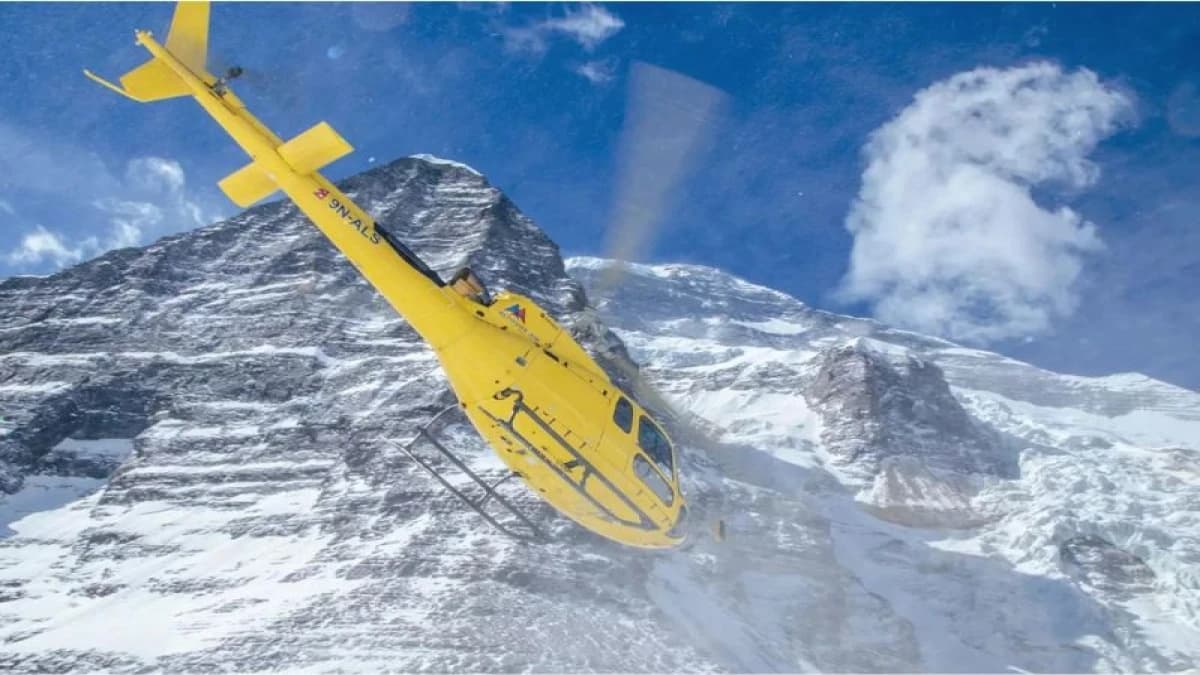
The helicopter lifts off from Kathmandu's domestic terminal at seven in the morning, and within twelve minutes you understand why people spend two weeks walking to a place you will reach in forty-five. The Kathmandu Valley drops away beneath you, the brown sprawl of the city, the terraced fields beyond it, the foothills rising in green waves, and then, without warning, the Himalayas appear. Not gradually, the way they reveal themselves to trekkers over days of walking. All at once. A wall of white that stretches from horizon to horizon, so high above you that the helicopter, which felt like it was climbing, suddenly seems to be descending toward something that cannot possibly be real.
Everest Base Camp by helicopter at a glance
- Duration: 1 day from Kathmandu, four to five hours in the air, leaving before breakfast and back before lunch.
- What you see: Everest, Lhotse, Nuptse, Ama Dablam and the Khumbu Icefall, with a landing for photos near Kala Patthar and a breakfast stop at Syangboche (3,880m).
- Who it suits: travellers short on time, or anyone who wants to stand in front of Everest without the two-week trek.
- Booking: we run both shared-seat and private-charter flights. Tell us your group size and date and we will send the current rate.
The Everest Base Camp helicopter tour is the shortcut that feels like a revelation. It compresses two weeks of trekking into a single morning. It shows you Everest, Lhotse, Nuptse, Ama Dablam, and the Khumbu Icefall from an altitude and angle that no trekker ever sees. And it does it in four to five hours, departing Kathmandu before breakfast and returning before lunch, having stood at 5,364 metres and looked at the highest mountain on earth from a distance that makes it feel close enough to touch.
It is not trekking. It does not replace trekking. The physical achievement, the cultural immersion, the slow revelation of the Khumbu over twelve days of walking, none of that exists in the helicopter version. What the helicopter offers instead is access. Access for people who cannot trek, because of age, fitness, time, or physical limitation. Access for people who want to see Everest but have four days in Nepal, not fourteen. And access to a perspective on the mountains that even the most experienced trekker never gets: the view from above.
What is included in the Everest Base Camp helicopter tour?
The standard Everest helicopter tour follows a route that has been refined over thousands of flights into the most efficient delivery of Himalayan spectacle available in tourism. You depart from Kathmandu's Tribhuvan Airport domestic terminal, fly east over the middle hills, and approach the Khumbu region from the south. The flight to Lukla takes approximately thirty minutes, the same flight that trekkers take as the starting point of their walk.
From Lukla, the helicopter follows the Dudh Koshi valley north, the same valley the trail follows, but seen from a thousand metres above. The suspension bridges are silver threads below. The villages, Phakding, Namche, Tengboche, are clusters of coloured rooftops in clearings of green. The trail that trekkers walk for days unspools beneath you in minutes.
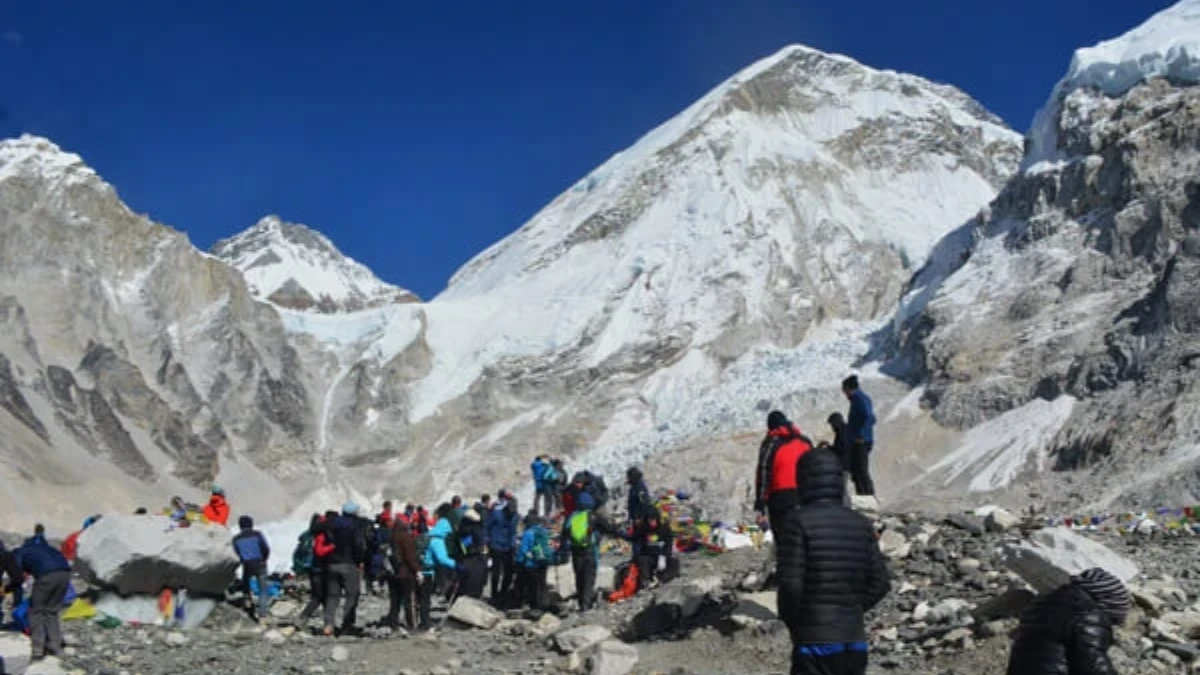
The helicopter climbs to Everest Base Camp at 5,364 metres, where, weather permitting, it lands. You step out of the helicopter onto the Khumbu Glacier. The air is thin. The cold is immediate. The Khumbu Icefall rises above you in a chaos of ice towers and crevasses. And Everest itself, hidden from most of the trail below by the bulk of Nuptse, is visible from base camp as the dark pyramid that has drawn climbers and dreamers for a century.
The landing at base camp lasts fifteen to twenty minutes. Enough time to walk a short distance on the glacier, take photographs, feel the altitude press against your lungs, and understand, viscerally, physically, what 5,364 metres means. For some visitors, this is the most altitude they will ever experience. The thin air, the headache that begins within minutes, the breathlessness that accompanies every step, these are the sensations that trekkers acclimatise to over days but that helicopter visitors time in their full, unmediated intensity.
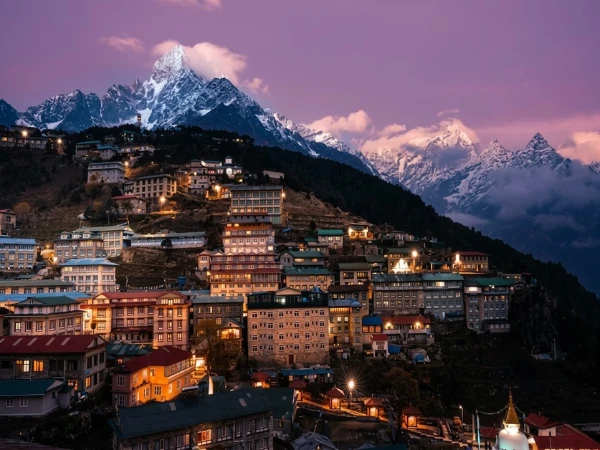
From base camp, the helicopter flies to Kala Patthar or the Hotel Everest View area at Syangboche (3,880 metres) for a breakfast stop. The views from this altitude, Everest, Lhotse, Ama Dablam, Nuptse, Thamserku, are the same views that trekkers earn through twelve days of walking. The breakfast is served in a lodge with glass windows and hot tea, and the contrast between the frozen landscape outside and the warm cup in your hands is one of the small luxuries that the helicopter version provides and the trekking version does not.
The return flight to Kathmandu takes approximately forty-five minutes. Total time from departure to return: four to five hours. Total altitude gained: nearly four thousand metres. Total mountains seen: more than you can count.
Who is the Everest Base Camp helicopter tour best for?
The helicopter tour serves a specific audience, and knowing if you are in that audience decides whether the trip satisfies or disappoints.
Travellers with limited time. If you have three to five days in Nepal and want to see Everest, the helicopter is the only option. No trek, not even the shortest, can deliver the Khumbu experience in under a week. The helicopter delivers it in a morning.
Travellers with physical limitations. Age, injury, chronic conditions, or disability may make a twelve-day trek impossible. The helicopter does not require physical fitness beyond the ability to walk short distances at altitude. It is the Everest experience for people whose bodies cannot or should not sustain the demands of high-altitude trekking.
Families with children. Children under ten are generally too young for the EBC trek. The helicopter allows families to share the Everest experience without the risks and demands of altitude trekking with young children. The flight itself is exciting for children, and the landing at base camp is a memory that even a five-year-old will carry.
Trekkers who have done EBC and want a different perspective. Repeat visitors to the Khumbu sometimes take the helicopter on a subsequent trip to see the landscape they walked through from above. The aerial perspective reveals the scale of the glacier system, the layout of the valleys, and the relationship between peaks that is impossible to understand from the ground.
Photography enthusiasts. The aerial views from the helicopter, mountains at eye level, glaciers unfolding below, the curvature of ridgelines visible from above, are photographs that no ground-based photographer can take. The window seats in the helicopter (most charter tours guarantee window seats for every passenger) provide a shooting platform that is unique in mountain photography.
Is the Everest helicopter tour the same as trekking to base camp?
It is not a trek. The physical accomplishment of walking to Everest Base Camp, the twelve days of effort, the acclimatisation, the teahouse culture, the Sherpa communities, the suspension bridges, the slow build of altitude and anticipation, does not exist in the helicopter version. The helicopter delivers the destination without the journey, and for many people, the journey IS the point of going to Everest.
It is not a substitute for the cultural side of the Khumbu. The Sherpa villages, the monastery at Tengboche, the mani walls and prayer flags along the trail, the conversations with guides and teahouse owners, these are experiences that happen on foot, over days, at walking pace. The helicopter flies over them at a hundred and fifty kilometres per hour.
It is not a summit. Standing at Everest Base Camp, whether you walked or flew, is not standing on the summit of Everest. The helicopter does not fly to the summit (it cannot, the altitude exceeds the operational ceiling of most helicopters). It lands at base camp, which is 3,485 metres below the summit. The trip is extraordinary, but it is not a mountaineering achievement.
What is the helicopter flight to Everest Base Camp like?
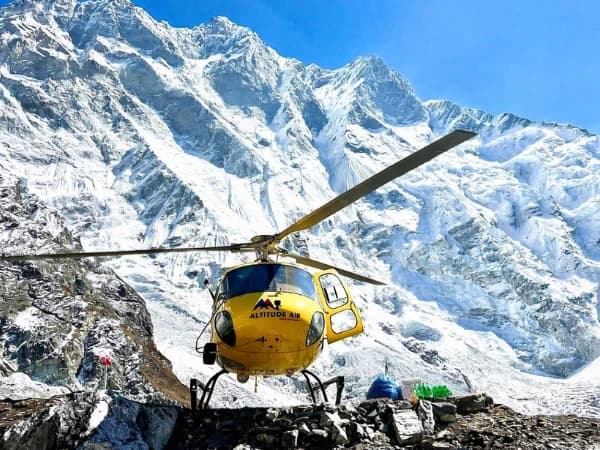
The helicopters used for Everest tours are typically Airbus AS350 (Eurocopter) or similar high-altitude models designed for Himalayan operations. They carry four to five passengers plus the pilot. The cabin is pressurised but not heated, dress warmly, particularly for the base camp landing. The windows are large and designed for visibility, though they may not open for photography (some operators allow window removal for photography-specific charters).
The flight path follows the valleys rather than crossing ridgelines, which provides continuous mountain views from both sides of the helicopter. The pilot typically narrates the flight, identifying peaks and landmarks as they appear. Some operators provide headsets with commentary; others rely on the pilot's intercom.
Turbulence is common. The Himalayan air mass is dynamic, thermals, valley winds, and altitude changes create movement that the helicopter navigates but that passengers feel. If you are prone to motion sickness, take medication before departure. The turbulence is not dangerous (the pilots are among the most experienced high-altitude aviators in the world) but it is noticeable.
Weather determines everything. The flight operates only in good visibility conditions. Cloud, wind, or precipitation at altitude will delay or cancel the flight. October and November (autumn) offer the most reliable conditions. March through May (spring) is the second-best window. The monsoon months (June-September) and deep winter (January-February) have the highest cancellation rates.
How much does the Everest Base Camp helicopter tour cost?
Helicopter tours to Everest Base Camp fall into two categories: shared flights and private charters.
Shared flights carry four to five passengers who share the helicopter cost. Per-person pricing ranges from approximately eight hundred to twelve hundred US dollars, depending on the operator and the season. This is the most common booking format and makes the trip accessible to individual travellers and couples.
Private charters book the entire helicopter for your group. Pricing ranges from approximately three thousand to five thousand US dollars for the helicopter, regardless of how many passengers you carry (up to the maximum of four to five). For groups of four, the per-person cost is similar to a shared flight. For couples or solo travellers, the premium is significant but provides complete flexibility in timing and route.
Both formats include the base camp landing, the breakfast stop, and the return flight. Some operators include hotel pickup from Kathmandu; others meet at the airport. Confirm inclusions when booking.
Is the Everest Helicopter Tour Safe?
Helicopter operations in Nepal's Himalayan regions are conducted by companies with decades of high-altitude flying experience. The pilots hold advanced certifications for mountain flying and have typically logged thousands of hours in the specific terrain they fly. The safety record for tourist helicopter flights in the Khumbu is strong, though incidents do occur, as they do in any aviation operation in extreme mountain environments.
The most common disruption is weather-related cancellation, not safety incidents. Operators err on the side of caution, if conditions are marginal, the flight does not depart. This is frustrating for travellers with fixed schedules but is the correct decision in every case. The mountains will be there tomorrow. Today's weather may not support safe flying.
Altitude sickness is a real consideration, even on a helicopter tour. You ascend from 1,400 metres to 5,364 metres in under an hour, a rate of ascent that would be medically reckless on foot. The short duration at altitude (fifteen to twenty minutes at base camp) limits the severity, but headache, nausea, and breathlessness are common. People with heart or respiratory conditions should consult their doctor before booking.
What is it like to land at Everest Base Camp by helicopter?
The helicopter lands, the rotor slows, and the pilot opens the door. The first thing you notice is the silence. Not the absence of sound, the glacier creaks, the wind hums, and somewhere above you a rock falls with a distant crack, but the silence that comes from being in a place where human noise does not belong. The second thing you notice is the cold. Minus five, minus ten, depending on the month and the hour. The third thing you notice is the breathing. Each breath requires conscious effort. The air at 5,364 metres provides roughly half the oxygen your body expects, and your lungs respond with the specific, urgent labour that altitude imposes.
You walk a few steps from the helicopter. The ground is glacier, rock and ice compressed over centuries into a surface that looks like rubble but is, in geological fact, a river of frozen water moving imperceptibly downhill. The Khumbu Icefall rises to the north, a cascade of ice blocks the size of buildings, tilted and fractured and slowly falling toward the valley below. Beyond the icefall, hidden from this angle by the massive wall of Nuptse, Everest's summit catches the morning light.
Fifteen minutes. That is how long you have. Fifteen minutes to stand where expeditions begin, where dreams are tested against reality, where the highest mountain on earth rises above you with an indifference that makes human ambition feel both magnificent and absurd. Fifteen minutes is not enough. It is also, for many visitors, exactly enough, enough to feel what altitude feels like, to see what Everest looks like up close, and to carry that specific, physical, unreproducible memory home.
The helicopter lifts off. The glacier drops away. And within minutes, you are flying south through the Khumbu valley, watching the world's highest mountains recede behind you, holding a cup of tea at the breakfast stop, and trying to explain to yourself, and eventually to everyone who asks, what it felt like to stand at the base of the tallest mountain on earth and breathe air that was barely enough to keep you standing.
The trek takes twelve days. The helicopter takes a morning. Both deliver Everest. Neither delivers the same Everest. And the choice between them, twelve days of walking or four hours of flying, is not a question of better or worse. It is a question of what you came to Nepal to find: the journey or the destination. Both are waiting.
Ready to See Everest?
If the helicopter appeals to you, our Everest Base Camp Helicopter Tour runs year-round with guaranteed departures from Kathmandu. If reading this has made you consider the trek instead, the 12-day Everest Base Camp Trek is the classic route, or the EBC Trek with Helicopter Return gives you the best of both: walk in, fly out. For photographers, the Everest Heli Photography Tour is a three-day itinerary designed around light and angles.
The Everest helicopter tour is for people who want to see Everest but do not have twelve days to trek there. You fly from Kathmandu, land at Kala Patthar or the base camp area, take photographs with the world's highest mountain behind you, and fly back. The whole thing takes half a day. Is it the same as trekking? No. Nothing is the same as trekking. But the views are identical, and for anyone with limited time or mobility, it is the best way to see Everest up close.
See our Everest Helicopter Tour (1 day) for the full trip including Kathmandu sightseeing.
WhatsApp:+977 9810351300
Email:[email protected]
Written by Shreejan Simkhada, CEO of The Everest Holiday and third-generation Himalayan guide. TAAN Member #1586.
Want EBC in a single day? Our EBC Helicopter Tour (1 Day) flies a full helicopter of 4 from USD 2,299 per person, or a private Luxury helicopter from 2 people. 2027 dates open. WhatsApp us for tailored 2027 dates and current departures.
 Chat with Shreejan