

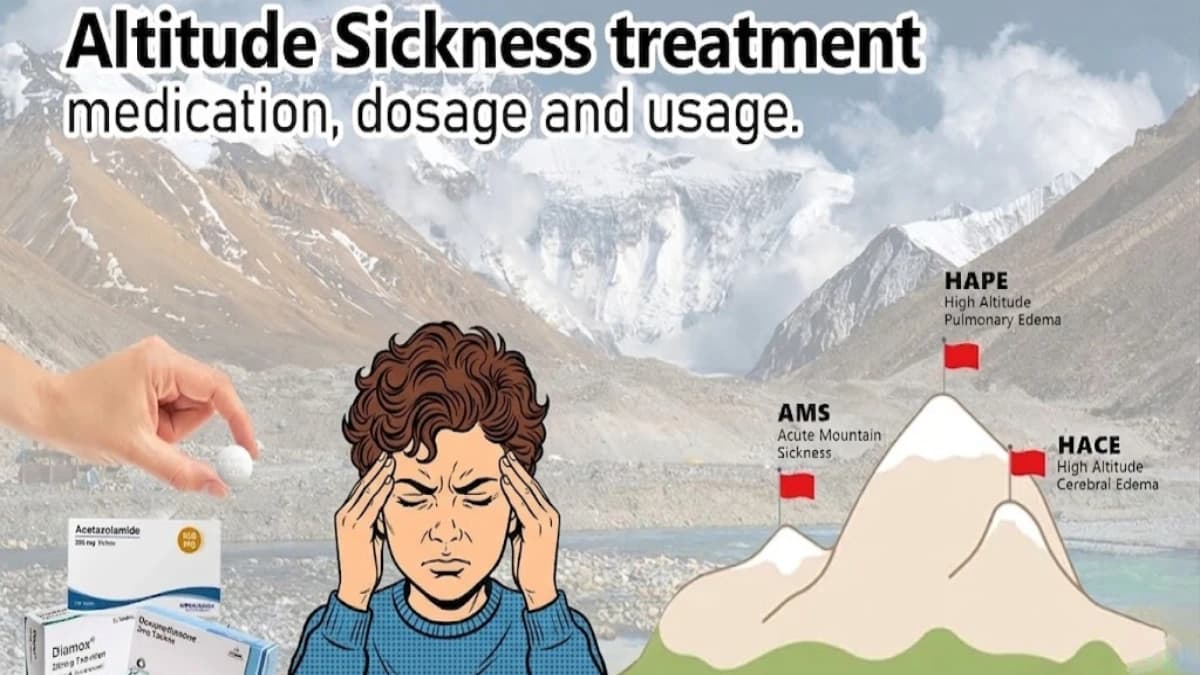
The headache arrives at Dingboche. Not the normal kind. The kind that sits behind your eyes and pushes, gently but persistently, as though your skull has decided it is slightly too small for the brain inside it. You drink water. You take ibuprofen. You lie down. The headache remains. It is not severe. It is not alarming. It is altitude telling your body that the rules have changed.
This is what mild altitude sickness feels like for most trekkers above four thousand metres. It is normal. It is temporary. And it passes, usually within twenty-four to forty-eight hours as your body acclimatises to the reduced oxygen.
But for some trekkers, the headache does not pass. It worsens. Nausea joins it. Sleep becomes impossible. Appetite vanishes. And suddenly the difference between a mild inconvenience and a serious medical condition narrows to a margin that your body, not your willpower, decides.
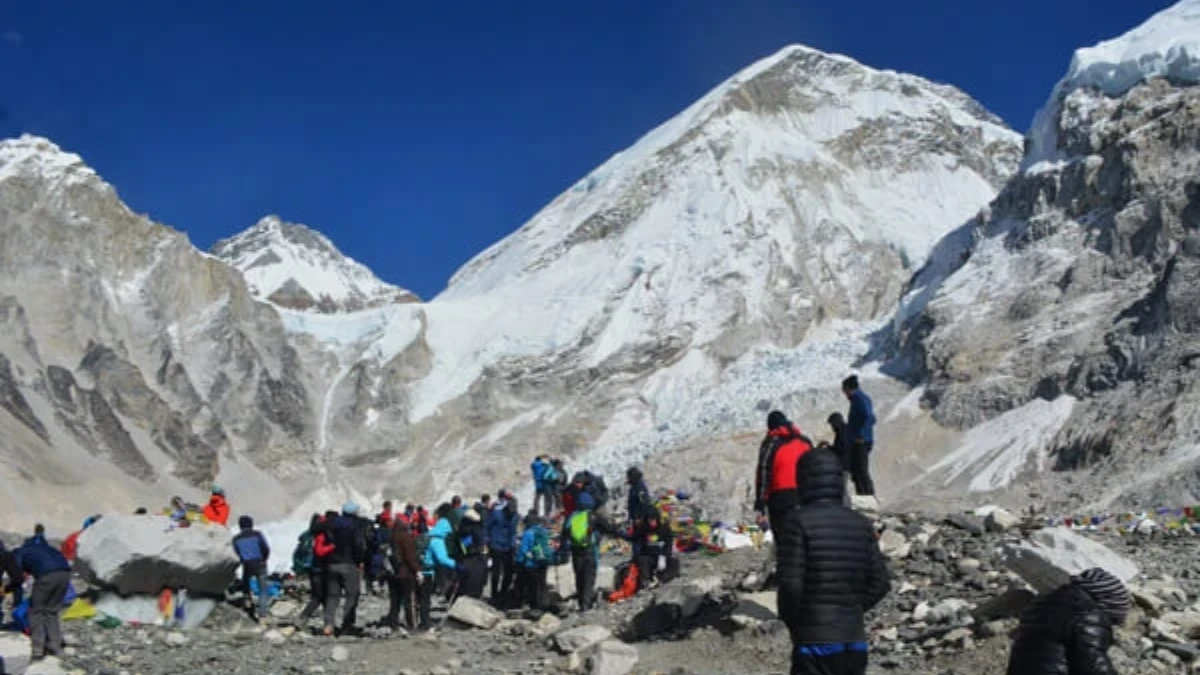
This is where medication enters the conversation. Not as a substitute for proper acclimatisation, since nothing replaces gradual ascent and rest days. But as a tool that, used correctly and with medical guidance, can help your body adapt more efficiently to the thin air of the Himalayas.
Diamox (Acetazolamide): the most studied option
Diamox is a carbonic anhydrase inhibitor originally developed to treat glaucoma. Its effect on altitude acclimatisation was discovered almost accidentally, when patients taking it for eye conditions reported fewer altitude symptoms. Decades of research have since confirmed its effectiveness as both a preventive and a treatment for mild to moderate Acute Mountain Sickness.
How it works: Diamox causes your kidneys to excrete more bicarbonate, which makes your blood slightly more acidic. Your body responds by increasing your breathing rate, taking in more oxygen per minute. The net effect is improved oxygenation at altitude, faster acclimatisation, and reduced symptoms of AMS.
Typical preventive dose: 125mg or 250mg twice daily, starting one to two days before reaching three thousand metres. Some doctors recommend starting at lower doses and increasing if needed.
Side effects: tingling or numbness in fingers and toes (very common, harmless, and temporary). Increased urination (because the drug works on the kidneys). Altered taste, carbonated drinks taste flat or metallic. Occasional nausea. Rare: allergic reactions in people sensitive to sulfa drugs.
Availability: readily available in Kathmandu pharmacies without prescription for twenty to fifty Nepali rupees per strip. However, and this is critical, you should consult your doctor before taking any medication. Your doctor knows your medical history, your other medications, and whether Diamox is appropriate for you specifically.
Can ibuprofen prevent altitude sickness instead of Diamox?
Several studies have shown that ibuprofen, ordinary, over-the-counter ibuprofen at 600mg three times daily, is as effective as Diamox in preventing AMS in some populations. It works by reducing inflammation and the headache that is the primary symptom of mild altitude sickness.
Many experienced trekkers prefer ibuprofen because it has fewer side effects than Diamox, is available everywhere, and does not require a doctor's prescription or prior testing. It does not improve acclimatisation the way Diamox does, it manages symptoms rather than addressing the underlying cause, but for mild AMS, symptom management is often sufficient.
When is dexamethasone used for altitude sickness?
Dexamethasone is a powerful steroid used for emergency treatment of severe AMS, High Altitude Cerebral Oedema (HACE), and as a bridge treatment while descending. It is not a preventive medication. It is not taken casually. It is the drug your guide carries in the first aid kit for the scenario that nobody wants to encounter.
Dexamethasone reduces brain swelling rapidly and can be life-saving when descent is delayed. It buys time. It does not fix the problem, the only fix for severe altitude sickness is descent.
What medication treats HAPE on high-altitude treks?
Nifedipine is used to treat High Altitude Pulmonary Oedema (HAPE), fluid accumulation in the lungs. Like dexamethasone, it is an emergency medication carried by guides, not a preventive taken by trekkers. HAPE is rare but serious, and nifedipine reduces pulmonary artery pressure while descent is arranged.
What should be in your medical kit for a Nepal trek?
For altitude specifically: Diamox (if your doctor approves), ibuprofen, paracetamol. Your guide carries dexamethasone and nifedipine.
For general trekking health: rehydration salts (for diarrhoea and dehydration), loperamide (for severe diarrhoea), antihistamines (for allergic reactions), throat lozenges (dry air at altitude causes sore throats), blister plasters, antiseptic cream, adhesive bandages, and any personal prescription medication with enough supply for the full trek plus three extra days.
What should you ask your doctor before a Nepal trek?
Before your trek, see your GP or travel medicine specialist. Tell them you will be trekking above five thousand metres for twelve days. Ask specifically about:
Whether Diamox is appropriate for you, particularly if you take other medications, have kidney issues, or are allergic to sulfa drugs. Whether your cardiovascular health supports sustained exertion at extreme altitude. Whether any existing conditions, asthma, diabetes, heart conditions, blood pressure medication, require specific management above three thousand metres. What vaccinations are current (hepatitis A and typhoid are recommended for Nepal). And whether a trial dose of Diamox at sea level is advisable, some doctors recommend taking it for a day at home to check for adverse reactions before relying on it at altitude.
Can altitude medication replace acclimatisation and descent?
No medication replaces proper acclimatisation. Diamox helps your body adjust faster. Ibuprofen manages the symptoms while you adjust. But neither allows you to skip acclimatisation days, ascend faster than your body can handle, or ignore the warning signs that altitude is winning.
The trekkers who get into trouble are not the ones who forgot their Diamox. They are the ones who took Diamox and assumed it made them invincible, who pushed through symptoms that should have triggered a rest day, who ignored their guide's advice to slow down, who treated medication as permission to bypass the fundamental reality that human bodies need time to adapt to reduced oxygen.
The best altitude medication is patience. Walk slowly. Drink water. Rest when your body asks. Descend when your guide says. And carry the pills as a tool, not a guarantee, in a first aid kit that you hope to bring home unopened.
Discuss altitude medication with your doctor before any trek above 3,000m. See our EBC Trek for the full altitude profile and acclimatisation schedule.
Diamox works. It is not a cheat. It is not dangerous. It does not mask symptoms. It helps your kidneys excrete bicarbonate, which makes your blood slightly more acidic, which triggers faster breathing, which means more oxygen. The side effects, tingling fingers, frequent urination and flat-tasting fizzy drinks, are annoying but harmless. Talk to your doctor before your trek and get a prescription. Most travel clinics prescribe it routinely for Nepal treks above 3,500 metres.
Our guides monitor acclimatisation daily with pulse oximetry. We never skip acclimatisation days.
WhatsApp:+977 9810351300
Email:[email protected]
Written by Shreejan Simkhada, CEO of The Everest Holiday and third-generation Himalayan guide. TAAN Member #1586.
Diamox for EBC: our guides carry it. Our Everest Base Camp Trek (12 Days) is private (your group only, no strangers), 2026 dates open, From USD $1399. WhatsApp us for tailored 2026 dates and current departures.

 Chat with Shreejan