
Village-by-village guide to the best teahouses on the Annapurna Circuit. From comfortable lower lodges to basic Thorong La shelters, what to expect at every stop.
Govt Regd. No.: 147653/072/073
Travel Agency Licence: 2838/072
Best Teahouses on the Annapurna Circuit: Where to Stay Each Night

Last updated 2 October 2026. Two things to know before you read on. First, the Annapurna Circuit road and the village of Chame were hit by a flood on 27 September, and I do not yet know which lodges and bridges at Chame are standing (the position, with dated sources, is in the next section). Second, my notes on individual lodges come from our guides' trips before that flood. These lodge lines are our guides' notes from before the flood, not today's report.
The short answer: on our 12-day Annapurna Circuit you sleep in simple teahouses on ten nights and in a hotel in Pokhara on the eleventh. The lodges get plainer as you climb: large and comfortable in the lower Marsyangdi valley, small and stove-heated above Manang, and basic at Thorong High Camp. The table below gives the night-by-night plan from our live itinerary, and the sections after it say what each stop is like and what has changed now that a road runs up both sides of the circuit.
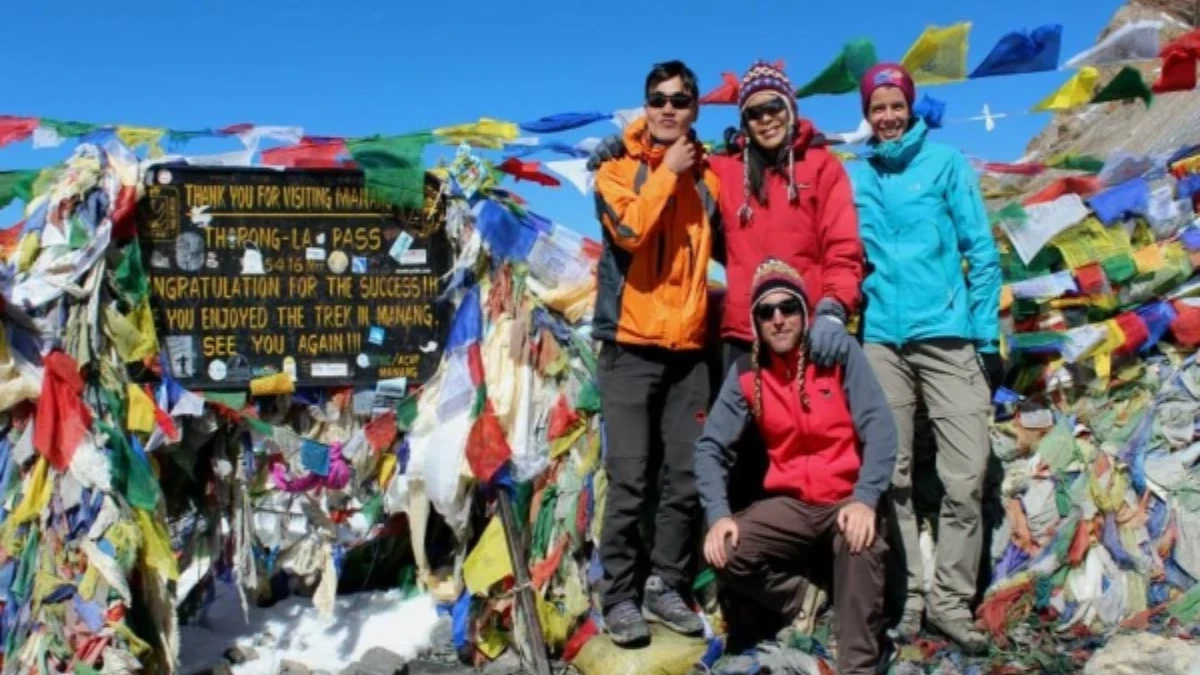
Is the Annapurna Circuit passable at Chame right now?
Not cleanly, and I will not say more than the reports say. As at 2 October 2026 nothing newer than 1 October has been reported. This is what has been published:
- A flood on 27 September swept away houses and two wooden bridges at Chame, the district headquarters on the circuit (our own post of 29 September, linked below). The Marsyangdi river was reported blocked by debris near Chame (Onlinekhabar, 27 September).
- On 30 September the road bridge at Chame bazaar was still submerged, and the Chief District Officer said Upper Manang was effectively completely blocked and that he could not say when it would reopen (Kathmandu Post, 30 September).
- Heavy snow on Thorong La turned back more than 150 tourists, and 226 foreign tourists were in upper Manang. All stranded tourists were reported safe, with medical and visa cases lifted out by helicopter (Nepal Press, 30 September).
- On 1 October the Kathmandu Post reported that major highways were reopening ahead of Dashain, but that "road links between Lamjung and Manang and between Myagdi and Mustang, however, remain cut off."
That is a road position, not a trail position. My earlier post, Is the Annapurna Circuit open: road or trail, explains the difference. For this autumn the practical point is simple: the route through Chame is disrupted, and we can't promise a date. We confirm the road 48 hours before departure. If it is still shut we find you an alternative, and we tell you before you travel, not at the roadside. The alternatives and the rescheduling rule are at the end of this page.
Which teahouse is on which night of the 12-day circuit?
This is the plan from our live 12-day Annapurna Circuit itinerary. Altitudes, distances and times are the figures printed on that itinerary, so treat the kilometres as approximate.
| Night | Stay | Altitude | The day's walk or drive |
|---|---|---|---|
| 1 | Teahouse in Bhulbhule | 845 m | Drive from Kathmandu, 7 to 8 hours |
| 2 | Teahouse in Jagat | 1,300 m | 16 km, 5 to 6 hours |
| 3 | Teahouse in Dharapani | 1,860 m | 13 km, 5 to 6 hours |
| 4 | Teahouse in Chame | 2,670 m | 15.5 km, 5 to 6 hours |
| 5 | Teahouse in Upper Pisang | 3,300 m | 13.2 km, 5 to 6 hours |
| 6 and 7 | Teahouse in Manang (two nights) | 3,540 m | 16 km, 6 to 7 hours; day 7 is the acclimatisation day |
| 8 | Teahouse in Ledar | 4,250 m | 9.1 km, 5 to 6 hours |
| 9 | Teahouse at Thorong High Camp | 4,900 m | 7.3 km, 4 to 5 hours |
| 10 | Teahouse in Muktinath | 3,800 m | Cross Thorong La (5,416 m), 15.6 km, 7 to 10 hours |
| 11 | Hotel in Pokhara | 820 m | Drive Muktinath to Jomsom to Pokhara, 174 km, 8 to 9 hours |
| 12 | Home (no night) | Drive Pokhara to Kathmandu, 200 km, 7 to 8 hours |
Adding the walking days gives about 106 km on foot, with the rest by road. The full circuit is 160 to 230 km "depending on where motor transportation is used", which is why two operators can both say "the Annapurna Circuit" and mean different distances. Kathmandu hotels are not included, before the trek or after it. The Pokhara night is included.
Two altitude notes. Manang is 3,519 m, Muktinath 3,762 m and Thorong High Camp 4,900 m. Our itinerary uses the figures in the table. The gap is a few metres to a few dozen metres and does not change the plan, but if you check your watch against this page you may see small differences. Related: Manaslu Circuit Trek Distance: Day-by-Day Kilometres and Altitude.
What are the teahouses like, place by place?
These are our guides' notes from before the 27 September flood. Read every line as "what it was like", not "what you will find tomorrow".
Bhulbhule, Jagat and Dharapani (845 to 1,860 m). The lower Marsyangdi valley has the most comfortable lodges of the trek. Our guides describe larger guesthouses with double beds, hot showers, charging points and a long menu, and dal bhat made with vegetables from the owner's garden. Enjoy it, because the rooms get smaller from here.
Chame (2,670 m). The district headquarters on the circuit, and the largest stop before Manang. After the 27 September flood we can't tell you which of them are standing, so I don't repeat pre-flood claims. Ask me about night 4 when the road and bridge position is clearer.
Upper Pisang (3,300 m). The high-route village above the valley. Our guides prefer it to Lower Pisang for the views of the Annapurna range and the quieter lodges. Rooms are small and the dining room is the only warm place after dark.
Manang (3,540 m), two nights. The acclimatisation stop, and the best-equipped village between Chame and Thorong La. The Himalayan Rescue Association runs a medical clinic at Manang. Our guides describe lodges with heated dining rooms and bakeries, and we choose the central ones with the best stoves. Every trek carries a pulse oximeter so your guide can check your oxygen saturation. It is a guide, not a diagnosis, and your guide's judgement comes first.
Ledar (4,250 m) and Thorong High Camp (4,900 m). Above Manang the terrain turns arid and the lodges turn basic: small rooms, shared squat toilets, a short menu and one heated dining room. Ledar is a handful of lodges. Thorong High Camp is the most basic night of the trek, but sleeping there rather than at Thorong Phedi (4,540 m) shortens the crossing the next morning. Eat well at dinner the night before. You leave in the dark, and breakfast is a quick affair.
The pass itself. There are no teahouses on Thorong La (5,416 m). Trekkers usually leave a few hours before sunrise because strong winds typically begin a few hours after it, and March to May and September to November are the safest months to cross. Our itinerary climbs about 490 m from High Camp and then descends about 1,600 m to Muktinath.
Muktinath (3,800 m). After the pass, Muktinath feels generous. Our guides describe warm lodges, better food and the Kali Gandaki valley opening below you.
Pokhara (820 m), night 11. A hotel with a proper bed and a hot shower. The drive to get there is the part of the trek most affected by road damage this year, so see the section below.
How has the road changed the lodging on the circuit?
Up to 75 per cent of the original circuit route has been affected by new roads linking the villages, and the road shortened the trail and changed the villages. For lodgings this means three things, and the first two are from our guides' trips, not from a survey.
- Lodges that sit beside the road get jeep traffic, dust and engine noise at dawn. Lodges on the older trail, on the far bank or above the road stay quiet. When there is a choice, we book the quiet side.
- Some owners have moved their business up to the road, because that is where the vehicles stop. A village can have more lodges than before and fewer on the old footpath.
- Some trekkers now skip the lower valley by jeep, so the lower lodges are emptier than they were. We walk it. Our itinerary drives to Bhulbhule on day 1 and then walks.
The Natural Annapurna Trekking Trails are side routes way-marked blue and red that avoid much of the new road, as opposed to the red and white of the original trail. Our guides use the footpath wherever it is walkable. The road still matters at the two ends of the trek, and it is the two ends that have been damaged: the Besisahar to Chame road lost about 200 m at Kharkhere Bhir on 27 September (Nepal Press, 27 September), and the Beni to Jomsom to Korala road was damaged at 46 points (Nepal Press, 28 September).
What if the Muktinath to Jomsom to Pokhara road is shut?
Day 11 of our itinerary is a drive, and the Kali Gandaki road is exactly the road that was damaged. The Kathmandu Post of 1 October said the Myagdi to Mustang link was still cut off. If the road is not open when you reach Muktinath, we will tell you the options before you are there. In order, they are:
- Hold a day at Muktinath or Jomsom and wait for a repair.
- Fly from Jomsom to Pokhara, which we can arrange on request. Mountain flights depend on the weather, and a morning can be held for visibility, so I would not plan a tight connection after it. My posts on the Jomsom road and on domestic flights explain how the flights work.
I will give you the price of any change before you agree to it.
How cold are the lodges from October to December?
I have no weather-station data for Chame, Ledar or High Camp. These are the two nearest published stations, and they are long-run averages, not a forecast. Both come from the Nepal Department of Hydrology and Meteorology (1991 to 2020 normals).
| Station | October high / low | November high / low | December high / low |
|---|---|---|---|
| Manang Airport, 3,401 m | 14.6 / 0.9 °C | 11.6 / -4.4 °C | 9.1 / -7.5 °C |
| Jomsom, 2,741 m | 18.0 / 5.5 °C | 14.8 / 1.5 °C | 12.3 / -1.2 °C |
Manang Airport is close to the altitude of our Manang lodge. Ledar and High Camp are 700 to 1,500 m higher, so expect colder nights than the Manang line. The pass sees snowfall from December to February, and it can close at any time of year in bad weather. That is why I do not recommend the circuit in December (see Trekking in Nepal in December 2026), and why November needs a road check as well.
Which teahouses should you avoid?
The same warning signs apply as on any Nepal trek. Damp rooms above 3,500 m, because sleeping damp at altitude invites a chest infection. A cold dining room above 4,000 m, where a lodge that will not light the stove is cutting a corner, because the stove dries your gear as well as warming you. A dirty kitchen: order something that has been boiled, such as soup, boiled eggs or dal bhat. Our guides know the owners along the route, and that is the practical advantage of walking with a company and not alone.
Do you need to book teahouses ahead?
In the peak season, yes. The teahouses on the circuit "book up very quickly" at that time, and independent trekkers often reach Manang or Muktinath to find their first-choice lodge full. We call the lodges on your route before departure and check again as you walk, which is the same checking we describe in my road-versus-trail post. If a lodge is gone, the guide moves you to the next one, not to the floor.
How do the tiers change where you sleep?
The lodges are the same for everyone, but what you get differs by tier. On Budget you share a room, you carry your own bag and meals are not included. On Standard you have a private room, all meals, and one porter for every two trekkers (a solo Standard trekker has no porter, and the guide carries up to 10 kg of the bag). On Luxury you have a dedicated porter, all meals with fruit and nuts, and a private deluxe room with ensuite where the lodge has one. Above Manang the lodges are simple for everyone, and I would rather you heard that now than at Ledar.
The 12-day circuit is from US$720 Budget, US$999 Standard and US$1,499 Luxury for a group of one to four. A 10 per cent deposit holds your dates and you pay the balance in Kathmandu. We take US dollars or card, and a card payment of the balance carries a 3.5 per cent charge. If you need to move, you can reschedule for free with at least 72 hours' notice (seven days for restricted areas) to any date within one year. The deposit itself is not refunded if you cancel. If we cannot run the trip, we refund what you paid less taxes, bank and card charges and any money already spent on permits or flights. Insurance is your own responsibility and must be bought at home, not in Nepal.
What permits do you need?
The Annapurna Conservation Area entry fee is NPR 3,000 and the TIMS card is NPR 2,000, both from the Nepal Tourism Board pages. We arrange them for every trekker. Fees change, so check the permits guide before you rely on a figure.
Who should not do the circuit this autumn?
Anyone who needs certainty about a date. Until the Chame bridge and the Lamjung to Manang road are open, we cannot promise a start day. Anyone short of acclimatisation days should not cut Manang. If your dates are fixed and the road is still cut when you fly, tell me. We reschedule free with 72 hours' notice to any date within a year, or we move you to a trek that is open. The Annapurna south treks start from Pokhara and were reported open at the last check on 29 September, and my open-treks post carries the dated picture. Tell me your dates on WhatsApp, +977 9810351300, or email [email protected].
Sources: Nepal Department of Hydrology and Meteorology (Manang and Jomsom altitudes and climate); Nepal Tourism Board (TIMS and park fees). Road and flood status: Kathmandu Post 30 September and 1 October 2026, Nepal Press 27, 28 and 30 September 2026 and Onlinekhabar 27 September 2026, checked again on 2 October. Lodge descriptions are our guides' notes from before 27 September 2026 and are marked as such.
About The Everest Holiday
We are a family company in Kathmandu, three generations of Himalayan guides, registered in 2016 and a member of the Trekking Agencies' Association of Nepal, number 1586. When you book with us you deal with the family, not a call centre.
Every booking helps fund our Nagarjun Learning Center. We fully run the centre at Saldum, where 70 children learn with a teacher I pay for personally.
Written by Shreejan Simkhada, CEO of The Everest Holiday and third-generation Himalayan guide. TAAN Member #1586.
The Annapurna Circuit needs a road check before you fly. Our Annapurna Circuit Trek (12 Days) is private (your group only, no strangers), from USD $1,175. WhatsApp us for dates and the current road position.
Planning a trip to Nepal?
Drop us your details and tell us what you have in mind. We will put together a personalised plan and get back to you.
Not sure which Nepal trek is right for you?
Take our free 2-minute quiz and get personalised recommendations based on your fitness, experience, and travel style.
Find Your Perfect Trek →Need Help? Call Us+977 9810351300orChat with us on WhatsApp
Latest Travel Blogs
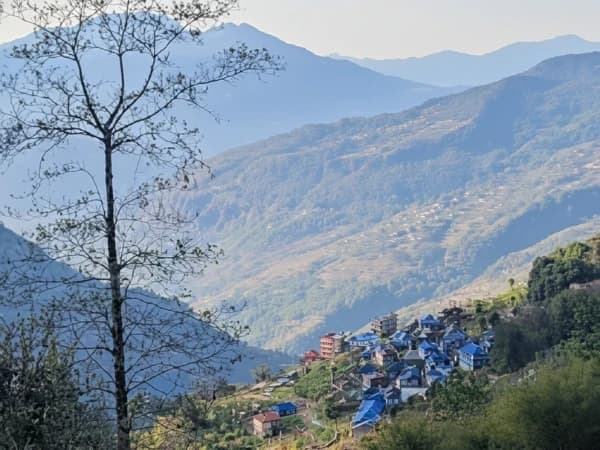
Tikhedhunga: The First Night on the Poon Hill Yoga Trek and the Foot of the Stone Steps
Tikhedhunga is a village at about 1,500 m at the foot of the Ulleri stone steps. Distances to Ghorepani, permits, best months and the trips that pass through.
Read More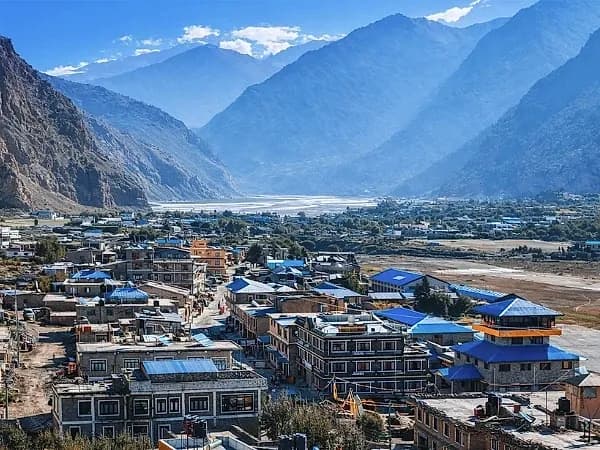
Tukuche: The Thakali Village on the Kali Gandaki Road
Tukuche is a Thakali trading village at about 2,590 m in the Kali Gandaki valley. Distances to Marpha and Kalopani, permits, best months and the trips that pass through.
Read More
Everest Base Camp Trek Cost from Uzbekistan: Soum Prices, Flights, Visa and Payment
Everest Base Camp trek cost from Uzbekistan: trek prices in dollars and soum, Tashkent to Kathmandu fares, visa on arrival, halal food and how to pay.
Read More Chat with Shreejan