

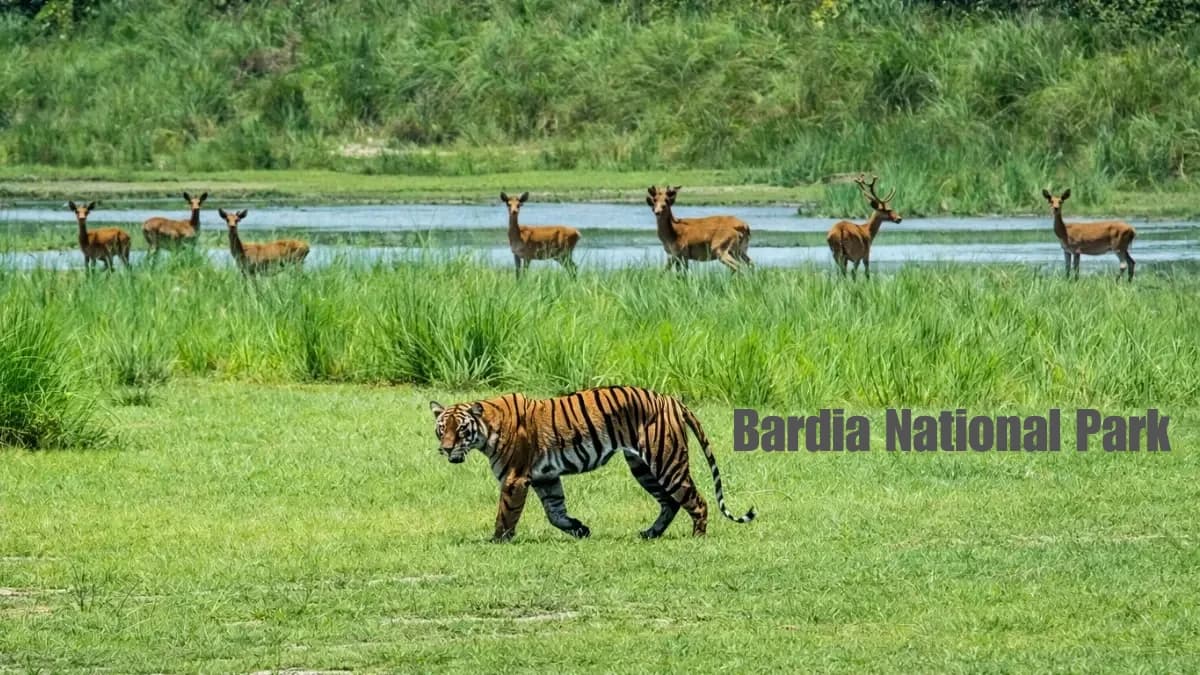
There is a national park in western Nepal that is twice the size of Chitwan, has half the visitors, and contains the same wildlife, plus a tiger density that some researchers believe is higher per square kilometre than anywhere else in the subcontinent. Bardia National Park sits on the floodplain of the Karnali River in the Terai lowlands, six hundred kilometres from Kathmandu and a world away from the trekking routes that bring tourists to Nepal. Most visitors to Nepal have never heard of it. The ones who find it rarely want to leave.
Chitwan National Park, in central Nepal, is the famous one. It receives over two hundred thousand visitors per year. It has an airport nearby. It is on the tourist circuit between Kathmandu and Pokhara. Its lodges are polished, its jeep safaris are efficient, and its rhinos appear with the reliability of a timetable. Chitwan is excellent. But Chitwan is managed, manicured, and, during peak season, crowded in a way that makes the wildlife trip feel curated rather than wild.
Bardia is the antidote. Rougher. Remoter. Wilder. A national park where the tiger tracks you saw at the river crossing this morning were not left there for your benefit, where the rhino that crossed the riverside grassland at dusk was not on anybody's schedule, and where the absence of other tourists is so complete that the jungle feels not like a park but like a wilderness that happens to have a few lodges at its edge.
How Do You Get to Bardia National Park?
Bardia's remoteness is both its greatest asset and its logistical challenge. The park is in the far western Terai, and getting there requires either a domestic flight to Nepalgunj (forty-five minutes from Kathmandu) followed by a two-and-a-half-hour drive, or a long overland journey from Kathmandu (twelve to fourteen hours by tourist bus) or Pokhara (eight to ten hours).
The flight-plus-drive option is the most comfortable. Nepalgunj is served by several daily flights from Kathmandu on Buddha Air and Yeti Airlines. The drive from Nepalgunj to Bardia follows the Mahendra Highway through flat Terai farmland, an unremarkable road that ends at the park boundary, where the landscape changes abruptly from agricultural flatland to dense subtropical forest.
The overland route from Kathmandu is long but scenic, passing through the mid-hills and descending to the Terai plain. Tourist buses depart in the evening and arrive the following morning, not the most comfortable journey, but budget-friendly and practical for trekkers adding Bardia to the end of a Nepal trip.
GPS coordinates for Bardia National Park headquarters at Thakurdwara: 28.3827°N, 81.3960°E. The main lodge area is clustered around Thakurdwara village on the eastern edge of the park.
What animals can you see in Bardia National Park?
Bardia's wildlife list reads like a greatest hits of South Asian megafauna. The park protects 839 square kilometres of sal forest, grassland, and riverine habitat in the Karnali and Babai river floodplains, an ecosystem that supports an extraordinary density and diversity of large mammals.
Bengal Tiger. Bardia's most famous resident. The park's tiger population has recovered from fewer than twenty in the 1990s to over one hundred and twenty-five in recent surveys, a conservation success story that has made Bardia one of the most important tiger habitats in Asia. Tiger sightings are not guaranteed, they are never guaranteed anywhere, but Bardia's combination of relatively open grassland habitat and high tiger density makes it one of the best places in the world to see a wild tiger. Jungle walks with experienced guides offer the best chances, particularly in the dry months (January to April) when vegetation is thinner and tigers come to the rivers to drink.
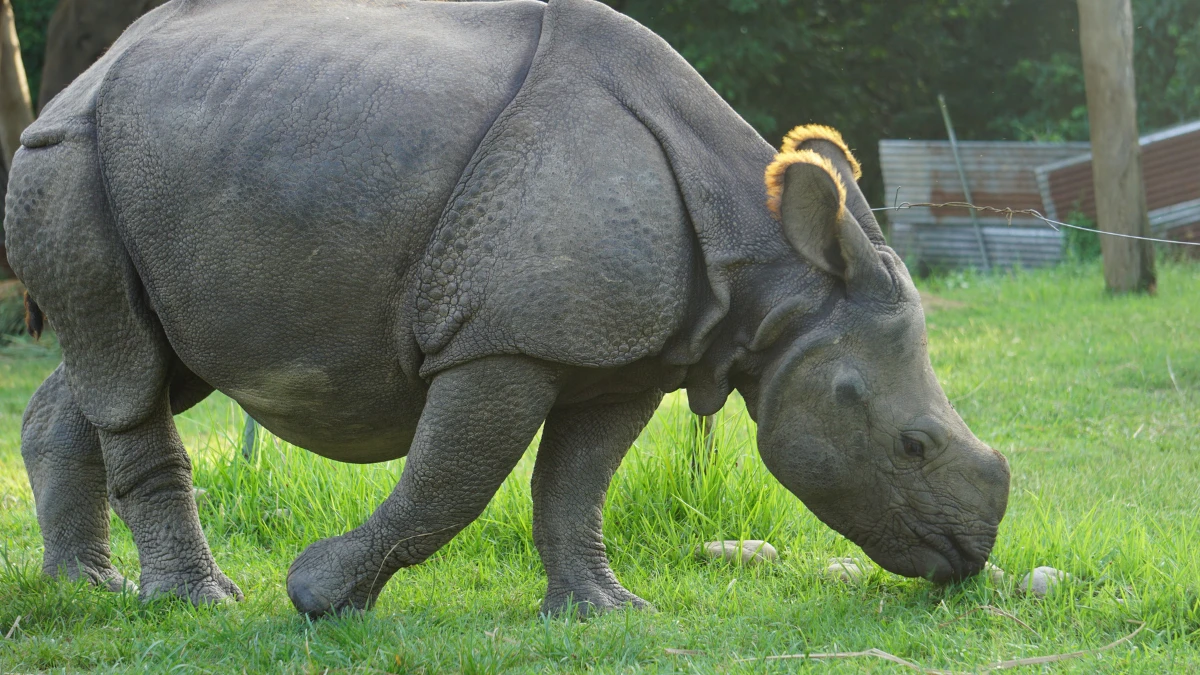
Greater One-Horned Rhinoceros. Translocated from Chitwan to Bardia in the 1980s and 1990s, the rhino population has established itself in the park's grasslands and riverine forests. Sightings are common on jeep safaris and jungle walks, particularly near the Karnali River.
Gharial and Mugger Crocodile. The Karnali and Babai rivers support populations of both crocodile species. The gharial, with its distinctive long, thin snout, is critically endangered globally, and Bardia is one of its last strongholds. River safaris by canoe or raft offer close encounters with basking crocodiles that are simultaneously beautiful and primordially alarming.
Gangetic Dolphin. The Karnali River is home to a small population of the endangered Gangetic river dolphin, a freshwater dolphin that surfaces with a characteristic "pffft" sound that, once heard, is instantly recognisable. Dolphin sightings are seasonal and require patience, but Bardia is one of the best locations in Nepal for this rare species.
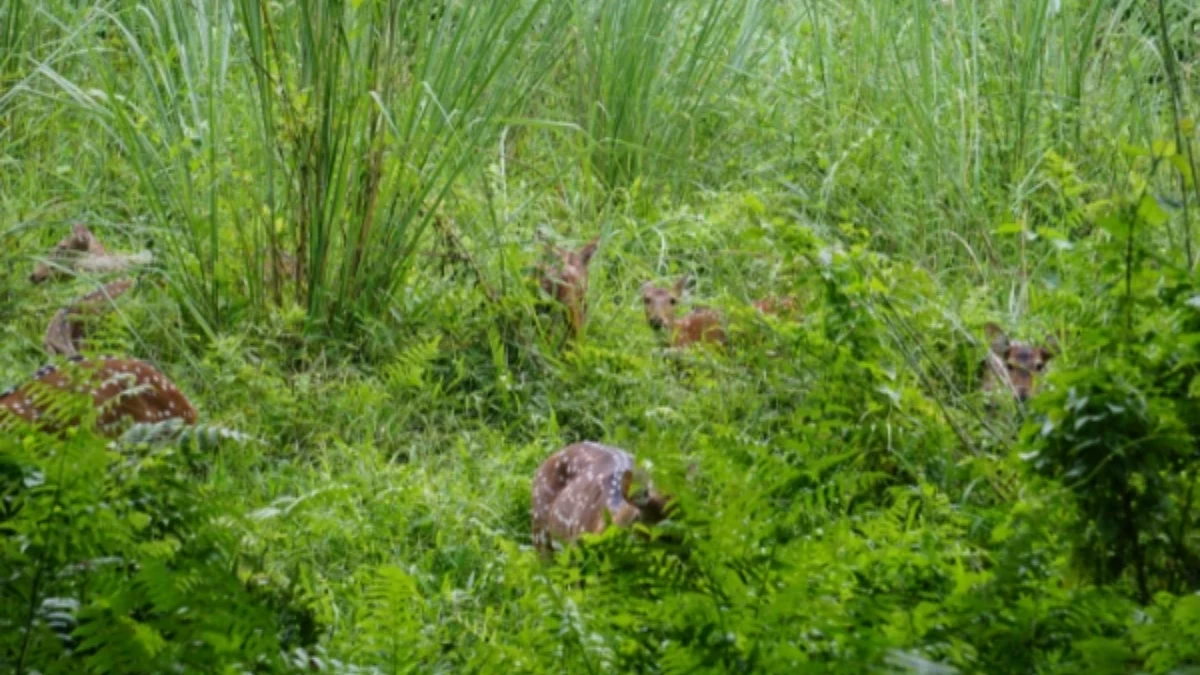
Other mammals. Spotted deer (chital), barking deer (muntjac), sambar deer, wild boar, langur monkeys, rhesus macaques, sloth bears, striped hyenas, jackals, and, very rarely, leopards. The smaller mammals are the ones you see most, deer grazing at the forest edge, monkeys crashing through the canopy, wild boar trotting across the trail with the particular combination of confidence and absurdity that characterises the species.
Birds. Over five hundred bird species have been recorded in Bardia, making it one of the richest birding destinations in South Asia. Bengal floricans, sarus cranes, giant hornbills, various kingfishers, eagles, and owls. The riverside and grassland habitats are particularly productive for birding, and the winter months (November to February) bring migratory species that push the list even higher.
What is there to do in Bardia National Park?
Jungle walks. This is Bardia's signature experience. Walking through the sal forest with an experienced guide and a park ranger, following animal tracks, reading the signs, fresh tiger pugmarks in the riverbed, rhino dung piles that indicate territory, alarm calls from deer that signal a predator nearby. The walking safari is quieter than a jeep, slower than a vehicle, and infinitely more immersive. You hear the jungle. You smell it. You feel the shift in atmosphere when the guide raises a hand and freezes, eyes locked on something in the undergrowth that you cannot yet see.
Jungle walks last three to six hours, departing at dawn when animal activity is highest. They are accompanied by a licensed naturalist guide and a park ranger who carries a stick that serves as both walking aid and deterrent. The guides are superb, many are from local Tharu communities with multi-generational knowledge of the forest. Their ability to spot a tiger in dappled shade at fifty metres, identify a bird by a three-note call, or age a set of tracks by the moisture in the print is a skill set that cannot be taught in a classroom.
Jeep safaris. Four-wheel-drive vehicles take you deeper into the park than walking allows, covering the grassland corridors and river crossings where large animals concentrate. Jeep safaris are particularly effective for rhino sightings and for covering large areas when specific wildlife has been reported in a particular zone. Morning and afternoon departures, three to four hours each.
River safaris. Canoe or raft trips on the Karnali and Babai rivers offer a different perspective, waterside wildlife, crocodile basking sites, river dolphins, and the bird life that concentrates along the waterways. The rivers are calm enough for gentle paddling in the dry season. The views of the forest from the water, with the Churia hills rising behind, are beautiful in a way that the ground-level forest perspective is not.
Tharu cultural sides. The indigenous Tharu people of the Terai have a rich cultural tradition that includes distinctive dance, music, architecture, and cuisine. Several lodges organise cultural evenings with Tharu stick dance performances and traditional music. The Tharu villages near the park boundary offer a glimpse into an agricultural community that has coexisted with the jungle, and its tigers, for centuries.
Multi-day jungle camping. For the adventurous, some operators offer multi-day camping trips deeper into the park. Sleep in tents by the river, wake to jungle sounds, and spend consecutive days walking through habitat that day-trippers never reach. This is the premium Bardia experience, total immersion in one of Asia's great wilderness areas.
When is the best time to visit Bardia National Park?
October to March: The best months. Cool, dry weather. Visibility is excellent. Vegetation thins through the dry season, making wildlife spotting easier. Tiger sighting probability increases through the dry months as animals concentrate around water sources. January and February are the coolest months, morning temperatures can drop to five degrees in the Terai, which feels cold after the subtropical heat.
April to May: Hot. Temperatures reach thirty-five to forty degrees. The vegetation is at its thinnest, which is excellent for wildlife spotting, but the heat makes long jungle walks uncomfortable. This is actually the best period for tiger sightings, the combination of thin vegetation and water-dependent animals creates optimal conditions, but you need to be comfortable in serious heat.
June to September: Monsoon. The park is officially open but practically difficult. Heavy rain floods the rivers, trails become impassable, and leeches are abundant. Most lodges close or operate at minimal capacity. Not recommended.
Where Should You Stay in Bardia?
Accommodation ranges from basic community-run lodges to comfortable jungle retreats. All are located outside the park boundary in and around Thakurdwara village.
Budget lodges: fifteen to thirty dollars per night including meals. Basic rooms, shared facilities, genuine hospitality. The food, Tharu-influenced Nepali cuisine, is often better at the budget places than the upscale ones.
Mid-range lodges: forty to eighty dollars per night including meals. Private rooms with ensuite bathrooms, gardens, and guide services. The sweet spot for most visitors, comfortable enough for a restful stay, affordable enough for a three-to-four-night visit.
Upscale lodges: one hundred to two hundred dollars per night. International-standard rooms, experienced naturalist guides, all activities included. These properties compete with Chitwan's luxury offerings but with Bardia's wildness, a combination that is difficult to find elsewhere in Nepal.
Which is better for a safari, Bardia or Chitwan?
The comparison is inevitable, so here it is plainly:
Chitwan is easier to reach, more developed, and more predictable. The wildlife trip is managed and reliable, you will see rhinos. The lodges are more polished. The tourist infrastructure is more mature. Chitwan is the right choice if you have limited time, want a guaranteed wildlife trip, and prefer comfort over wildness.
Bardia is harder to reach, less developed, and wilder. The wildlife trip is less managed but more authentic. Tiger sighting probability is higher because the tiger population is dense and the habitat is favourable. The experience feels like a genuine wilderness encounter rather than a curated safari. Bardia is the right choice if you have time for the journey, value wildness over convenience, and want a safari trip that feels like discovery rather than tourism.
If you have time for both, and Bardia followed by Chitwan, or vice versa, is a superb combination, you will see the full range of Nepal's lowland wildlife in two dramatically different settings. The contrast between Bardia's frontier wildness and Chitwan's polished efficiency is itself illuminating. Two parks. Same species. Different experiences entirely.
Combining Bardia With Trekking
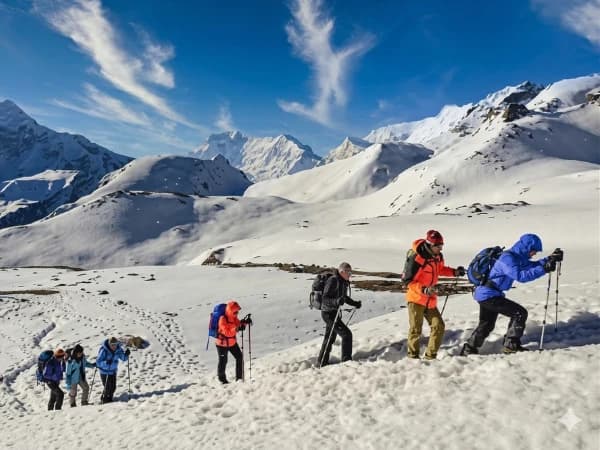
The most common combination is a Himalayan trek followed by a Bardia safari. After two weeks at altitude, living on dal bhat and boiled water, sleeping in cold teahouses, breathing thin air, the descent to the warm, flat, wildlife-rich Terai feels like arriving on a different planet. The warmth is luxurious. The flat terrain is absurdly easy after mountain trails. The food includes fresh fruit, river fish, and vegetables that altitude makes impossible.
The trek-to-safari combination also makes physiological sense. Your body, stressed by altitude for two weeks, recovers rapidly in the oxygen-rich low altitude. The relaxation of a jungle lodge, walking slowly, eating well, sleeping in warmth, is the perfect antidote to the exertion of a Himalayan trek. And the wildlife adds a completely different dimension to the Nepal trip, mountains and jungle, snow and subtropical forest, yaks and tigers, all in one country, all in one trip.
Logistically, Bardia works best after treks that end in Kathmandu (fly to Nepalgunj) or Pokhara (drive to Bardia). Allow a minimum of three nights at Bardia, two full days of safari activities, to justify the travel time. Four to five nights is optimal. Related: How Much Does a Bardia National Park Safari Cost in 2027?
Are tiger sightings guaranteed in Bardia National Park?
Bardia is not a zoo. The animals are wild. The forest is dense. The tiger that watched you from thirty metres as you walked the riverside trail at dawn, the one your guide pointed out later, reading the fresh prints and the flattened grass where it had lain, chose to let you pass. The encounter happened. You just did not know it at the time.
This is the difference between Bardia and a wildlife documentary. In the documentary, you see everything. In Bardia, you see what the jungle allows you to see. Some mornings, you see nothing larger than a langur. Some mornings, a tiger walks across the road in front of your jeep with a casualness that suggests it considers you irrelevant. The unpredictability is the point. The jungle operates on its own schedule, and the visitor who accepts this, who finds value in the alarm call of a deer as much as in the stripe of a tiger, is the visitor who leaves Bardia satisfied.
The mountains of Nepal are famous. The jungles of Nepal are secret. Bardia is the deepest of those secrets, a place where the forest is old, the river is wide, the tigers are real, and the tourists are few enough that the wildness remains intact. Finding it requires effort. The effort is the filter. And what passes through that filter, the silent walk at dawn, the pugmark in wet sand, the crash of something large moving through bamboo, is a Nepal that the mountains, for all their grandeur, cannot provide.
Visit Bardia on our Bardia-Lumbini-Chitwan Photography Tour (12 days).
Bardia is the safari Nepal should be famous for. Chitwan gets the crowds, but Bardia gets the tigers. The park is three times larger, the visitor numbers are a tenth, and the chances of seeing a Bengal tiger in the wild are genuinely high. I have seen guests come to Nepal for mountains and leave talking about the tiger they watched crossing the Karnali River at dawn.
We include Bardia in our Bardiya, Lumbini and Chitwan Photography Tour. It is worth every extra hour of travel to get here.
WhatsApp:+977 9810351300
Email:[email protected]
Written by Shreejan Simkhada, CEO of The Everest Holiday and third-generation Himalayan guide. TAAN Member #1586.
Bardiya safari is the quieter Chitwan alternative. Our Bardiya, Lumbini & Chitwan Tour (12 Days) is private (your group only, no strangers), 2027 dates open, From USD $1249. WhatsApp us for tailored 2027 dates and current departures.
 Chat with Shreejan