


The Annapurna region offers Nepal's two most popular alternatives to Everest Base Camp, and they share a range, a name, and a permit. Everything else (duration, character, landscape, physical demand, and the specific type of reward they deliver) is different enough that choosing the wrong one for your temperament, fitness, or schedule leaves you wishing you had chosen the other.
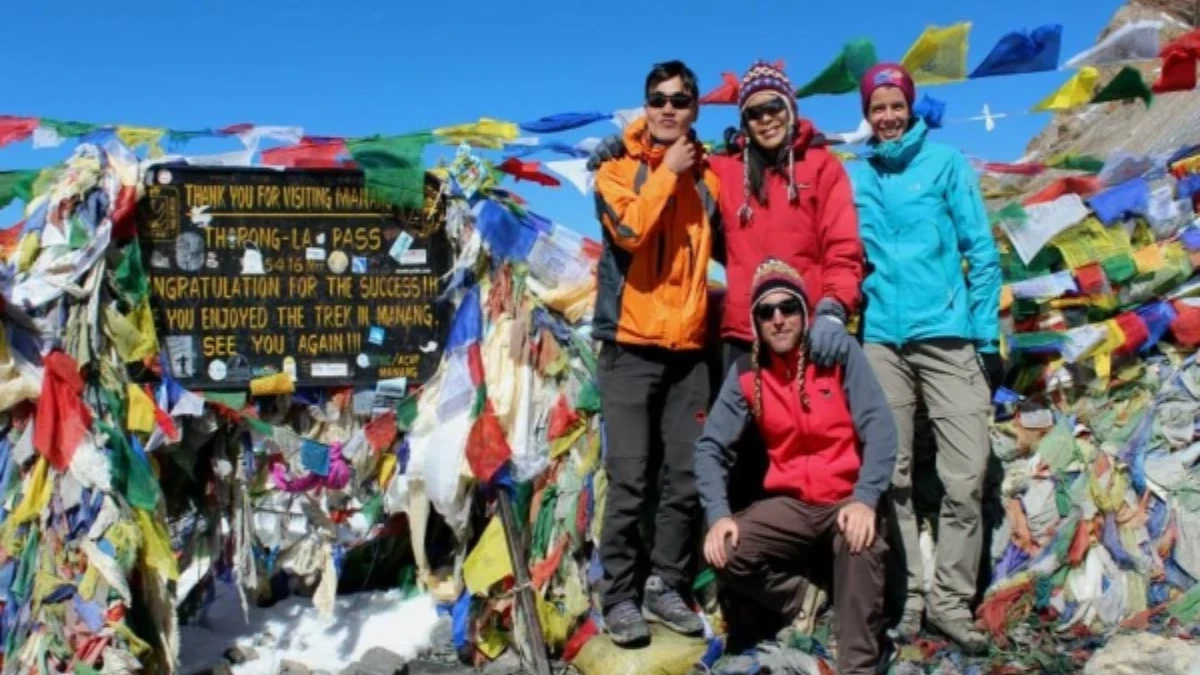
The Annapurna Circuit is a circumnavigation. A two-to-three-week loop around the entire Annapurna massif, from the subtropical depths of the Marsyangdi valley to the 5,416-metre Thorong La pass and down through the Kali Gandaki gorge, the deepest gorge on earth. It is epic in the original sense: it has an arc and a climax.
Annapurna Base Camp (usually called ABC) is a penetration. A trek of seven to twelve days that walks straight into the heart of the Annapurna range, up the Modi Khola valley, through the Annapurna Sanctuary's narrow entrance, and into a natural amphitheatre surrounded by mountains on every side. It is intimate in a way that the Circuit's grand sweep cannot be.
Both are top-tier treks. Both deliver Himalayan scenery that justifies the effort, the expense, and the altitude headache. But they are not interchangeable, and the trekker who understands the differences before booking will choose the one that fits.
What is the Annapurna Circuit trek like?
The Circuit is one of the great long-distance walks on earth. The classic route, before road construction shortened some sections, was a two-hundred-kilometre loop that took three weeks and traversed more ecological zones than most countries contain. Today, road construction on the eastern approach from Besisahar has shortened the walking days (or, for many trekkers, replaced some with jeep rides), but the essential experience remains: a complete circumnavigation of a mountain range that exposes you to everything the Himalaya contains.
The eastern approach follows the Marsyangdi River upstream through subtropical forest (banana trees, rice paddies, humidity) into temperate forest (pine and rhododendron) into alpine meadow (brown grass, yak pastures, thin air) and finally into the high-altitude desert of the Manang Valley, where the landscape looks more like Ladakh or Mustang than Nepal. The transformation is gradual and complete. You walk from jungle to desert in a week.
Manang (3,540 metres) is the Circuit's resting point, a stone-built village in a wide, dry valley where acclimatisation days allow your body to adjust before the push to Thorong La. The village has bakeries, gear shops, and a cinematic sunset over the Annapurna range that draws trekkers to rooftop terraces every evening.
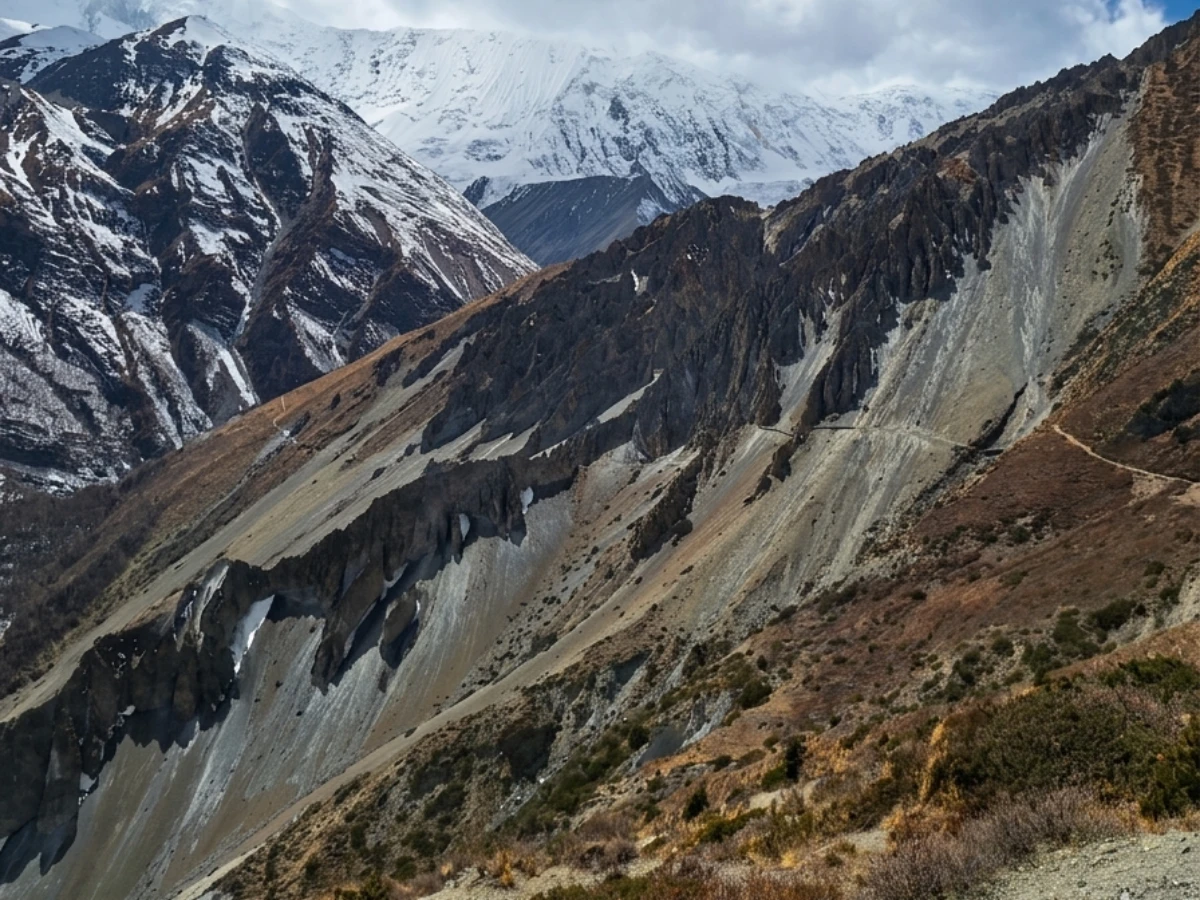
Thorong La (5,416 metres) is the crux. The highest point on any major trekking route in Nepal. The crossing takes a full day, starting in the dark at four in the morning from Thorong High Camp or Thorong Phedi, climbing steadily through scree and snow to the pass, and descending the other side to Muktinath. The altitude, the cold, the wind, and the physical demand make this the most challenging single day of any standard trek in Nepal. It is also, for most Circuit trekkers, the most memorable, the moment when three weeks of walking converge on a single accomplishment.
The western descent through the Kali Gandaki valley to Jomsom and beyond completes the loop, passing through the trans-Himalayan landscape of Mustang, the apple orchards of Marpha, and the increasingly lush terrain as you descend toward Pokhara. The contrasts are extreme: you begin the day in a landscape that resembles Tibet and end it in a landscape that resembles the Mediterranean.
What is the Annapurna Base Camp trek like?
ABC is shorter, more focused, and structurally different from the Circuit. Where the Circuit is a loop, ABC is an in-and-out, you walk to base camp and walk back the same way. Where the Circuit's scenery changes constantly, ABC's scenery builds toward a single crescendo: the Annapurna Sanctuary itself.
The approach from Pokhara follows the Modi Khola valley northwest. The trail passes through Gurung villages, Ghandruk and Chhomrong are the largest, where stone houses with slate roofs sit among terraced fields with the Annapurna peaks as a backdrop. The Gurung cultural trip is one of ABC's distinctive pleasures, these are mountain-farming communities with a warrior tradition (many Gurung men serve in the British and Indian Gurkha regiments) and a warm hospitality that feels different from the Sherpa culture of the Khumbu.
The trail enters the Annapurna Sanctuary through a narrow passage between the flanks of Hiunchuli and Machhapuchhre, the legendary "Fish Tail" mountain that is sacred and forbidden to climb. The passage feels like entering a cathedral through a narrow door, the valley closes in, the walls rise on both sides, and then suddenly opens into a vast amphitheatre surrounded by Annapurna I (8,091 metres), Annapurna South (7,219 metres), Machhapuchhre (6,993 metres), Hiunchuli (6,441 metres), and a ring of lesser but still enormous peaks.
Annapurna Base Camp sits at 4,130 metres in the centre of this amphitheatre. The feel of being surrounded by mountains on every side, not looking at a range from outside but sitting inside it, is unique in Himalayan trekking. The scale is overwhelming. The Annapurna South face alone, three thousand metres of rock and ice rising directly above the camp, is one of the most imposing mountain walls on earth.
Sunrise at ABC is the signature experience. The peaks catch the first light one by one, Machhapuchhre's tip turning gold, then Annapurna South, then the main summit, while the base camp remains in shadow. The contrast between the illuminated peaks and the dark valley floor is dramatic in a way that photographs can suggest but never reproduce.
How Do the Duration and Difficulty Compare?
| Annapurna Circuit | Annapurna Base Camp | |
|---|---|---|
| Typical duration | 12 to 21 days | 7 to 12 days |
| Maximum altitude | 5,416 m (Thorong La pass) | 4,130 m (Base Camp) |
| Difficulty | Challenging, long with a high pass | Moderate, no pass to cross |
| Restricted-area permit | No | No |
| Best for | Variety, the high-pass challenge, the drier Mustang side | Getting deep among the peaks in a shorter trip |
Annapurna Circuit: Twelve to twenty-one days depending on the starting point and whether road sections are walked or driven. The classic full trek from Besisahar takes eighteen to twenty-one days. The abbreviated version, jeep to Chame or Manang, walk the upper sections and cross Thorong La, takes twelve to fourteen days. Maximum altitude: 5,416 metres (Thorong La). Difficulty: challenging, primarily due to the duration and the Thorong La crossing.
Annapurna Base Camp: Seven to twelve days depending on the starting point and pace. The standard itinerary from Nayapul (near Pokhara) takes nine to eleven days. Shorter versions starting from Ghandruk or Chhomrong take seven to nine days. Maximum altitude: 4,130 metres (ABC). Difficulty: moderate. The trail is well-maintained, the altitude is manageable, and no single day is as demanding as the Thorong La crossing.
The altitude difference is significant. Thorong La at 5,416 metres is over 1,200 metres higher than ABC at 4,130 metres. This means the Circuit requires more acclimatisation time, carries higher altitude sickness risk, and demands more from your body's adaptive systems. Trekkers who are concerned about altitude, or who have limited time for acclimatisation, may find ABC's lower maximum altitude more manageable.
Which Annapurna trek has better scenery, Circuit or Base Camp?
The Circuit offers variety. An extraordinary variety, tropical to arctic, forest to desert, river valley to high pass, compressed into two to three weeks. The landscape changes daily, sometimes hourly. The trip is cinematic, a road movie through every climate zone the Himalaya contains.
ABC offers intensity. A single, building crescendo from terraced farmland to mountain sanctuary. The landscape does not change as dramatically as the Circuit's, but its destination, the Annapurna Sanctuary amphitheatre, delivers a concentrated mountain trip that the Circuit's linear panoramas do not. Being inside the mountains, surrounded on all sides, is a different feel from looking at them from a pass.
If you value variety and epic scale, choose the Circuit. If you value intimacy and focused mountain immersion, choose ABC.
How crowded are the Annapurna Circuit and Base Camp treks?
The Circuit's upper sections, above Manang and on the Thorong La crossing, are quieter than they were before road construction, because the road now allows trekkers to start higher and skip the lower sections. But the Circuit is still a popular trek and the trail between Manang and Muktinath sees steady traffic in peak season.
ABC's trail is narrower and more concentrated than the Circuit's, which means the same number of trekkers feels more crowded. The approach through Chhomrong and up the Modi Khola is busy in October and November. The base camp itself, a small flat area surrounded by mountains, can feel packed during peak season, with dozens of trekkers sharing the limited space.
Neither trek is quiet in peak season. Both are quieter in spring (March-April) and late autumn (November). The Circuit's eastern approach is the quietest section of either trek, particularly the lower sections between Besisahar and Dharapani.
How much do the Annapurna Circuit and Base Camp treks cost?
The Circuit is more expensive because it is longer. More days means more accommodation, food, guide wages, and porter wages. A budget Circuit package costs approximately nine hundred to twelve hundred dollars. A budget ABC package costs approximately six hundred to nine hundred dollars. The difference is roughly proportional to the difference in duration.
Both treks require the same ACAP permit, NPR 3,000 for foreign nationals and NPR 1,000 for SAARC nationals, roughly twenty and seven US dollars, and a TIMS card. Neither requires a restricted area permit.
Both permit fees are set by the government: the ACAP entry fee by the Nepal Tourism Board and restricted-area rules by the Department of Immigration. Our full trek-by-trek breakdown is in our guide to Nepal trekking permits.
Transport costs differ: the Circuit starts from Besisahar (a bus ride from Kathmandu or Pokhara) and often ends at Jomsom (a flight or long bus ride to Pokhara). ABC starts and ends near Pokhara, which is easier and cheaper to reach from Kathmandu. The Circuit's transport logistics are slightly more complex and expensive.
Which Annapurna trek has a richer cultural experience?
The Circuit passes through a wider range of ethnic communities, Gurung, Manangi, Thakali, and Mustangi, reflecting the cultural diversity of the Annapurna region. The transition from Hindu-influenced lowlands to Buddhist-influenced highlands is gradual and fascinating. Marpha's apple brandy, Manang's Tibetan-influenced architecture, and Muktinath's sacred temple (holy to both Hindus and Buddhists) are cultural highlights unique to the Circuit.
ABC's cultural trip is concentrated in the Gurung villages of the lower trail, particularly Ghandruk and Chhomrong. The Gurung culture is rich and distinctive, and the villages are well-preserved, but the cultural range is narrower than the Circuit's. Above Chhomrong, the trail enters uninhabited mountain terrain and the cultural trip is replaced by a purely natural one.
Which is harder, the Annapurna Circuit or Base Camp trek?
The Circuit is more demanding overall, more days, higher altitude, and the Thorong La crossing, which is the most physically challenging single day of either trek. But the daily demand on the Circuit is moderate, the trail is well-graded, the ascent rate is gentle (except on Thorong La day), and the long duration allows your body to adapt gradually.
ABC is less demanding overall but has steeper daily sections. The trail into the Modi Khola valley includes significant stair climbing, hundreds of stone steps ascending and descending through the narrow valley. The daily altitude gain is sometimes sharper than the Circuit's, though the maximum altitude is much lower. Trekkers with knee problems may find the stairs more challenging than the Circuit's more gradual grades.
If you can handle two to three weeks of sustained walking, the Circuit is manageable. If you prefer a shorter, more intense experience with lower overall altitude exposure, ABC is the choice.
Can you combine the Annapurna Circuit and Base Camp treks?
For trekkers with three weeks or more, the Circuit and ABC can be combined by adding the ABC trail as a side trip from the Circuit route. This requires significant additional time and fitness but delivers the complete Annapurna experience, circumnavigation plus penetration, pass crossing plus sanctuary immersion.
The more common combination is the Ghorepani-Poon Hill trek (four to five days, maximum altitude 3,210 metres) combined with either the Circuit or ABC. Poon Hill's famous sunrise viewpoint, the Annapurna range and Dhaulagiri illuminated by dawn light, provides a taste of the Annapurna region for trekkers whose time or fitness does not stretch to the longer options.
Should I choose the Annapurna Circuit or Base Camp trek?
Choose the Annapurna Circuit if: you have two to three weeks, you want variety and epic scale, you want to cross a 5,400-metre pass, you value cultural diversity, and you are fit enough for the Thorong La day.
Choose Annapurna Base Camp if: you have seven to twelve days, you want focused mountain immersion, you prefer a lower maximum altitude, you want the feel of being inside a mountain amphitheatre, and you want a trek that starts and ends near Pokhara.
Choose both if: you have a month and want to understand why the Annapurna region, not Everest, is where many experienced trekkers say the best trekking in Nepal actually lives.
The Annapurna range does not care which trail you take. It rises above eight thousand metres no matter if you see it from Thorong La's windswept pass or from ABC's sheltered amphitheatre. What changes is the angle, the distance, the context, and, most importantly, the story you carry home. The Circuit's story is a long walk. ABC's story is an arrival. Both are true. Both are Annapurna. And both, in the end, deliver the same gift: the feel of standing in the presence of mountains so large that they redefine your understanding of what "large" means.
Compare both on our trip pages: Annapurna Circuit (12 days) and Annapurna Base Camp (9 days).
If you only have ten days and cannot decide between the Annapurna Circuit and Annapurna Base Camp, here is the honest answer: ABC if you want mountains in your face from day one, the Circuit if you want cultural variety and a high pass. Both are extraordinary. Neither is wrong. It depends on what makes your heart beat faster: the intimacy of a base camp or the grandeur of crossing a 5,416-metre pass at dawn.
We run both treks regularly. Tell us what matters most to you and we will recommend the right one.
WhatsApp:+977 9810351300
Email:[email protected]
Written by Shreejan Simkhada, CEO of The Everest Holiday and third-generation Himalayan guide. TAAN Member #1586.
AC vs ABC? ABC is the deeper Annapurna experience. Our Annapurna Base Camp Trek (9 Days) is private (your group only, no strangers), 2027 dates open, From USD $499. WhatsApp us for tailored 2027 dates and current departures.
 Chat with Shreejan