

Update, 14 October 2026: As of 14 October 2026 the Besisahar–Chame road and the Beni–Jomsom road are repaired and open to vehicles again. We still check road and trail conditions 48 hours before every departure. If a road is not open on the day, we move your dates free.
The short answer is: you can, but you probably should not. The longer answer involves leeches, landslides, the physics of a 5,416-metre pass in wet snow, and one exception so significant it deserves its own section.
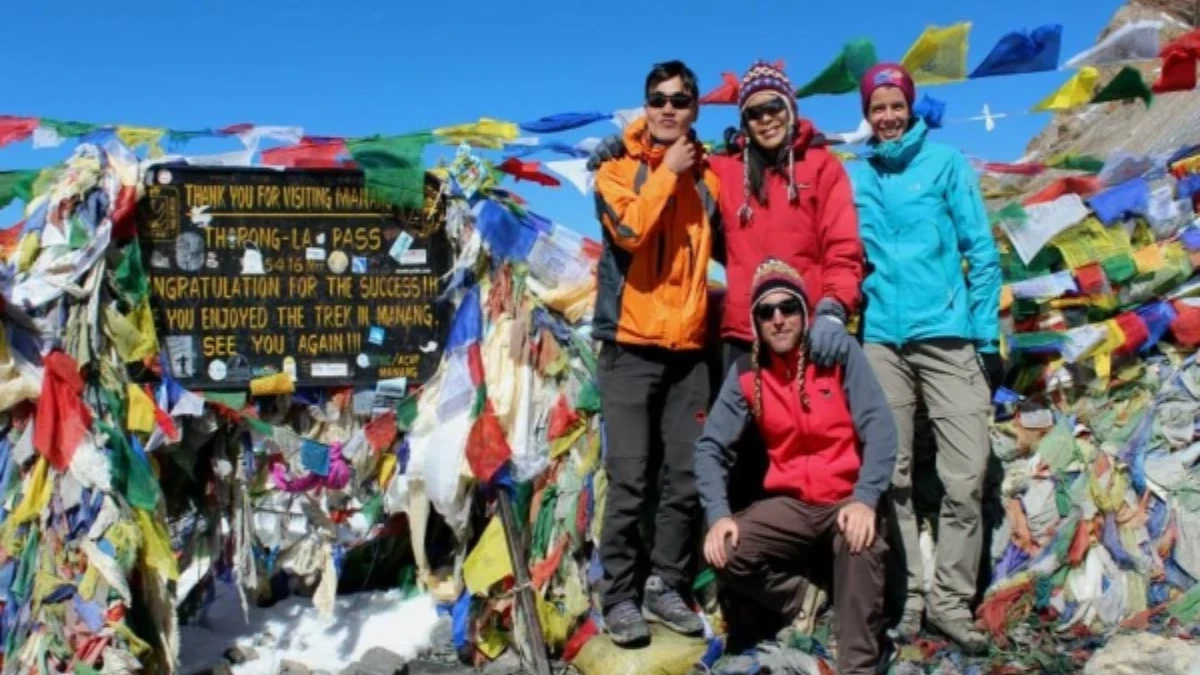
The Annapurna Circuit during monsoon, June through September, is a fundamentally different proposition from the Circuit in October or April. The eastern approach, from Besisahar to Manang, receives heavy rainfall that turns trails to rivers and hillsides to mud. The lower sections, below two thousand metres, become leech territory. Landslides block the road and occasionally the trail. Visibility drops to metres on bad days. And Thorong La, the 5,416-metre pass that is the crux of the trek, can receive snowfall that makes crossing dangerous or impossible.
These are not minor inconveniences. They are genuine hazards that make the standard Circuit inadvisable for most trekkers between June and August.
Can You Trek Upper Mustang During Monsoon?
The Annapurna Circuit ends, or connects, with the entrance to Upper Mustang at Kagbeni. And Upper Mustang sits in a rain shadow behind the Annapurna and Dhaulagiri ranges. While the eastern side of the Circuit drowns in monsoon rain, Mustang basks in dry warmth.
This creates a specific opportunity: trekkers who want to visit Upper Mustang during its best season (June-September) can combine a monsoon-friendly approach with the restricted kingdom. Jomsom sits above the monsoon zone, and our Upper Mustang trek goes in by road as standard, with Kathmandu to Pokhara and Pokhara to Jomsom flights, both ways, on request. Either way you skip the Circuit's eastern section entirely.
Upper Mustang in monsoon is genuinely exceptional, warm days, clear skies, empty trails, and a landscape at its most vivid. It is not the Annapurna Circuit. But it uses the same gateway and offers a monsoon alternative that is arguably better than the Circuit at any time of year.
Is September a Good Month for the Annapurna Circuit?
Late September is when the monsoon weakens. The rains reduce. The skies begin to clear. The landscape is at its greenest and most dramatic, waterfalls are thundering, the rice paddies are luminous green, and the first clear views of the peaks emerge through breaking cloud.
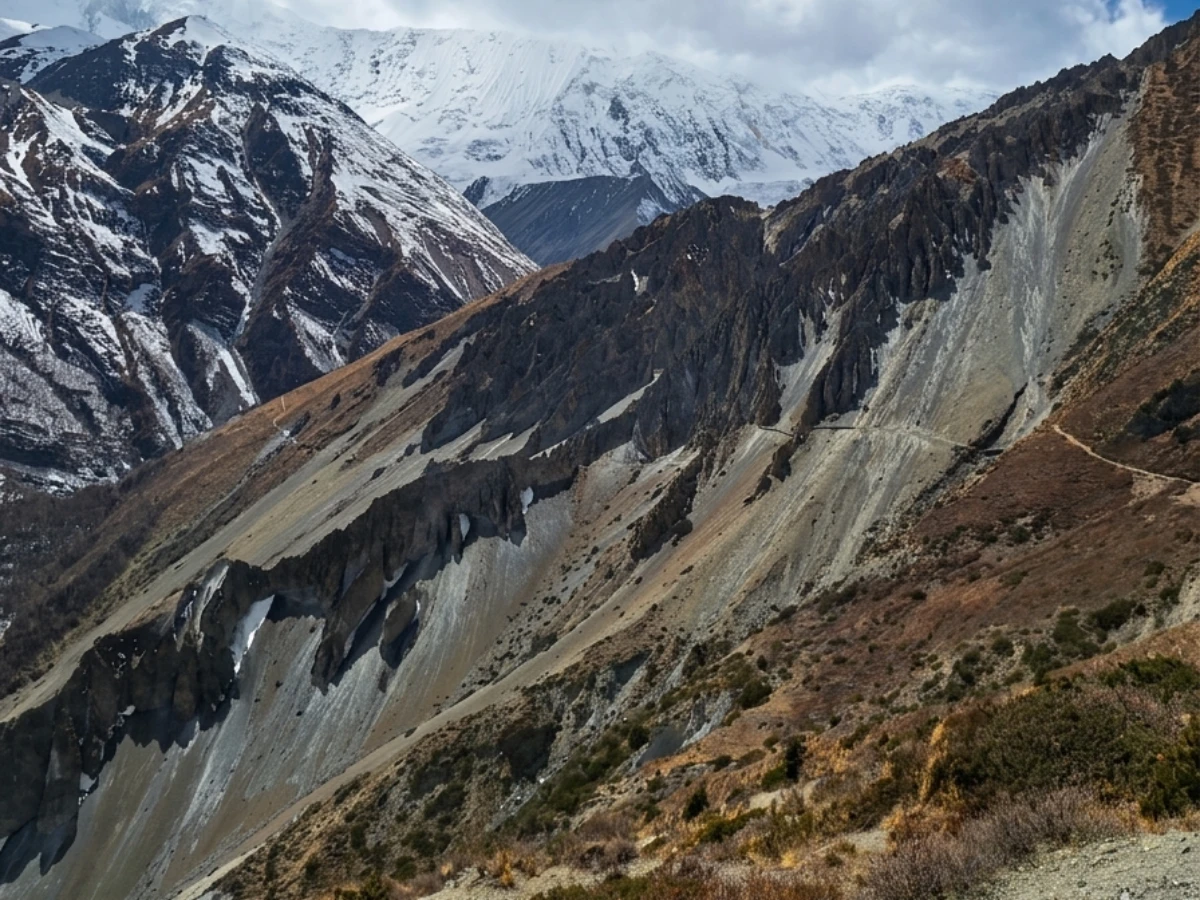
Trekking the Annapurna Circuit in late September is a calculated gamble. Some years the monsoon ends early and the last week of September offers excellent conditions with few trekkers. Other years the rain persists into October and the experience is wet, muddy, and frustrating.
If you gamble on late September and win, you get the Circuit at its quietest with post-monsoon freshness. If you gamble and lose, you get leeches and cloud. The mountains have no obligation to cooperate with your schedule.
What Monsoon Actually Looks Like on the Trail
Rain falls primarily in the afternoon and evening. Mornings are often clear or partially clear. This means early starts, walking from six or seven in the morning, can yield several hours of dry trail before the afternoon clouds arrive.
The rain is heavy. Not London drizzle. Tropical downpour that fills valleys with sound and turns every surface into a waterfall. A good waterproof jacket and overtrousers are essential, not advisory. A pack cover is essential. Dry bags inside your duffel are essential. Everything that can get wet will get wet unless proactively protected.
Leeches appear below 2,500 metres in the wet vegetation. They are harmless, they attach, feed, and drop off, but they are psychologically distressing for most people. Long socks pulled over trouser legs and tucked tight prevent attachment. Salt or a flame detaches them if they get through.
Trail conditions deteriorate. Sections that are dry and stable in October become muddy and slippery in July. Small stream crossings become challenging river crossings. Landslides close sections of trail and sometimes the road. Your itinerary may need to flex, a good guide adapts in real time to conditions that monsoon makes unpredictable.
Is Thorong La Pass Safe During Monsoon?
The pass at 5,416 metres can receive snowfall during monsoon, particularly in June and September when the monsoon's edges interact with altitude. Fresh snow on the approach trail makes the footing treacherous. Reduced visibility on the pass itself, which is exposed, windswept, and featureless, creates navigation risk. And wet cold at 5,400 metres is dramatically more dangerous than dry cold at the same altitude.
Crossing Thorong La in monsoon is not impossible. It is done by experienced trekkers and guides who monitor conditions carefully and wait for weather windows. But it is significantly riskier than crossing in October or April, and the risk is the type that cannot be managed by willpower alone, it requires the weather to cooperate, which in monsoon it often does not.
Should You Trek the Annapurna Circuit in Monsoon?
If you must trek in monsoon and you want the Annapurna region, go to Upper Mustang. It is the right trek in the right season in the right place. If you specifically want the Circuit, the eastern approach, the Manang valley, Thorong La, wait for October or March. The experience in good weather is so dramatically superior to the experience in monsoon that the wait is worth it.
The Circuit is a great trek. Monsoon is a great season for certain places. But the Circuit in monsoon is a compromised version of both, and Nepal offers better options for the trekker willing to adjust their destination to the season rather than forcing the season onto their destination.
What Gear Do You Need for a Monsoon Trek?
Monsoon trekking demands gear that most trekkers never bother with in October. A hardshell waterproof jacket rated at 20,000 mm hydrostatic head minimum. Not a softshell. Not a poncho. A proper mountaineering rain jacket that can handle hours of sustained downpour. Gore-Tex or equivalent membranes are worth the money here.
Waterproof overtrousers are not optional. Your legs will be soaked within thirty minutes without them, and wet legs at 4,000 metres mean hypothermia risk that dry-season trekkers never encounter. A full pack cover plus dry bags inside your duffel protect everything you cannot afford to get wet: sleeping bag, down layers, electronics, and documents.
Gaiters keep leeches and mud out of your boots. Quick-dry hiking trousers, not cotton jeans, dry overnight in a teahouse. Two pairs of socks per day is realistic in monsoon. Bring leech socks or tuck your trousers into your socks with rubber bands at the ankles below 2,500 metres.
A headlamp is essential because monsoon afternoons get dark early under heavy cloud, and you may be walking the last hour in near-darkness. Waterproof bags for your phone and camera prevent the kind of water damage that ruins an entire trip of photographs.
Which Monsoon Month Is the Worst for the Annapurna Circuit?
July and August are the peak monsoon months and the worst for trekking the full Circuit. Rainfall in the Marsyangdi valley can exceed 400 millimetres per month. The Thorong La is most likely to be blocked by snow or poor visibility during these months. Landslide risk on the road sections between Besisahar and Chame peaks in late July.
June is the monsoon onset. Rain builds gradually through the month. Early June can still offer reasonable windows, particularly in the upper Manang valley above 3,500 metres where rainfall is lighter. By mid-June, full monsoon conditions are established.
September is the monsoon retreat. The first two weeks are still wet, but from the third week onwards, conditions improve noticeably. Late September is the transition window that experienced trekkers target, accepting the gamble for empty trails and post-rain clarity.
If monsoon is your only option and you want the Annapurna region, trek Upper Mustang, which goes in by road as standard with Kathmandu to Pokhara and Pokhara to Jomsom flights on request, or the dry side of the Circuit from Manang westward. The rain shadow behind the Annapurna massif keeps these areas remarkably dry even in July.
See our Annapurna Circuit Trek page for monsoon departure availability.
Yes, you can trek the Annapurna Circuit in monsoon. Should you? Probably not, unless you specifically want leeches, landslide diversions, and views hidden behind rain clouds. But if July or August is your only option, the rain shadow areas around Manang and Upper Mustang stay relatively dry. The Thorong La crossing is still possible. Just go with realistic expectations and a good rain jacket.
We can advise on monsoon trekking options. Some routes work better than others in the rain.
WhatsApp:+977 9810351300
Email:[email protected]
Written by Shreejan Simkhada, CEO of The Everest Holiday and third-generation Himalayan guide. TAAN Member #1586.
AC in monsoon (Jul-Sep): quieter but wet. Our Annapurna Circuit Trek (12 Days) is private (your group only, no strangers), 2027 dates open, From USD $1,175. WhatsApp us for tailored 2027 dates and current departures.


 Chat with Shreejan