
Booking your Nepal trek direct from Singapore
If you are in Singapore planning Everest Base Camp, Annapurna or Langtang, a lot of what you find online is sold by agencies that do not run the trek themselves. They take your booking and pass it to a Nepali operator on the ground, then add their own margin on top. We are that operator. Book with The Everest Holiday and you deal with the family company that actually runs your trek in Kathmandu, with our own guides, the same trails and the same lodges, and no reseller in the middle.
One thing worth knowing up front: we set and charge every price in US dollars. The Singapore-dollar figures on this page are only to give you a feel for the cost. Your bank converts at its own rate on the day, so the exact amount in Singapore dollars will move a little. At the end of September 2026, roughly 1.28 Singapore dollars buys 1 US dollar, and 1 Singapore dollar is worth about 119 Nepali rupees.
Our trek prices from Singapore
| Trek | Budget | Standard | Luxury |
|---|---|---|---|
| Everest Base Camp, 12 days | USD 1,399 (~S$1,790) | USD 2,499 (~S$3,200) | USD 4,999 (~S$6,400) |
| Annapurna Base Camp, 9 days | USD 499 (~S$640) | USD 799 (~S$1,020) | USD 1,400 (~S$1,790) |
| Ghorepani Poon Hill, 6 days | USD 499 (~S$640) | USD 749 (~S$960) | USD 1,235 (~S$1,580) |
| Langtang Valley, 8 days | USD 365 (~S$470) | USD 650 (~S$830) | USD 1,000 (~S$1,280) |
| Manaslu Circuit, 12 days | USD 799 (~S$1,020) | USD 1,599 (~S$2,050) | USD 2,099 (~S$2,690) |
| Mardi Himal, 7 days | USD 454 (~S$580) | USD 849 (~S$1,090) | USD 1,111 (~S$1,420) |
The three tiers are a real choice, not a sales trick. Budget means shared teahouse rooms and you carry your own bag; meals are not included on the trail. Standard adds private rooms, all your trail meals and a porter shared between two trekkers. Luxury gives you private deluxe rooms, all meals, a dedicated porter to yourself and the Kathmandu–Lukla helicopter both ways on Everest. Every tier includes your permits, a licensed guide, and the shared tourist transport to and from the trailhead. We also give every trekker a down jacket, a warm sleeping bag and a duffel to use free of charge, so you do not need to buy expensive cold-weather kit in Singapore. Kathmandu hotel nights are quoted separately from the trek.
How you pay
A 10 percent deposit confirms your dates and you pay the balance in Kathmandu. Card payments carry a 3.5 percent processing fee; paying the balance in cash in Kathmandu has no fee. The deposit is non-refundable, and we do not refund the trek cost if you cancel, but if your plans change we will reschedule you free to any date within a year, as long as you give us at least 72 hours' notice (7 days for restricted-area treks like Manaslu). If we ever have to cancel a trip ourselves, we refund what you have paid, less taxes, bank and card charges, and anything already spent on your behalf such as permits and flights.
Getting to Kathmandu from Singapore
Singapore is one of the few cities in the world with a non-stop flight to Kathmandu. Singapore Airlines flies Changi to Tribhuvan International direct, a hop of about 5 hours, which is a genuine advantage over most of the region. If you would rather connect, there are frequent and often cheaper one-stop options too.
| Route | Airlines | Total travel time |
|---|---|---|
| Singapore → Kathmandu (non-stop) | Singapore Airlines | About 5 hours |
| Singapore → Bangkok → Kathmandu | Scoot / Thai AirAsia / Nepal Airlines | 7–9 hours with the layover |
| Singapore → Kuala Lumpur → Kathmandu | AirAsia / Malaysia Airlines / Nepal Airlines | 7–10 hours with the layover |
| Singapore → Delhi → Kathmandu | IndiGo / Air India / Scoot | 8–11 hours with the layover |
The non-stop is the easiest by far. If you fly it, your bags are checked straight through and there is nothing to sort out in transit. If you piece together two separate budget tickets through Bangkok or Kuala Lumpur, your luggage is usually not checked through, so collect it and re-check it at the connecting airport, and leave yourself at least three hours between flights. Book two to three months ahead for the best fares in October and November.
Visa and entry for Singapore passport holders
Singapore citizens get a visa on arrival at Tribhuvan International Airport in Kathmandu. There is nothing to apply for in advance.
| Duration | Fee |
|---|---|
| 15 days | USD 30 |
| 30 days | USD 50 |
| 90 days | USD 125 |
Bring a passport with at least six months' validity, one passport photo, and the fee in US dollars. You can fill in the arrival details in advance at the online immigration portal to speed up the queue, which is worth doing in the October to November peak. The process usually takes 15 to 30 minutes.
From MacRitchie to the Himalayas
Singaporeans take the outdoors seriously. If you have walked the MacRitchie TreeTop Walk, climbed Bukit Timah Hill (Singapore's highest point at 163 metres), done the Southern Ridges or the Coast-to-Coast Trail, you already have a real base to build on. And Singapore has form on the highest mountain of all: on 25 May 1998, Edwin Siew and Khoo Swee Chiow reached the summit of Everest, the first Singaporeans to stand on top of the world. You are not starting from nothing.
The one thing your home hikes cannot give you is altitude. MacRitchie is at sea level; Everest Base Camp sits at 5,364 metres. But the fitness you build in Singapore's heat and humidity carries over well, and tropical trekkers often perform better at altitude than they expect.
How to prepare in Singapore
- Stair training: HDB stairwells are your best friend. Climb 20 to 30 floors a day for 8 to 12 weeks before you leave. That builds the legs for 5 to 7 hour trekking days.
- Cardio: jog at MacRitchie or East Coast Park three or four times a week. Swimming builds good lung capacity too.
- Weekend hikes: Bukit Timah, the Rail Corridor and the Coast-to-Coast Trail are ideal. Wear the boots you will trek in so they are broken in before Nepal.
- Hike with others: Singapore has active trekking groups on Facebook and Meetup that run regular training walks.
Heat to cold: what to expect for a tropical body
This is the biggest adjustment for a Singaporean trekker. You are going from a steady 28 to 33 degrees to nights that can drop below minus 10 at high altitude. Your body has spent years set for the tropics, so it needs time and the right kit, not toughness, to handle the cold.
| Location | Altitude | Daytime | Night |
|---|---|---|---|
| Kathmandu | 1,400 m | 20 to 30°C | 10 to 20°C |
| Namche Bazaar | 3,440 m | 5 to 15°C | -5 to 5°C |
| Dingboche | 4,410 m | 0 to 10°C | -10 to -2°C |
| Everest Base Camp | 5,364 m | -5 to 5°C | -15 to -8°C |
Forget dressing for Singapore. In Nepal you use three layers: a moisture-wicking base, an insulating mid-layer, and a waterproof shell. You do not need to buy any of the heavy cold-weather items, though. We give you a down jacket, a warm sleeping bag and a duffel to use free of charge, so your money stays in your pocket. A useful trick in the weeks before you fly is to start taking cold showers and ease off the air-con at home, so the cold is less of a shock.
Altitude matters more than cold. Our itineraries build in proper acclimatisation days at Namche Bazaar and Dingboche, and we follow the simple rule of walking high and sleeping low. Drink 3 to 4 litres of water a day, skip alcohol above 3,000 metres, and let your guide set the pace. Our guides carry a pulse oximeter and check your oxygen twice a day above 3,000 metres.
Our most popular treks for Singaporean trekkers
Everest Base Camp trek, 12 days
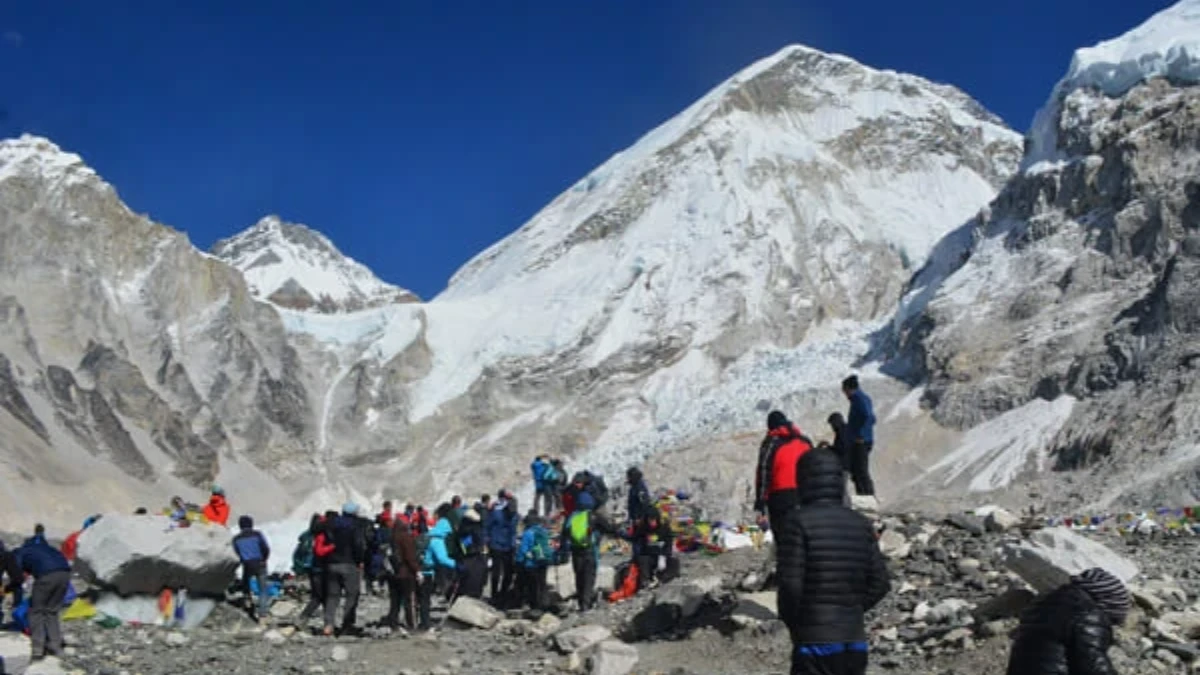
The one most people come for. You stand at 5,364 metres below the highest mountain on earth, walking up through Sherpa villages, over suspension bridges, and sleeping in teahouses with views no photo does justice to. Budget USD 1,399, Standard USD 2,499, Luxury USD 4,999 per person, with permits, guide, porter, transport, and meals on the Standard and Luxury tiers.
Annapurna Base Camp trek, 9 days
Rice terraces, bamboo forest and hot springs lead up to the amphitheatre of peaks around Annapurna I (8,091 metres). It is warmer and more varied than Everest, which makes it a kind choice for a tropical body meeting cold for the first time. Budget USD 499, Standard USD 799, Luxury USD 1,400 per person.
Ghorepani Poon Hill trek, 6 days
The best first Himalayan trek, and the one to pick if you only have a week of leave. Sunrise over Annapurna and Dhaulagiri from 3,210 metres, at a modest altitude that is gentle on a tropical body. Budget USD 499, Standard USD 749, Luxury USD 1,235 per person.
Langtang Valley trek, 8 days
The closest of the big treks to Kathmandu, with strong Tamang culture, village cheese, and views of Langtang Lirung (7,227 metres). Quieter than Annapurna or Everest, and deeply rewarding for it. Budget USD 365, Standard USD 650, Luxury USD 1,000 per person.
Manaslu Circuit trek, 12 days
The quieter alternative to the Annapurna Circuit. You cross the Larkya La at 5,160 metres through a restricted area that keeps trekker numbers low. Best for people with some trekking behind them who want solitude. Budget USD 799, Standard USD 1,599, Luxury USD 2,099 per person.
Mardi Himal trek, 7 days
One of Nepal's newer trails and a favourite for people on short leave. Quiet ridge walking with close views of Machhapuchhre, the Fishtail. Budget USD 454, Standard USD 849, Luxury USD 1,111 per person.
Best months to trek from Singapore
- October and November: the most reliable weather of the year, clear skies and stable temperatures. This is peak season, so book two to three months ahead. Ideal for Everest and Annapurna.
- March to May: spring, with rhododendrons in bloom and slightly warmer days that suit tropical trekkers. Good for Langtang, Poon Hill and Mardi Himal.
- December to February: cold but clear at lower elevations, with quiet trails. Good for Poon Hill and Mardi Himal, not for Everest or Manaslu unless you are ready for hard cold.
- June to early September: the monsoon. Best avoided for most treks, though Upper Mustang and Dolpo sit in the rain shadow and stay dry.
If you are working around Singapore leave, the Deepavali break in October or the year-end holidays in December pair well with annual leave for a 10 to 14 day trek. Poon Hill or Mardi Himal fit into a long weekend plus three or four days off.
What Singaporean trekkers ask about
Money on the trail
Nepal uses the Nepali rupee. The Singapore dollar goes a long way here, worth about 119 rupees. Change money at the airport or in Kathmandu, and carry cash for the trail, as there are no ATMs above Namche Bazaar on the Everest side or Chame in the Annapurna region. Budget the equivalent of S$15 to S$25 a day for snacks, drinks, charging and Wi-Fi.
Food
Dal bhat, which is rice, lentils, vegetables and pickle, is the staple on every trek, and most teahouses refill your plate for free. Nepal is one of the easiest countries anywhere for vegetarians: dal bhat is vegetarian by default, and fried rice, noodles, vegetable momos, chapati and Tibetan bread are everywhere. If you love Singapore's Indian food, the spices and warmth of Nepali cooking will feel familiar.
On halal needs, teahouses do not carry certification, but most trail food is naturally free of pork and alcohol: dal bhat, vegetable dishes, egg dishes, noodle soups and fried rice are all safe. If strict halal compliance matters to you, the vegetarian options are plentiful and are the safest choice. Tell us your dietary needs when you book and we will brief your guide.
Phone and internet
Your Singapore SIM will only work on expensive roaming. Buy an Ncell SIM with a data pack at the airport for a few dollars; Ncell has the best coverage on the trekking routes. Teahouses sell Wi-Fi by the session, but do not count on a reliable connection above 4,000 metres.
Travel insurance
Travel insurance that covers trekking and helicopter evacuation up to 6,000 metres for treks above about 4,500 metres such as Everest Base Camp (5,000 metres is enough for lower treks like Poon Hill or Annapurna Base Camp) and is required for every trekker, and we ask to see it before you leave. Singapore insurers with suitable adventure cover include NTUC Income, AXA, Allianz Travel and FWD; check the altitude limit and the helicopter clause on the policy. One firm rule: do not buy Nepal-issued insurance, as the helicopter operators and hospitals here do not accept it.
Permits
Every permit you need is included in the price and arranged by us: the national park or conservation area entry permit, the local trekking permit, and a restricted-area permit for Manaslu or Upper Mustang where it applies. You do not fill in any paperwork.
Altitude sickness
Altitude sickness can affect anyone, fit or not, and coming from sea level your body has no head start. That is not a problem, it just means respecting the schedule. Our guides carry a pulse oximeter and check your oxygen twice a day above 3,000 metres, we build in acclimatisation days, and if serious symptoms show we descend at once. No debate, no delay.
Do I need a guide?
A licensed guide is required in most trekking areas under the Nepal Tourism Board rule from April 2023, and the listed restricted routes such as Manaslu, Tsum, Upper Mustang and Nar Phu also need an agency-issued TIMS card. The Everest (Khumbu) region does not enforce it locally, but we always trek with a licensed guide. Ours are government-trained and licensed, and carry a first-aid kit and a pulse oximeter.
Can I trek on my own or do I have to join a group?
Both are on offer and it is your choice. We run a departure for even one trekker, privately, so it is just you, your guide and your porter. If you would rather share the trail and the cost, you can opt into one of our fixed group departures. What we never do is quietly merge two separate private bookings into one. Solo trekkers, couples, families and groups of friends are all welcome, from 1 person up to 20.
About The Everest Holiday
We are a family trekking company from Kathmandu, registered in 2016, with three generations of family guides behind us. Shreejan Simkhada and Shamjhana Basukala run it today with a team of 80-plus guides and staff.
- TAAN Member #1586, Nepal's trekking agency association.
- Government travel trade licence 2838/072.
- Over 300 reviews on TripAdvisor, Google and Trustpilot.
- A 10 percent deposit confirms your trek through our secure Himalayan Bank payment page, with the balance paid in Kathmandu.
Our charity, the Nagarjun Learning Center
A part of every booking supports the Nagarjun Learning Center, which our family started. It provides free education and hot meals to 70 children, and has helped build seven learning centres in rural Nepal that it still supports today. The centre is verified and listed on the UN Partner Portal. Your trek does a little good beyond your own memories of it.
Frequently asked questions
Do Singapore citizens need a visa for Nepal?
Yes, but it is simple. You get it on arrival at Kathmandu airport with no advance application. Bring your passport (six months' validity), one photo, and USD 30 for 15 days or USD 50 for 30 days. It takes 15 to 30 minutes.
How do I get from Singapore to Kathmandu?
Singapore Airlines flies non-stop, about 5 hours, which is the simplest option. There are also cheaper one-stop connections through Bangkok, Kuala Lumpur or Delhi.
Can I pay in Singapore dollars?
We set and charge every price in US dollars through our secure Himalayan Bank payment page, so the Singapore-dollar figures on this page are only a guide and your bank converts on the day. Card payments carry a 3.5 percent fee; the balance paid in cash in Kathmandu has none.
How fit do I need to be?
You should be able to walk 5 to 7 hours a day on hilly ground. If you can do the MacRitchie to Bukit Timah loop without stopping, you have a good base. Start training 8 to 12 weeks out with stairs, jogging and weekend hikes. No mountaineering skills are needed for the standard treks, and we have routes for every level, from Poon Hill to Manaslu.
I am used to Singapore's heat. Will the cold be a problem?
It is a real shift but a manageable one. Nights at Everest Base Camp can reach minus 15, a big swing from a Singapore afternoon. The answer is proper layering and a good sleeping bag, which we provide. Most Singaporean trekkers tell us the cold is only uncomfortable at night; by day, walking keeps you warm.
Are there halal options on the trail?
Teahouses are not certified, but most trail food is naturally free of pork and alcohol. Dal bhat, vegetable dishes, egg dishes, noodle soups and fried rice are all widely available. If strict compliance matters, the vegetarian options are your safest and are plentiful. Tell us at booking and we will brief your guide.
What is included in the price?
All permits, a licensed guide, a porter (one per two trekkers on Standard), accommodation on the trek, meals on the Standard and Luxury tiers, the shared tourist transport to and from the trailhead, and airport transfers. Your international flights, Nepal visa, travel insurance, Kathmandu hotel nights and personal spending are not included.
Plan your Nepal trek
Whether this is your first trek beyond MacRitchie or you have walked in Patagonia and the Dolomites, we will make Nepal personal, safe and worth remembering. The dates, the pace, the tier and the route are all your choice.
WhatsApp: +977 9810351300
Email: [email protected]
Website: theeverestholiday.com
Three generations. One family. Your Himalayas.
 Chat with Shreejan