
Helambu Trek Month by Month: When to Go and What Each Season Is Like

Last updated 7 October 2026.
Helambu is a low, short trek close to Kathmandu, and it works in most months. October and November are the most reliable, March and April are the second-best window because of the rhododendrons, December to February is cold but quiet, and the monsoon months are the ones to skip.
Our Helambu Trek, 6 Days from Kathmandu runs from Sundarijal to Melamchi Pul Bazar with no flights, so you can fit it around a short stay. Below is what each month is like, and what to expect on the trail.
When is the best time to do the Helambu trek?
The best months are October, November, March and April. In October and November the air is clear and the weather settles after the monsoon, which is when you are most likely to see the Langtang range from Tharepati. In March and April the rhododendron forests flower between Chisapani and Tharepati, in crimson, pink, white and magenta.
December to February is cold at night but often clear, and the trail is very quiet. May is warmer and hazier. June to mid-September is monsoon, and I would leave it alone.
What is Helambu like month by month?
| Month | What to expect | My view |
|---|---|---|
| January | Cold nights, often clear days, very few trekkers. Snow is possible on the high ridge near Magen Goth and Tharepati. | Good if you like quiet and carry warm layers |
| February | Still cold at night, often clear, still quiet. | Good, same advice as January |
| March | Days get warmer and the rhododendrons begin to flower on the forest slopes. | Very good |
| April | Rhododendron bloom, the best reason to choose Helambu. | Very good |
| May | Warmer and hazier as the heat builds before the monsoon. | Fair, views are less reliable |
| June | The monsoon arrives. Trails are wet and cloud sits on the ridge. | Skip |
| July | Green and wet, slippery trails, little view. Leeches are common in wet forest. | Skip |
| August | Green and wet, slippery trails, little view. | Skip |
| September | The monsoon tails off, but showers can still come, especially early in the month. | Possible late in the month, check with us |
| October | Clear air and settled weather after the monsoon. | Best |
| November | Clear and dry, with colder nights as the month goes on. | Best |
| December | Cold at night, often clear, quiet. | Good with warm layers |
I cannot promise a view on any date. Clouds can come in even in the best months, so treat the mountains as a bonus.
What is October and November like?
These are the months I would book first. The air is clear and the weather is settled after the monsoon. On the morning you cross Tharepati you should see the Langtang range on a clear day. Nights are cool at the lodges and get colder in November, so pack a warm layer for the evenings.
If you have fixed dates, book early so we can plan the road transfers and lodges around them.
What is March and April like?
This is the spring window. Between Chisapani and Tharepati the trail runs through some of the best rhododendron forest near Kathmandu, with trees that grow to about fifteen metres. In March and April they flower in crimson, pink, white and magenta, and the forest is full of birdsong. Views can be softer than in autumn, so I choose these months for the flowers more than for the peaks.
Can you trek Helambu in winter?
Yes. December to February is cold at night but often clear, and you will meet very few other trekkers. The high point of the trek, Tharepati at about 3,650 m, is crossed by day, so you never sleep there. Even so, the nights at Magen Goth, at about 3,300 m, are cold, and snow is possible on the ridge. Bring a warm sleeping layer and good gloves. Ask us before you book a winter date, and we will tell you plainly what to expect.
If you are comparing Helambu with a longer winter route, our notes on the Helambu region cover how it fits with the wider Langtang area.
Should you go in the monsoon?
I would not. From June to mid-September the trails are slippery, cloud covers the ridge and the forest is wet. Leeches are common in wet forest. You miss the views that make the trek worth doing. If your only free dates fall in these months, tell us and we will suggest something else.
What does the 6-day route look like?
| Day | Route | Sleeps |
|---|---|---|
| 1 | Drive to Sundarijal, walk 3 to 4 hours to Chisapani | Chisapani, about 2,200 m |
| 2 | Chisapani to Kutumsang, 6 to 7 hours | Kutumsang, 2,470 m |
| 3 | Kutumsang to Magen Goth, a shorter day | Magen Goth, about 3,300 m |
| 4 | Over Tharepati to Melamchigaon, the longest day | Melamchigaon, about 2,550 m |
| 5 | Melamchigaon to Tarkeghyang, 4 to 5 hours | Tarkeghyang, 2,600 m |
| 6 | Down through Sermathang to Melamchi Pul Bazar, then a vehicle to Kathmandu (2 to 4 hours) | Back in Kathmandu |
The route starts at the edge of Shivapuri Nagarjun National Park, climbs through forest to the ridge at Chisapani and Kutumsang, then crosses Tharepati into the Hyolmo villages. The Hyolmo are a Buddhist people of this region, and Tarkeghyang has a monastery and a long tradition of home stays. Read more in our guides to Sundarijal, Tarkeghyang, the Hyolmo community and Melamchi Pul Bazar.
What about altitude?
Day 3 is the one to respect. You sleep at about 3,300 m at Magen Goth, about 800 m higher than Kutumsang, and it is the first night above 3,000 m. Walk slowly, drink plenty of water and tell your guide at once if you get a headache or feel unwell. The next day you cross Tharepati at about 3,650 m and then sleep lower, in Melamchigaon.
What is included and how do you book?
The package includes a licensed guide, the Langtang National Park permit, the Shivapuri Nagarjun National Park fee, the TIMS card, a private vehicle at both ends and a first aid kit with a pulse oximeter. Standard has one porter for every two trekkers, all meals and private rooms where the lodge has one. A solo Standard trekker has no porter, and the guide carries up to 10 kg. Luxury has a dedicated porter for each trekker and all meals plus fruit and nuts. Budget has no porter, and trek meals are not included. Kathmandu hotels are not included on any tier, so we quote them separately. Buy your insurance at home, covering trekking to 5,000 m including helicopter rescue.
The road at either end can be affected by heavy rain. We check 48 hours before departure, and if it is not open we move your dates free.
Group size is 2 to 20, and you can also travel solo. The deposit is 10 per cent and it is non-refundable, with no refund if you cancel. You can reschedule free of charge with at least 72 hours notice, to any date within one year. The balance is paid on arrival in Kathmandu in USD or EUR, cash or by card. Card carries 3.5 per cent and cash in Kathmandu none. We do not take Nepali rupees from foreign clients.
Questions people ask
Is Helambu good for beginners? It is a good first trek, but day 4 is long and day 3 sleeps above 3,000 m, so you need some stamina.
Can I do Helambu in December? Yes. It is cold at night but often clear and very quiet.
Is there snow on the trail? In winter, snow is possible near Magen Goth and Tharepati. In spring and autumn it is less likely, but I cannot promise it.
Do I need a flight? No. A vehicle takes you from Kathmandu to Sundarijal and brings you back from Melamchi Pul Bazar.
Written by Shreejan Simkhada, CEO of The Everest Holiday, from a family of three generations of family guides. TAAN Member #1586. WhatsApp +977 9810351300.
Planning a trip to Nepal?
Drop us your details and tell us what you have in mind. We will put together a personalised plan and get back to you.
Not sure which Nepal trek is right for you?
Take our free 2-minute quiz and get personalised recommendations based on your fitness, experience, and travel style.
Find Your Perfect Trek →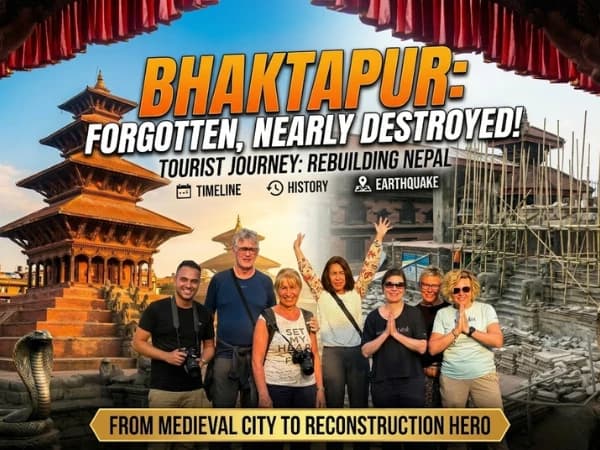
Bhaktapur Day Trip from Kathmandu: Durbar Square, Potters' Square and Changunarayan
Bhaktapur is an old Newar city east of Kathmandu that makes an easy one-day trip. Durbar Square, Nyatapola, the potters' square and Changunarayan, with the order of the day and what to wear.
Read More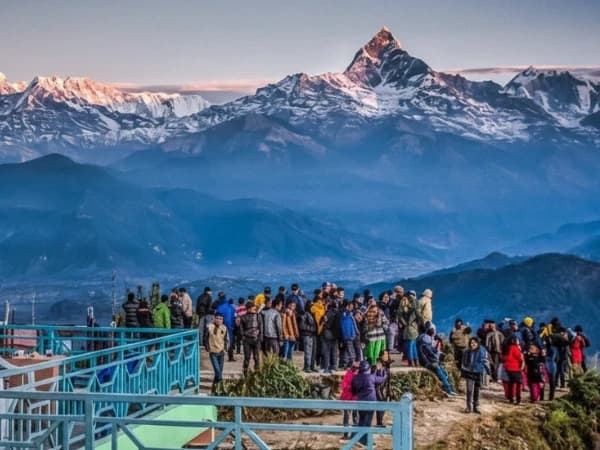
Sarangkot Sunrise or Poon Hill Sunrise: Which One Is Worth the Early Start?
Choose Sarangkot if you have one free morning in Pokhara and Poon Hill if you want to walk to your view. A plain comparison of height, effort, what you see, months and cloudy mornings.
Read More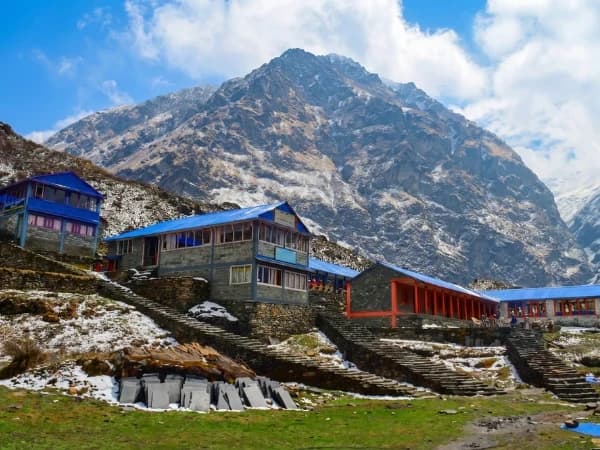
Annapurna Base Camp in 5, 7 or 9 Days: Which Itinerary Should You Choose?
Which Annapurna Base Camp itinerary should you choose: 5, 7 or 9 days? A side-by-side comparison, what each day looks like, how altitude compares and who each one suits.
Read More Chat with Shreejan