Everest Base Camp Trek Cost From Japan: The Real All-In Numbers in Yen for 2027

Last updated 7 October 2026. The flights below were checked on 7 October 2026 and include both Tokyo airports (Haneda and Narita). Yen figures use the European Central Bank reference rate of 6 October 2026, US$1 = JPY 158.1, which shifts daily. We take payment in US dollars or euros.
Tokyo to Kathmandu is a long trip with a change somewhere, and nothing in my search flew it direct. The best fare was JPY 173,080. The trek is a bigger price tag than the ticket for most Japanese travellers, so I will give both and then add them up.
The 12-day Base Camp trek, for parties of one to four, costs each person US$1,399 on Budget (around JPY 221,000), US$2,499 on Standard (around JPY 395,000) and US$4,999 on Luxury (around JPY 790,000). Nothing changes for 2027. With a Tokyo return, the visa, insurance and tips, one traveller can expect roughly JPY 486,000 to JPY 626,000 on Budget, JPY 633,000 to JPY 755,000 on Standard travelling alone and JPY 1,047,000 to JPY 1,178,000 on Luxury.
What Haneda and Narita offered
Search used: economy class, one adult and one checked bag, outbound Sunday 25 October 2026, return Wednesday 11 November, with at most one change per direction and no self-transfers. There were 15 itineraries from JPY 173,080 to JPY 254,545.
The cheapest two were Air India from Haneda through Delhi (10:30 out, in Kathmandu at 20:40, about 13 hours 25 minutes) at JPY 173,080, and Batik Air Malaysia from Narita through Kuala Lumpur (10:25 out, in Kathmandu at 20:35, also about 13 hours 25 minutes) at JPY 174,128. Both came home on China Southern through Guangzhou: the 23:30 departure from Kathmandu reaches Haneda at 20:00 the next evening, about 17 hours 15 minutes.
A quicker way home on China Southern (Guangzhou to Haneda at 08:50, arriving 13:35) saved about 6 hours 25 minutes and raised the fare by about JPY 3,400, to JPY 176,455. Through Delhi on Air India the journey back runs about 11 hours 50 minutes to 16 hours 40 minutes, from JPY 190,435. Thai Airways home through Bangkok (leaving at 00:25) was JPY 197,184. Cathay Pacific via Hong Kong, with a night there on the way out, started at JPY 196,942, and SriLankan through Colombo started at JPY 251,169.
The full cost for one person, in yen
Each row is for one person. In the flight column you see the lowest and highest result above, and the next column adds up the visa for 30 days, insurance, tips and trail meals (Budget) or pocket money (Standard and Luxury). Hotels in Kathmandu are priced separately. Staying in our family homestay costs US$15 per person per night, about JPY 2,400.
| Tier | Trek | Tokyo return | Visa, insurance, tips, extras | Likely total |
|---|---|---|---|---|
| Budget | JPY 221,000 | JPY 173,080 to JPY 254,545 | JPY 92,000 to JPY 150,000 | JPY 486,000 to JPY 626,000 |
| Standard, solo, no porter | JPY 395,000 | JPY 173,080 to JPY 254,545 | JPY 65,000 to JPY 105,000 | JPY 633,000 to JPY 755,000 |
| Luxury | JPY 790,000 | JPY 173,080 to JPY 254,545 | JPY 84,000 to JPY 134,000 | JPY 1,047,000 to JPY 1,178,000 |
On the Budget tier, meals come out of your pocket, about US$25 to US$40 daily, so US$300 to US$480 by the end. The other two tiers include them. Keep a small float for showers, device charging and snacks: US$130 to US$195, or 20,000 to 30,000 rupees. Withdraw it in Kathmandu, as machines on the trail are unreliable. At the end of the trek, a lead guide is tipped US$15 to US$20 per day and a porter US$10 to US$15.
Visa for a Japanese passport
Japanese citizens do not have to apply ahead. The fee is US$30 for 15 days, US$50 for 30 days (around JPY 7,900) or US$125 for 90 days, in dollars, multiple-entry. A photo and a passport valid for six months are what you carry; the online form can be done before you fly. More in the visa on arrival guide.
Insurance and Japan's public health system
Japan's public health insurance can repay part of the cost of treatment abroad if you claim afterwards, calculated on what the same treatment would cost in Japan. It does not pay for a helicopter or a flight home, so take a private policy as well, bought before you leave. Look at the altitude ceiling first: it should be 6,000 metres or higher, since Kala Patthar is 5,545 m and many holiday plans stop at 3,000 or 4,000 m. Then check for helicopter evacuation, a bill of US$3,000 to US$5,000 (about JPY 474,000 to JPY 790,000) when it is not covered. Last, make sure illness is covered and not only accidents. If you plan to rely on a credit card's automatic travel insurance, read what it says about trekking at altitude. Our helicopter cover to 6,000 m lists what to check.
What Japan's foreign ministry offers
The Ministry of Foreign Affairs runs the Overseas Safety website and the Tabi-Regi registration service for people travelling abroad, which sends alerts to your email. The Embassy of Japan in Nepal is at Panipokhari in Kathmandu (Narayan Gopal Sadak).
Standard, Budget or Luxury
Think of three steps up. Budget is the base: your pack is yours, rooms are shared, meals are bought by you and the plane to Lukla is fixed-wing. Standard adds every meal, a private room and one porter between two trekkers. Luxury adds a dedicated porter, deluxe private rooms with ensuite bathrooms, fruit, nuts, soft drinks without limit and the helicopter to and from Lukla. In all three you get a licensed guide, the permits (NPR 3,000, 3,000 and 2,000), airport pick-ups, and a borrowed down jacket and minus 15 sleeping bag. Alone on Standard, the guide carries up to 10 kg because there is no porter. No single supplement applies on Standard or Luxury, and Kathmandu hotels are extra. On Budget, a solo Everest Base Camp trekker pays US$2,275 instead of US$1,399. The route is on the 12-day trek page.
Is Fuji enough?
Mount Fuji, at 3,776 m, is a sensible test: it is a little above Namche Bazaar and well below the Everest Base Camp trail's highest night, Gorak Shep at 5,164 m. The trek is hard, with five to seven hours of walking on most days and two acclimatisation days among the 12. What helps most is long days with a loaded pack on consecutive weekends. Read how fit you need to be.
Group prices in yen
| Tier | 1 to 4 people | 5 to 8 people | 9 to 12 people | 13 to 20 people |
|---|---|---|---|---|
| Budget | JPY 221,000 | JPY 205,000 | JPY 190,000 | JPY 158,000 |
| Standard | JPY 395,000 | JPY 387,000 | JPY 379,000 | JPY 371,000 |
| Luxury | JPY 790,000 | JPY 782,000 | JPY 774,000 | JPY 767,000 |
Private trip or group trip, the per-person price is the same. Group size sets the band.
Fitting it into a Japanese calendar
Nepal is 3 hours 15 minutes behind Japan all year. Under the Labour Standards Act, an employee gets 10 days of paid leave after six months, rising to 20 days with long service. The 12 days on the mountain, travel and a spare day add up to about two weeks, which makes Golden Week the obvious window. In 2027, 29 April (Thursday) and 3 to 5 May are holidays, so 29 April to 5 May is a single stretch if you take 30 April off. Two Nepali festivals affect autumn plans, Dashain (17 to 23 October 2026) and Tihar (8 to 12 November), because offices are shut and permits take 48 hours of government working days. In the peak weeks the small planes to Lukla fly out of Manthali. Getting there is a four to five hour drive from the capital, and you are collected at some point between midnight and 2 am. Luxury trekkers take the helicopter from Kathmandu, which skips this.
Paying from Japan
Booking takes a 10 per cent deposit. On arrival in Kathmandu you pay the balance, in dollars or euros, either in cash (no extra) or by card (3.5 per cent extra). We do not accept yen or rupees. If your plans change, we offer a free change of date, to any day within a year, with 72 hours' notice, or seven days for Tibet, Kailash and restricted-area routes. If you cancel instead, the deposit is not refunded, and nor is the rest of the trip. If the cancellation is ours, we return your payments after deducting taxes, bank and card charges and sums already laid out for permits and flights.
Checking who you are booking with
The Everest Holiday has been registered in Kathmandu since 2016, with three generations of my family guiding behind it. TAAN number 1586; over 300 travellers have reviewed us on TripAdvisor, Google and Trustpilot. Please check the registrar, TAAN, the tourism licence and the forex certificate for yourself. No licence guarantees honesty, since licensed operators have been caught in scams, so I suggest a video call before a deposit leaves your account. Part of each booking goes to the Nagarjun Learning Center.
For figures on your own dates, message me on WhatsApp +977 9810351300 / [email protected].
Next: cost guide, permits, weather by month.
Shreejan Simkhada, CEO of The Everest Holiday. TAAN 1586.
Planning a trip to Nepal?
Drop us your details and tell us what you have in mind. We will put together a personalised plan and get back to you.
Not sure which Nepal trek is right for you?
Take our free 2-minute quiz and get personalised recommendations based on your fitness, experience, and travel style.
Find Your Perfect Trek →
Kathmandu Yoga Tour in 2 Days: How It Runs and What It Costs (2027)
Two days of asana, breathwork, meditation and yoga philosophy in Kathmandu with a certified instructor: how it runs, what each tier includes and 2027 prices.
Read More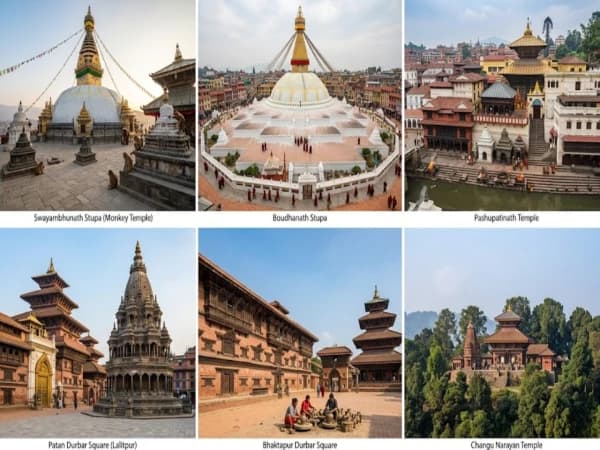
Swayambhunath and Kathmandu Durbar Square in One Day: How the Tour Runs and What It Costs (2027)
Swayambhunath in the morning, Kathmandu Durbar Square after lunch: how our private day tour runs, what each tier includes, the best months and 2027 prices.
Read More
Kakani: The Hill Above Kathmandu with Ganesh Himal and Langtang Views
Kakani is a cool hill village at about 2,030 m on the north-west rim of the Kathmandu Valley, with Ganesh Himal and Langtang views. Here is what it is like and how to visit.
Read More Chat with Shreejan