
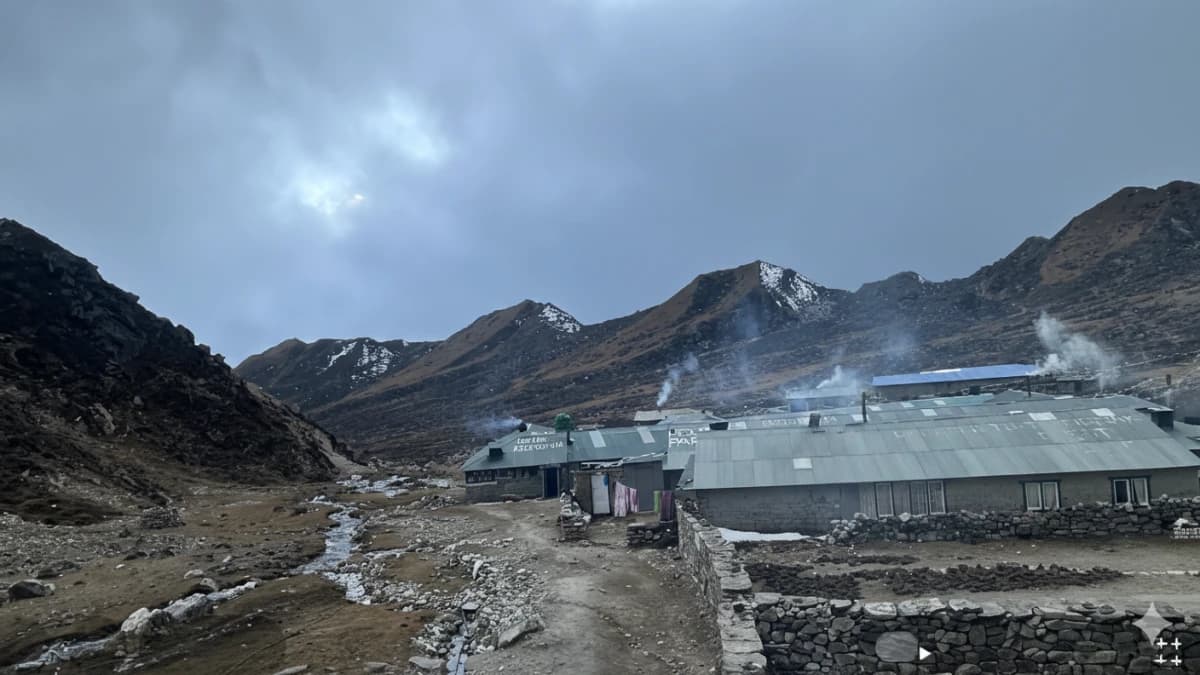
Thangnak, which is about 4,700 meters (15,420 feet) high, is a stark, useful, and temporary village. Its main goal is to be the most important starting point for crossing the Cho La Pass.
It's the last place to get some sleep before the hard journey from the Gokyo Valley to the Everest Base Camp trail, which is an important part of the Three Passes Trek.
History and Importance: A Shepherd's Stop to a Hiking Hub
Thangnak, Lungden, and Lobuche all started as summer grazing outposts (yersa). Its position at the foot of the Cho La and at the meeting point of valleys leading to the Ngozumpa Glacier made it a logical stopping point for people who move their yaks between pastures.
For many generations, it had only had a few stone animal pens and simple huts. Its current form was entirely created through hiking arrangements. In the 1990s and 2000s, the Cho La Pass path became a well-known way to travel from the Gokyo trails to the Everest trails. Because of this, a safe place to stay at this spot became necessary. Enterprising locals, often from Machchermo or Phortse, built the first simple cabins. They turned a summer campsite for hikers into a specialized mountaineering transit station. It's an old place, but not that old, and its economy is based on hikers who walk through.
The Trekking Experience
A Night at the Foot of the Gate Thangnak is not a place to go; it is a place to start. People are focused and mildly anxious in the setting.
How to Get There
People who hike from Gokyo to Thangnak go down, and those who walk from Dragnag, which is a small town on the other side of a glacier, also go down. The dramatic setting has no plants or trees and is bordered by tall cliffs and a steep, scary-looking slope covered in ice at the start of the Cho La climb.
The Ritual
A day in Thangnak follows a strict pattern of acclimatizing, preparing, and resting. Many people will go on a short hike up the nearby hills. Before the next morning, everyone will carefully pack their daypacks, making sure their lights are ready and their crampons or microspikes are easy to get to. They'll also make sure they have water and snacks ready for an early start. People mostly discuss past weather, ice rumors, and climbing tactics in the dining room.
Facilities
These are the most basic in the area, even more than those in Gokyo. A lodge is a basic stone box. The only heat is usually from a bukhari, or wood fire, in the dining room that is turned off at 8 PM. Solar screens make very little electricity, and it is mostly used for lights. The only high-calorie comfort foods on the menu are dal bhat, pasta, and garlic soup. It's not a place to relax; it's a place to warm up and get gas.
Lodging in Thangnak
There are only 3-4 lodges, all nearly identical in their stark functionality. Naming is informal, but you might find:
- Cho La View Lodge or Cho La Pass Lodge
- Thangnak Lodge
- Himalayan Guest House
- Yak Hotel
Important Advice
Don't expect to be able to choose or be comfortable. The cabins are there to give people a place to stay. A start before dawn (4–5 AM) is normal for the Cho La crossing. This is to make sure the ice is stable in the morning and to avoid the risk of clouds and storms in the afternoon.
On the icy glacier, walk to the pass itself; crampons or microspikes are often required. Before you spend a night here, you have to properly acclimatize in Gokyo.
The Most Important Part of the Path
Thangnak is an example of the physical truth of trekking in the high Himalayas. There are only stones around, and that's where people go to calm down and get their things together. This is not due to its appearance but rather to the possibilities it offers.
The challenging, beautiful, and fulfilling trip via the Cho La Pass connects two iconic worlds: the turquoise lakes of Gokyo and the steely ambition of the Everest path. A night in Thangnak is part of a rigorous mountain trek. It's a short rest in the thin, chilly air before tackling a major challenge at a high altitude.