Phu Village is one of the most remote and culturally preserved villages in Nepal. Located at 4,080 meters (13,385 feet) in the restricted Nar Phu Valley, this high-altitude settlement offers a rare glimpse into traditional Tibetan Buddhist life. Far from busy trekking trails like the Annapurna Circuit, Phu Village remains isolated, peaceful, and deeply rooted in ancient Himalayan traditions.
For trekkers, reaching Phu Village feels like discovering a hidden Himalayan kingdom. After walking through narrow gorges, crossing suspension bridges, and passing dramatic rock formations, the valley suddenly opens to reveal stone houses clustered beneath towering cliffs. The experience is both powerful and unforgettable.
History and Cultural Significance of Phu Village
Phu Village has long been connected to Tibet through trade and culture. For centuries, it was part of ancient salt trading routes between the Tibetan plateau and lower Nepal. Local traders transported salt, wool, livestock, and herbs across high mountain passes, sustaining both economic and cultural exchange.
Because of its isolation, Phu preserved its Tibetan Buddhist heritage almost completely. The village is surrounded by mani walls carved with sacred mantras, prayer flags stretched across rooftops, and chortens marking spiritual boundaries. One of the most important religious landmarks is Tashi Lhakhang Monastery, believed to have been blessed by the renowned Buddhist master Karmapa Rinpoche.
Religion shapes daily life in Phu Village. Monks perform regular rituals, and villagers gather for prayers during important festivals. Losar, the Tibetan New Year, is celebrated with community gatherings, traditional ceremonies, and shared meals that strengthen social bonds.
Local Life in Phu Village
Life in Phu Village is shaped by altitude and climate. Farming is limited due to the short growing season, but residents cultivate barley, buckwheat, and potatoes during the warmer months. Yak and sheep herding play a crucial role in the local economy, providing milk, butter, wool, and meat.
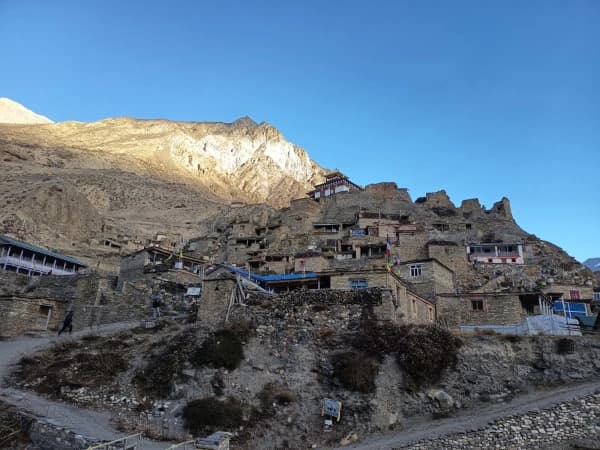
Traditional stone houses with flat roofs are built to withstand strong winds and freezing winters. Families live closely connected lives, relying on cooperation and shared labor to manage farming and livestock.
Despite the remote setting, hospitality is genuine and welcoming. Trekkers staying in local teahouses often share tea by the stove while listening to stories about mountain life and traditions passed down through generations.
Geography and Scenic Beauty of Phu Village
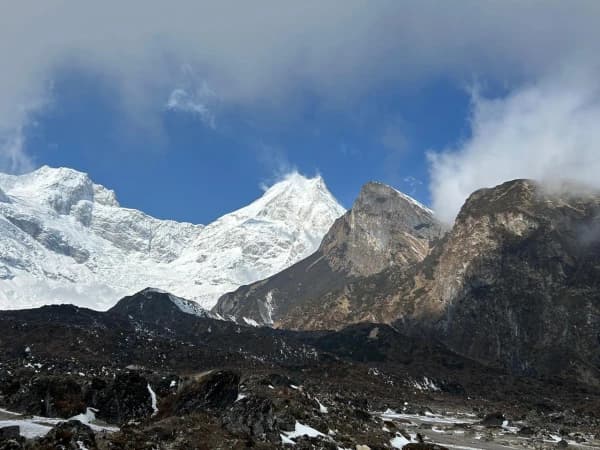
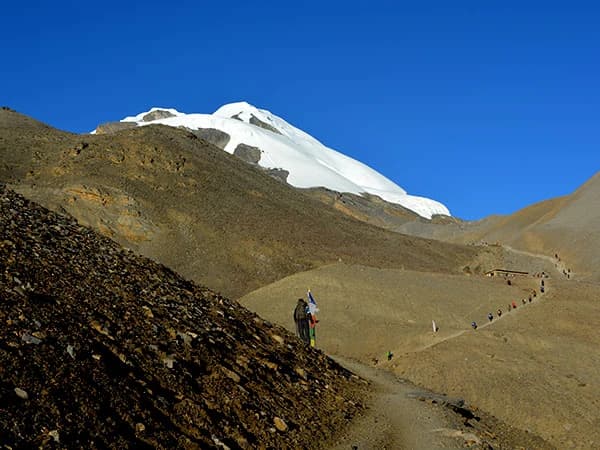
Phu Village is surrounded by dramatic Himalayan landscapes. The valley features steep cliffs, open high-altitude plains, and snow-capped peaks rising in the distance. The terrain is rugged and dry, giving it a Tibetan plateau appearance.
The Phu Khola river flows through the valley, adding movement and sound to the otherwise quiet environment. Sunrises and sunsets are particularly beautiful, with golden light illuminating stone homes and surrounding mountains.
The isolation of Phu Village enhances its beauty. With minimal modern development, the scenery feels raw and untouched.
Accommodation and Facilities in Phu Village
Accommodation in Phu Village is basic but comfortable for trekkers. Teahouses offer simple rooms with twin beds and blankets. Dining areas are shared and heated by a central stove.
Meals typically include dal bhat, noodles, soups, Tibetan bread, tsampa porridge, potatoes, and tea. Electricity is limited and usually solar-powered. Hot showers and internet access are not guaranteed.
Because Phu Village lies in a restricted and remote region, facilities are minimal. Trekkers should carry essential supplies and prepare for simple mountain living.
Best Time to Visit
Spring (March to May)
Spring is one of the best seasons to visit Phu Village. During this time, the weather is generally stable with clear skies and excellent mountain visibility. Daytime temperatures usually range between 8°C to 15°C, while nighttime temperatures can drop to around -5°C to 0°C.
Autumn (September to November)
Autumn is considered the peak trekking season in Phu Village. After the monsoon clears, the skies become bright and crystal clear, offering outstanding views of the Himalayan peaks. Daytime temperatures typically range from 10°C to 16°C, while nights can fall to -3°C to 2°C.
Winter (December to February)
Winter in Phu Village is harsh and extremely cold. Daytime temperatures often range between -5°C to 5°C, and nighttime temperatures can drop below -15°C.Snowfall is common, and high passes may become blocked.
Monsoon (June to August)
Phu Village lies in a rain-shadow area, so it receives less rainfall compared to southern Nepal. However, the approach trails can still be muddy and slippery due to monsoon conditions. Daytime temperatures usually range from 12°C to 18°C, with nighttime temperatures around 5°C to 10°C.
How to Reach Phu Village
Phu Village is accessed through the Nar Phu Valley Trek, which begins near Koto on the Annapurna Circuit route. Special restricted area permits are required to enter the valley.
The trek passes through Meta and other small settlements before gradually climbing to Phu. Many trekkers combine Phu Village with Nar Village and cross Kang La Pass to reconnect with the Annapurna region.
Proper acclimatization is important due to the high altitude. Most itineraries include a rest day in Phu Village before continuing.
Why Phu Village is a Unique Trekking Destination in Nepal
Phu Village stands out as one of the most authentic and culturally rich destinations in Nepal. Its preserved Tibetan heritage, ancient monasteries, and dramatic Himalayan landscapes create a trekking experience that feels meaningful and rare.
For travelers seeking a remote Himalayan adventure away from crowded trails, Phu Village offers solitude, tradition, and breathtaking scenery in one unforgettable journey.