High above the Budhi Gandaki Valley, far from roads, villages, and the noise of modern life, Gumba Lungdang stands quietly on a forested ridge beneath the towering peaks of the Manaslu range. This remote Buddhist monastery is one of the least visited yet most spiritually powerful places in the Manaslu region. For trekkers and pilgrims who make the effort to reach it, Gumba Lungdang offers not only breathtaking mountain views but also a rare sense of peace that is difficult to find elsewhere in the Himalayas.
Unlike well-known monasteries along popular trekking routes, Gumba Lungdang remains hidden from most travelers. Its isolation has preserved both its spiritual practices and its natural surroundings, making it a deeply meaningful destination for those seeking silence, reflection, and authentic Himalayan culture.
Location and Altitude of Gumba Lungdang
Gumba Lungdang is located in the upper Gorkha district, above the village of Bihi and near the boundary between the Manaslu and Tsum Valley regions. The monastery sits at an altitude of approximately 3,540 meters above sea level, perched on a ridge surrounded by dense alpine forest and high mountain pastures.
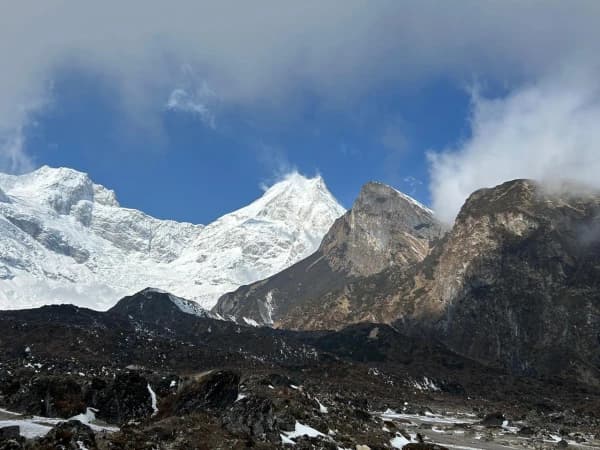
Reaching Gumba Lungdang requires a dedicated side trek from the main Manaslu Circuit route. The trail climbs steeply through forested slopes, crossing narrow paths and open grazing land. Because of its position high above the valley floor, the monastery offers wide panoramic views of Manaslu, Ganesh Himal, Shringi Himal, and surrounding peaks on clear days.
The journey itself plays an important role in the experience. The physical effort required to reach Gumba Lungdang creates a sense of transition, as trekkers leave behind the busy rhythm of the main trail and enter a quieter, more contemplative environment.
Historical and Spiritual Background
Gumba Lungdang is deeply connected to Tibetan Buddhist traditions that have shaped the Manaslu region for centuries. The monastery is believed to have been established as a meditation and retreat center rather than a large institutional monastery. Its purpose has always been spiritual practice, solitude, and the preservation of religious teachings.
Local belief holds that Guru Rinpoche (Padmasambhava) traveled through this region while spreading Vajrayana Buddhism in the Himalayas. As with other sacred sites in the Manaslu and Tsum Valley areas, Gumba Lungdang is regarded as part of a blessed landscape where spiritual energy is especially strong.
The monastery has also served as a seasonal retreat for monks and nuns from surrounding valleys. Its remote location makes it ideal for long periods of meditation, study, and prayer, particularly during warmer months when access is possible.
Life at Gumba Lungdang
Life at Gumba Lungdang follows a quiet and disciplined rhythm. Monks and nuns living here dedicate their time to prayer, meditation, study, and basic daily tasks required to sustain life at high altitude. Silence is an important part of daily practice, and visitors often notice how naturally their own pace slows upon arrival.
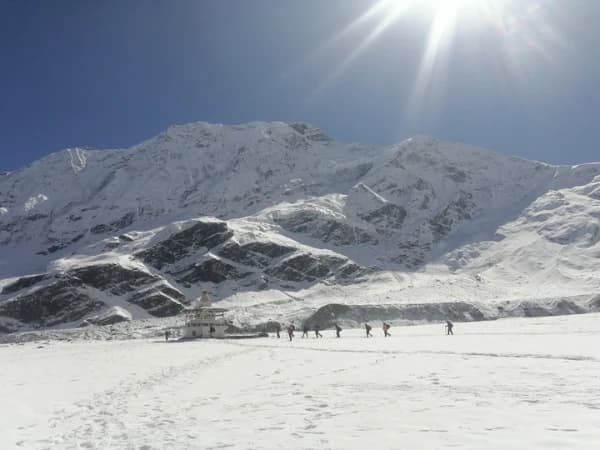
Facilities are extremely simple. Buildings are constructed from stone and wood, designed to withstand heavy snow and strong winds. There is no modern infrastructure beyond basic solar power when conditions allow. Water must be collected from nearby sources, and food supplies are carried up from lower villages.
Despite the physical challenges, the atmosphere at Gumba Lungdang is welcoming. Visitors who arrive with respect are often offered tea and invited to sit quietly in the prayer hall or courtyard. Interaction is gentle and unforced, allowing guests to observe rather than intrude.
Gumba Lungdang as a Side Trek from the Manaslu Circuit
Gumba Lungdang is usually visited as an optional side trip during the Manaslu Circuit Trek. Trekkers typically plan one or two extra days to reach the monastery and return to the main trail. The detour requires good fitness and careful planning, as the ascent is steep and the terrain can be challenging.
Most trekkers approach Gumba Lungdang from Bihi or nearby settlements. The trail climbs steadily through forests of pine, rhododendron, and juniper before emerging onto open slopes. Along the way, trekkers are rewarded with changing views of the Budhi Gandaki Valley far below.
Accommodation near the monastery is extremely limited. Some trekkers arrange basic lodging at the gompa with prior permission, while others return to lower villages the same day. Staying overnight near Gumba Lungdang offers a rare chance to experience the area at sunrise and sunset, when the mountains glow with soft light and the valley falls silent.
Natural Environment and Scenic Beauty
The natural surroundings of Gumba Lungdang are as powerful as its spiritual presence. Dense forests cover the lower slopes, while higher areas open into alpine meadows used for seasonal grazing. Wildlife such as Himalayan birds and small mammals inhabit the area, though sightings are usually quiet and brief.
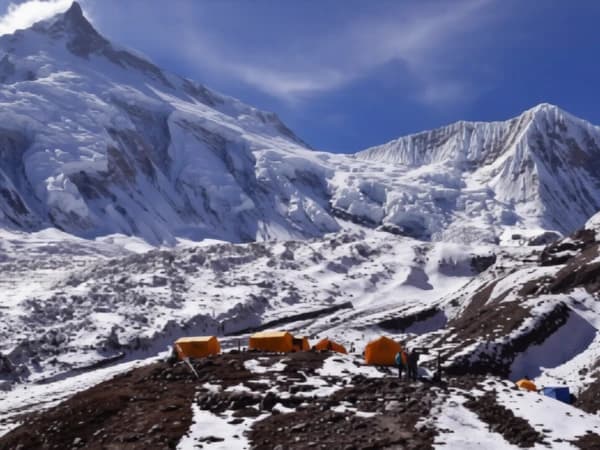
From the monastery, views extend across multiple Himalayan ranges. Manaslu dominates the horizon, rising sharply above glaciers and ridgelines. On clear days, the scale of the mountains feels overwhelming, yet the setting remains peaceful rather than intimidating.
The isolation of the site enhances its beauty. With no roads, few visitors, and minimal human activity, the environment feels untouched. The sound of wind through prayer flags and trees replaces the noise of daily life, creating a setting ideal for reflection.
Practical Information for Visitors
Gumba Lungdang lies within the Manaslu restricted area. Visitors must obtain the Manaslu Restricted Area Permit and the Annapurna Conservation Area Permit. Trekking with a licensed guide is mandatory.
Because of the monastery’s isolation, trekkers must carry sufficient food, water, warm clothing, and personal supplies. A high-quality sleeping bag and layered clothing are essential. Respectful behavior is expected at all times, as Gumba Lungdang is an active spiritual retreat.
Why Gumba Lungdang Is Worth Visiting
Gumba Lungdang is not a destination for casual sightseeing. It is a place for those willing to step off the main trail and accept physical effort in exchange for silence, space, and spiritual depth.
For trekkers who seek more than views and altitude, Gumba Lungdang offers something rare. It provides an opportunity to experience the Himalayas not just as a landscape, but as a living spiritual environment where faith, nature, and human resilience coexist.
Long after leaving the Manaslu region, memories of Gumba Lungdang often remain vivid. The stillness, the vast mountain views, and the simplicity of life there serve as a reminder that some of the most meaningful journeys are those that lead inward as much as outward.