

Written by Shreejan Simkhada, CEO of The Everest Holiday and third-generation Himalayan guide. TAAN Member #1586.
Namobuddha at a glance
Short answer: Namobuddha is one of Nepal's three holiest Buddhist stupa sites, on a pine-covered hill at about 1,750 m southeast of Kathmandu. It is where an earlier incarnation of the Buddha is said to have given his body to a starving tigress. Most visitors go as a day trip from Kathmandu, and October to November gives the clearest mountain views.
| Detail | Facts |
|---|---|
| What it is | One of Nepal's three holiest Buddhist sites; where an earlier Buddha, Prince Mahasattva, is said to have given his body to a starving tigress |
| Where | Kavrepalanchok district, on a pine-covered hill at 1,750 m southeast of Kathmandu |
| Getting there | A day trip from Kathmandu, or a guided day hike from Dhulikhel |
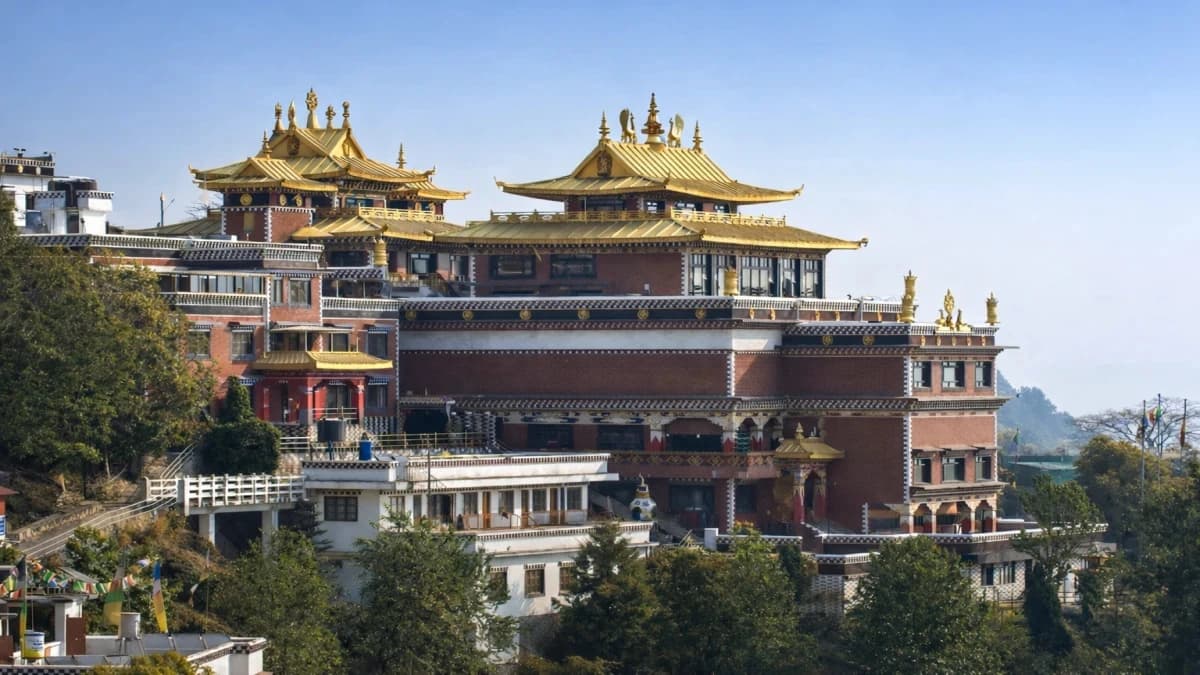
| Main monastery | Thrangu Tashi Yangtse Monastery (Karma Kagyu lineage), founded 1978, home to 250+ monks |
| Biggest festival | Namobuddha Mela, held on the full moon in November |
| Time needed | A half to full day; an overnight at the monastery guesthouse is the quiet highlight |
| How to visit with us | Our Dhulikhel to Namobuddha day hike is a guided six-hour ridge walk from Dhulikhel to the monastery, from USD 99 per person. Namobuddha is also day 3 of our 7-day Nepal Buddhist Circuit tour |
What is Namobuddha and why is it sacred?
For more than two thousand years, pilgrims have trekked to a hill in Nepal where the earth recalls a sacrifice that was so great. The hill rises slowly from the valleys below it. It is covered with pine trees and prayer flags. At the top, a white stupa stands like a quiet witness to the landscape. Namobuddha means "Homage to the Buddha," and that's all you need to know about it.
But the Buddha being revered here is not the prince who sat under the bodhi tree. This is an older Buddha, an earlier incarnation, a creature who lived on this earth many lives before Siddhartha Gautama was born. His name was Mahasattva, and the narrative of his life is why this hill is hallowed.
What is the legend behind Namobuddha?
A palace is where the story starts, like so many others. King Maharatha was Prince Mahasattva's father. His realm was somewhere in these hills, but the exact location has been lost to time. He had two older brothers, and they all lived a life of luxury and comfort, with all the pleasures a prince could want.
The monarch brought his three boys into the woods to have fun one day. The writings don't mention whether it was spring or fall. They rode through the woods, enjoying the fresh air and the beautiful scenery, until they found a cave. Something inside the cave caused them to halt abruptly.
A tigress lay on the cave floor, her body thin and her ribs showing through her fur. Seven newborn cubs mewed weakly next to her, seeking to nurse from a mother who had no milk to give. The tigress had not eaten since she gave birth a few days ago. She didn't have the strength to hunt. She lacked the strength to move. She would die in a day or two, maybe sooner, and her cubs would perish with her.
The two older brothers stared at what was going on and felt sorry for the people, but they also felt helpless. What could they do? They didn't have any food to provide. They couldn't save her. They looked away and kept riding.
But the youngest prince stayed behind. He gazed at the famished tigress and the defenceless cubs, and something inside him moved that was more than just sympathy. It was recognition. That poor thing made him think of himself. He saw all living things in her sad eyes. He then realised that the body he had carried since birth, this transient collection of flesh and bone, could be used for more.
He told his brothers to go ahead and that he would catch up later. Then he went to the cave.
The tigress was so frail that she couldn't even lift her head. The prince did something that shocks the mind and crushes the heart. He cut into his skin and let his blood pour to the hungry animal. The smell woke her up. She licked the blood, which gave her a little bit of strength. Then, driven by instinct and hunger, she ate him.
The prince devoted his life to the tigress so that she and her cubs could live.
How Did the Namobuddha Stupa Come to Exist?
The brothers were quite sad when they came back and saw what had transpired. The king and queen arrived and collected the remnants, which consisted solely of bones and fragments of cloth. They gathered these treasures and built a stupa in the area where the sacrifice took place. It was a tribute to their son's incredible kindness.
The stupa is still there today. It rises from the top of the hill in a magnificent white dome, with prayer wheels and flags flying all around it. It looks out over the same woodland where a prince gave everything he had. It is stated that the bones of Mahasattva still rest inside, encased in the monument, waiting for pilgrims to arrive and pay their respects.
For hundreds of years, only the people who lived in these hills knew about the stupa. About 3,500 years after the sacrifice, another Buddha came this way. After attaining enlightenment, Siddhartha Gautama journeyed through the region and paused at this hill. He walked around the stupa three times as a sign of respect, and then he told the people who were there, "In a past life, I gave my body to a starving tigress." This act of kindness aided me in achieving enlightenment. "Remember that this place is holy."
And so the name was given: Namo Buddha. It means "homage to the Buddha." Not only to the wise one who spoke but also to the kind one who contributed.
What Is the Thrangu Monastery at Namobuddha?
For most of its history, Namobuddha was just a stupa on a hill that people who lived nearby took care of. In 1978, a Tibetan lama named Thrangu Rinpoche visited the site and had the same feeling that many others have had: this area needed more than just a memorial. It needed a community of people who practised and studied the teachings of compassion.
He started the Thrangu Tashi Yangtse Monastery, which now has more than 250 monks living there; the monastery keeps its own record of its founding and daily practice. The monastery complex towers over the hill, its white walls and golden roofs visible from a considerable distance. From a distance, it looks like a small Tibetan city was dropped onto a Nepali hillside, like a piece of the plateau was moved to the lush midlands.
One of the four main schools of Tibetan Buddhism is the Karma Kagyu lineage, which is what the monks here follow. They get up before dawn to pray, study Buddhist philosophy in the morning, and then spend their afternoons debating and meditating. Visitors are welcome to sit silently at the back of the prayer hall and allow the sound of chanting to wash over them like rain.
The prayer hall itself is amazing. There are murals on the walls that show the life of the Buddha and the renowned gurus of the Kagyu lineage. Statues of enlightened beings look down from every corner, their eyes half-closed in concentration and their hands making gestures of instruction and protection. The smell of butter lamps and incense fills the air. These are the two odours that define Buddhist sacred space across the Himalayas.
When the monks chant, the sound is deep and resonant. You can feel it in your chest as much as hear it with your ears. They chant in Tibetan, which most visitors can't understand, but the meaning is clear: compassion, wisdom, and the way to enlightenment. You don't have to be a Buddhist to feel it. You only need to be there.
What are the two holy sites to see at Namobuddha?
There are two main holy places on the hill of Namobuddha, and pilgrims go to both.
The first is the main stupa, which Mahasattva's family built in his memory. It is next to the monastery and is encircled by a paved courtyard where pilgrims walk in a circle, turning the prayer wheels that are built into the wall. Every time it spins, it sends the prayers inside out into the world, and each time it does, the benefits grow.
The second place is harder to find. A stairway goes from the stupa into the woods, going up slowly via pine trees and rhododendrons. After ten minutes of walking, you come to a clearing where a modest shrine commemorates the cave of the tigress. Tradition holds that this location is the precise site where Mahasattva surrendered his body. A prince became a Buddha on this piece of land.
The cave is tiny, just a little hole in the rock. One statue represents the tigress and her cubs, and another shows the prince giving himself up. Some pilgrims kneel, some meditate, and some just stand still here. There is no noise in the jungle surrounding them. The birds sing. The trees move with the wind. And the air feels different, older, and full of the recollection of that long-ago act.
The Village Below
The lower hills below the monastery are home to the villages that sustain this holy place. Most of the settlements are Tamang, and the people who live there are descendants of individuals who arrived from Tibet hundreds of years ago and settled in these hills. The Tamang, one of Nepal's most marginalised groups, have found some success around Namobuddha due to pilgrims.
Small stores sell Buddhist figurines, prayer flags, butter lamps, and incense. Tea establishments serve hot cups of chai and trays of momos. Guesthouses have simple rooms for anyone who wants to stay the night. The inhabitants are pleasant and used to seeing outsiders. They are cordial in the same way that people who live near pilgrimage sites are.
Manegaun, the village just down the hill from the monastery, is a wonderful place to visit. Many of its ancient stone buildings, grouped on narrow roads where chickens scratch and kids play, feature carved wooden windows. Tamang women wear striped aprons when they do their everyday chores, like carrying water, grinding grain, and taking care of vegetable gardens. Life here moves at the same slow pace it has for hundreds of years. People are connected to the land and to each other.
What views can you see from Namobuddha hill?
One of the best things about Namobuddha is where it is. The hill captures the early light long before the valleys below have come out of the shadows. It is 1,750 metres above sea level. The view from the monastery is amazing on clear days, especially in the fall and spring.
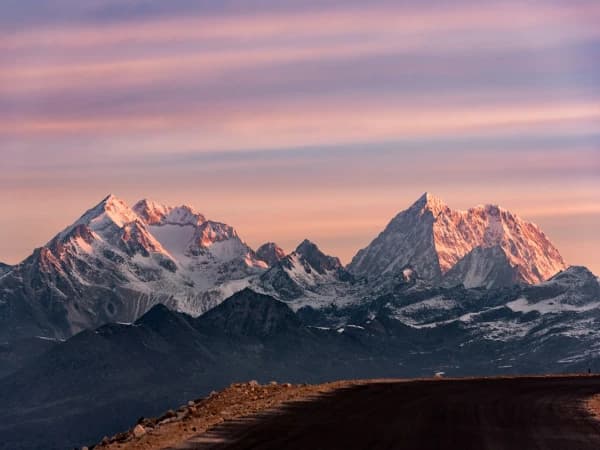
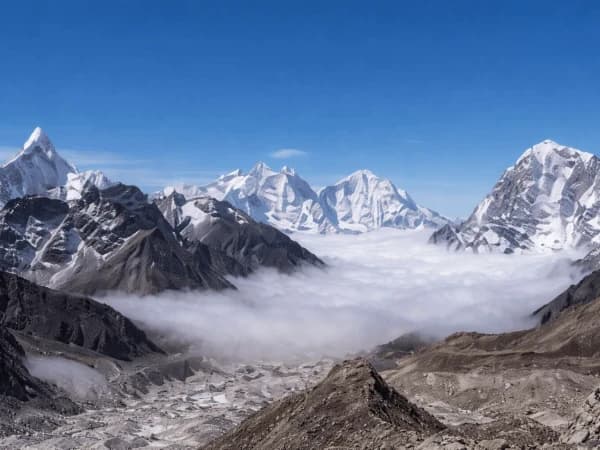
The Himalayas rise to the north in a jagged white line. You can see Ganesh Himal. Langtang Lirung is the tallest mountain in its range. You can see Dorje Lakpa, and on the clearest days, you can even see the faraway Shishapangma massif in Tibet. The mountains look like they are right next to you, yet they are actually several kilometres distant.
The hills sweep down in green waves to the south and east. They are terraced with rice farms and have settlements on them. The light varies throughout the day, making the landscape look like it is changing colours from green to gold to blue. The sky becomes orange and pink at sunset, and the white stupa shines like a flame against the lowering hills.
Can you do a meditation retreat at Namobuddha?
Namobuddha is a wonderful spot to visit because it welcomes visitors who want to stay for more than a few minutes. At the monastery, meditation and Buddhism sessions might run anywhere from a few days to a month.
The one-month retreat is the most in-depth. Participants live like monks by eating the same food, going to the same meditation hall, and following the same schedule. Every day, they attend to the monastery's ceremonies, meditate with help, and learn about Buddhist philosophy. This is a rare chance for folks who want to get right in.
The goal of the five-week meditation retreat is to develop bodhicitta, which is the enlightened mind and the desire to wake up for the good of all living beings. All of the teachings, meditations, and small and large group discussions are based on ancient Tibetan literature. It can help everyone, from beginners to pros.
People who don't have a lot of time can also take the Tibetan language classes at the monastery. These classes are good for both beginner and expert students. You can feel the texts, chanting, and culture that make this site come alive when you learn the language.
Can You Stay Overnight at Namobuddha?
The best way to experience Namobuddha is to spend the night there. People who visit the monastery during the day can see it, but only people who stay overnight can really feel it. They wake up to the sound of chanting. They see the Himalayas change colours as the sun rises. After the crowds left, pilgrims took their time walking around the stupa.
There are two guesthouses at the monastery. Each room at the New Guest House has a private bathroom, a comfortable bed, and hot water. The daily cost of about 3,500 Nepali rupees includes breakfast and dinner. Rates change, so confirm with the monastery when you book. The community eats simple vegetarian food together. This choice can be beneficial for people who want to feel comfortable throughout a spiritual thing.
The Old Guest House is similar to a more traditional inn in many aspects. The rooms are modest and share utilities, but they are clean and comfortable enough. The experience is more real, and the cost is lower, about 3,000 rupees a day. Sharing a home, cooking, and other basic needs help you feel more like a monk.
At both guesthouses, reservations are required during busy times. You can contact the monastery through their website, and they can even help you plan your trip.
When is the Namobuddha Mela festival held?
Namobuddha's biggest event happens once a year, on the full moon in November. The Namo Buddha Mela is what it's called. People from all over Nepal, Tibet, India, Bhutan, and the world come.
People fill the hill for days prior. There are tents on every flat surface. People sell food, prayer flags, and statues at the market. The chanting never ends. Thousands of butter lamps are lit at night. Their flames flicker in the dark like stars on the ground.
The primary ritual takes place at the stupa on the night of the full moon. High lamas are in charge, and their golden caps shine in the light of the torches. Monks do complicated rites, and their instruments, such as long horns, cymbals, and drums, make holy sounds. Pilgrims walk around in circles, spinning prayer wheels and saying mantras. You can feel their passion in every move they make.
The Mela is something that anyone lucky enough to go to will never forget. Buddhism is not just a theory; it is a way of life. It is not just a museum piece; it is a living tradition. The hill that saw a prince's sacrifice sees once more the faith that sacrifice brought about.
The Hill's Seasons
Namo Buddha wears the seasons like clothes, and they change as the year goes on.
Spring is warm and colourful. The rhododendrons blossom, turning the hillsides red and pink. The skies clear up little by little, giving you better and better views of the Himalayas. This period is a great time to visit because the weather is nice and the days are getting longer.
The monsoon comes in the summer. It rains virtually every day, sometimes in light showers and sometimes in heavy downpours. The hills become incredibly green and full of new vegetation. There are fewer tourists; thus, there is more room for those who do come. However, the hiking trails become slippery, and clouds often obscure the mountain vistas.
The classic season is autumn. The weather in October and November is perfect: bright skies, excellent visibility, and reasonable temperatures. The air after the rain has been scrubbed clean, and the Himalayas stand out in a way that is impossible to miss. The fall season is also the time of year for festivals, and the Mela in November draws many people.
It gets cold in the winter, especially at night. Most days are clear and sunny, but the temperature drops swiftly once the sun goes down. There are fewer tourists to the monastery in the winter, so it's a peaceful time for people who want to be alone. Bring warm clothes.
The Quiet That Speaks
The stupa is magnificent, but that is not what sticks with you after Namobuddha. The monastery is impressive, but it is not the one we are referring to. The view stays with you, yet it's more than the view.
The silence is what stays.
It is a meaningful silence, not synonymous with death. It's a quiet that brims with vitality. The quiet echoes from a hill where a momentous event occurred. The prayer flags moved in the wind, and their mantras echoed across the valley. Monks sang in the distance, their voices blending with the sound of pine needles rustling and birds calling.
The narrative of Prince Mahasattva becomes more than a legend amid that hush. It becomes a chance. The concept of compassion can reach its full potential. That offering can be whole. The impact of a single individual's sacrifice can extend hundreds of years into the future.
Namobuddha gives this. Namobuddha provides not only a place to visit but also a peaceful sanctuary. If you listen intently, you might hear the echo of a long-ago deed of love in this quiet place.
What are Nepal's three holiest Buddhist sites?
Buddhists think that the three stupas in Nepal are the most holy. The Monkey Temple, or Swayambhunath, is on top of a hill in western Kathmandu. Its eyes gaze over the valley. The major stupa of the Tibetan community, Boudhanath, rises from the east side of the city. It is a huge three-dimensional mandala.
Namobuddha, the smallest and most distant, is atop a hill with trees southeast of the valley.
They all have their unique personalities. Mystery shrouds the history of Swayambhunath. Boudhanath is a lively and busy place that is the centre of Tibetan culture in Nepal. Namobuddha is a peaceful spot to think and be alone.
Many pilgrims who go to all three think that Namobuddha has the biggest impact on them. Maybe it's the peacefulness of the forested slope that makes it such. Maybe it's the story and the raw strength of the sacrifice it honours. Maybe it's just that the Dharma is easier to feel here, away from the masses.
The Question Namobuddha Poses
Every person who goes to Namobuddha has to answer the same question. It doesn't come in words or thoughts; it arrives in feelings and presence. The question is: What would you give?
It is not about what you would provide in theory or in comfortable guesswork. What will you do when the time comes, when the choice is real, and when you are faced with the pain of another person who needs your help?
Prince Mahasattva gave it all. He sacrificed his body, his future, and even his life. He didn't think twice. He made no calculations. He saw people in pain and felt sorry for them.
A lot of us can't do it. Most of us will never be asked. But the question is still out there, lingering over this sacred hill, waiting for each visitor to answer in their own manner.
Maybe the answer doesn't have to do with big actions. It can be about little gifts, little acts of compassion, and little actions of giving that add up over a lifetime. Maybe the road of compassion isn't one big sacrifice but a thousand little ones that chip away at the self and bring us closer to the limitless generosity that Mahasattva embodied.
You don't have to become a saint to say Namo Buddha. It merely wants you to think about the chance. You must allow the story of a prince who gave everything to touch your heart. You must allow his tale to impact you, transform you, and inspire you to reach beyond yourself.
Return
You'll leave at some point. As you walk back down the hill, you'll see local kids playing, monks in their robes, tea shops, and prayer flags. As you drive back to Kathmandu along the winding roads, you'll see the city's busy streets. Your habits, worries, and personality traits will come back to you.
There will still be something, though. You will always feel alone. A picture of mountains. You can't stop reading this narrative.
And the question, "What would you give?" will keep coming up in your mind.
Namobuddha gave you that. Not solutions, but thoughts. Just possibilities, not promises. The end objective is not what matters on the path to enlightenment.
The slope is prepared for action. Watch the stupa. The woodland is really quiet. A prince who gives up all shows us what we can do.
Related Treks & Guides
- Tsum Valley Trek
- Dhulikhel to Namobuddha Day Hike
- Kathmandu Mountain Bike Tour
- Bardiya Lumbini and Chitwan Photography Tour- 12 Days Itinerary and Cost
- Lumbini, Nepal
- Bandipur
Namobuddha is less than two hours from Kathmandu but it feels like another century. If you have a spare day before or after your trek, this is where I send people. Not Nagarkot, not Dhulikhel. Here. The monastery stay alone is worth the trip, waking up to chanting at 5 AM with the valley fog below you.
We include Namobuddha as a day trip option on several of our packages. If you want to add it to your itinerary, just ask.
WhatsApp:+977 9810351300
Email:[email protected]
Written by Shreejan Simkhada, CEO of The Everest Holiday and third-generation Himalayan guide. TAAN Member #1586.
Namobuddha is day 3 on our Buddhist Circuit Tour. Our Nepal Buddhist Circuit Tour (7 Days) is private (your group only, no strangers), 2027 dates open, From USD $999. WhatsApp us for tailored 2027 dates and current departures.
Want to visit Namobuddha yourself? Our Dhulikhel to Namobuddha Day Hike takes you there on a guided day trip from Kathmandu.
 Chat with Shreejan