

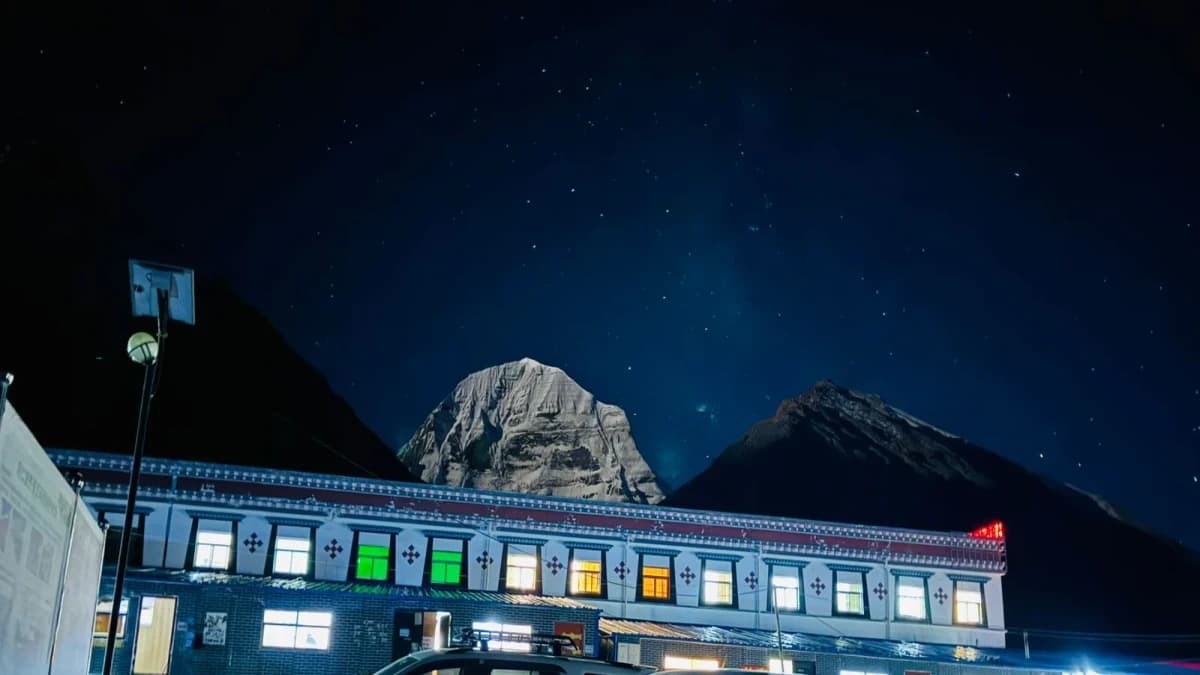
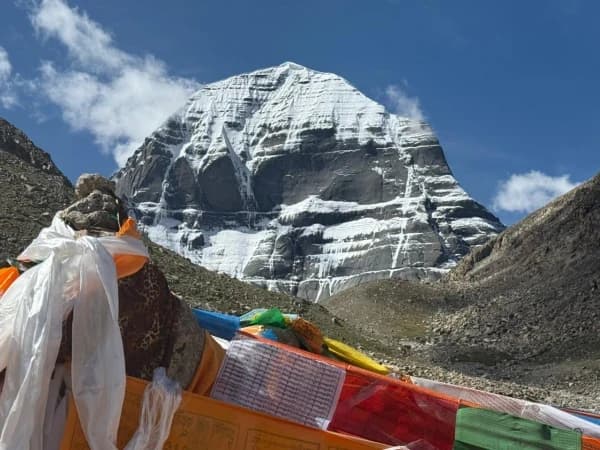
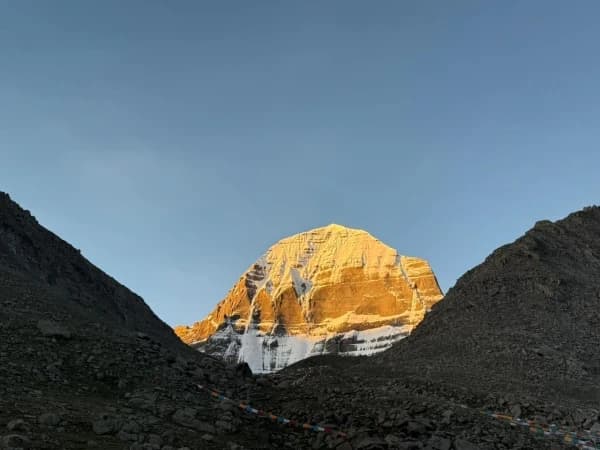
There is a mountain that no one can climb. It's not because it's too high or steep, but rather because it's too spiritual. No one has ever climbed to the top of Mount Kailash, which is 6,638 metres high above the Tibetan plateau. No one has ever stood on its peak. People who go on pilgrimages don't come to take it over. They come to go around it.
In Sanskrit, this act of circling is called Parikrama, while in Tibetan, it is called Kora. For Hindus, Buddhists, Jains, and Bon practitioners, walking around Mount Kailash is the best way to connect with God. It is a moving meditation that lasts three days, goes 52 kilometres, and crosses a 5,630-metre pass where the air has just half the oxygen of sea level.
The outer Kora is more than just a hike. Every stride is a prayer, every breath is a way to purify yourself, and every step is a trip to the heart of what makes mountains holy. Hindus think that every stride clears away all the sins of a lifetime. Buddhists earn merit on their way to enlightenment. Jains pay respect to their first Tirthankara. Bon practitioners engage with the oldest parts of their culture.
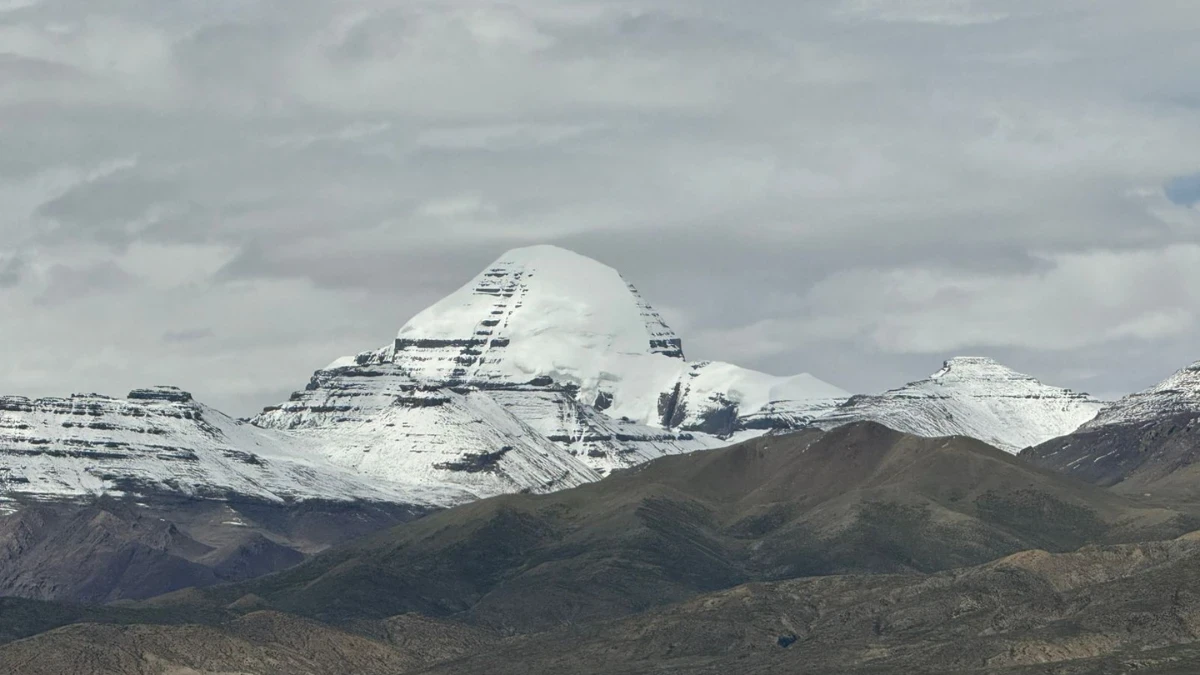
But don't get me wrong: this is a tough path. The second day traverses Dolma La, the Pass of the Goddess, where travellers leave offerings and get blessings. The height affects everyone. The weather can change from bright sun to blinding snow in a matter of hours. The trail goes from dusty grasslands to fields of frozen boulders.
But every year, thousands of people make the trip. They come from all over the world, including India and Tibet. They come in all ages, from young to elderly, strong to weak, and rich to destitute. They come because something calls them, something that has been around longer than religion, language, or even the mountains.
This tutorial is all about the Parikrama. The 52 kilometres. The three days. The passes, the valleys, the monasteries, and the lake of the goddess. The horses are for people who can't walk. The height makes things difficult for everyone. And the meaning that changes everyone who does it.
The mountain is waiting. The circuit starts. Every step is holy.
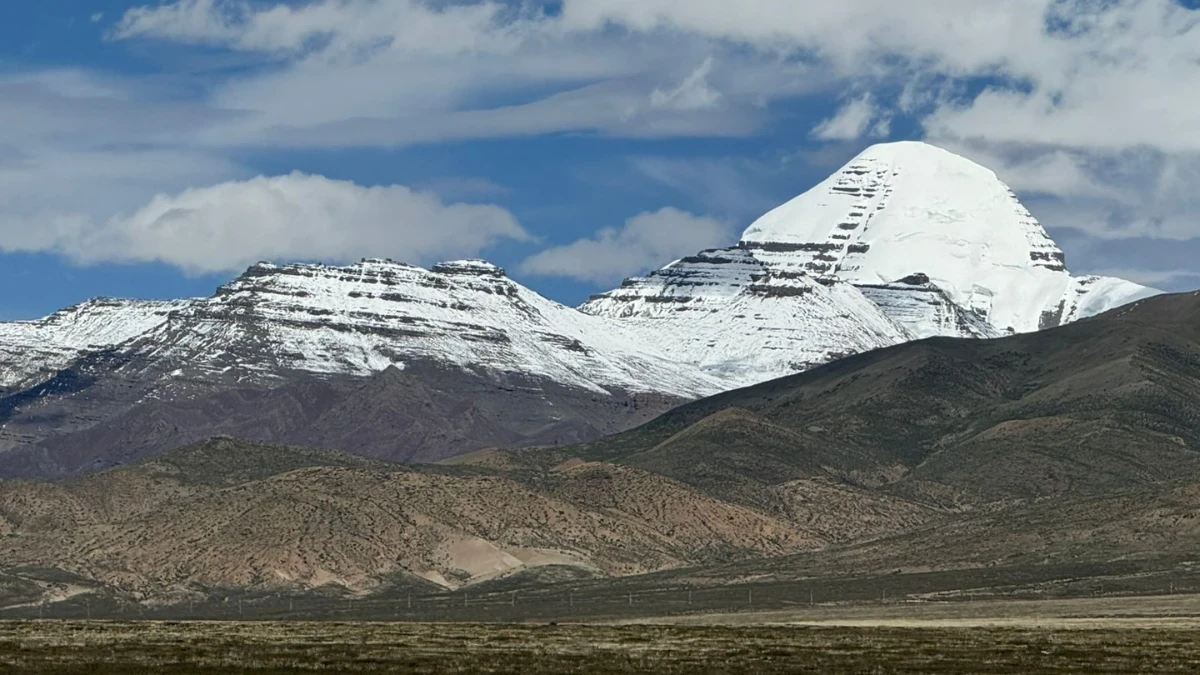
What Does It Mean to Circle Mount Kailash?
Before you look at the path, you should know what this act signifies to the people who do it.
The Spiritual Meaning
In Hindu cosmology, Mount Kailash is the centre of the universe, the point around which everything else rotates. Walking aligns you with the cosmic order and the cycle of life. People think that each circuit cleanses bad karma that has built up throughout many lives. One circuit cleanses all the sins of a lifetime. In that exact lifetime, 108 circuits reach enlightenment.
The Kora is a movement meditation for Buddhists. It is a way to show devotion to Demchok, the god who represents ultimate happiness. Walking around the mountain in a clockwise direction makes you more virtuous and gets you closer to enlightenment. The circuit goes through places that are important to different parts of Buddhist practice, like the birthplace of compassion, the field of accumulation, and the wisdom path.
Jains think that Rishabhadeva, the first Tirthankara, became free atop the peak. For them, walking around him acknowledges his work and ties them to his teachings.
Bon practitioners, who follow an ancient Tibetan spiritual path, walk in a circle, keeping their old way of doing things. Their Kora celebrates the mountain as the source of spiritual power.
The Outer Kora
The outer Kora is a 52-kilometre loop around the mountain that stays within sight of its slopes the whole time. Most pilgrims use this path. It takes three days for people who are walking, one day for the most devout, and as long as weeks for others who are prostrating their whole bodies the whole route.
Inner Kora
There is a shorter inner circuit that goes over more difficult terrain and visits places of exceptional importance. It is closer to the mountain. Only skilled practitioners follow this route, and they usually do it after finishing several outer Koras.
The 3-Day Kora Route: A Day-by-Day Guide
The regular Parikrama takes three days, with pauses for the night at Dirapuk and Zutulphuk. Every day has its scenery, problems, and spiritual meaning.
Day One: Darchen to Dirapuk (12 kilometres, 5–6 hours)
The Path
The trip starts at Yam Dwar, which is a short drive from Darchen and the entrance to the circuit. A huge chorten marks the beginning of the path, and prayer flags wave in the breeze. Before they go, pilgrims stop to get blessings.
The trail goes through the Lha Chu Valley, which is also known as the River of the Gods. You can see Mount Kailash on the right all day. The path is rather easy, going up from about 4,600 metres to 4,900 metres over time. Over the years, pilgrims have put up prayer flags and cairns along the road.
You get to Tarboche after about two hours. This is where the big prayer flag pole is put up and taken down every year for the Saga Dawa celebration. This intersection is one of the strongest places on the whole circuit. The flagpole seems like a cosmic axis that connects the sky and the ground. People who are on pilgrimage add their flags and pray.
As you go north, the valley gets smaller, and the mountain gets closer. You can see the north face of Kailash, which is a huge wall of rock and ice that seems like it protects the inner sanctum. The path goes via little hermitages where people have meditated for hundreds of years in the shadow of the mountain.
You can see Dirapuk Monastery ahead, hidden against a slope at 4,900 metres. Simple lodges provide basic rooms. The north face looms right above, blocking the vista as the sun sets.
Profile of Elevation:
-
Yam Dwar, at about 4,600 m, is where it starts.
-
End: Dirapuk, around 4,900 m
-
Gain: about 300 metres
Land:
-
A trail that is easy to see
-
Soft grades
-
Some rough parts now and then
-
Crossing streams on little bridges
Spiritual Significance
Day One is the start of the journey, the beginning of the adventure, and the end of everyday worries. The valley is linked to the building up of merit and spiritual energy for the struggles that lie ahead.
What Pilgrims Go Through:
-
First long-lasting sight of Kailash
-
More and more people are becoming aware of the mountain's presence.
-
Community with other pilgrims on the same path
-
Getting excited for Dolma La
Where to stay in Dirapuk
-
Basic lodges with rooms that are like dorms
-
Dining areas with wood fires for everyone
-
Simple meals include dal bhat, noodles, and soup.
-
After the sun goes down, the temperature drops a lot.
-
Going to bed early is a beneficial idea (3 AM start the next day).
Day Two: From Dirapuk to Zutulphuk via Dolma La (18 kilometres, 8–9 hours)
This afternoon is the day that makes the Kailash Parikrama what it is. This moment is the end of everything. It leads to everything else.
3:00 AM: The Early Start
It is dark when the day starts. The pilgrims wake up to cold boots and skies full of stars. A simple supper of porridge and tea gives you energy. As the gang gathers outdoors, headlamps cut through the dark. The north face of Kailash is there, but you can't see it. You can feel it more than see it.
The rise starts right away.
The climb to Dolma La:
The path goes up steeply from Dirapuk, which is 4,900 metres high, to Dolma La, which is 5,630 metres high. The trail ascends the moraine through a series of switchbacks, revealing more of the massive mountain's flank at each bend. Every step is challenging because of the height. Breathing becomes aware. Paces sluggishly.
The trail goes up to the foothills of the pass after about two hours. The slope gets steeper here. The path gets rockier and more open. There are more prayer flags now, fastened to cairns and stretched over boulders. Each flag has prayers on it that have been here for decades, and the winds never stop blowing them.
Shiva's Footprint:
About halfway up, a big rock has a mark that people say is the footprint of Lord Shiva. People who are on a pilgrimage stop here to pray and get blessings. Over the years, millions of people have touched the rock, which has made it smooth.
Dolma La is 5,630 metres high.
Unexpectedly, the pass appears. You are rising one second. Suddenly, you find yourself at the summit of the ridge, with an expansive view of the surrounding landscape.
There are prayer flags all over the place. There are thousands of them strung across the pass, fastened to every rock, and blowing in the wind that never stops. The wind here is strong, and it blows the flags sideways, making a sound like wings.
In the middle is a big pile of rocks with more flags on top. Pilgrims contribute their things, including pictures of loved ones, clothes, jewellery, or anything else that shows attachment. This is the time to let go.
The view from Dolma La is challenging to put into words. The valley you climbed is on one side. The valley you will go down is on the other side. To your left, Mount Kailash is huge. And peaks go on forever in every direction.
Pilgrims hug each other, cry, pray, and think. Some lie flat on the freezing ground. Others just stand there, not knowing what to do.
Gauri Kund:
The fall starts right away. The trail goes down quickly from the pass and leads to a little turquoise lake that is hidden in the rocks. This is Gauri Kund, which is connected to the goddess Parvati. According to folklore, this location is where Parvati took a bath before she married Shiva.
When the lake thaws, its surface reflects the peaks around it. It stays frozen for most of the year. On a pilgrimage, people walk around it in a clockwise direction, pray, and then continue down.
The Long Descent:
The trail keeps going down below Gauri Kund, where the land gets more and more arid. The valley expands upward, revealing distant peaks. Prayer flags still show the way. The walking is easier as the altitude goes down, but your legs get tired from going down for a long time.
There are small teahouses that pop up from time to time, serving hot tea and simple nibbles. Pilgrims take a short break before moving on.
Zutulphuk:
You can see Zutulphuk after around 8 to 9 hours of walking. This village, which is 4,800 metres high, is named after the cave where the famous Tibetan saint Milarepa is reputed to have meditated. According to legend, he fought a mystical combat with a Bon priest here, and his cave still has the handprints left in the rock.
The meditation cave is still open, and pilgrims can pray there. People think that sleeping close to this holy place can offer them visions and good luck.
Simple lodges offer a place to stay for the night. Exhausted pilgrims meet in dining rooms to tell stories about the past, compare their experiences, and celebrate their survival and success.
Elevation Profile:
-
Start: Dirapuk 4,900 m
-
High Point: Dolma La, 5,630 metres
-
End: Zutulphuk, 4,800 metres
-
Gain: 730 metres
-
Loss: 830 metres
Terrain
-
Steep rocky ascent to pass
-
Loose scree on sections
-
Exposed ridge at the top
-
Steep descent with careful footing
-
Stream crossings
Spiritual Meaning
Dolma La stands for death and rebirth. At the pass, pilgrims leave behind their relationships, which is like dying to their former selves. Going down into the valley below is like being reborn into a new life, cleansed by the experience.
What Pilgrims Go Through
-
Tiredness in the body
-
Being emotionally overwhelmed
-
Feeling of success
-
Opening up spiritually
-
Link to everyone who has gone before
-
Possible signs of altitude
-
Problems with the weather
Zutulphuk has places to stay.
-
Simple lodges like Dirapuk
-
A cave for meditation is nearby.
-
Pilgrims are in a festive mood.
-
Long day, deep slumber
Day Three: From Zutulphuk to Darchen (8 km, 3–4 hours)
The Way:
For those who didn't attend the night before, the last morning starts with a trip to Milarepa's cave. The cave is modest and cozy, and you can feel the saint's presence inside. Before they go, pilgrims ponder for a little time.
The path from Zutulphuk goes down slowly through the Shing Tsong Valley, which is named for the trees that used to grow there. The vista opens up much more, and you can see distant peaks beyond the Kailash massif.
This valley is the last place where you may see Mount Kailash before the tour stops. Pilgrims turn around a lot, remembering the shape of the mountain since they know they will soon leave it.
The track goes to the road after around three to four hours of easy walking. Cars wait to take pilgrims back to Darchen. The circuit is done.
Getting to Darchen
Coming back to Darchen brings up a lot of feelings. Relief when it's done. Tired from working hard. Sad to leave the mountain. Thankful for having taken the trip.
A lot of pilgrims go to the Darchen monastery to say their last prayers. Some set up another circuit because they want to stay longer. Some people start to plan how they will get back to normal life, bearing the mountain inside them.
Elevation Profile:
-
Start: Zutulphuk, 4,800 m
-
End: Darchen 4,600 m
-
Loss: 200 metres
Terrain:
-
Gentle descending trail
-
Well-defined path
-
Easy walking
Spiritual Meaning
The last day is a time of integration, when the thrill of the circuit returns to everyday life. The mountain has been circled. The gifts have been given. Now the job is to move them ahead.
What Pilgrims Go Through:
-
Feeling good about finishing
-
Lingering awe
-
Relief from pain
-
Wanting to stay longer
-
Promise to come back.
Kora Tips for High Altitude
Altitude affects everyone. The difference between struggling and succeeding is being ready and aware.
Before the Yatra
Improve Your Heart Health:
Focus on aerobic conditioning for months before you leave. Engage in any activity that elevates your heart rate and maintains it there, such as running, biking, swimming, or climbing stairs. Your body consumes less oxygen when your cardiovascular system is stronger.
Train with Elevation: If you can, spend some time at a high altitude before your Yatra. Weekend vacations to the mountains, even small ones, are a wonderful way to learn. Your body learns how to change.
Talk to Your Doctor:
Talk about altitude drugs like Diamox. Some pilgrims find it helpful to use. Some people have side effects. It's really important to get professional medical advice that takes your health history into account.
Stay hydrated at all times during the Yatra:
When you go up in altitude, your thirst signals go down. Drink anyhow. Drink at least three to four litres per day. All of these drinks count: water, electrolyte drinks, and hot tea. Dehydration makes altitude sickness worse and looks like it.
Take it easy: "Walk like an old man" is a Tibetan phrase that fits. Taking slow, careful steps saves energy. Take breaks often, even if you don't feel weary. Taking short rests during the day is better than pushing yourself to the limit.
Eat Lightly:
At high altitudes, people lose their appetite. Instead of big meals, eat modest portions often. Carbs give you energy that is easy to get. Simple things like soup, cereal, and bread are excellent.
Stay Away from Alcohol and Sedatives: Alcohol dries you out and slows down your breathing. Sleeping drugs might make it hard to breathe while you sleep. During the Kora, stay away from both altogether.
Pay attention to your body.
Find out what the signs of altitude sickness are:
-
A headache that doesn't go away with medicine
-
Feeling sick or throwing up
-
Dizziness
-
Lack of coordination
-
Confusion
-
Breathing problems while at rest
-
Do not go much higher if you start to feel sick. If things get worse, go down right away. The mountain will wait for you to try again. Your life won't.
Should I walk or ride a horse on the Kailash Kora?
Not everyone can walk the whole 52 kilometres. Pilgrims may think about using horses to get around because of their age, fitness level, health problems, or just because they want to. Knowing what your alternatives are will help you make the best choice.
Going for a walk on the Kora
Walking is still the most common way for pilgrims to get about.
The advantage
-
You have complete control over the speed and rest pauses.
-
Strongest connection to the path and the mountain
-
Feeling of personal success
-
The freedom to stop and pray or meditate
-
Ability to feel each step as a gift
-
Not reliant on animals or handlers
Disadvantages
-
Needs good fitness and endurance
-
Needs more time
-
More tiredness in the body
-
Possible altitude effects when working hard
-
Exposure to weather throughout
Who Should Walk:
-
Pilgrims who are in good shape for their hearts
-
People who have trained enough
-
Anyone who wants to get the most physical experience
-
Younger pilgrims who don't have any health problems
-
People who have been to high altitudes before
Transport for Horses
People who can't walk the whole circuit can ride horses or yaks to get around. Local handlers are with each animal to make sure they are safe and can find their way.
Advantages:
-
Saves energy for the hardest parts
-
Let people who can't walk take part.
-
Lessens the effort needed at high altitudes
-
Faster progress on rough ground
-
Help with going up and down the Dolma La
Disadvantages:
-
Less control over speed
-
Can't stop on their own to pray
-
Riding hurts different muscles in your body.
-
Dependence on the animal and the person who handles it
-
Extra cost
-
Not always available during busy times.
-
Still have to walk parts when the ground is too rough to ride
Things to think about:
-
Horses can't ride on very steep or tight parts.
-
Still, pilgrims have to walk these parts.
-
Handlers are in charge of the animals; thus, trust is important.
-
You have to book ahead of time when it's busy.
-
constraints on weight
-
Not good for folks who are scared of animals
Who Should Think About Moving Horses:
-
Older adults who don't have much energy
-
People who suffer pain in their knees or joints
-
Pilgrims who have health concerns that make it hard for them to exercise
-
Anyone who tried to walk and found it too hard
-
People who don't have a lot of time need to hurry.
Making the Choice
Choosing between walking and riding is a very personal decision. There is no spiritually better option. No matter how they get there, the mountain greets everyone who comes with devotion.
Some pilgrims walk the first day, bike the second day (the hardest), then walk the third day. This mixed method strikes a balance by letting people participate in the whole experience while also getting help with the hardest aspect.
Talk to your trip operator about your possibilities before you leave. If you think you'll need horse transportation, make plans for it ahead of time. We can't promise that things will be available at the last minute.
What Local Handlers Provide
-
Guides who know the route well
-
Horses that are used to being in high places
-
Basic safety gear
-
Help in getting on and off.
-
Help with navigation and everything else.
How much does a horse cost on the Mount Kailash Kora?
Horse transportation costs between $150 and $250 USD each day on top of your Yatra cost. Prices change depending on the season, how many items are available, and how much you can negotiate.
Spiritual Significance at Important Points
Each part of the Parikrama has its own spiritual meaning that makes the experience more meaningful.
Yam Dwar: The Doorway
The beginning point means leaving the normal world behind. Pilgrims leave their everyday lives behind and enter a holy area. The prayers said here set the tone for the whole trip.
Tarboche: The Axis of the Universe
The huge prayer flag pole shows the link between the earth and the sky. Changing its flags every year at Saga Dawa is a sign of renewal, the cycle of death and rebirth that is the basis of all life.
Dirapuk: The North Face
The north face of Kailash is thought to be the most holy part since it is linked to endless meditation. Sleeping near the mountain lets consciousness operate all night long.
Dolma La: Life and Death
The pass is the most powerful change. People who go on pilgrimages leave behind things that show their connection, like clothes, jewellery, photos, and written prayers. This letting go is like dying to the old self. On the other side, coming out means being reborn into a pure life.
The Goddess's Womb is Gauri Kund.
The turquoise lake that goes with Parvati stands for the feminine divine and the creative principle. The waters of this place are the waters of life, of showing up, and of caring.
Zutulphuk: The Cave of Understanding
Milarepa's cave shows that it is possible to become enlightened in this particular body. The saint who pondered here reached enlightenment through hard work and dedication. His example encourages pilgrims to keep doing what they do.
The Return: Bringing it all together
Finishing the circuit and going back to Darchen is like bringing spiritual journey back into everyday life. The challenging part now is bringing the mountain's blessings into everyday life.
Useful Tips for the Kora
What to Bring Every Day
-
Daypack with simply the basics
-
2 to 3 litres of water
-
Snacks with a lot of energy, like chocolate, nuts, and energy bars
-
It's easy to get to warm layers.
-
Rain protection no matter what the weather says
-
Lip balm and sunscreen
-
Headlamp with new batteries
-
A little first aid kit
-
Camera (kept safe from the weather)
-
Passports and permissions (kept dry)
-
Money for food and drinks along the way
What to Leave Behind
-
Heavy luggage (in Darchen)
-
Things you can't afford to lose
-
That day, you don't need extra clothes.
-
Electronics that aren't necessary
-
Physical Preparation Timeline
3 to 4 Months Before
-
Start working out your heart and lungs.
-
Four to five times a week for 45 to 60 minutes
-
Don't worry about how hard you work; focus on how long you work.
Two months before:
-
Add climbing stairs with a pack.
-
Practise on different types of ground
-
On weekends, make the duration longer, to two hours or more.
A Month Before:
-
Hikes over several days in a row that are like the Kora
-
Check all of your gear.
-
Last medical checkup
One Week Before:
-
Taper off your training and get enough rest.
-
Drink plenty of water.
-
Getting your mind ready and setting your intentions
Getting Ready Mentally
-
Read stories from other pilgrims.
-
Learn about the myths and what they mean.
-
Make sure you know what you want to do with your Kora.
-
Bring gifts to leave at Dolma La.
-
Before you leave, make sure you meditate or pray every day.
Frequently Asked Questions
1. Is it possible to finish the Kora in one day?
Yes, some very dedicated pilgrims round the circuit in one day by sprinting or walking very quickly. You need to be in great shape and get used to it. Three days is how long most pilgrims take.
2. What if I can't finish the Kora because I'm sick?
The mountain knows. Many pilgrims who can't finish nonetheless get graces for trying. Horse transportation is accessible for anyone who needs help. It's not a bad thing to put health first.
3. Is the Kora a threat?
Risk is manageable if you prepare well and respect the conditions. The most dangerous thing is the altitude. The weather might be challenging. You need to pay attention to the trail conditions. Follow the guide's advice, pay attention to your body, and turn back if things get worse.
4. Is it okay if I do the inner Kora instead?
You need special authorisation to do the inner Kora, and you usually have to finish several outer Koras first. Most pilgrims go around the outside of the circuit.
5. What will happen if it snows on Dolma La?
Guides check the conditions every day. If the snow makes it dangerous to cross, pilgrims can wait at Dirapuk for things to get better or go back to Darchen. Safety comes before the schedule.
6. Do I need specific equipment for the Kora?
Sturdy hiking boots, warm clothes, rain gear, trekking poles, a headlamp, and a daypack cover are all necessary. No technological skills needed.
7. Is it okay to take pictures during the Kora?
Yes, but be polite. Don't take pictures of pilgrims praying without their consent. Some places ask that you not take pictures. Follow the rules in your area.
8. What should I leave at Dolma La?
Traditional contributions include clothes, pictures of loved ones, prayer flags, written petitions, and little personal items that reflect attachments. Don't leave anything that harms the environment.
9. What should I do to get ready spiritually for the Kora?
Pray or meditate every day before you go. Study of holy scriptures that have something to do with Kailash. Making your goals obvious. Engaging in meaningful discussions with fellow pilgrims is also beneficial.
10. When is the greatest time of year for the Kora?
The warmest weather is from June to September. September has bright skies and fewer people. It is possible to see milder weather in May and October.
Last Thoughts
The Mount Kailash Parikrama is not a hike. It's not an adventure. It is not a break. A pilgrimage is for self-discovery, not sightseeing.
The 52 kilometres go around the mountain, but they also go around something inside you. The three days take you through valleys and passes, but they also take you through parts of yourself that you may not have known were there. The Dolma La crossing is hard on your body, but it also gives you the chance to let go of things that don't help you anymore.
People who go on the Kora come back different. Not in a big way, but in a small, deep way. Something calms down inside of them. Things change. They carry the mountain in ways they can't describe and don't need to.
The circuit is waiting. The flags for prayer flap. Dolma La is eager to take your gifts. Mount Kailash is in the middle of it all, meditating forever and thanking everyone who surrounds it in adoration.
Om Nama Shivaya
Related Treks & Guides
- Kailash Mansarovar Tour 15 - Days Itinerary and Cost
- Kailash Trek via Simikot: 20 - Day Sacred Pilgrimage & Adventure
- Kailash Mansarovar Helicopter Tour
The Kora around Mount Kailash is part of our Kailash Mansarovar Tour (15 days). Dolma La is crossed on Day 2 of the three-day parikrama.
The three-day kora around Mount Kailash is the hardest thing most pilgrims will ever do. Dolma La at 5,630 metres, the thin air, the cold, the exhaustion, and then the descent into the Valley of God where everything is quiet and green and you cannot believe what you just walked through. I have watched people weep at the top of Dolma La, not from sadness but from something they cannot name.
The kora is part of our Kailash Mansarovar Tour (15 days). Our guides have done this circuit dozens of times and know how to pace you through the hardest day.
WhatsApp:+977 9810351300
Email:[email protected]
Written by Shreejan Simkhada, CEO of The Everest Holiday and third-generation Himalayan guide. TAAN Member #1586.
Ready to walk the Mount Kailash kora? Our Kailash Mansarovar Overland Yatra (14 Days) is private (your group only, no strangers), private departures on your dates, pricing on request. WhatsApp us for tailored 2027 dates and current departures.
 Chat with Shreejan