
Update, 26 August 2026: a large flood came down the Bhote Koshi river on 26 August and damaged the Rasuwagadhi border crossing, the customs post and the road through Timure and Syabrubesi. The overland route into Tibet described on this page is closed at present. The western route to Kailash, which flies Kathmandu to Nepalgunj to Simikot and then crosses by helicopter to Hilsa, is in a different part of the country and is unaffected. I have written the full account of what happened, and what it means for each route, here. I will update this page once the crossing has been properly assessed.
What is Kerung the gateway between Nepal and Tibet?
Short answer: Kerung (Kyirong in Tibetan, Gyirong in Chinese) is the Tibetan border town about 25 km north of the Rasuwagadhi crossing, at roughly 2,770 metres. Since the 2015 earthquake closed the old Kodari road, it has been the main road crossing from Nepal into Tibet and the usual first night on our Kailash Mansarovar overland yatra. The crossing is closed at present after the 26 August 2026 Rasuwa flood destroyed the road and bridge. Foreign visitors cross only on a Chinese group visa issued in Kathmandu, with a registered agency and a guide.
Last updated 7 October 2026. Checked against our own notice of the Rasuwa flood and the DOI notice of 27 August. Roads, borders and permits change, so ask us for the current position before you plan.
| Kerung at a glance | Details |
|---|---|
| Names | Kerung (Nepali), Kyirong (Tibetan), Gyirong (Chinese) |
| Altitude | About 2,770 m. Our itinerary lists the overnight at 2,800 m |
| Border crossing | Rasuwagadhi (Nepal) to Kerung (Tibet), about 25 km apart |
| Open to international traffic | Opened to commercial traffic in December 2014; became the main crossing after the 2015 earthquake |
| Status at present | Closed. Road and bridge destroyed in the 26 August 2026 Rasuwa flood (DOI notice of 27 August) |
| Next stop north | Saga, 4,450 m, about 245 km and 7 to 8 hours by road on our itinerary |
| Paperwork | Chinese group visa issued in Kathmandu (any existing Chinese visa in the passport is cancelled), Tibet Travel Permit through a registered agency, Aliens' Travel Permit, military and border permit |
| Money | Bank does not take foreign cards, so carry cash |
In just a few kilometres, the world transforms completely. The Tibetan Plateau is a huge, windswept area that starts where the lush green hills of Nepal end. The hills are full of monsoon wetness and the sound of birds. That is Kerung. For Kailash yatra planning beyond the border, see our Kailash division, The Kailash Holiday.
The Chinese refer to this small settlement on the Tibetan side of the Nepal-China border as Gyirong, while the Tibetans call it Kyirong. The name means "pleasant village" or "garden of happiness." It is one of the lowest villages in Tibet, at about 2,770 metres above sea level, which makes it special. Kerung is a unique world, where subtropical plants thrive amidst snow-capped peaks. Most of Tibet is a high, freezing desert.
The Valley That Seems Like a Different World
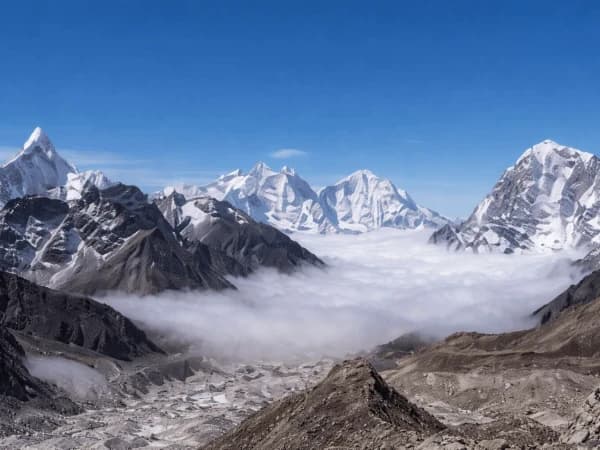
When you get to Kerung, you have to reconsider everything you thought you understood about Tibet. The trip from the Nepalese border at Rasuwagadhi leads you into a tight canyon where the Trishuli River, which is named the Gyirong Zangbo here, flows over rocks in milky turquoise rapids. Pine trees cling to slopes that are too steep to walk on. Waterfalls pour down cliffs, and the mist they make hangs in the air like silk. The road twists and turns, and with each curve, the plants get thicker, and the air gets thicker.
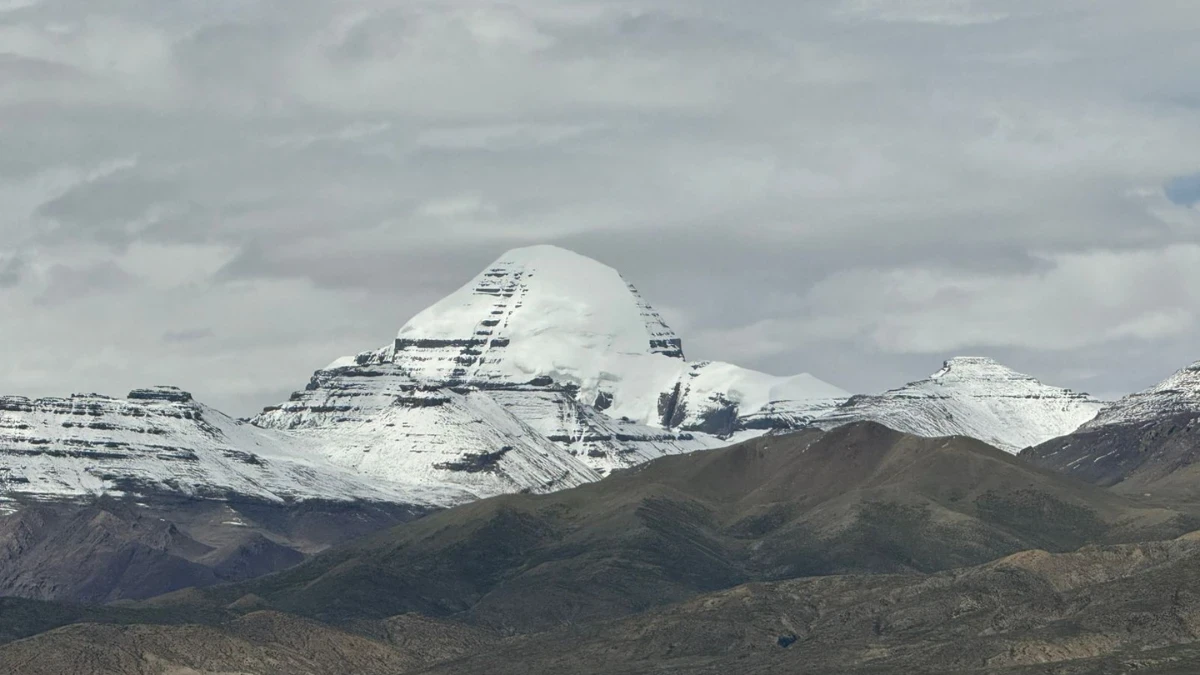
Suddenly, the valley widens. You can see Kerung town ahead, along the east side of the river. There are many whitewashed houses with wooden balconies and roofs made of corrugated tin. There are prayer flags between the structures. There are forested hills behind the town that lead to constant snow. It doesn't feel like Tibet; it feels more like a Himalayan Shangri-La, a secret valley where time runs at its pace.
This is not a mistake in perception. People in Tibet say that Gyirong Valley is the most beautiful valley in the whole country, and most people who have travelled a lot in the area agree. It is one of the Five Valleys near Mount Everest, and it has not been affected by the plateau's harsh weather. The weather here is like a subtropical monsoon. The winters are short and not too cold. There is a lot of rain. The valley seems to have forgotten what winter means because flowers blossom even in January.
What is the trading history of the Kerung valley?
Kerung is not merely a strange place. It is also a human one. For hundreds of years, this valley has been a way to get from one world to another. Tibetan, Nepali, and Indian cultures have all met, mixed, and made their mark here.
Since ancient times, the town has been an important place for trade. Yaks used to carry salt from the Tibetan plateau down these valleys and trade it for rice and grains from the warmer lowlands of Nepal. The path was a southern extension of the historic Silk Road, which linked the high desert to the lush plains. Caravans would stop here, their bells echoing in the small alleyways, before continuing on their long trips.
You can still see signs of this crossroads' history today. There is a settlement of ethnic Nepalis in Kerung town called the Daman people. They are the children of Gurkha troops who came here hundreds of years ago and stayed. For a long time, they lived in a type of limbo where they weren't totally Nepali or fully Tibetan. They became Chinese citizens in 2003, and today they are an important part of the town's fabric. Kerung has a unique character because of its presence. It is a mix of Tibetan Buddhist culture and Nepali customs that you won't find anywhere else.
What is Qiangdui Monastery near Kerung?
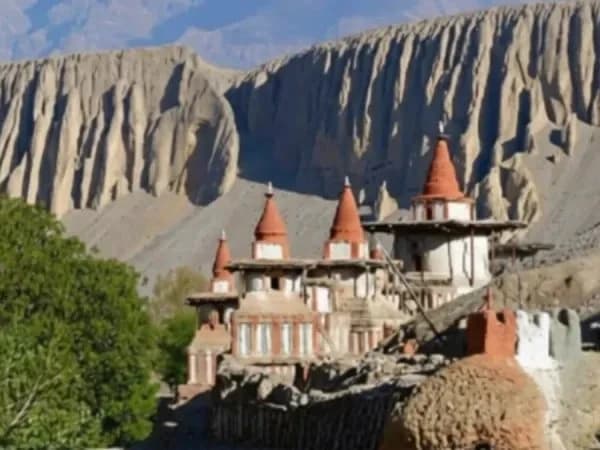
Hidden away in a village named Bangxing, a few kilometres from the town of Kerung, lies one of the oldest monasteries in western Tibet. The Potala and Tashilhunpo are much more impressive than Qiangdui Monastery. It is old, simple, and completely real.
The monastery is made of wood and has a square centre tower. It was built about 1,300 years ago during the time of Songtsen Gampo, the powerful Tibetan king who brought Buddhism to the plateau. The base is built of uneven stones held together with mud, a simple method that has somehow lasted over 13 centuries of earthquakes and weather. The brickwork above goes up four levels and has wooden eaves and a slabstone roof on top.
You can feel the weight of ages as you walk into its dark interior. The murals are fading but still clear. They show Buddhist gods and protectors in the style of western Tibet. The air smells of butter lamps, ancient wood, and incense. Monks walk silently into the shadows, and their presence is as much a part of the building as the old wood.
A stone tablet from the Tang Dynasty of China is etched into a cliff face nearby. The inscription says "Datang Tianzhu Shichu Ming," which is a tribute to Wang Xuance, a Chinese courier who travelled through this valley on a diplomatic mission to India in the 7th century. This plaque is a reminder that this part of the planet that seems so far away has never been completely cut off from the rest of the world. There have always been empires and messengers who came here.
Why did Kerung become the main Nepal-Tibet border crossing?
Kerung was a sleepy backwater for most of its modern history, known only to tradesmen and the rare brave traveller. A huge earthquake hit Nepal on April 25, 2015, and it changed everything.
The earthquake destroyed the Kathmandu Valley and caused avalanches on Everest. But it also ruined the Kodari Highway, which was the key commerce route between Nepal and China. It crossed the border near Zhangmu. Landslides and broken bridges made that crossing, which had been the main method to get across for decades, impossible to use. It was out of use for years afterwards.
Despite its official designation as a port of entry in 1961, Kerung unexpectedly gained significant importance. The Chinese government opened the Rasuwagadhi-Kerung crossing to international commercial traffic in December 2014, just a few months before the earthquake. Kerung was ready when the Kodari route fell apart.
In 2017, the crossing was turned into an international border point, which meant that anybody from all around the world could cross here, not just Nepalis and Chinese. This peaceful valley village became the primary road between Nepal and Tibet, and by extension, the rest of China, overnight.
This was a present for travellers. There are a few ways in which the Kerung route is better than the old Kodari highway. The valley is just more lovely, the elevation is lower, and the slopes are less steep. The diversion that used to be there became the main road.
What Is the Kerung Border Crossing Like?
Crossing from Nepal to Tibet at Kerung is like going through a beautiful bureaucracy. Rasuwagadhi is a small outpost on the Nepalese side of the border. It has a customs office and a line of vehicles waiting to cross. The Friendship Bridge is a modest concrete construction that crosses the river and supports a lot of weight.
There is a contemporary building on the Tibetan side where immigration paperwork is done. You get your passport stamped, your permits checked, and then you're in China. The road gets better right away. The Chinese have put a lot of money into this crossing as part of their larger Belt and Road Initiative. The road from the border to Kerung town is smooth and well-kept.
Kerung is where most people spend their first night in Tibet. This isn't just an issue of convenience; it's a matter of life and death. The town's moderate height provides an ideal environment for acclimating to the altitude. The route quickly rises from here to the high plateau, reaching heights of almost 4,500 metres in just one day's driving. Spending the night in Kerung, where the air is full of oxygen, can make the difference between a pleasant trip and a bad case of altitude sickness.
What Is Life Like in Kerung?
Kerung is a town that is changing right now. The old trading post is now a sophisticated border centre, and you can see indications of growth all over. New hotels have opened to accommodate the growing number of tourists and pilgrims. There are Chinese, Tibetan, and Nepali restaurants. There is a bank, but it won't take foreign cards, so travellers should bring cash.
There are guesthouses and stores along the main roadway that runs right through town. The Gyirong Shengtai Hotel has nice accommodations with hot water, which is a nice touch after days of hiking. Backpackers can stay at the Hand & Hand International Hostel for cheap. It has dormitory beds and a friendly atmosphere.
But there are development costs. The old ways are going away. The Daman villagers used to live in relative solitude, but now they are in the middle of an international crossing. Young people are more interested in tourism than in the traditional jobs that their ancestors did. The valley that used to be a secret garden is now a busy road.
But some of the old magic is still there. You can still locate the Kerung that has always been there if you climb into the hills away from the main road. Terraced fields that cling to high hills. The rooftops of these stone homes are adorned with prayer flags. Women in their 80s and 90s are spinning prayer wheels as they walk. The river sang a tune that filled the valley with its sound.
How do you travel from Kerung to Kailash and Lhasa?
The route from Kerung goes in two directions. The route heads south, returning to Nepal and the verdant valleys of the Himalayas. The route continues northward, entering the core of Tibet.
The road to the north keeps going up. The woodlands get thinner and disappear in a few hours. The air gets colder and thinner. Yaks graze on the thin grass of the Tibetan Plateau, a vast expanse where the horizon seemingly never ends. This road goes to Saga, Lake Manasarovar, Mount Kailash, and finally Lhasa.
Many Kailash pilgrims spend their first night in Kerung, Tibet, to rest and prepare for the journey. To them, the town is not just a border crossing; it's a holy door. The high plateau, the home of the gods, is beyond. In this green valley, people breathe their last breaths of rich air before going up to the high country.
The Spirit of the Place
What is Kerung, in the end? Yes, it is a border town, a trading post, and a gateway. But it's also something else. It is a location where diverse worlds converge, where green and white collide, and where the lowlands embrace the peaks. In a world of rock and ice, there is a valley of flowers. It is a reminder that Tibet is not a single place, climate, or culture, but a collection of areas, each with its own beauty and personality.
Kyirong is a lovely name since it means "pleasant village." In the high Himalayas, it's not common to find a place that is so nice and calm. Maybe it's the air full of oxygen, the sound of water, or the trees' green colour. Maybe it's just the fact that here is a site of passage, where travellers stop to rest before continuing on their adventures, and that rest itself is a type of blessing.
Kerung stays in the minds of people who cross here. Perhaps it's not as striking a memory as Everest, Kailash, or the Potala. However, it leaves a serene and comforting memory behind. It was a valley where the world slowly transformed, where the mountains extended their embrace, and a place where the traveller could pause and rest for the night.
Related Treks & Guides
- Kailash Mansarovar Tour 15 - Days Itinerary and Cost
- Kailash Trek via Simikot: 20 - Day Sacred Pilgrimage & Adventure
- Kailash Mansarovar Helicopter Tour
- Dolma La Pass (about 5,630m)
- Lake Manasarovar
If you are crossing into Tibet via Kerung, you need a guide and a permit arranged in advance. There is no way around this. Chinese regulations require it, and the border officials will turn you back without the paperwork. We handle all of this for our Kailash Mansarovar guests, including the vehicle on the Tibet side, the group visa, and the overnight in Kerung itself.
The crossing is straightforward when the paperwork is sorted. When it is not, it is a nightmare. Let us sort it for you.
WhatsApp:+977 9810351300
Email:[email protected]
Written by Shreejan Simkhada, CEO of The Everest Holiday and third-generation Himalayan guide. TAAN Member #1586.
Planning the Kailash Yatra via Kerung? Our Kailash Mansarovar Overland 14 Days package uses this exact border crossing. Private departures arranged on your dates, all permits handled, pricing on request. Message us on WhatsApp with questions.
 Chat with Shreejan