There is a teahouse in the Khumbu region — it will remain unnamed because naming it would defeat the purpose — where the rooms have heated floors. Not heated by a stove in the corner. Heated by an underfloor system that runs on solar and battery power, maintaining a temperature that would be unremarkable in a London hotel and is absolutely extraordinary at 3,800 metres in the Himalayas. The beds have proper mattresses. The showers are hot. The WiFi works. And the dal bhat is served on ceramic plates rather than metal.
This is luxury trekking in Nepal. Not the five-star resort experience that the word "luxury" conjures in a Maldives or Swiss Alps context. Something more nuanced — the careful, intentional elevation of comfort within a landscape that is fundamentally opposed to comfort. The mountains do not change. The altitude does not change. The trail does not change. What changes is how you feel at the end of the day, and whether the evening at the teahouse restores you fully or leaves you shivering in a sleeping bag wondering why you paid for this.
What Luxury Means at Altitude
Below three thousand metres, luxury in Nepal is straightforward. Boutique lodges with private bathrooms, spring mattresses, and room service. These exist on the lower sections of most treks — the approach valleys to Everest and Annapurna have seen investment from lodge operators who recognised that a growing segment of trekkers will pay more for comfort.
Above three thousand metres, luxury becomes a matter of degree rather than absolute standard. The best available room at four thousand metres is not a hotel suite. It is a room with thicker walls, a better mattress, an attached bathroom instead of a shared one down the corridor, and — if you are fortunate — heating that works. The dal bhat is the same dal bhat. But the bed you sleep in determines whether tomorrow's walk is powered by rest or endured through exhaustion.
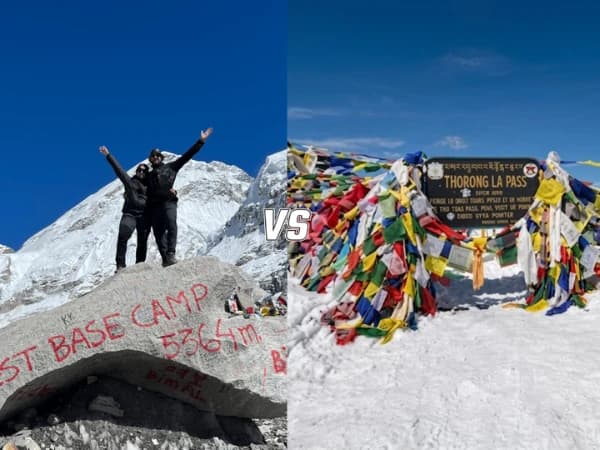
Above five thousand metres, luxury effectively ceases to exist. Gorak Shep and Everest Base Camp are cold, spare, functional. No amount of money changes the fundamental reality of sleeping at extreme altitude. What premium packages offer at these heights is not better rooms but better support — a senior guide with decades of experience, equipment that does not fail, and the confidence that comes from knowing every logistical detail has been handled by someone who has done this hundreds of times.
What Premium Packages Include
The specific inclusions vary by company, but the premium tier at most reputable Nepal trekking companies provides the best available rooms at every teahouse — booked in advance by the guide, secured before peak-season competition fills them. A senior guide — not a junior one gaining experience, but a veteran with thousands of days on the specific route. A sleeping bag and down jacket provided — high-quality, clean, and properly rated for the temperatures encountered. Bottled water throughout the trek. Hotel accommodation in Kathmandu at four-star level rather than tourist class. Welcome and farewell dinners at quality restaurants. Airport transfers in a private vehicle rather than shared transport.
Some companies add helicopter transfers as an option — flying from Lukla to Kathmandu instead of walking down, or flying into the Annapurna region instead of driving. These save days of travel and provide aerial views of the Himalayas that ground-based trekking cannot match.
What It Costs
Premium-tier EBC treks range from seventeen hundred to two thousand dollars with Nepal-based companies. International luxury operators charge three thousand to five thousand five hundred for the same routes. Lodge-based luxury treks — using the handful of purpose-built luxury lodges in the Khumbu — can reach four thousand to eight thousand dollars.
The price difference between budget and premium with the same Nepal-based company is typically five hundred to seven hundred dollars. For this, you get better rooms, better equipment, a more experienced guide, and the daily comfort margin that makes the difference between a trek you endure and a trek you enjoy.
The price difference between a Nepal-based premium package and an international luxury operator is often two thousand to four thousand dollars — and much of this premium goes to the international company's overhead rather than to improved on-the-ground experience. The guide is the same calibre. The trail is the same trail. The teahouses are the same teahouses. What you pay extra for is the reassurance of booking through a brand name in your own country, which for some trekkers is worth the cost and for others is not.
Who Chooses Luxury
Trekkers over fifty who want to maximise their energy for the trail rather than spending it managing uncomfortable nights. Sleep quality at altitude is the single variable that most determines day-to-day trek enjoyment. A better room — warmer, quieter, with an attached bathroom — translates directly into better sleep, which translates into better walking, which translates into a better experience of the mountains.
Couples celebrating a significant event — an anniversary, a retirement, a milestone birthday — who want the trek to feel special beyond the inherent specialness of the Himalayas. The difference between budget and premium is not just physical comfort. It is the sense that every detail has been anticipated and addressed.
Trekkers who have done budget treks before and know exactly what comfort they are willing to sacrifice and what they are not. The first trek teaches you your non-negotiables. The second trek lets you pay for them.
And professionals who earn well and value their limited holiday time highly enough to pay for the version that maximises enjoyment per day. If your annual leave is twelve days and this is the trip you have been planning for two years, the additional five hundred dollars for premium accommodation and an experienced guide is a trivial percentage of the total trip cost and a significant percentage of the total trip quality.
Who Should Not Choose Luxury
First-time trekkers who do not yet know what they need. Budget trekking is an education — it teaches you what cold feels like, what basic accommodation looks like, what your body can tolerate. This information is valuable. Spending it on your first trek gives you the knowledge to make informed decisions on every subsequent one.
Budget-constrained trekkers who would sacrifice other elements of their trip to afford premium. The mountains are the same at every tier. If premium means skipping Chitwan, shortening your time in Kathmandu, or choosing a less interesting trek route, the trade-off is not worth it. Better to do the trek you want at budget level than a lesser trek at premium.
Trekkers who equate luxury with hotel standards. If your expectation is room service, minibar, and a concierge, Nepal luxury will disappoint you at every altitude above two thousand metres. Premium trekking is not luxury as the Ritz defines it. It is the least uncomfortable version of an inherently uncomfortable activity — which, at its best, is vastly more rewarding than any comfortable alternative.
The Uncomfortable Truth About Comfort
Some of the most meaningful moments on a Nepal trek happen because of discomfort, not despite it. The camaraderie of huddling around a stove in a basic teahouse. The absurd joy of a lukewarm shower after three days without one. The satisfaction of eating dal bhat — not because it is gourmet but because your body needs it and the warmth and salt hit differently after seven hours of walking in cold air.
Luxury trekking removes some of these edges. The heated room means you do not huddle around the stove. The reliable hot shower means you never go three days without one. The premium dal bhat on ceramic plates is still dal bhat — but served without the context of desperation that makes the metal-plate version taste like the best meal of your life.
Whether this trade-off is worth making depends entirely on what you value. Comfort or intensity. Rest or rawness. The smooth version or the version with edges that cut and leave marks.
The mountains do not notice which version you chose. They are there for all of it.