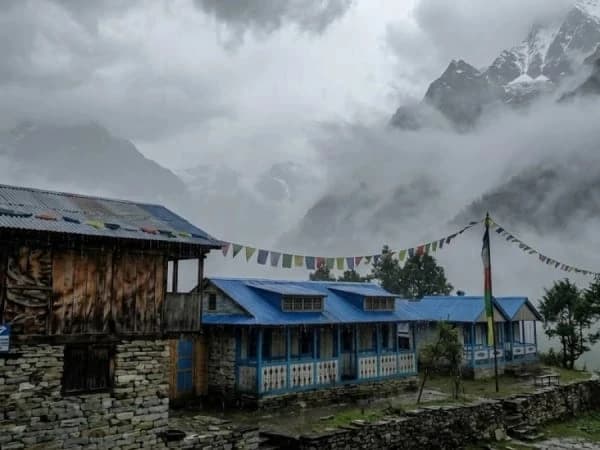
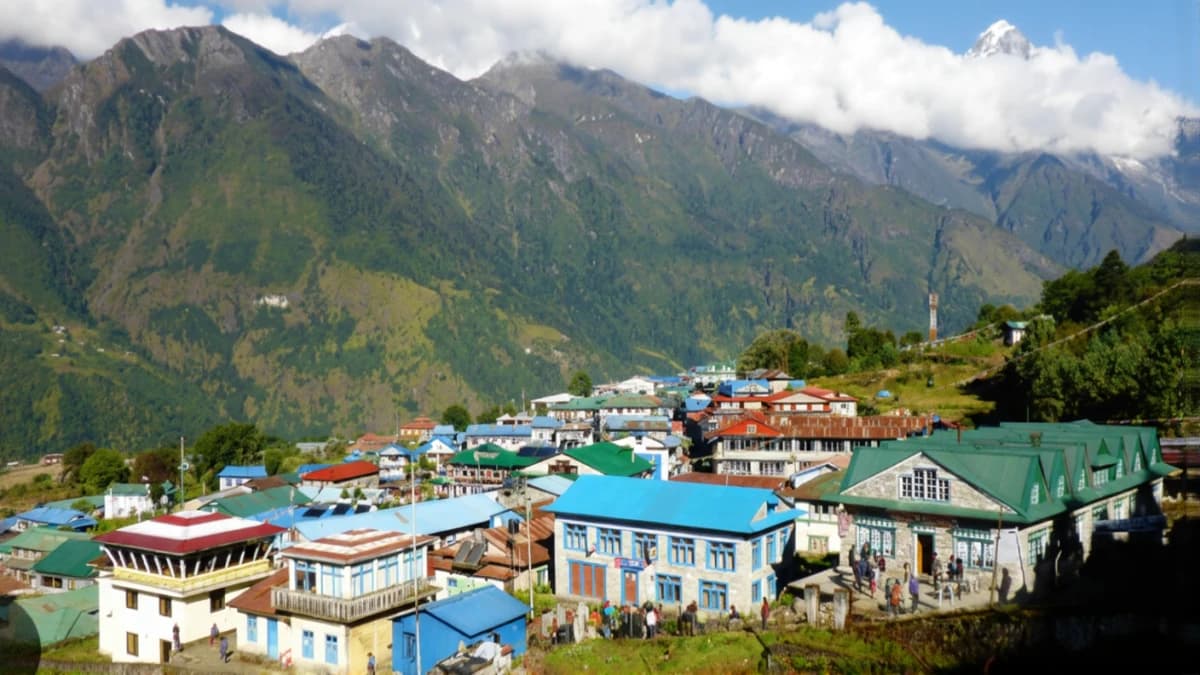
The first night on the Everest Base Camp trail is not spent at altitude. It is not spent in cold. It is not spent in a teahouse with thin walls and thinner air. It is spent in Phakding, at 2,610 metres, in a village so gentle and so green that it seems designed to ease you into everything that comes after , the altitude, the effort, the teahouse life, and the specific rhythm of walking, eating, sleeping, and walking again that will define the next twelve days of your life.
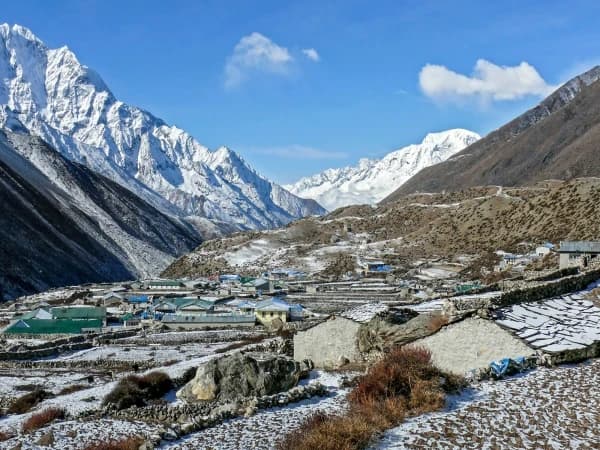
Phakding sits on the bank of the Dudh Koshi river , the Milk River, named for the glacial sediment that turns its water a pale, opaque blue-white. The village is small , a single street of teahouses and lodges strung along the trail, with prayer wheels at each end and a suspension bridge that sways gently when you cross it. The air smells of pine trees and wood smoke and the particular mineral scent of glacial water. The sound is the river , constant, rushing, a white noise that fills every silence and that you will hear, in diminishing volume, for the next week as you climb above its source.
Most trekkers dismiss Phakding as a transit stop. They arrive from Lukla in the afternoon, sleep, and leave for Namche the next morning. They treat it as the beginning of the walk rather than the beginning of the experience. This is a mistake. Phakding is where the trek teaches you how to trek , and what it teaches in those first eighteen hours determines how the next twelve days unfold.
Getting to Phakding
If you flew to Lukla, Phakding is a three-to-four-hour walk downhill. The trail from Lukla (2,840 metres) descends gently through the village of Cheplung, crosses the Dudh Koshi on a suspension bridge, and follows the river downstream to Phakding. The walking is easy , the altitude is moderate, the terrain is a well-maintained stone path, and the descent means your legs are fresh rather than burning. This is deliberate. The first day of the EBC trek is designed to be gentle, because your body has just been deposited at 2,840 metres by an aircraft and needs time to begin the acclimatisation process without the stress of a hard climb.
If you came by road , driving from Kathmandu to Salleri or Phaplu and trekking from there , Phakding is your second or third day on the trail, and you arrive having already walked through the beautiful hill country of the Solu-Khumbu. The road route trekkers arrive at Phakding with better acclimatisation than the fly-in trekkers, having spent two to three days walking at progressively higher altitudes.
Either way, you arrive in the afternoon. The sun is still warm at 2,610 metres. The teahouse owner greets you. Your guide selects a lodge. You drop your daypack, order tea, and sit on a bench outside the teahouse looking at the river and the forested hillside across the valley and the prayer flags strung between the trees, and you think: this is what I came for. And you are right, even though the mountains , the real mountains, the ones that will make you gasp and ache and cry and laugh , are still three days away.
The Village
Phakding is a trekking village , it exists because the trail passes through it, and its economy is built on feeding and housing the trekkers who stop for the night. This does not make it inauthentic. The families who run the teahouses are Sherpa families who have lived in this valley for generations. The teahouses are extensions of their homes. The food they cook , dal bhat, noodle soup, fried rice, chapati , is the food they eat themselves, prepared in kitchens where the family's children do homework at the same table where your dinner is served.
The village sits at the bottom of the Dudh Koshi valley, surrounded by steep, forested hillsides. Pine, rhododendron, and birch trees cover the slopes. Bird life is abundant , you may hear Himalayan monals calling from the forest, or see flocks of snow pigeons wheeling above the river. The temperature in October is comfortable , fifteen to twenty degrees during the day, dropping to five to ten at night. You sleep with a light blanket. You do not need your down jacket. You will not need it until Namche, two days from now.
The prayer wheels at each end of the village are functional, not decorative. Spin them clockwise as you pass , this is the direction of the Buddhist universe, and each spin releases the mantras printed on scrolls inside the wheel into the world. Your guide will show you on the first day. By the third day, you will spin them without thinking, and the habit will follow you up the valley to Everest and back.
What Phakding Teaches
Teahouse etiquette. Phakding is where you learn the social contract of teahouse trekking. You pay little or nothing for your room (free to three hundred rupees). In exchange, you eat dinner and breakfast at the lodge. This is not optional , it is the economic model that sustains the teahouse system. Your guide explains this on the first evening, and from Phakding onward, the pattern is set: arrive, check in, order tea, rest, eat dinner, sleep, eat breakfast, walk.
Packing rhythm. At Phakding, you unpack your duffel for the first time and discover what you packed wrong. The headlamp you buried at the bottom , you need it on top. The warm layers you stuffed in randomly , they need to be accessible in the daypack, not the duffel. The water bottle that does not fit in the side pocket , it needs to go in a different pocket. Phakding is where you reorganise, and the reorganisation makes the next eleven days more comfortable.
Walking pace. The walk from Lukla to Phakding is your body's first calibration of trekking pace. Not hiking pace , trekking pace, which is slower. The guide walks at a speed that feels frustratingly gentle. This is not because the guide is slow. It is because the guide knows that the pace that feels easy at 2,600 metres is the pace that will be necessary at 5,000 metres, and building the habit now , slow, steady, breathing controlled , prevents the habit of rushing that causes altitude problems later.
Hydration. Your guide tells you to drink three litres of water today. This seems excessive at 2,600 metres where you are not sweating much. It is not excessive. It is preparation. The hydration habit built at Phakding , sipping from your bottle every fifteen minutes, ordering tea at every stop, drinking soup with every meal , is the habit that prevents altitude headaches at 4,500 metres.
The Suspension Bridges
Between Lukla and Phakding, you cross your first suspension bridges. These are the bridges you have seen in photographs , steel cables strung across the Dudh Koshi gorge, with a metal mesh walkway that bounces and sways under the weight of trekkers, porters, and the occasional yak train. The bridges are narrow , one trekker wide in most cases , and the river below is fifty to one hundred metres down.
The bridges are safe. They are engineered, maintained, and inspected. The swaying is normal. The creaking is normal. The sensation that the bridge is about to collapse is not normal but is universal , every first-time trekker feels it, and every experienced trekker remembers feeling it.
Yak trains have priority on the bridges. If you see a train of yaks (or dzopkyo , yak-cow hybrids) approaching a bridge from either direction, stand to the mountain side (the uphill side) and let them pass. Do not stand on the downhill side. A yak that brushes against you on the mountain side pushes you into the hillside. A yak that brushes against you on the valley side pushes you toward the edge. This is the first trail rule your guide teaches, and it is the one with the most immediate physical consequences.
Where to Stay
Phakding has approximately a dozen lodges. They are similar in quality , twin rooms with two single beds, thin mattresses, and blankets. Shared bathroom with squat toilet. Hot shower available at some lodges (three hundred to five hundred rupees). Common room with a stove that burns dried yak dung or wood. Menu posted on the wall.
Your guide chooses the lodge. This is not arbitrary , guides have established relationships with specific lodge owners, built over years of bringing trekking groups through. The relationship ensures good rooms, good service, and the specific attention that comes from the lodge owner knowing your guide by name and wanting to maintain the business relationship.
If you are trekking independently (with your mandatory guide but without a group), you may have more choice. The lodges at the northern end of the village tend to be quieter. The lodges at the southern end, closer to the bridge, tend to be livelier. The difference is minor , at Phakding, all lodges are comfortable by teahouse standards.
The Evening
Dinner at Phakding is served at six or seven in the evening. The common room fills with trekkers from that day's arrivals , a mix of nationalities, ages, fitness levels, and trekking ambitions. Conversations start easily. Where are you from. How long is your trek. Is this your first time. Have you done EBC before. The common room at Phakding is the social beginning of the trail , the place where the strangers who will walk the same path for the next two weeks first meet, share stories, compare gear, and quietly assess each other's fitness.
After dinner, the common room empties quickly. Eight o'clock is late at Phakding. The altitude , mild as it is , makes sleep come easily. The river provides the soundtrack. The stars, visible through the window of your room, are brighter than anything you have seen from sea level. And the down jacket that you packed but do not need tonight hangs on a hook on the wall, waiting for the altitude where it will become the most important garment you own.
The Morning After
You wake at six. The air is cool but not cold. Tea arrives , brought by the lodge staff or available in the common room where the stove was lit an hour ago. Breakfast: porridge, eggs, chapati, or pancakes. Your guide checks in: how did you sleep. Any headache. How do you feel. These questions are not small talk. They are the first of many daily health assessments that your guide performs without making them feel clinical.
At seven or seven-thirty, you walk. The trail from Phakding to Namche Bazaar is five to six hours , the day that transforms the trek from gentle to real. The climb to Namche gains 830 metres in altitude. It is steep. It is sustained. And it ends at 3,440 metres, where the air is noticeably thinner and the mountains , which have been hidden behind forested ridges since Lukla , suddenly appear.
You leave Phakding knowing how to trek. You leave knowing how to eat at a teahouse, how to pack your daypack, how to cross a bridge, how to walk at trekking pace, and how to hydrate for altitude. You leave having slept your first night on the trail and having survived it comfortably. And you leave with the specific confidence that comes from having begun , the knowledge that the hardest part of any trek is not the altitude or the cold or the distance but the decision to start, and that decision is now behind you.
Phakding is not the summit. It is not the destination. It is the beginning. And like all good beginnings, it gives you everything you need for what comes next without telling you how hard what comes next will be.