

Short answer: Tortong (about 2,995 m) is a forest camping spot in the Simbua Khola valley on the way to Kanchenjunga South Base Camp, with no lodges, set in one of the most intact forests in eastern Nepal. It is a stop on the south-side approach. It is on our 19-day Kanchenjunga Base Camp trek.
Tortong Village: The Forest Gateway on the Kanchenjunga South Base Camp Trek
The trail narrows to a thread of packed earth, and the canopy closes overhead. Rhododendron branches knot together above you like the ribs of a cathedral, filtering the morning sun into pale green shafts that fall across the path. Somewhere in the understorey, a bird you can't see produces a sound like water dropping into a copper bowl: two clear notes, then silence. Your guide stops walking, tilts his head, and smiles. "Satyr tragopan," he says quietly. "We're lucky."
This is Tortong (sometimes written Torontan on older maps), a small clearing in the Simbua Khola valley at approximately 2,995 metres. It's not a village in any conventional sense. There are no lodges, no menu boards nailed to wooden posts, no solar-charged phone stations. Tortong is a camping spot carved from one of the most intact forests in eastern Nepal, a place where the trail between Yamphudin and Tseram pauses long enough for trekkers to pitch tents, boil water, and sleep surrounded by trees that have been growing undisturbed for centuries.
If you've trekked the popular routes (Everest Base Camp, the Annapurna Circuit), Tortong will feel like stepping into a different country altogether. The Kanchenjunga region receives a fraction of the foot traffic, and this section of the trail, threading through the Kanchenjunga Conservation Area's dense montane forest, is where that remoteness becomes tangible. You'll hear more birds than people. The air smells of damp bark and wild orchids. And for one night, your tent becomes the only structure for kilometres in any direction.
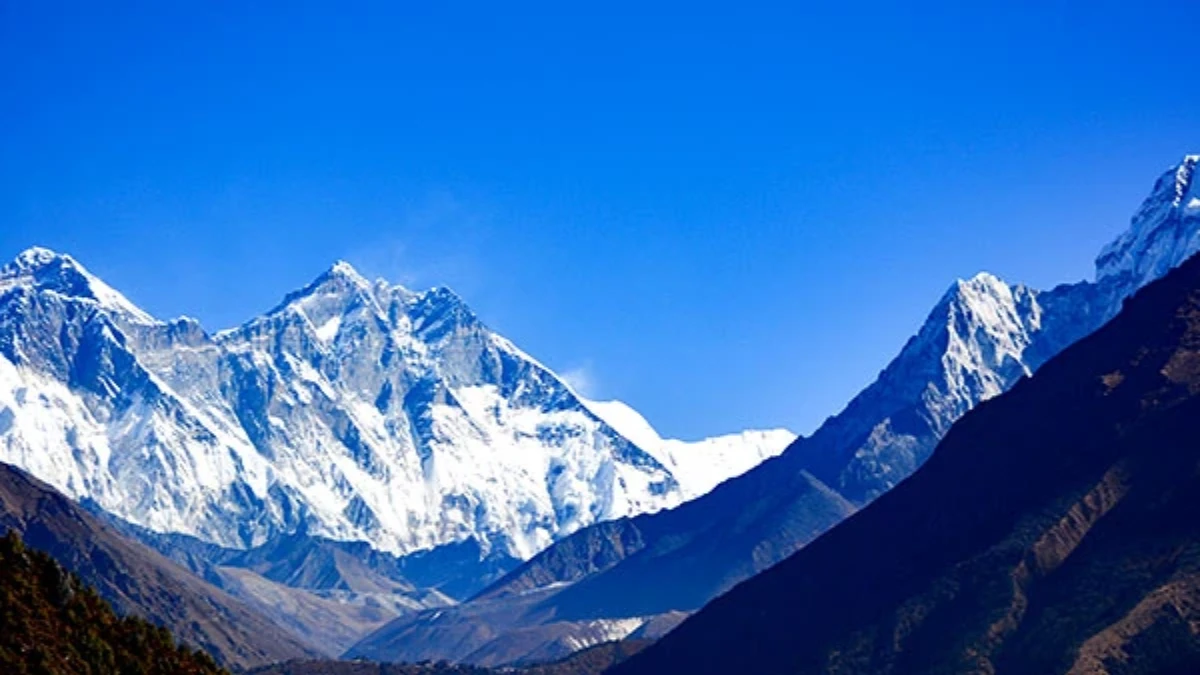
Where is Tortong on the Kanchenjunga South Base Camp trek?
Tortong lies roughly halfway between Yamphudin (approximately 2,080m) and Tseram (approximately 3,870m) on the southern approach to Kanchenjunga Base Camp. The Simbua Khola, a fast, milky river fed by glacial melt from the Yalung Glacier higher up, runs through the valley below. The trail follows the river's left bank, climbing gradually through forest that changes character with every few hundred metres of altitude gained.
Most trekking itineraries reach Tortong on the third or fourth day out of Taplejung, depending on pace and acclimatisation strategy. The walk from Yamphudin takes roughly five to six hours, not technically difficult, but steady. The trail gains around 900 metres over the course of the day, much of it through forest so thick that you lose sight of the sky for long stretches. It's the kind of walking where you measure progress not by visible peaks but by the changing trees around you.
From Tortong, the next day's walk to Tseram takes another five to seven hours, climbing through increasingly sparse vegetation as the treeline approaches. Tortong, then, is the last night you'll spend fully enclosed by forest before the landscape opens into the alpine zone, the high, rocky, wind-scoured terrain that leads eventually to Kanchenjunga South Base Camp at Oktang (4,730m).
The Forest, A Living Transition Zone
What makes the walk to and through Tortong extraordinary isn't the destination itself, it's everything growing around you on the way there.
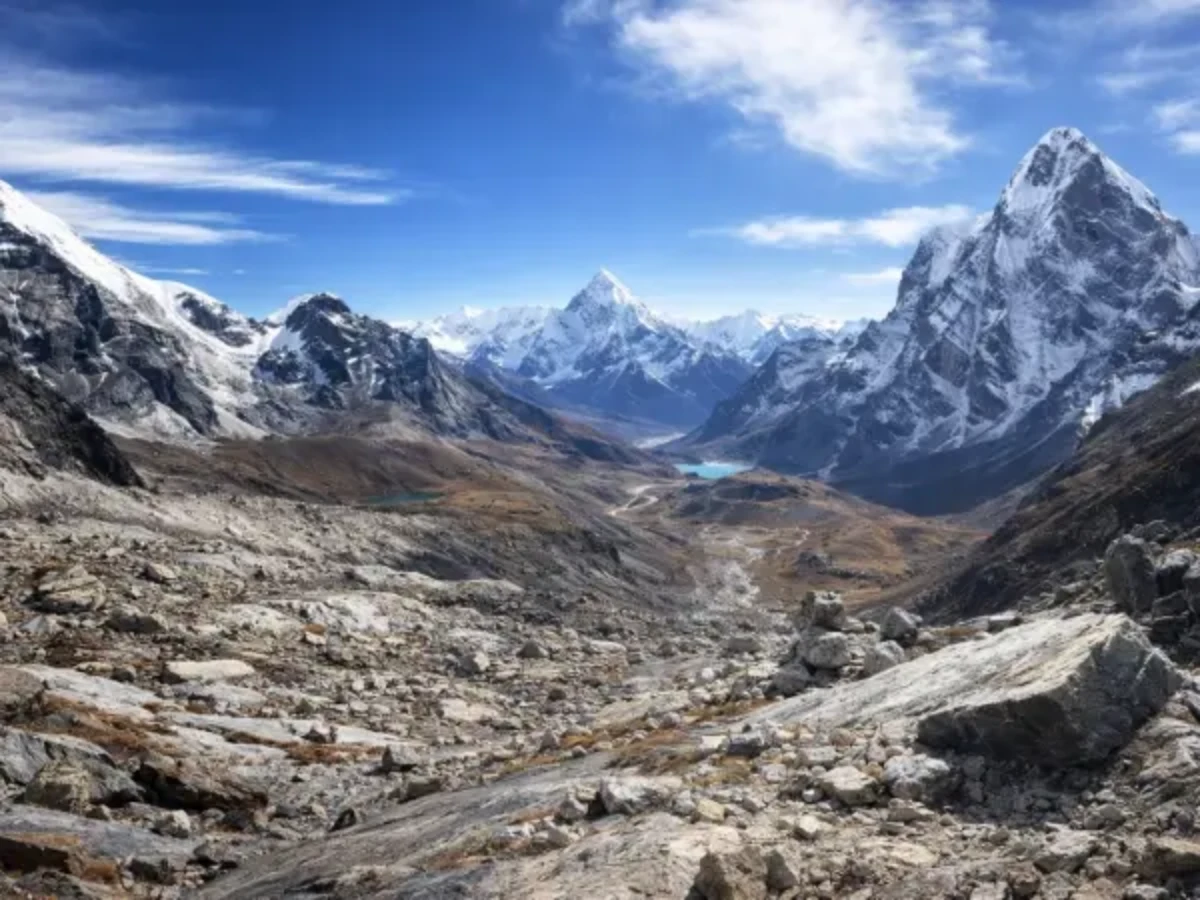
At around 2,500 metres, the subtropical vegetation of the lower Simbua Khola valley begins to give way to temperate forest. Sal and chilaune trees thin out. Oaks take over, Quercus lamellosa with their broad, leathery leaves, and Quercus semecarpifolia higher up, their trunks shaggy with moss and lichen. Rhododendrons appear in increasing density: Rhododendron arboreum with its deep crimson flowers in spring, and higher still, Rhododendron barbatum and Rhododendron campanulatum forming dense, twisted groves.
By the time you reach Tortong at nearly 3,000 metres, you're walking through a classic eastern Himalayan cloud forest. The trees are draped in old man's beard lichen (Usnea longissima), which hangs from branches in pale green curtains. The forest floor is carpeted with ferns, mosses, and fallen leaves so deep and soft that your boots sink into them with each step. In the wetter months, orchids cling to tree trunks at head height, some tiny and white, others with elaborate spotted petals.
This transition zone is ecologically significant. The Kanchenjunga Conservation Area, which protects the forest here, covers over 2,000 square kilometres and contains some of the most biodiverse habitat in the entire Himalayan range. The conservation area was established in 1997 and is managed with significant involvement from local communities, a model that's proved more effective than many top-down approaches to conservation in Nepal.
For trekkers, the practical result is simple: you're walking through forest that hasn't been logged, grazed to exhaustion, or replaced by terraced farmland. It's intact. And that intactness means the wildlife is still here too.
What wildlife can you see near Tortong village?
Eastern Nepal's forests are a hotspot for Himalayan bird species, and the Tortong section of the trail is one of the best places to encounter them.
The satyr tragopan, that copper-bowl bird your guide identified, is the headline act. It's a pheasant, technically, but it looks nothing like the pheasants of European farmland. The male is a deep crimson covered in white-centred ocelli (eye-shaped spots), with a bare blue face and inflatable throat wattle used in courtship displays. They're shy, ground-dwelling birds that prefer dense rhododendron undergrowth, and hearing one is far more common than seeing one. But if you're walking quietly through the forest around Tortong at dawn, you've a genuine chance.
Other birds you're likely to encounter include the Himalayan monal (Nepal's national bird, with its iridescent plumage catching the light like spilled petrol), blood pheasants, kalij pheasants, and a variety of laughingthrushes, chestnut-crowned, white-throated, and the wonderfully named streaked laughingthrush, whose song carries through the forest canopy in the early morning.
Smaller species are everywhere if you're paying attention: fire-tailed sunbirds probing rhododendron flowers, rufous-bellied woodpeckers drumming on dead trunks, and the tiny, restless flocks of warblers and yuhinas that move through the mid-canopy like schools of fish.
As for mammals, the forests around Tortong are home to Himalayan black bears, red pandas, and musk deer, though all three are elusive. Red panda sightings are rare but documented in this valley. More commonly, you'll see evidence rather than animals themselves: claw marks on tree bark, droppings on the trail, the distinctive scrape marks where musk deer have rubbed their glands against rocks. Langur monkeys are more visible, moving through the upper canopy in family groups, and you may hear their alarm calls bouncing through the trees long before you spot them.
Do you camp or stay in teahouses at Tortong?
Let's be direct about logistics: Tortong is a camping spot, not a teahouse stop. There are no permanent structures here, no kitchens, no toilets beyond what your crew sets up. Everything you need, tents, food, cooking equipment, water purification, comes with you on the backs of porters or pack animals.
The camping area itself is a relatively flat clearing in the forest, large enough for several tents with space between them. The ground is typically soft, sometimes too soft after rain, and slightly sloped in places. Your crew will scout the driest, flattest spots before pitching. A small stream runs nearby, providing water that should still be purified before drinking despite its clear appearance.
Evenings at Tortong are quiet in a way that takes some getting used to if you've spent previous nights in teahouses with other trekkers. The forest dampens sound. Conversation around the cooking area drops to a natural murmur. After dinner, typically dal bhat prepared by your trek cook, with whatever fresh vegetables were carried up from the lower villages, the temperature falls quickly. At nearly 3,000 metres, nighttime temperatures between October and November (peak trekking season) can drop to around 2-5°C. A good sleeping bag rated to at least minus 10°C is essential, and a foam or inflatable sleeping mat makes a real difference on the cold ground.
One thing that surprises many trekkers at Tortong is the sound of the forest at night. The Simbua Khola provides constant background noise, a deep, steady rush that never quite fades from awareness. Layered over that, you'll hear rustling in the undergrowth (most likely small mammals or ground-feeding birds), the occasional bark of a deer, and sometimes the deeper, more unsettling sounds of a forest that hasn't learned to be afraid of people. It's wildly atmospheric. Some trekkers find it hard to sleep. Others say it's the best night of the entire trek.
Who are the Limbu and Rai people near Tortong?
While Tortong itself is uninhabited, the communities of the lower Simbua Khola valley, particularly around Yamphudin and the villages you'll pass through on the approach, are predominantly Limbu and Rai, two of Nepal's indigenous Kirati peoples.
The Limbu have lived in the hills of eastern Nepal for centuries, and their connection to this landscape runs deep. Their traditional homeland, known as Limbuwan, encompasses much of the territory between the Arun and Mechi rivers. The Limbu language, Yakthungpan, belongs to the Tibeto-Burman family and is still widely spoken in these villages, though younger generations increasingly use Nepali in daily life.
Limbu culture is rich with traditions that trekkers may catch glimpses of when passing through settlements on the trail. Houses are typically two-storey structures with bamboo or wooden walls and thatched or tin roofs. The ground floor often serves as storage and livestock space, while the family lives above. If you're invited inside, and hospitality in these villages is genuine and warm, you may be offered tongba, the Limbu millet beer served in a tall bamboo or wooden vessel with a bamboo straw. Hot water is poured over fermented millet, and you sip the warm, slightly sour liquid through the straw. It's both a drink and a social ritual, and refusing it would be unusual.
The Rai communities in the region share many cultural similarities with the Limbu, both are Kirati peoples with shamanistic traditions that predate both Hinduism and Buddhism in Nepal. Rai shamans, known as bijuwa or nakchong, still play important roles in community life, performing healing rituals and seasonal ceremonies that mark planting, harvest, and the transitions between seasons.
For trekkers, the cultural takeaway is this: you're not walking through empty wilderness. These forests and valleys have been known, named, and cared for by Kirati peoples for generations. The trails you walk were made by them. The conservation area that protects the forest exists in part because local communities advocated for it. Tortong may be uninhabited, but it sits within a landscape that is deeply inhabited in ways that aren't always visible from the trail.
What is the Kanchenjunga Conservation Area?
Nepal's protected areas have had a complicated history. Some national parks were established by displacing communities; others succeeded precisely because they didn't. The Kanchenjunga Conservation Area falls firmly in the second category.
Established in 1997, the KCA covers 2,035 square kilometres of eastern Nepal's most remote territory, stretching from subtropical valleys at around 1,200 metres up to the summit of Kanchenjunga itself at 8,586 metres, the third-highest mountain on earth. The conservation area is managed by local community groups rather than the national parks authority, a model inspired by the Annapurna Conservation Area Project but adapted for the specific conditions of the east.
This community-based management has had measurable results. Forests in the KCA are in better condition than many comparable areas elsewhere in Nepal. Hunting has been significantly reduced. And the wildlife populations, including snow leopards at higher elevations, red pandas in the temperate forest, and a remarkable diversity of bird species, have stabilised or grown.
For trekkers walking through Tortong, the KCA's protection is the reason the forest looks and feels the way it does. Without it, these slopes would likely have been logged for timber or cleared for grazing, as has happened in many other Himalayan valleys. Instead, you're walking through forest that functions as a connected ecosystem, where the satyr tragopan can still breed undisturbed, where red pandas can find enough bamboo to feed, and where the orchids and ferns of the understorey haven't been stripped for trade.
A Kanchenjunga Conservation Area permit is required for all trekkers. Your trekking company will arrange this as part of your overall permit package, it's not something you need to organise independently.
What are the trail conditions on the Tortong section?
The trail between Yamphudin and Tortong is well-established but not maintained to the standard of Nepal's busier trekking routes. Expect narrow paths through forest, occasional muddy sections (particularly during and just after the monsoon), exposed tree roots, and a few short but steep climbs where the trail switchbacks up through dense rhododendron.
River crossings in this section are generally straightforward, small tributary streams crossed on logs or stepping stones. The main Simbua Khola runs below the trail and doesn't need to be forded. However, after heavy rain, side streams can swell quickly, and logs can become slippery. Trekking poles are strongly recommended for balance.
The trail is not signposted. Navigation depends on your guide, who'll know the route intimately. This is one of the many reasons why trekking independently in the Kanchenjunga region isn't practical, beyond the licensed-guide requirement for this restricted area, the route-finding alone requires local knowledge.
Leeches are present in the forest during and after the monsoon (roughly June to September). If you're trekking in the shoulder months of late September or early October, you may still encounter them. Gaiters, insect repellent applied to boots and socks, and regular checks during rest stops are the best defences. They're harmless but unpleasant, and most trekkers develop a reasonably philosophical attitude towards them by day three.
Mobile phone signal is nonexistent at Tortong and intermittent throughout much of the Simbua Khola valley. If you need to communicate with anyone outside the trek, plan to do so before leaving Yamphudin or after reaching Tseram, where signal is sometimes available. Carry a power bank, there's nowhere to charge devices between villages.
What to Pack for the Tortong Section
A few items become particularly important for this stretch of the trek:
A warm sleeping bag, rated to minus 10°C minimum. The forest traps cold air at night, and camping at 2,995 metres in autumn or spring means genuinely cold nights.
A reliable headtorch, with spare batteries. There's no ambient light at Tortong. When the cooking fire goes out, the darkness is total.
Waterproof layers, the cloud forest earns its name. Even in the dry season, mist and light rain can move through quickly, and the forest canopy drips long after the sky has cleared.
Binoculars, if you've any interest in birds at all, this is the section where binoculars transform the experience. Compact, lightweight models are fine.
A sense of patience, Tortong rewards slow walking and quiet attention. The trekkers who rush through the forest to reach camp quickly miss most of what makes this section special.
Why Tortong Stays With You
Most people who trek to Kanchenjunga South Base Camp come home talking about Oktang, the massive amphitheatre of ice and rock at 4,730 metres where the Yalung Glacier spills down from Kanchenjunga's south face. That's understandable. It's one of the most dramatic mountain viewpoints in Nepal.
But when you ask the same trekkers about their favourite night of the trip, not the most spectacular, but the one they remember most vividly, a surprising number will mention Tortong. The forest. The quiet. The feeling of being genuinely remote, genuinely small, genuinely present in a landscape that doesn't care if you're there or not.
There's something about sleeping in a tent in unbroken forest, with no walls between you and whatever's moving through the undergrowth, that recalibrates your sense of scale. The mountains ahead will be enormous and humbling. But the forest at Tortong is humbling in a different way, older, quieter, and profoundly indifferent to human schedules and ambitions.
You'll wake before dawn to the sound of birds you can't identify, unzip your tent into cold air that smells of moss and woodsmoke, and watch your breath cloud in the torchlight as you pull on your boots for another day's walking. The peaks are still hidden above the treeline. The glacier is still days away. But something about this morning, this particular clearing in this particular forest, will lodge itself in your memory and refuse to leave.
That's Tortong. Not a destination, exactly. More like a threshold, the last doorway of green before the mountains begin.
Tortong is on the descent from Kanchenjunga South Base Camp on the Kanchenjunga Base Camp Trek (19 days).
Tortong is deep Kanchenjunga. The forest here is old-growth, the trail sees fewer than ten trekkers a week in peak season, and the bird calls are sounds you have never heard before. This is Nepal before the tourism boom, preserved by distance and difficulty. If that is what you are looking for, the Kanchenjunga south base camp trail delivers it.
Tortong is on our Kanchenjunga Base Camp Trek.
WhatsApp:+977 9810351300
Email:[email protected]
Written by Shreejan Simkhada, CEO of The Everest Holiday and third-generation Himalayan guide. TAAN Member #1586.
Tortong is the Kanchenjunga South Base Camp gateway. Our Kanchenjunga Base Camp Trek (19 Days) is private (your group only, no strangers), 2027 dates open, From USD $1655. WhatsApp us for tailored 2027 dates and current departures.

 Chat with Shreejan