

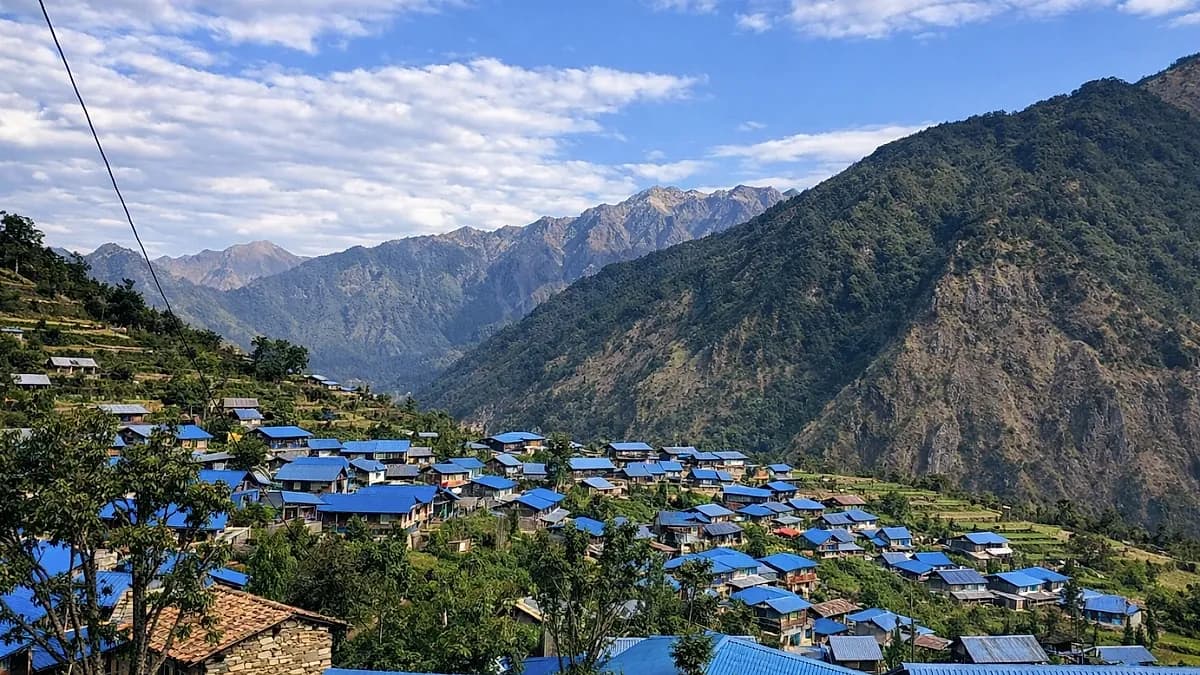
Short answer: Tipling is a village in northern Dhading known for its natural hot springs and for the meeting of Tamang and Gurung cultures, and it is the last comfortable stop before the wilder Ruby Valley. Walk through it on our Ruby Valley trek.
There is a village in Nepal where the earth breathes warm mist into the chilly mountain air, where the language of the hills varies with every valley, and where two worlds (Tamang and Gurung) meet in silent harmony. Tipling is more than just a point on the map of the Dhading district; it is a boundary. For many years, people who traded across the Himalayan passes only murmured its name. Today, it is the last spot of comfort before the wild Ruby Valley, where ancient stone cottages cling to the slope, and the steam from natural hot springs mixes with the smoke from evening fires. Once you reach Tipling, the trek's weight eases, and you settle into the warmth of a region that has welcomed tourists for centuries.
Where it is and its geography
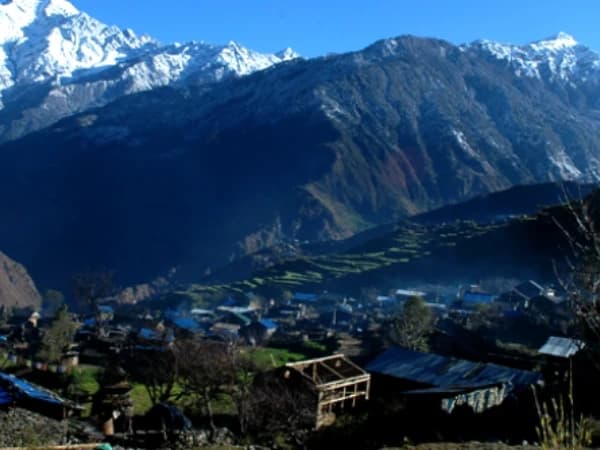
Tipling is at a place that seems like it was meant to be dramatic. The village lies in Nepal's Bagmati Province, in the northern portion of the Dhading district. It lies at a high altitude that puts it in a transitional zone between the Middle Hills and the High Himalaya. Tipling is about 1,900 to 2,100 metres above sea level; therefore, it doesn't get the hot, humid weather of the lowlands or the dry, cold weather of the trans-Himalayan plateaus.
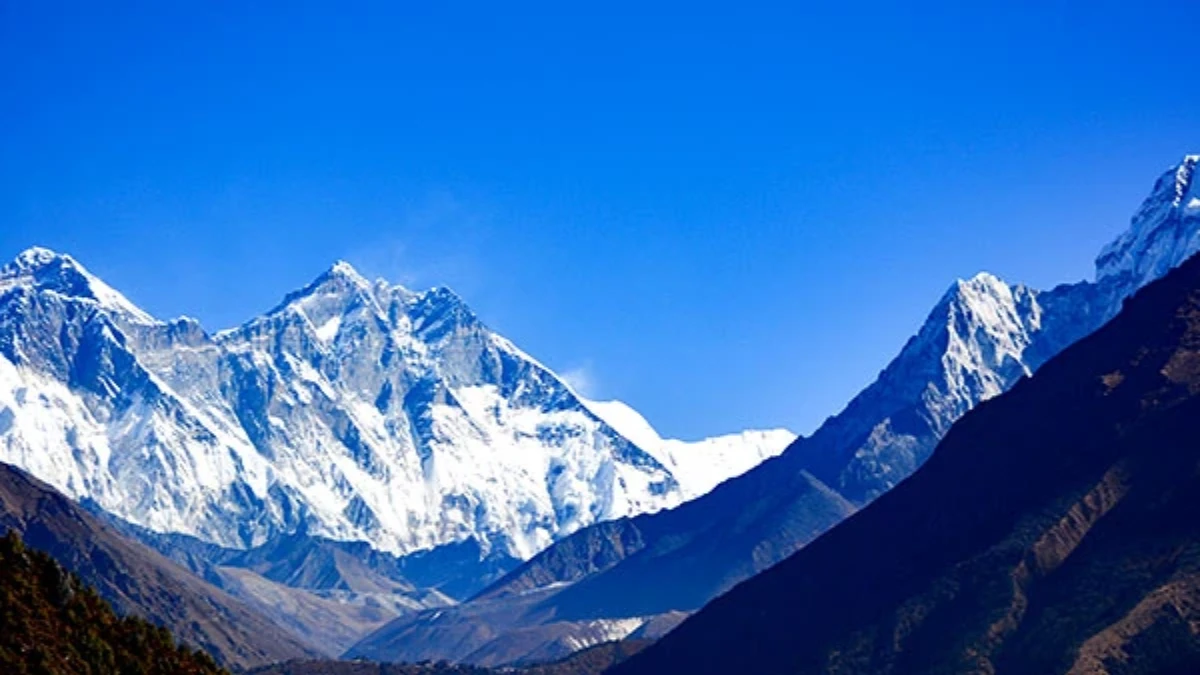
The settlement sits in a large valley that the flow of glacial rivers has hollowed out. The valley is a wonderful place to catch the sun. The land rises dramatically to the north toward the passes that lead to the famous Ruby Valley and the base camp areas of the Ganesh Himal. The hills slope down to the south, where there are terraced crops and forests. The geography here is characterised by contrast: dense rhododendron and pine forests give way to rocky outcrops, while the distant gleam of snow peaks (Ganesh Himal and Langtang Lirung) frames the horizon like sentinels gazing over the valley.
How to get there?
Your journey to Tipling takes you through the heart of rural Nepal. It takes time, but it's worth it because you get to really experience it.
-
The Road Approach: Tipling is slowly becoming easier to get to by road than the highest communities in the Himalayas. From Kathmandu, travellers can drive through Malekhu and down the winding Dhading Besi road to get to the trailhead. Jeep trails have gotten closer to the village in the last few years, but the last part of the trip is still often a walk, which keeps it quiet.
-
The Trekking Connection: Tipling is an important stop for people on the Tamang Heritage Trail or the Ruby Valley climb. The path from Gatlang and Somdang goes down through pine trees and over high slopes until it reaches the Tipling valley. Hikers can adapt to the changing scenery while walking with this multi-day plan.
-
The Seasonal Reality: Weather has a big impact on how easy it is to get to places. During the spring and fall, the trails are busy with people; however, the latter parts can be treacherous and challenging to walk on during the monsoon rains. The settlement is rarely totally blocked by snow in the winter, but the higher passes can be dangerous.
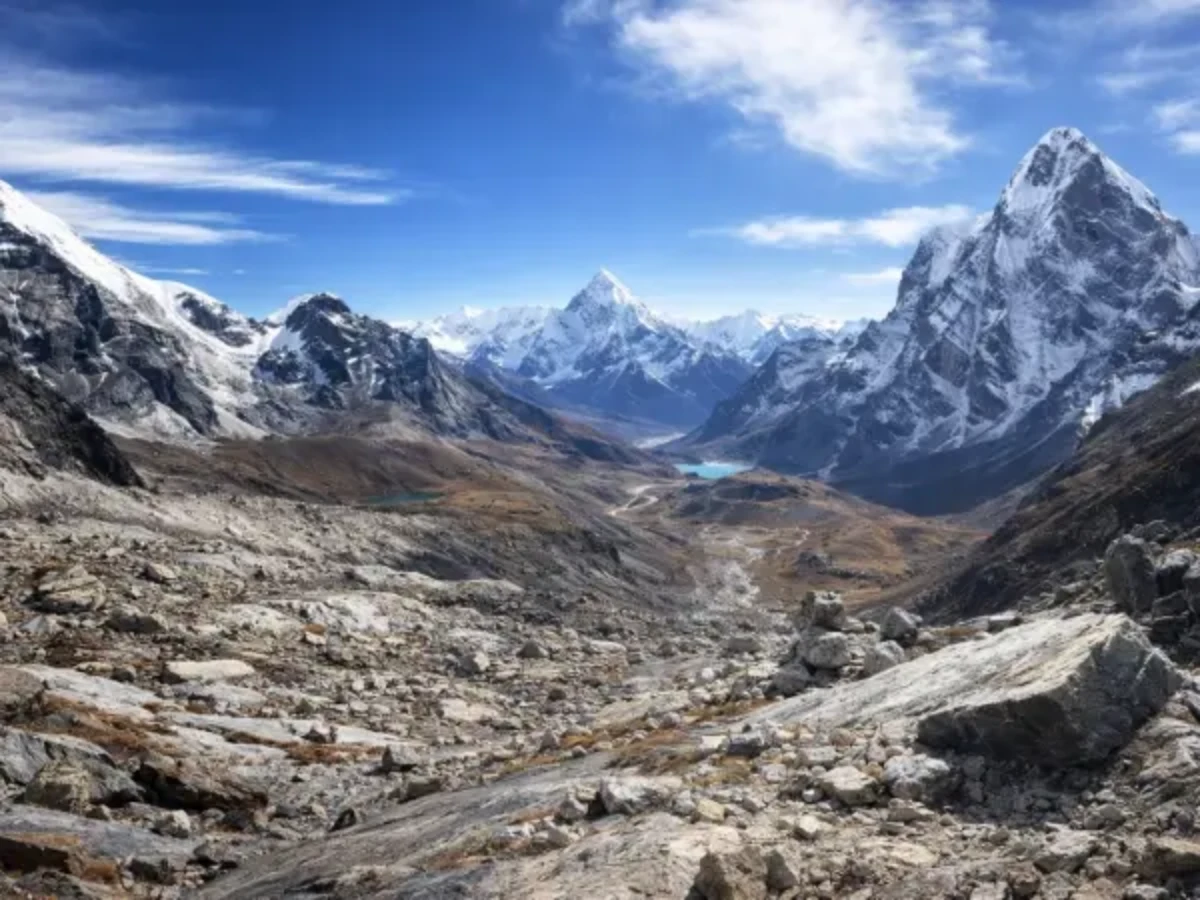
Cho La Pass crossing between Everest and Gokyo
What Facilities Are Available in Tipling?
Tipling occupies a unique position in the Himalayan hiking hierarchy, balancing development and authenticity.
-
Tea Houses & Lodges: A few permanent lodges are the main places where visitors stay. These family-run businesses are made of local stone, have roofs that keep out the monsoon rain, and use traditional burners to heat the inside. They have separate rooms with modest furniture and communal dining spaces where people who don't know each other can eat together and develop friendships.
-
Local Shops: Small stores in the village sell basics like batteries, bread, noodles, and sometimes even chocolate bars. They are also the best places to buy potatoes, millet, and the famous Himalayan buckwheat, which all come from farms nearby.
-
Community Infrastructure: Tipling has a health post for basic medical requirements, a few local schools where children learn in Nepali and Tamang, and more and more solar panels that offer a little bit of electricity. Mountain streams bring water to the settlement, which is then routed through traditional stone taps.
-
The Hot Spring Facility: The best thing about Tipling is the minimal infrastructure around its natural hot springs. There are simple changing rooms and stone-lined pools where guests may relax after a long hike.
Major Attractions
Tipling's attraction comes from the fact that it has both natural beauty and cultural depth in one valley.
-
The Tipling Hot Springs (Tatopani): These mineral-rich hot springs are the village's most notable feature. They come from deep geothermal fractures in the ground. The water comes out at a temperature that changes with the seasons, but it's always warm enough to relax sore muscles. People in the area talk of its healing powers, and for visitors coming from the high passes, it is a baptism of warmth and new life.
-
The Ganesh Himal Panorama: From the peaks above Tipling, you can see the whole Ganesh Himal range in all its glory. Here, you only share the view with the wind and the occasional eagle, not with many other people, like on other walking paths. Peaks like Ganesh I, II, and III make a jagged wall of ice that captures the first and final light of the day.
-
The Tamang-Gurung Cultural Mosaic: Tipling is a place where many cultures meet. The Tamang people have strong traditions in the lower village, such as their language, Buddhist chhortens, and festivals. You can see the Gurung villages' impact on the architecture and the looks of the inhabitants in the upper reaches. This blend creates a unique cultural texture.
-
The Ancient Commerce Route Markers: If you go around Tipling, you can see signs of its past as a commerce centre. Along the pathways are old mani walls with prayers etched into them. Safe paths are marked by stone chortens. These are not just religious symbols; they are also historical markers along the old road that used to connect Nepal and Tibet.
Important Things to Do
Tipling encourages people to get involved instead of just watching. It is a location where you can accomplish things, not simply see them.
-
You have to soak in the hot springs. Allow the mineral water to rejuvenate your body for an hour during the late afternoon. The ideal moment is right before sunset, when the light turns golden and the noises of the hamlet recede into the distance.
-
Village Walks and Homestay Interaction: Walk through the stone-paved streets that connect the houses. Say yes to the tea invitation. You may see women make baskets or grind millet. Tipping's real cultural immersions happen when people interact with each other in unplanned ways.
-
Day hikes to ridge viewpoints: Several routes go from the settlement to the ridges around it. These are half-day trips that give you better views of the valley and the peaks beyond. The hike to the Ganesh Himal viewpoint is really worth it.
-
Learn Local Crafts: During certain times of the year, local women hold informal courses on crafting bamboo baskets or weaving. You can learn about how these crafts are used in everyday life while making something with your hands.
-
Meditation by the River: The river that flows past Tipling has made several little beaches and flat rocks that are ideal for silent thought. You don't need anything else to help you meditate other than the sound of water against stone.
What Does Tipling Stand For?
Nepali travellers know and love Tipling as an important and well-known place to visit. Many people like it as the "Gateway to the Ruby Valley," but it's also a great spot to visit on its own.
Many trekkers around the world come here to enjoy the natural hot springs, which are very rare in the high Himalayas. For people who walk through the area, they are both a reward and a rite. But Tipling is also known for being a place where people from different countries can meet. The Tamang and Gurung communities have lived together there for hundreds of years, making it one of the few places where they have done so. You can see this mixed culture in everything from festivals to everyday food.
People who know how to get to the woods also like to hang out at Tipling. It goes past the Ruby Valley and leads to the high fields and passes. Before things get really wild, Tipling is the last taste of steady village life.
Where Can You Stay in Tipling?
When you stay in Tipling, you will feel warm, both literally and figuratively.
-
Family-Run Lodges: The main place to stay is in lodges that are created and run by local families. These aren't hotels in the business sense; they're like extra rooms in a house. The rooms are simple: four walls, a window, a bed with a solid mattress, and heavy covers. People often share the bathroom, and the shower is simply a pail of hot water that is heated on the stove.
-
The kitchen is the heart of the home. While the food is being made, guests are welcome to sit by the fire. You eat what the family eats here: dal bhat, vegetable curries, pickles, and perhaps meat if an animal has been killed. The meal is straightforward and honest and has the taste of the mountain air.
-
Homestay Options: Some families offer homestays where you sleep in a room in their house if you want to get even more involved. This setup makes it hard to tell who is a guest and who is a family member, which gives you a different view of everyday life than staying in a lodge.
-
What to Expect: Don't expect to have Wi-Fi or satellite TV. When the solar power runs low, you may expect candlelight, the sound of prayer flags in the breeze, and the feeling of being made welcome into a community.
Best season to visit
The quality of the experience depends on the seasonal rhythms of Tipling.
-
The ideal periods to visit are definitely in the spring and fall, from March to May and September to November. The weather is consistent, the skies are clear, and the temperatures are perfect for hiking during these times. In the spring, the rhododendrons blossom and turn the forests red and pink. The best time to see the mountains and hike is in the fall.
-
Winter (December to February): Tipling becomes a quiet, cold place to stay throughout the winter. Days are usually clear and sunny, while nights are frigid. The hot springs look much better in the chilly weather, with a dramatic contrast of steam and snow. Some lodges close, while a handful stay open for brave travellers.
-
Monsoon (June to August): The rains bring leeches and slippery trails, and the views of the mountains are often blocked. But the terrain is at its most lush and colourful. This season is for people who want to be alone and don't mind being wet.
Climate and Weather
The Himalayan massif and the height of Tipling both affect its climate.
-
Spring: This season is marked by a slow rise in temperature. During the day, temperatures are between 15°C and 22°C, and at night, they stay cool at 5°C to 8°C. The smell of blossoming flowers starts to fill the air.
-
Summer and the monsoon provide warm temperatures, with an average of 18°C to 24°C, although the humidity goes up. It rains a lot, and in the afternoons, it often pours down in dramatic storms that clear the air and make the landscape shine.
-
Autumn: The air after the rain is clear. The weather is warm and comfortable during the day, which is great for hiking. As winter gets closer, the nights get a lot cooler. The summer is the time of year when you can see everything clearly.
-
In winter, it's cold and dry. During the day, the temperature stays between 10°C and 13°C, while at night it can dip to freezing or below. When the sun is out, it stays warm, but the shade is very cold. Sometimes snow falls on the higher slopes, but it doesn't stay in the settlement very often.
Homestay & Contacts
|
Homestay |
Contacts |
|
Tipling Homestay |
+977-986-012-1271 |
Related Treks & Guides
Tipling is the kind of village that rewards the patient trekker. The hot springs, the Tamang hospitality, and the views of Ganesh Himal from the ridge above the village are worth every hour of walking to get here. This is not a trek that Instagram has discovered yet. Good.
Tipling is on our Ruby Valley Trek and the Tamang Heritage Trail.
WhatsApp:+977 9810351300
Email:[email protected]
Written by Shreejan Simkhada, CEO of The Everest Holiday and third-generation Himalayan guide. TAAN Member #1586.
Tipling is on the Ruby Valley loop. Our Ruby Valley Trek (9 Days) is private (your group only, no strangers), 2027 dates open, From USD $560. WhatsApp us for tailored 2027 dates and current departures.
Continue planning your trek
This is one stop on the Ruby Valley and Ganesh Himal trail. For the full route, read our Ganesh Himal Base Camp guide. When you are ready for dates and prices, see the Ruby Valley Trek (9 days) or WhatsApp us directly. We reply personally.
 Chat with Shreejan