

Short answer: Shekathum (1,660 m) is a small riverside stop on the Tamor River, usually the second night of the Kanchenjunga Base Camp trek, with a couple of teahouses where the forest begins. It marks the move from the lowland approach into the mountain valleys. It is on our 19-day Kanchenjunga Base Camp trek.
Two days north of Taplejung, the trail descends through dense forest to a river crossing that feels like entering another country. The Tamor River, wide, grey-green with glacial sediment, fast enough to make the suspension bridge hum, marks the transition between the lowland approach and the mountain valleys above. Shekathum sits on the northern bank at 1,660 metres, a small settlement of stone houses and two teahouses where the river noise fills every conversation and the forest closes overhead like a green ceiling.
Shekathum is the first major rest stop on the Kanchenjunga Base Camp trek after the initial days of walking from Taplejung. Most itineraries place it as the Day 2 overnight, after a long first day from the trailhead at Chirwa or Mitlung through agricultural lowlands, across the Tamor River, and into the forest that will be your companion for the next three days. The village is small, the accommodation is basic, and the reason for stopping is simple: the day's walking has gained enough altitude and covered enough distance that the body needs rest, food, and the eight hours of horizontal time that sleep at altitude requires.
But Shekathum offers more than logistics. The river crossing, the forest, and the specific quality of remoteness that the second day of the Kanchenjunga trek delivers, you are now two days' walk from the nearest road, in a valley that receives fewer than two thousand foreign trekkers per year, create an atmosphere that the popular routes cannot replicate. At Namche Bazaar on the EBC trail, you are surrounded by other trekkers. At Shekathum, you are surrounded by trees.
How Do You Get to Shekathum from Taplejung?
The walk from the trailhead to Shekathum takes one to two days depending on the starting point. From Chirwa (the most common starting point if driving from Taplejung), the trail follows the Tamor River upstream through a landscape of terraced rice paddies, small Limbu and Rai villages, and subtropical forest. The altitude is low, 1,200 to 1,660 metres, and the temperature is warm. The vegetation is dense: bamboo, banana, and the broadleaf trees of Nepal's mid-hills.
The Limbu villages along this section are culturally distinct from anything on the EBC or Annapurna trails. The Limbu, one of Nepal's oldest indigenous groups, with their own language, religion (Kirat), and social structures, inhabit the eastern hills with a cultural identity that predates both Hinduism and Buddhism in Nepal. The houses are wooden, built on stilts in the lowland sections, with thatched or tin roofs and the distinctive Limbu hearth around which family life centres. The food includes the eastern Nepali staples: tongba (fermented millet beer, served hot in a wooden container with a bamboo straw), sel roti (ring-shaped fried bread), and the specific dal bhat preparation of the east, spicier, sharper, made with mustard oil rather than the ghee of the west.
The trail is well-used by local communities, farmers carrying goods between villages, children walking to school, traders moving between the weekly markets that dot the valley. The trekkers who pass through are a minority of the trail traffic, and the experience is of walking through a working landscape rather than along a trekking route, a distinction that the more touristic trails have lost. Related: Kanchenjunga Communities: Exploring the Villages and Festivals of Nepal's Far East.
What Is Shekathum Village Like?
Shekathum has two teahouses and a handful of houses on a flat above the Tamor River. The teahouses are basic: rooms with two beds and thin mattresses, shared bathroom, a common room where the stove burns wood and the menu offers dal bhat, noodle soup, and rice. The food is fresh, the low altitude supports kitchen gardens, and the teahouse owners grow some of their own vegetables.
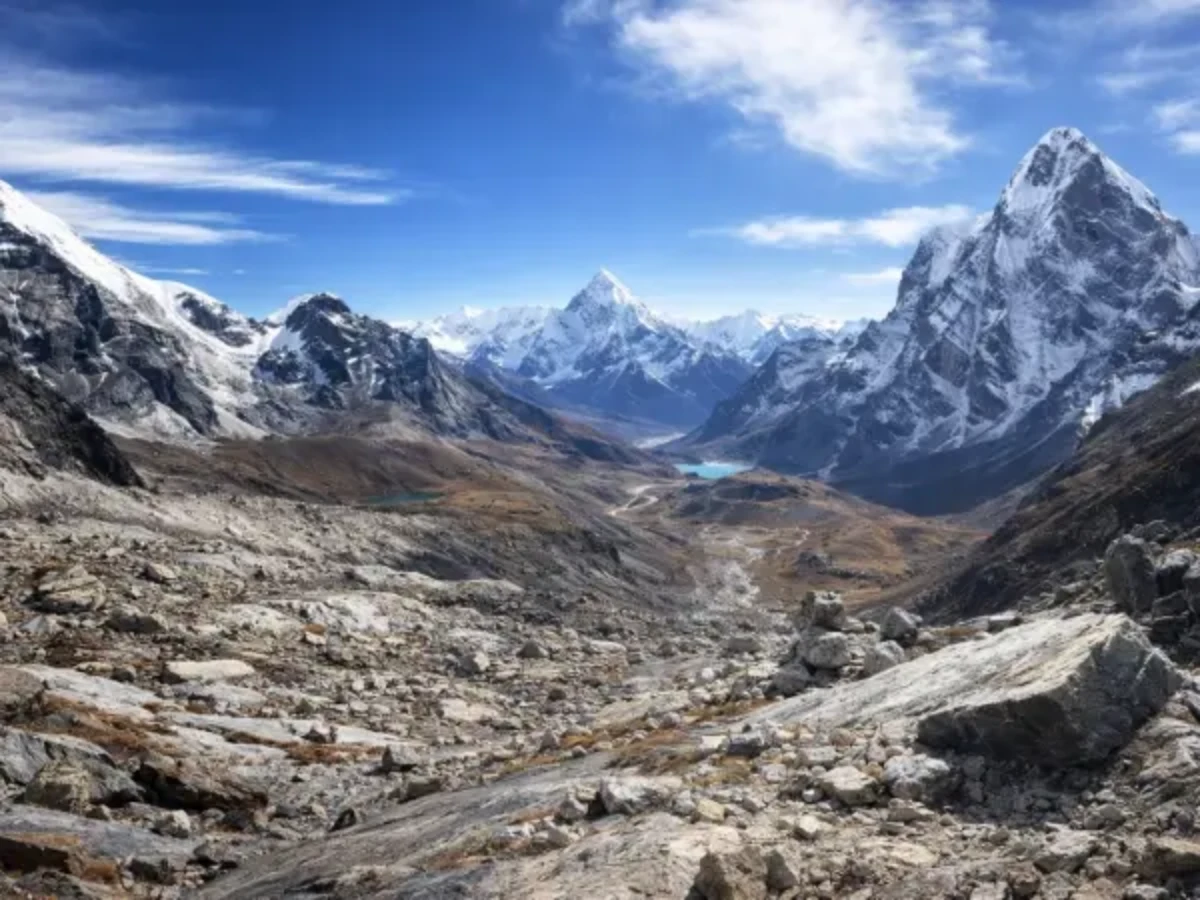
The river dominates Shekathum. The Tamor is one of eastern Nepal's major rivers, fed by the glaciers of Kanchenjunga and the surrounding peaks. At Shekathum, the river is wide and powerful, too deep to ford, fast enough to carry boulders, and the sound of its passage is the village's constant companion. The suspension bridge that crosses the Tamor near Shekathum is long, narrow, and dramatic, high above the water, swaying in the river-generated breeze, with views upstream toward the gorges that lead to the mountain.
The forest around Shekathum is rich. Subtropical broadleaf trees, sal, chilaune, schima, create a canopy that filters the sunlight into green shafts. Langur monkeys are common, their grey bodies visible in the canopy when they move, invisible when they are still. Bird life is abundant: laughingthrushes, barbets, sunbirds, and the distinctive calls of the cuckoo that eastern Nepal's forests harbour.
In monsoon season (June-September), the forest around Shekathum is leech territory. The combination of warm, wet conditions and dense vegetation creates the ideal environment for the small land leeches that attach to exposed skin. Tuck trousers into socks, apply DEET to lower legs, and check for leeches at every stop. The leeches are harmless but psychologically unwelcome, particularly at the end of a long day when the prospect of finding a leech between your toes transforms the evening's boot removal from routine to anxiety. Related: Soti Khola: Where the Manaslu Circuit Begins and the Road Ends.
What Comes After Shekathum on the Kanchenjunga Trek?
The trail north from Shekathum continues along the Tamor and then follows the Ghunsa Khola upstream into the heart of the Kanchenjunga region. The walking for the next three days climbs steadily through forest, rhododendron and oak replacing the subtropical trees of the lower sections, as the altitude increases from 1,660 metres at Shekathum to 3,595 metres at Ghunsa.
The cultural transition continues above Shekathum. The Limbu villages of the lower valley give way to mixed communities, Rai, Sherpa, and Tibetan-influenced settlements, as the trail climbs. By Ghunsa, the culture is fully Sherpa Buddhist, with flat-roofed stone houses, monasteries, and prayer flags that indicate the transition from the Hindu-influenced lowlands to the Buddhist highlands.
The forest through which the trail passes between Shekathum and Ghunsa is among the most biodiverse in eastern Nepal. The Kanchenjunga Conservation Area protects old-growth forest that supports red pandas, Himalayan black bears, musk deer, and over three hundred bird species. The wildlife is more commonly heard than seen, alarm calls in the canopy, rustling in the undergrowth, the distant crash of a bear moving through bamboo, but patient trekkers with binoculars may spot tahr on cliff faces, danphe pheasants in clearings, or the flash of a sunbird's iridescent plumage in the canopy light.
What Do You Need to Know About Shekathum?
Altitude: 1,660 metres. No altitude concerns at this elevation. Walking time from Chirwa: five to seven hours. Walking time to next stop (Amjilosha or Gyabla): five to six hours.
Accommodation: two teahouses, basic but adequate. Bring a sleeping bag (teahouse blankets may be thin). The common room stove provides evening warmth.
Water: the river water is not safe to drink untreated. Use purification tablets or a filter. Boiled water is available at the teahouses for a small fee.
Communication: no mobile coverage at Shekathum. The last reliable coverage is at Taplejung. Satellite communicator (Garmin inReach or similar) recommended for the Kanchenjunga trek.
Best season: October-November (dry, clear, comfortable temperatures at this altitude). March-May (warmer, rhododendron bloom in the forest). Avoid monsoon (June-September) unless prepared for leeches, rain, and trail conditions that can become challenging.
The Beginning of Remote
Shekathum is not a destination. Nobody comes to the Kanchenjunga region for Shekathum. It is a waypoint, one night in a long walk, one river crossing in a valley that leads to the base of the third highest mountain on earth. But waypoints have their own significance. They are the places where the journey settles into rhythm, where the body accepts that it is walking for two weeks rather than two days, and where the mind begins the slow transition from the life left behind to the mountain life ahead.
At Shekathum, the road is two days behind you. The mountain is five days ahead. The river is below. The forest is above. And the trail, which at this point feels less like a trail and more like a conversation between you and the landscape, continues north, climbing slowly, gaining altitude slowly, revealing the Himalaya slowly, in the specific pace that the Kanchenjunga region insists upon and that the trekker, by the second day, begins to welcome.
Shekathum is an early stop on the Kanchenjunga Base Camp Trek, in the lower foothills before the trail enters the conservation area.
Shekathum is the Kanchenjunga Circuit's gateway village on the eastern approach. The forest around it is dense, the river crossings are exciting, and the trail beyond leads into some of the most remote trekking territory in Nepal. If you chose Kanchenjunga, you chose solitude. Shekathum is where that solitude begins.
Shekathum is on our Kanchenjunga Base Camp Trek.
WhatsApp:+977 9810351300
Email:[email protected]
Written by Shreejan Simkhada, CEO of The Everest Holiday and third-generation Himalayan guide. TAAN Member #1586.
Shekathum is the Kanchenjunga circuit gateway. Our Kanchenjunga Base Camp Trek (19 Days) is private (your group only, no strangers), 2027 dates open, From USD $1655. WhatsApp us for tailored 2027 dates and current departures.
Continue planning your trek
This is one stop on the Kanchenjunga Base Camp trail. For the full route, read our Kanchenjunga gateway guide. When you are ready for dates and prices, see the Kanchenjunga Base Camp Trek (19 days) or WhatsApp us directly. We reply personally.

 Chat with Shreejan